Cognitive Development Normal Phonics Worksheets for Ages 5-8
6 filtered results
-
From - To
Enhance your child's cognitive development with our Normal Phonics Worksheets designed for ages 5-8. These engaging and interactive worksheets promote essential phonics skills and boost early literacy while fostering critical thinking and problem-solving abilities. Your child will explore sound-letter relationships, rhyming words, and vocabulary expansion through fun-filled activities. Our user-friendly worksheets encourage independent learning, helping young learners build a solid foundation in reading. Perfect for home or classroom use, these resources align with educational standards, making phonics practice enjoyable for your little ones. Spark your child's love for learning today with our thoughtfully crafted cognitive development worksheets!
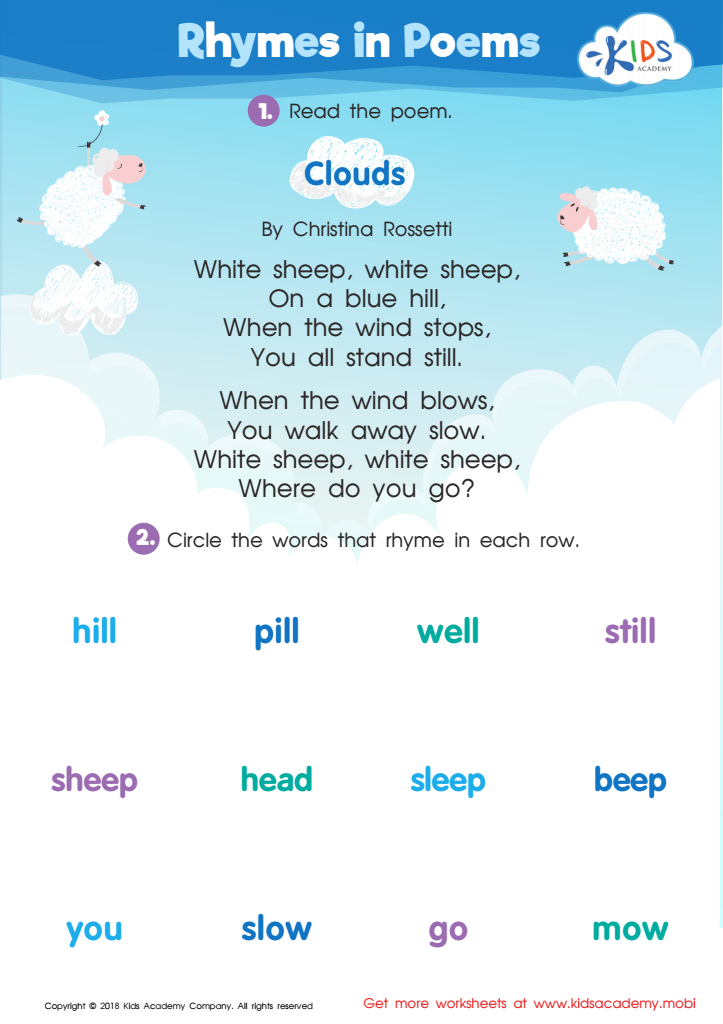
Rhymes in Poems Worksheet
 Assign to My Students
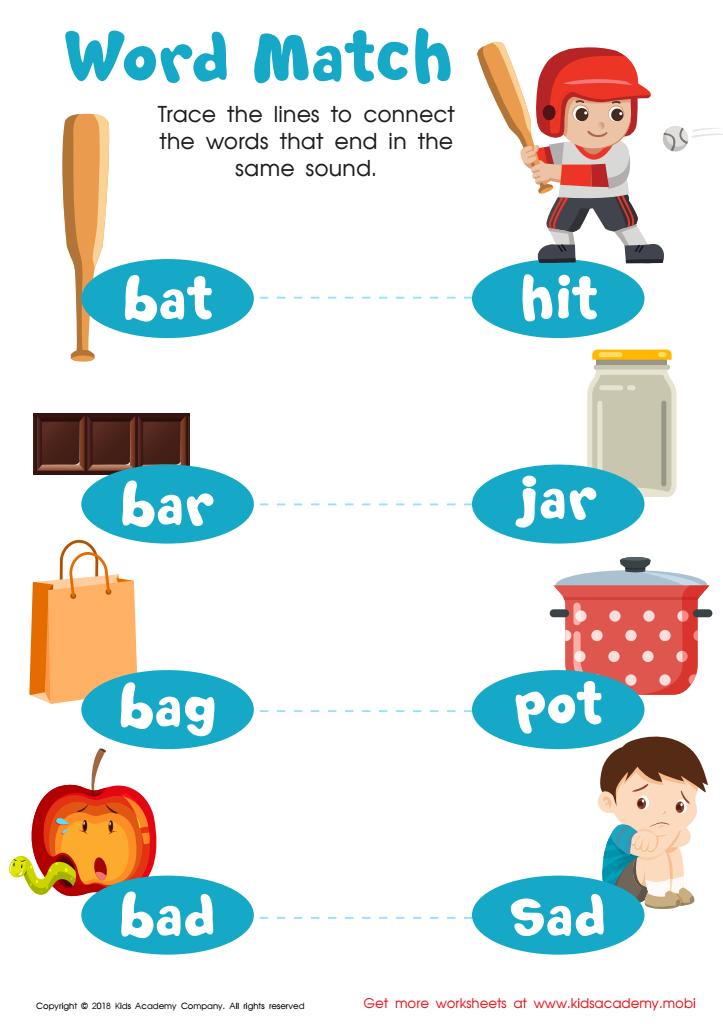
Word Match Reading Worksheet
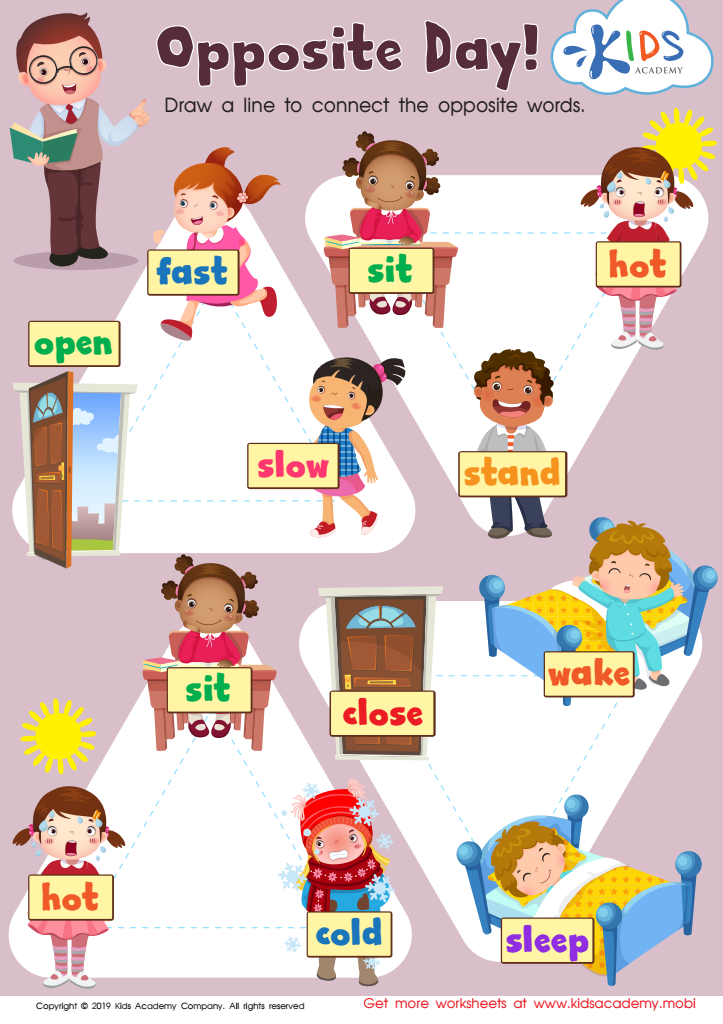
Opposite Day Worksheet
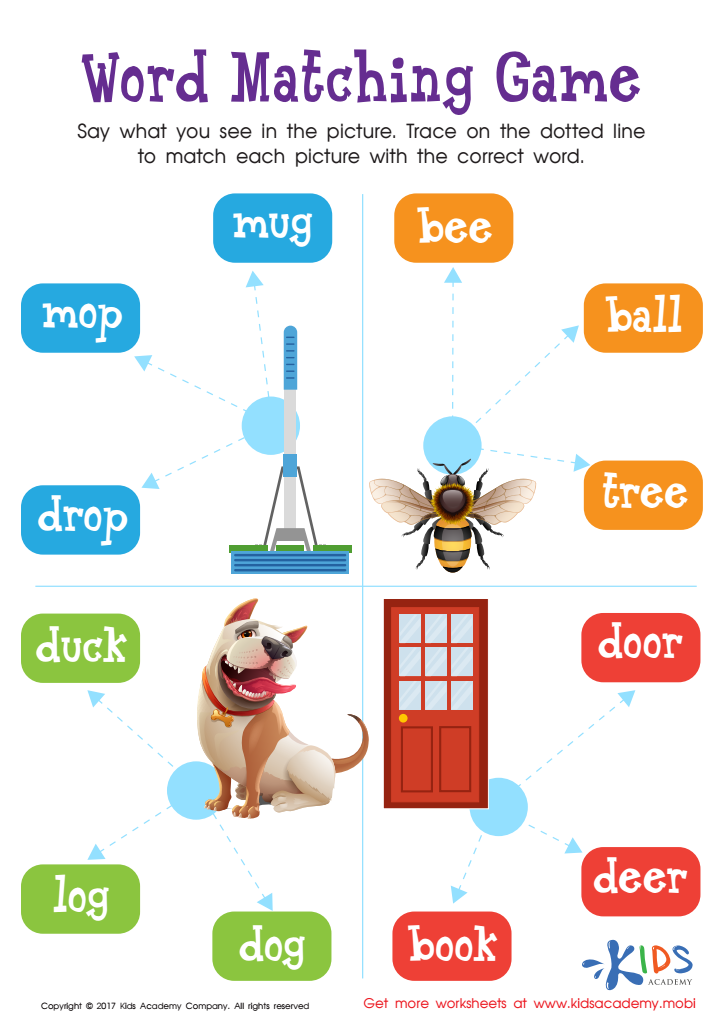
Word Matching Game Worksheet
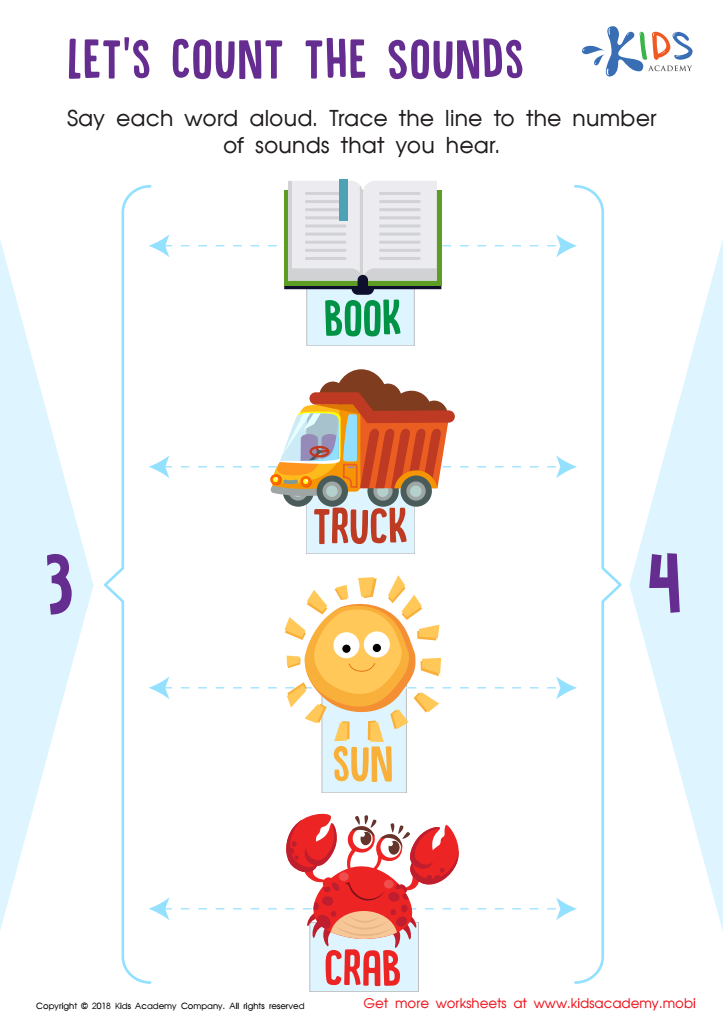
Let's Count the Sounds Worksheet
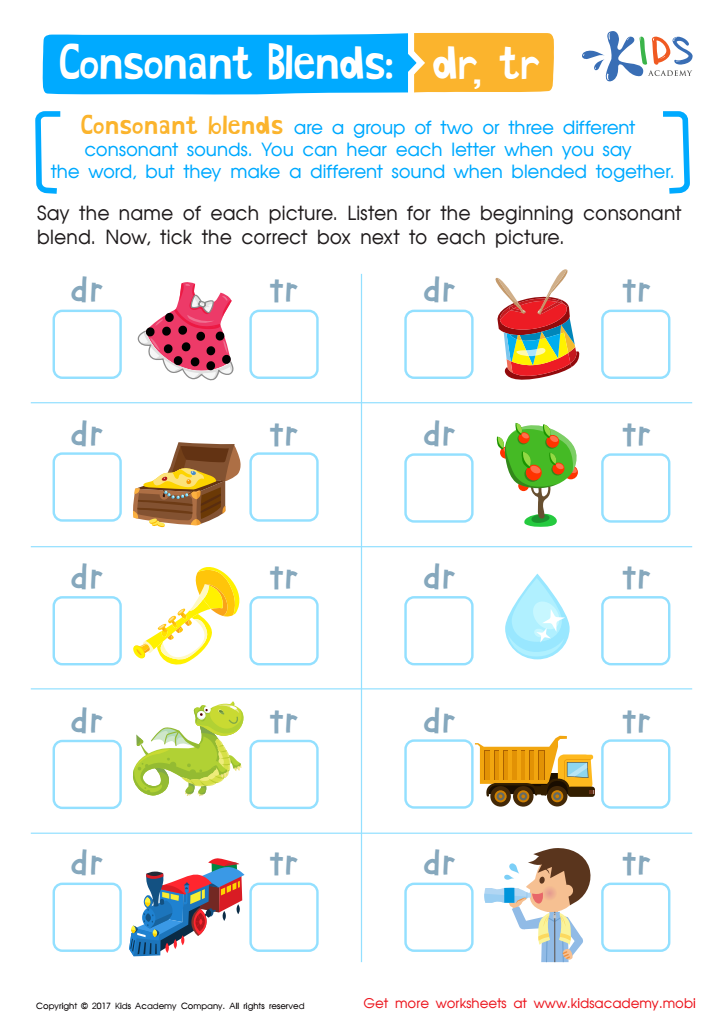
Consonant Blends: "Dr" and "Tr" Printable








Cognitive development during the ages of 5 to 8 is a crucial stage as children are increasingly capable of thinking, learning, and processing information more complexly. Understanding normal phonics at this age is essential for several reasons. First, phonics forms the foundation of literacy, helping children to decode words and develop reading skills, which are fundamental for academic success across subjects. As students develop cognitive skills, they also enhance their vocabulary and comprehension abilities.
Parents and teachers should be attentive to phonics because early reading skills are linked to later academic performance. When children grasp phonics, they gain confidence which fosters a love of reading and learning that can last a lifetime. Additionally, this stage of development is characterized by significant neural growth, making it an optimal time to introduce phonetic structures. Engaging children in phonics through playful and interactive methods caters to their cognitive abilities, making learning enjoyable and effective.
Encouraging phonics awareness also supports children in articulating their thoughts, improving their communication skills. By focusing on cognitive development through phonics, parents and teachers play a pivotal role in shaping well-rounded, confident learners prepared for future challenges. Thus, prioritizing phonics is key to nurturing a child's cognitive milestones.







