Basic measurement concepts Normal Worksheets for Ages 5-8
3 filtered results
-
From - To
Introduce young learners to the world of measurement with our engaging Basic Measurement Concepts worksheets designed for ages 5-8. This collection focuses on essential skills such as length, weight, capacity, and comparison. Each worksheet offers fun, hands-on activities that cultivate understanding through visual aids and practical examples. Ideal for both home and classroom settings, our worksheets help children grasp foundational measurement concepts in a playful, educational manner. Empower your child to master measurements and build a strong mathematical foundation with interactive worksheets that make learning both easy and enjoyable. Explore and download the resources today!
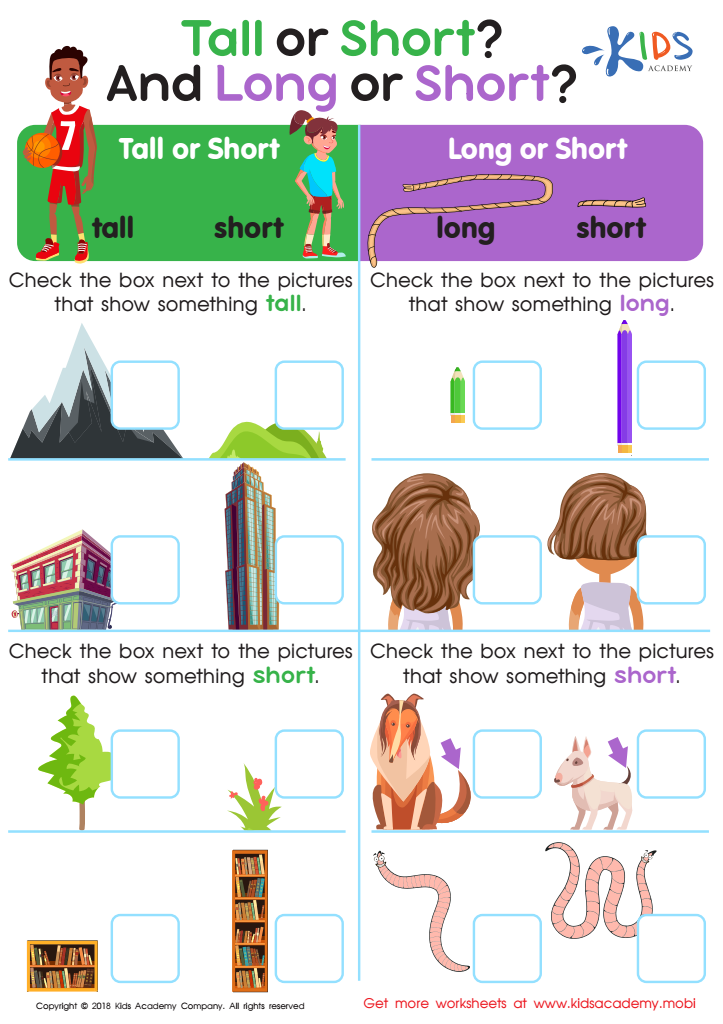
Tall or Short and Long or Short? Worksheet
 Assign to My Students
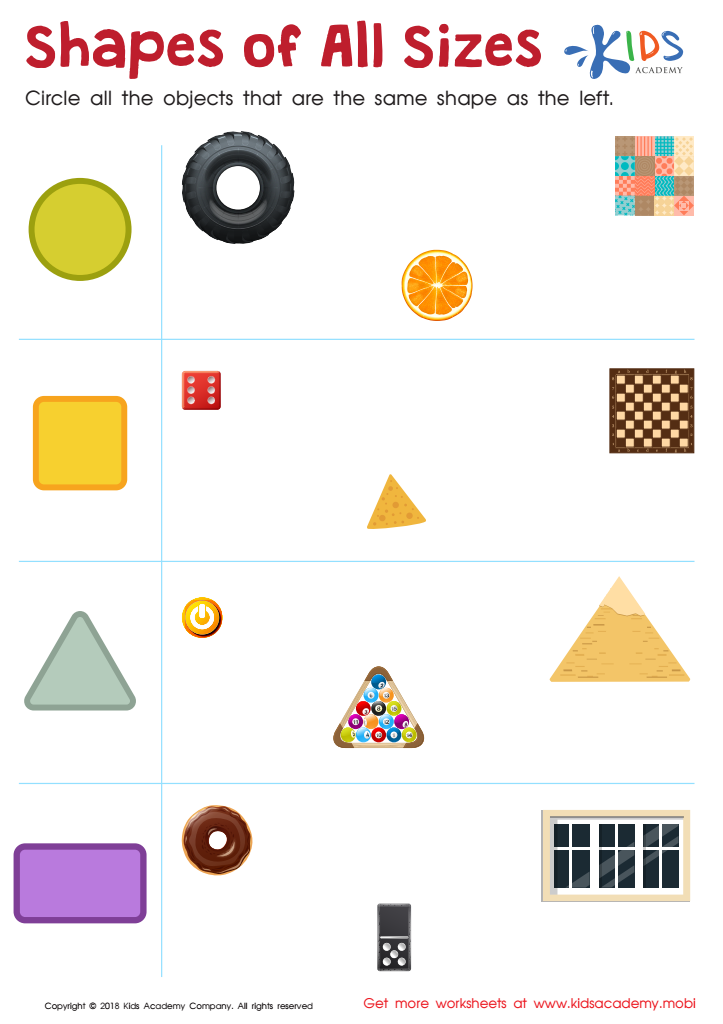
Shapes of All Sizes Worksheet
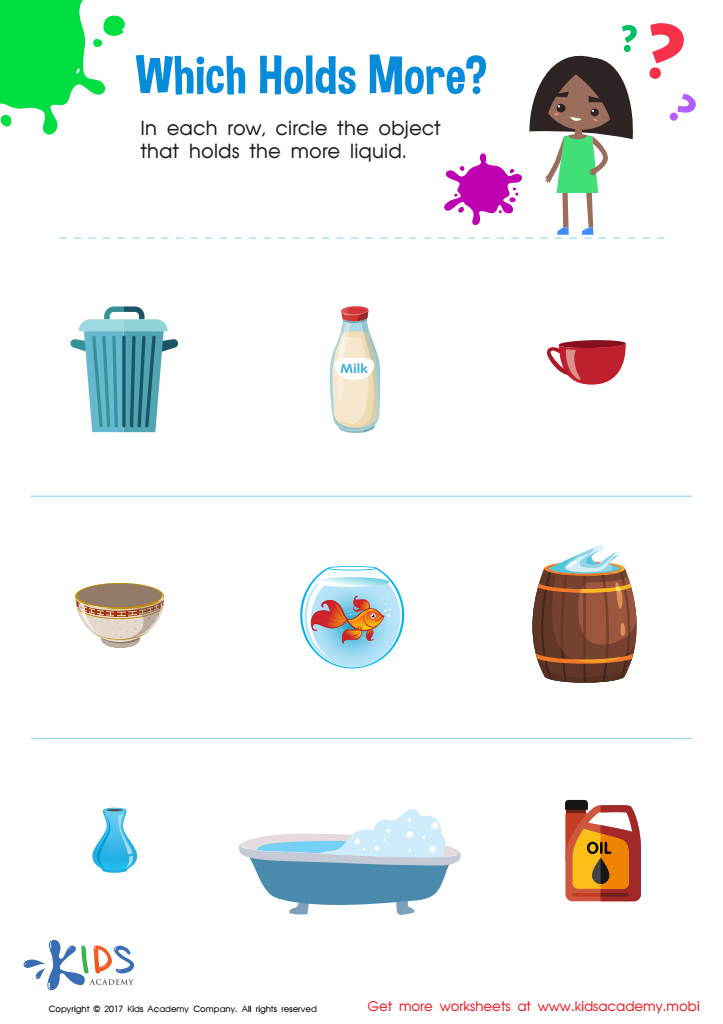
Which Holds More: Capacity Worksheet




Parents and teachers should care about introducing basic measurement concepts to children aged 5-8 because these foundational skills are crucial for their overall cognitive and academic development. At this age, children are just beginning to understand the world in tangible ways, so learning basic measurements like length, weight, and volume can help them make sense of their environment.
Measurement activities foster critical thinking and problem-solving skills. For example, when children use rulers to measure objects, they learn to compare sizes and understand units of measurement. This is not only vital for math but also in everyday situations such as cooking, playing sports, and even in arts and crafts.
Moreover, grasping these concepts early helps improve numeracy, directly influencing their ability to perform more complex mathematical operations later on. It also nurtures spatial awareness, an essential skill in subjects like geometry and science.
Interactive measurement tasks can also be very engaging and fun, fostering a love for learning. Whether it's measuring ingredients for a recipe or determining the height of a plant in a school project, applying measurement to real-life situations emphasizes its usefulness. In essence, early mastery of measurement concepts lays a solid foundation for academic success and practical life skills, making it a pivotal part of early education.








