Differentiating goods/services Normal Worksheets for Ages 5-8
3 filtered results
-
From - To
Dive into our "Differentiating Goods/Services Normal Worksheets" tailored for kids aged 5-8 at Kids Academy. These engaging printable worksheets foster essential learning skills, helping children distinguish between goods (tangible items) and services (activities performed by others). Through fun exercises, young learners will classify everyday items and activities, boosting critical thinking and practical understanding. Ideal for use both in the classroom and at home, these worksheets offer clear instructions and vibrant illustrations, making learning enjoyable and effective. Equip your child with foundational knowledge that enhances their comprehension of the world around them. Start exploring today at Kids Academy!
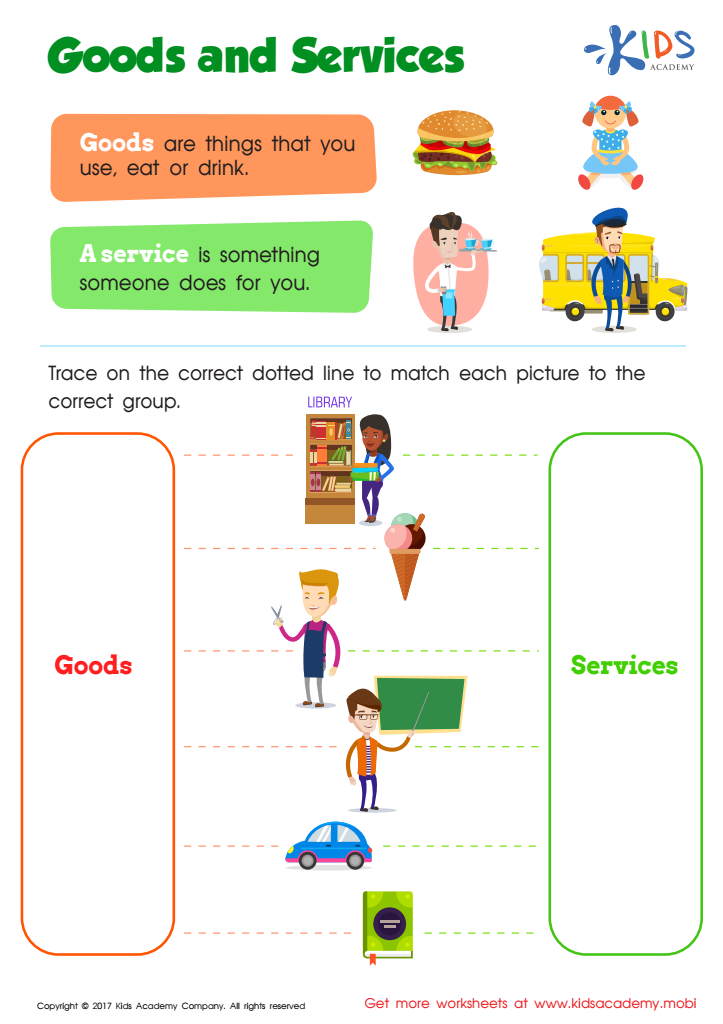
 Assign to My Students
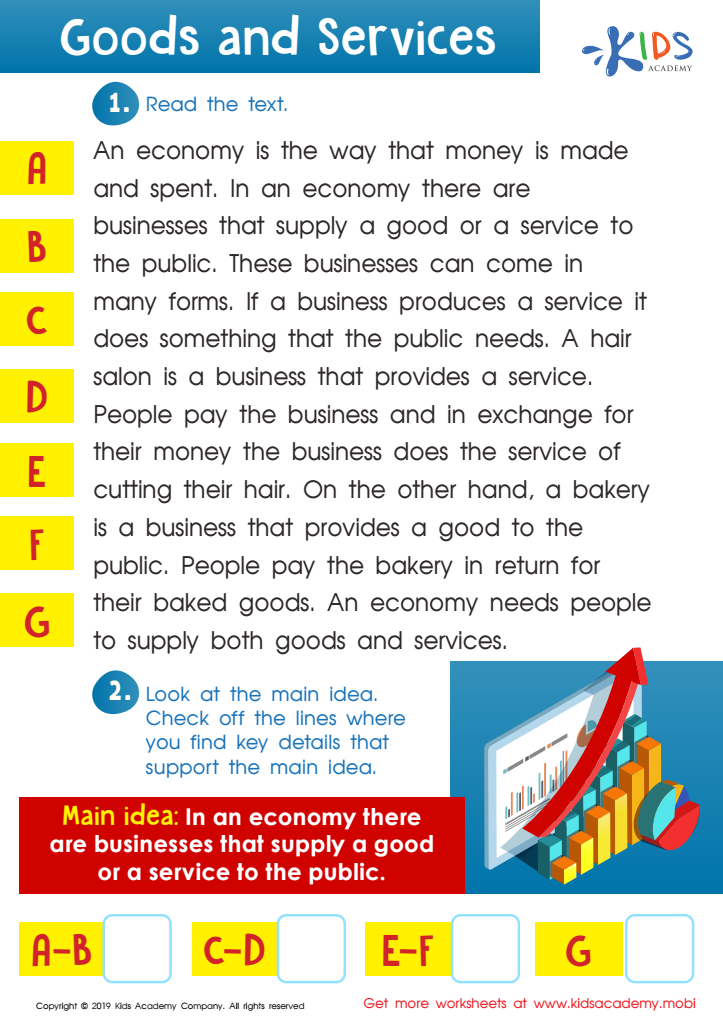
Goods and Services Worksheet
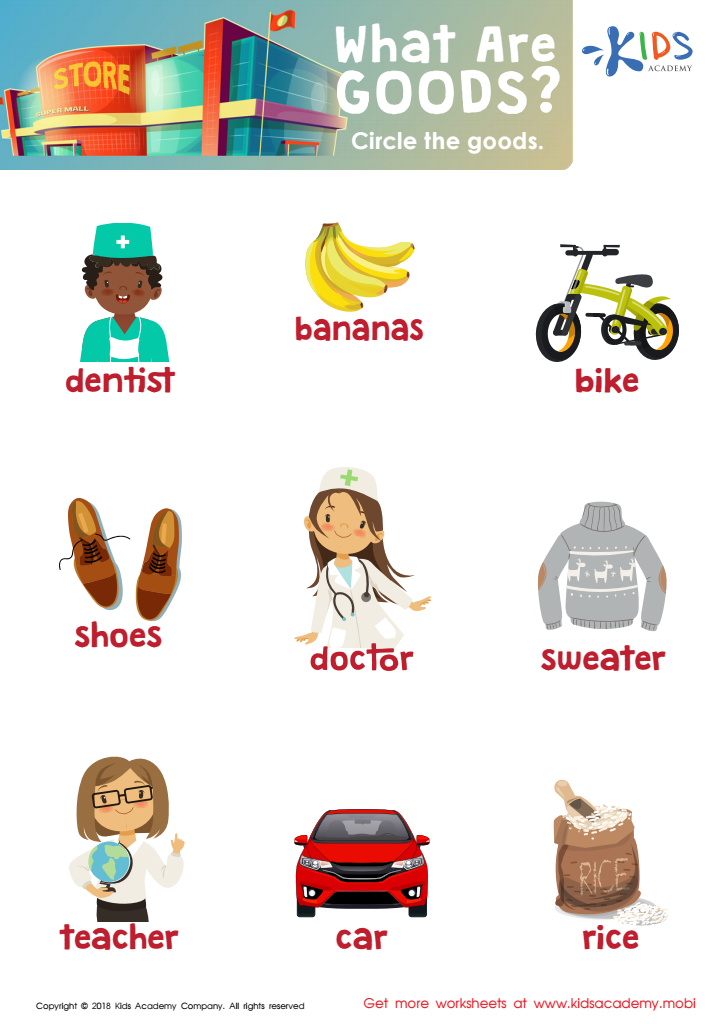
What Are Goods? Worksheet







Differentiating goods and services is crucial for the cognitive and social development of children ages 5 to 8. At this impressionable age, kids are establishing fundamental understandings about the world around them. By helping them distinguish between goods and services, parents and teachers support their ability to categorize and make sense of different types of offerings, which enhances critical thinking and comprehension skills.
Understanding goods—the tangible items like toys, books, and snacks—helps children grasp the concept of physical objects that can be seen and touched. On the other hand, recognizing services—activities and services like haircuts, teaching, or a bus ride—fosters an understanding that some benefits come not from physical products but from the actions and efforts of people.
This differentiation is foundational for their future economic understanding, as it introduces them to basic economic principles and the structure of commerce. Additionally, it encourages appreciation and respect for various professions. For instance, learning that a teacher's service is as valuable as the toys they play with can prompt respect and gratitude towards different job roles within society.
Moreover, by teaching children about these concepts early on, parents and educators lay the groundwork for informed decision-making and budgeting skills that children will utilize in their later years. This essential education propels them towards becoming more responsible and conscientious consumers and citizens in the future.








