Phonics understanding Normal Worksheets for Ages 5-8
3 filtered results
-
From - To
Discover our engaging Phonics Understanding Normal Worksheets designed specifically for children ages 5-8. These worksheets provide fun, interactive activities to help young learners develop essential phonics skills, including recognizing letter sounds, blending phonemes, and enhancing reading abilities. Tailored to meet the developmental needs of early readers, our resources facilitate hands-on learning through colorful illustrations and practical exercises. Teachers and parents can easily incorporate these worksheets into daily lessons, making reading practice enjoyable and effective. Visit our website to access a variety of printable worksheets that support phonics understanding and foster a lifelong love of reading in your child!
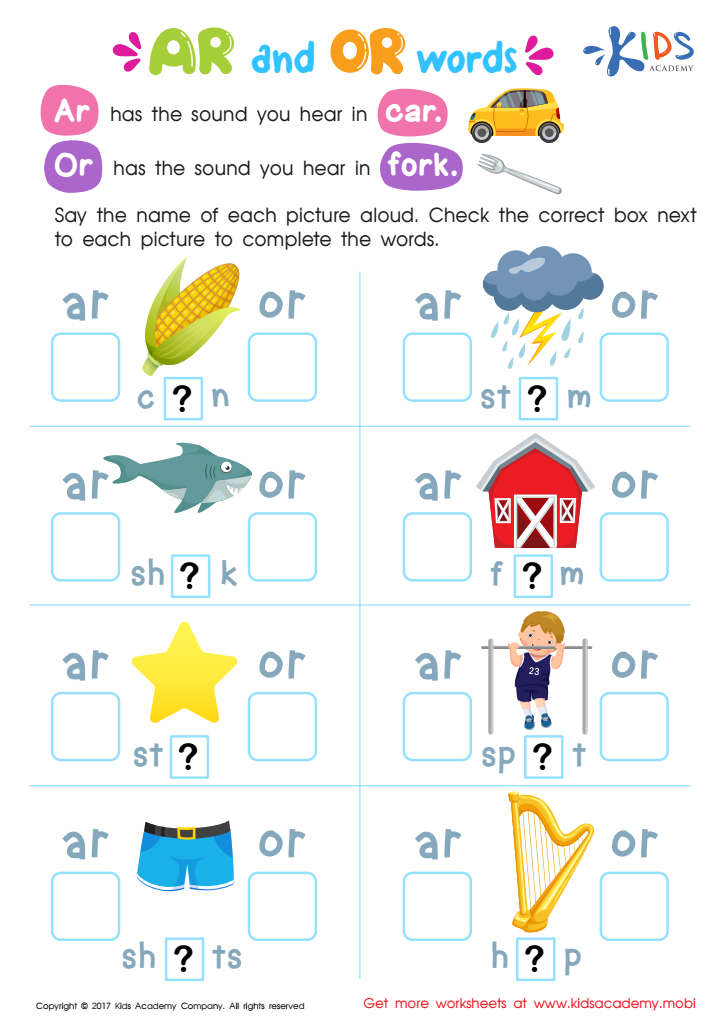
Ar and Or Words Phonics Worksheet
 Assign to My Students
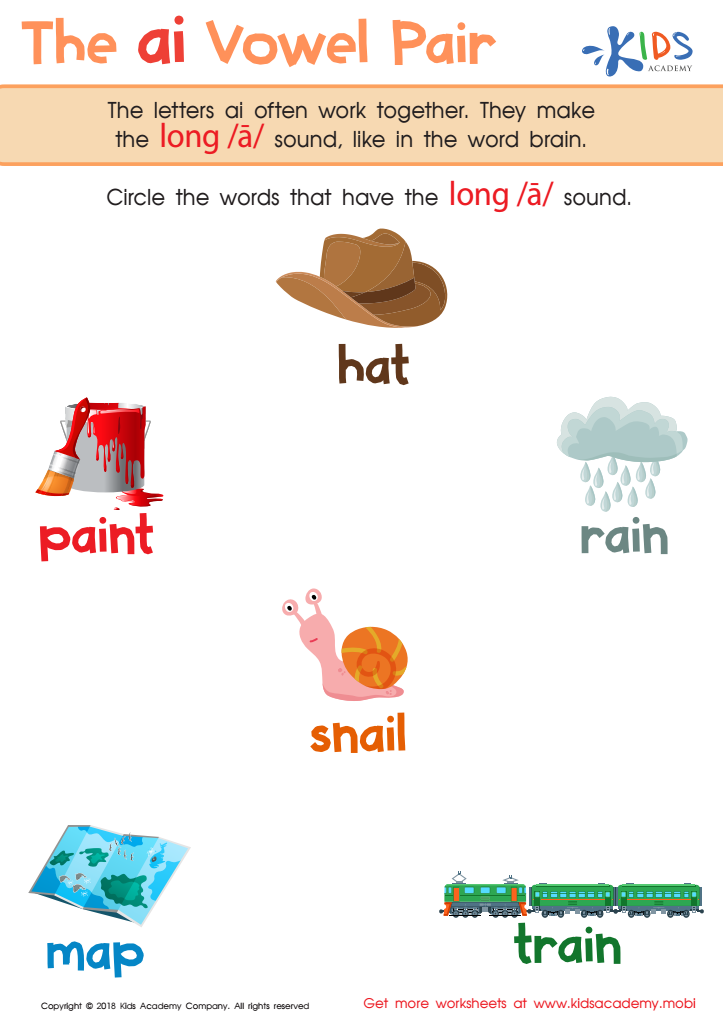
The AI Vowel Pair Worksheet
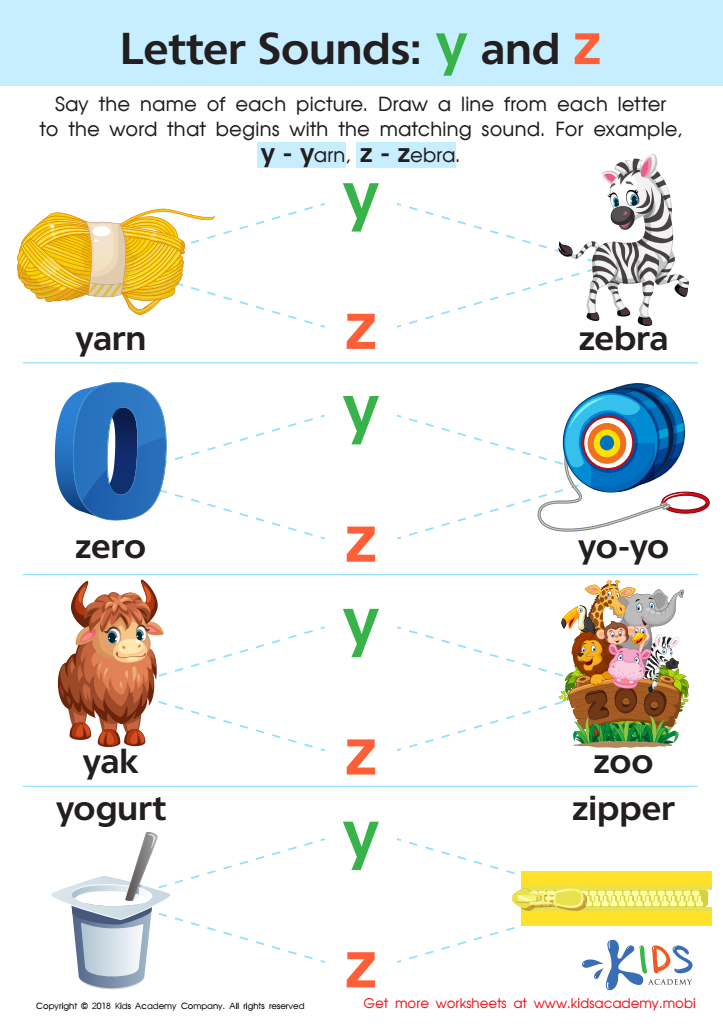
Letter Y and Z Sounds Worksheet








Phonics understanding is crucial for children aged 5-8 as it serves as the foundation for their reading and writing skills. During this developmental stage, children are mastering the relationship between sounds and letters, which directly influences their ability to decode words. For parents and teachers, fostering phonics understanding is essential for several reasons.
First, phonics helps children become confident readers. When children can sound out words, they experience less frustration, leading to a more positive attitude toward reading. This confidence can encourage a lifelong love of literature and learning.
Second, strong phonics skills are linked to broader language development, aiding spelling and vocabulary acquisition. Children who grasp phonetic principles can tackle new words with greater ease, contributing to their overall academic success.
Additionally, phonics instruction can help identify specific learning difficulties, such as dyslexia. Early intervention becomes more manageable when phonics is prioritized, allowing targeted support to be given.
Ultimately, investing time and effort into strengthening phonics understanding can yield significant benefits for children’s literacy, cognitive growth, and emotional well-being. Parents and teachers play a vital role in this process, encouraging and supporting young learners as they develop essential skills for their educational journey.








