Reading analog clocks Normal Worksheets for Ages 5-8
3 filtered results
-
From - To
Enhance your child’s time-telling skills with our "Reading Analog Clocks Normal Worksheets" for ages 5-8. These engaging worksheets are designed to help young learners master the art of reading analog clocks through fun and interactive activities. Each worksheet focuses on different aspects of time, including recognizing hour and minute hands, telling time to the hour and half-hour, and understanding the concept of time in everyday life. Ideal for both classroom and home settings, our worksheets foster essential math skills while keeping learning enjoyable. Download now and give your child the confidence to read analog clocks with ease!
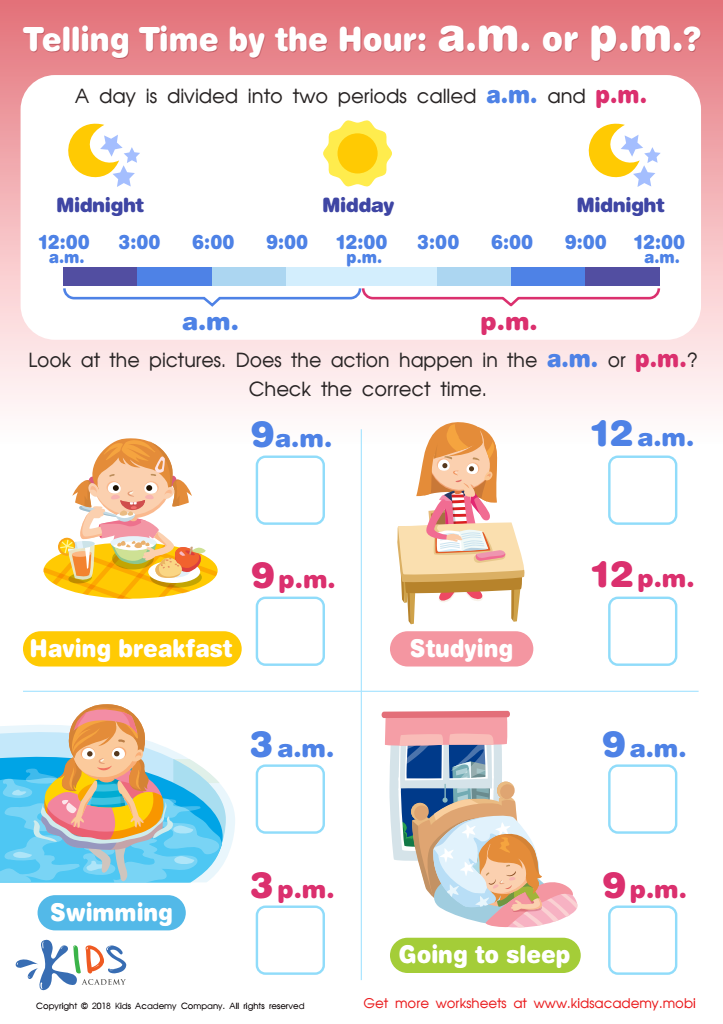
Tilling Time by the Hour: a.m. or p.m.? Worksheet
 Assign to My Students
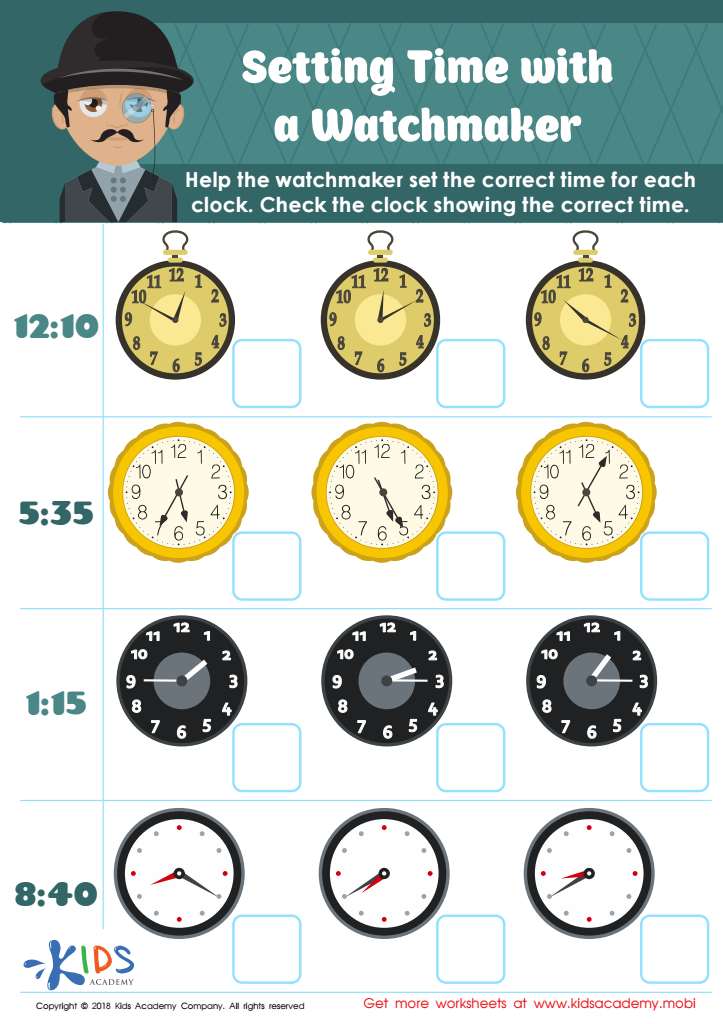
Setting Time with Watchmaker Worksheet
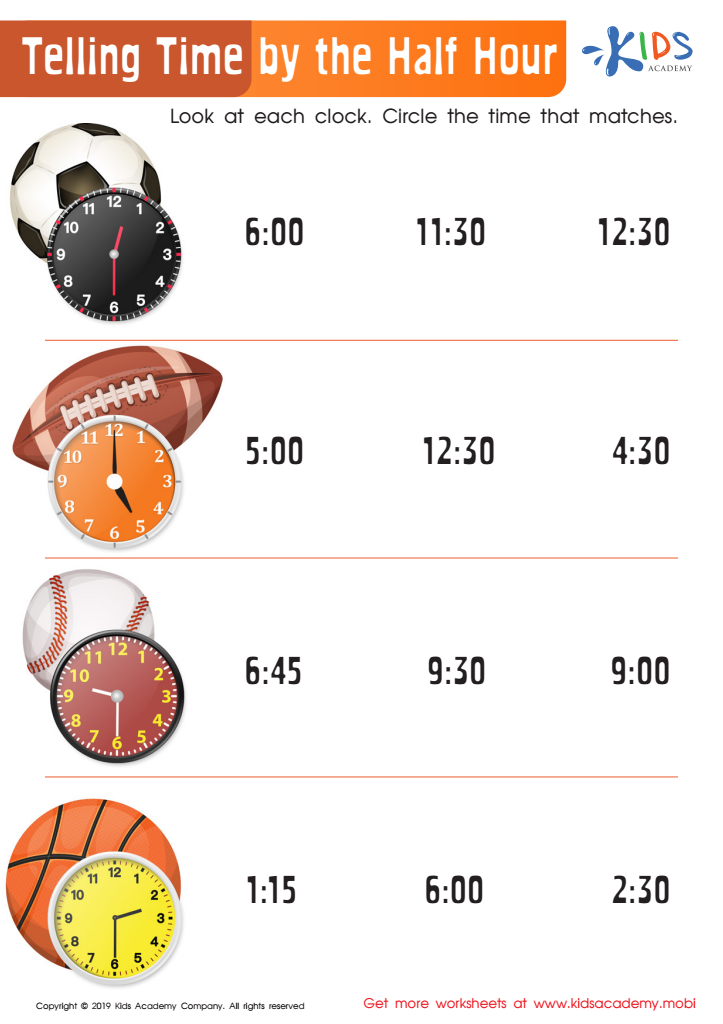
Telling Time by the Half Hour Worksheet








Teaching children to read analog clocks is vital for their development and daily functioning. For children aged 5-8, mastering this skill fosters independence and time management. Unlike digital clocks, which present time in a straightforward manner, analog clocks require the understanding of hours, minutes, and how they interact with each other. By learning to read an analog clock, children can grasp the concept of time in a more meaningful and visual way.
Moreover, knowing how to tell time can improve a child's mathematical skills by reinforcing concepts of counting, spatial awareness, and visual interpretation. Engaging with analog clocks helps children practice their fine motor skills as they manipulate clock hands during interactive learning activities.
Additionally, understanding time management early fosters responsibility. Kids learn the importance of routines, punctuality, and planning their day, which can have long-lasting effects on their personal and academic lives. As they grow, the ability to read an analog clock remains a practical skill that is often required in schools, workplaces, and everyday situations.
Overall, by emphasizing the importance of learning to read analog clocks, parents and teachers equip children with essential life skills that support both cognitive development and independence in managing their activities.








