Time recognition Normal Worksheets for Ages 5-8
5 filtered results
-
From - To
Welcome to our "Time Recognition Normal Worksheets for Ages 5-8"! Tailored specifically for young learners, these worksheets help children master the essential skill of telling time. Engaging and interactive, our resources cater to various learning styles, ensuring that every student can grasp this vital concept. From reading analog and digital clocks to understanding basic time units, these worksheets provide a fun and educational experience. Designed for home or classroom use, they are an excellent tool for reinforcing time-telling skills while promoting confidence and independence in young learners. Unlock your child's potential with our engaging time recognition activities today!
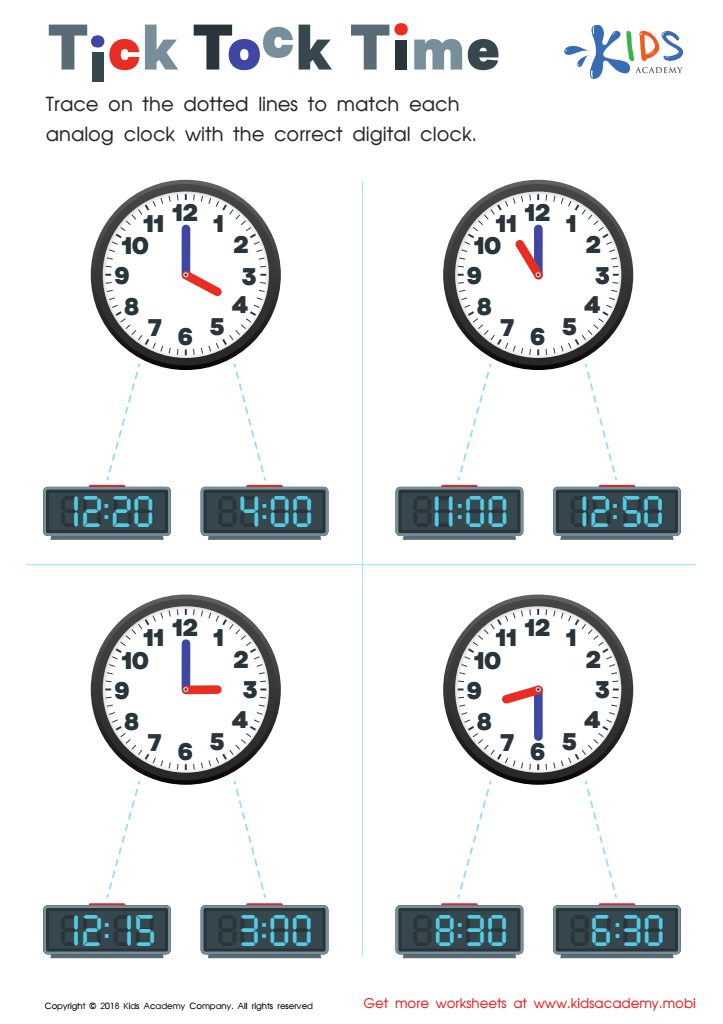
Tick Tock Time Worksheet
 Assign to My Students
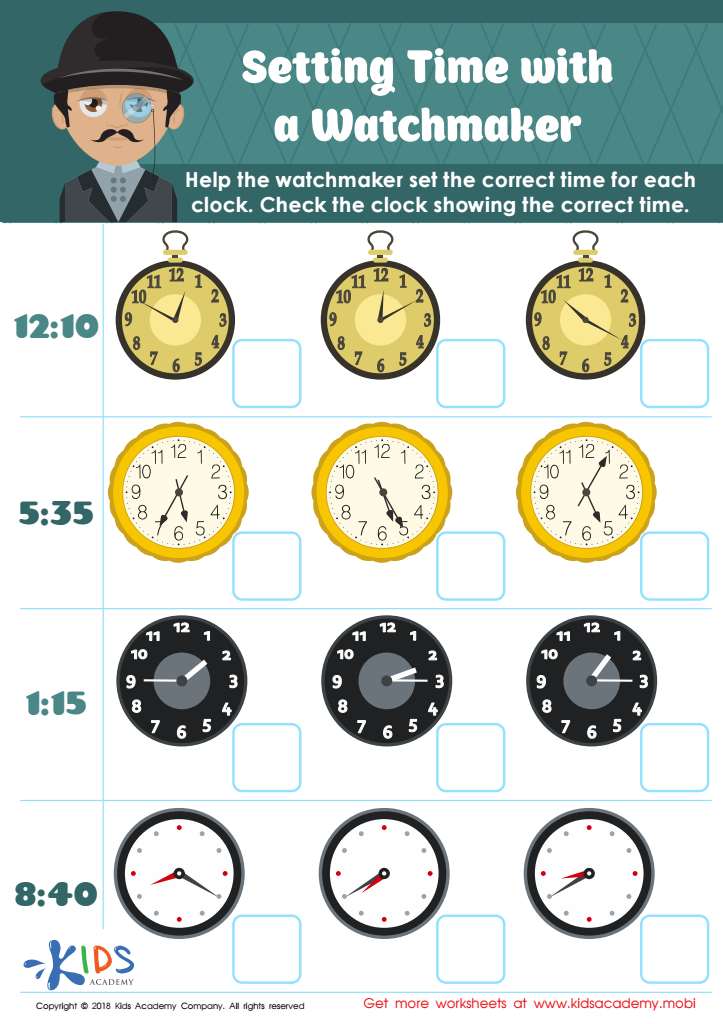
Setting Time with Watchmaker Worksheet
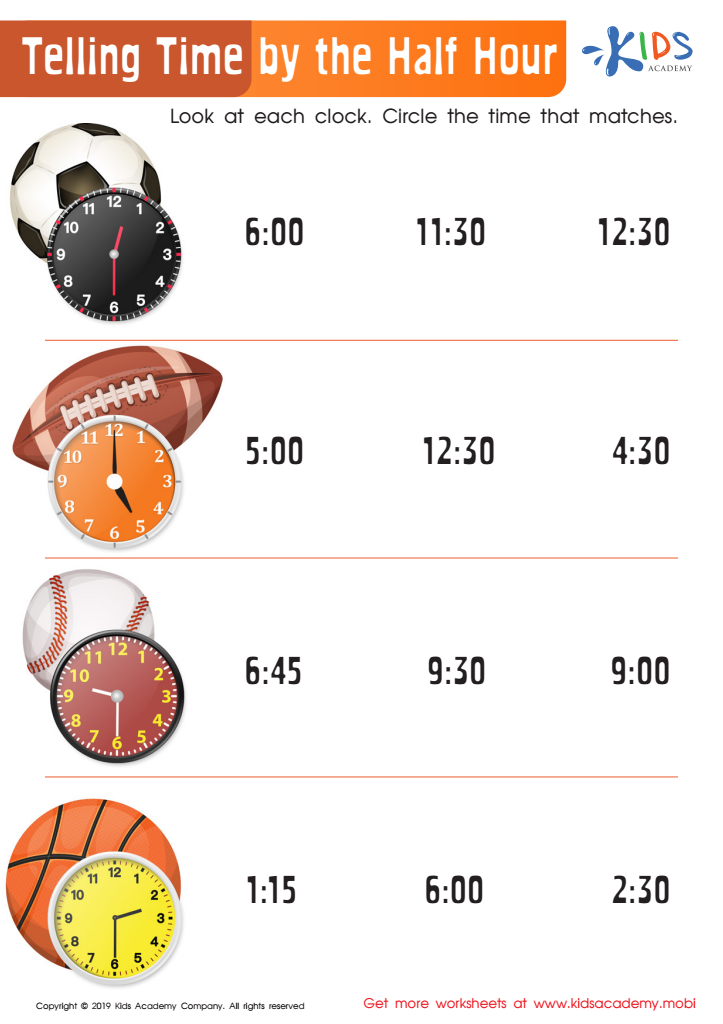
Telling Time by the Half Hour Worksheet
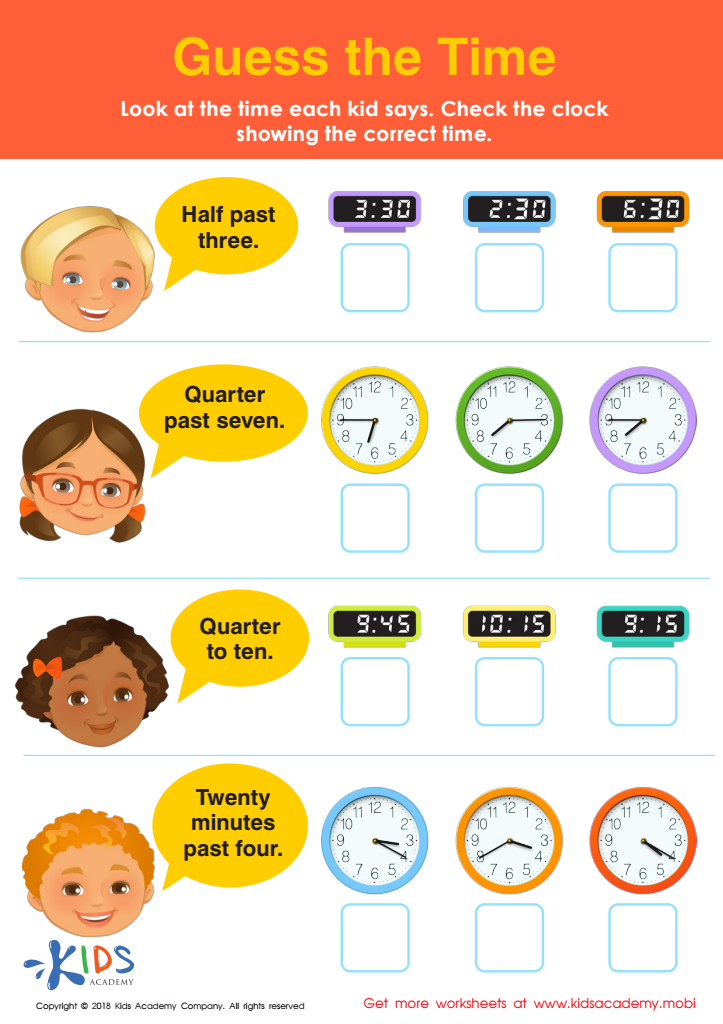
Guess the Time Worksheet
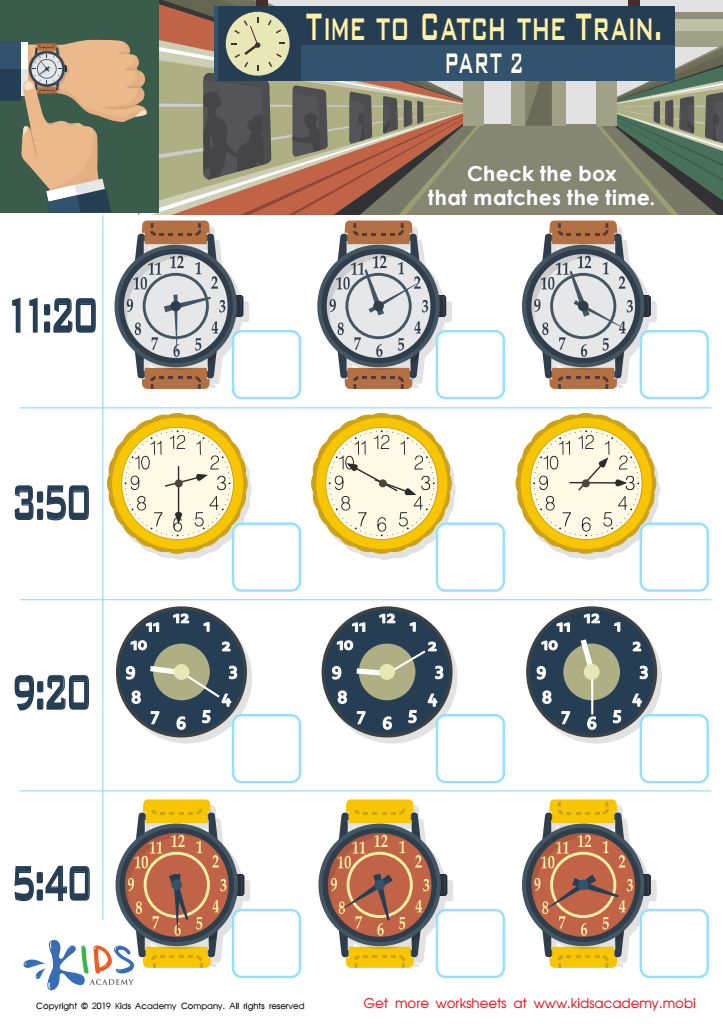
Time to Catch the Train Part 2 Worksheet








Time recognition is a crucial skill for children aged 5 to 8, and both parents and teachers should prioritize its development for several reasons. Firstly, understanding time helps children create a sense of structure and routine in their daily lives. At this age, children begin to grasp the concept of schedules, which fosters responsibility and predictability. This is essential for their overall emotional well-being.
Furthermore, time recognition supports academic growth. Lessons often involve understanding timelines, schedules for assignments, and the sequence of events, making it an essential skill for effectively absorbing information. The ability to tell time contributes to enhanced cognitive skills, such as critical thinking and problem-solving, as children learn to manage their day and allocate time for various activities.
Engaging with time also invites families to spend quality moments together, encouraging routines such as reading before bed or planning family outings. This linkage creates opportunities for conversations around the passage of time and its significance.
In summary, time recognition empowers children with essential foundational skills that contribute to their independence, academic success, and emotional stability, making it a critical area of focus for both parents and teachers.








