Understanding syllables Normal Worksheets for Ages 5-8
5 filtered results
-
From - To
Discover an engaging way to teach your child about syllables with our "Understanding Syllables Normal Worksheets" designed for ages 5-8. These worksheets provide a fun and interactive learning experience that helps young learners grasp the concept of syllables through various activities, including counting, sorting, and breaking down words. Ideal for homeschooling or supplementing classroom learning, these printable resources cater to different learning styles, promoting literacy and phonemic awareness. Each worksheet is age-appropriate and encourages creativity while building essential language skills. Start your child's journey toward reading proficiency today with our thoughtfully crafted syllable worksheets!
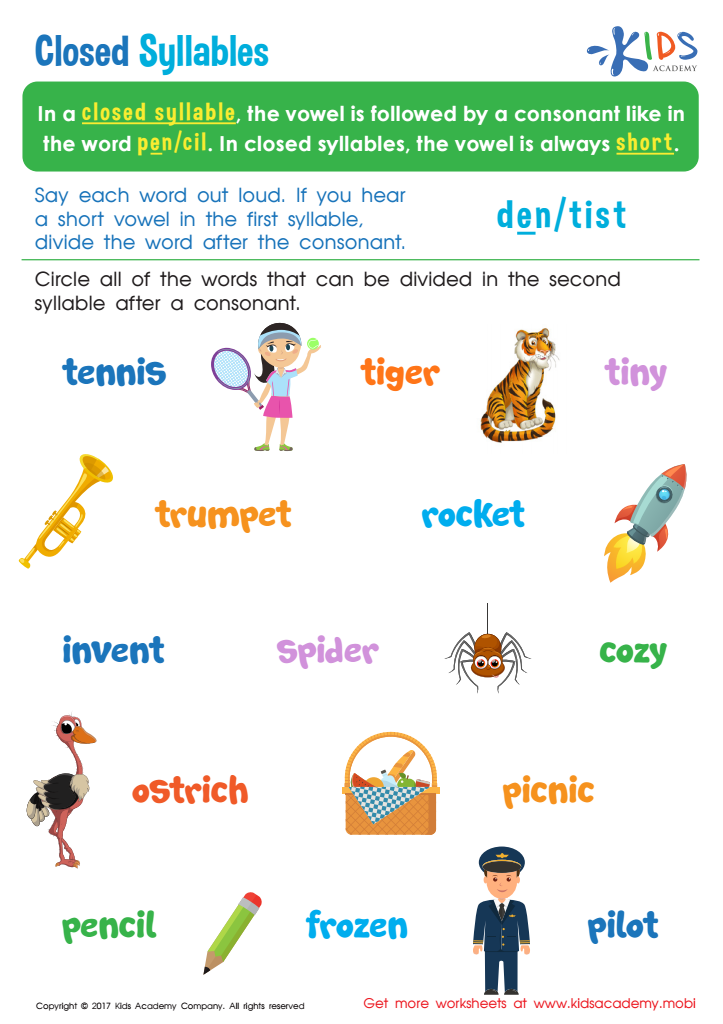
Closed Syllable Spelling Worksheet
 Assign to My Students
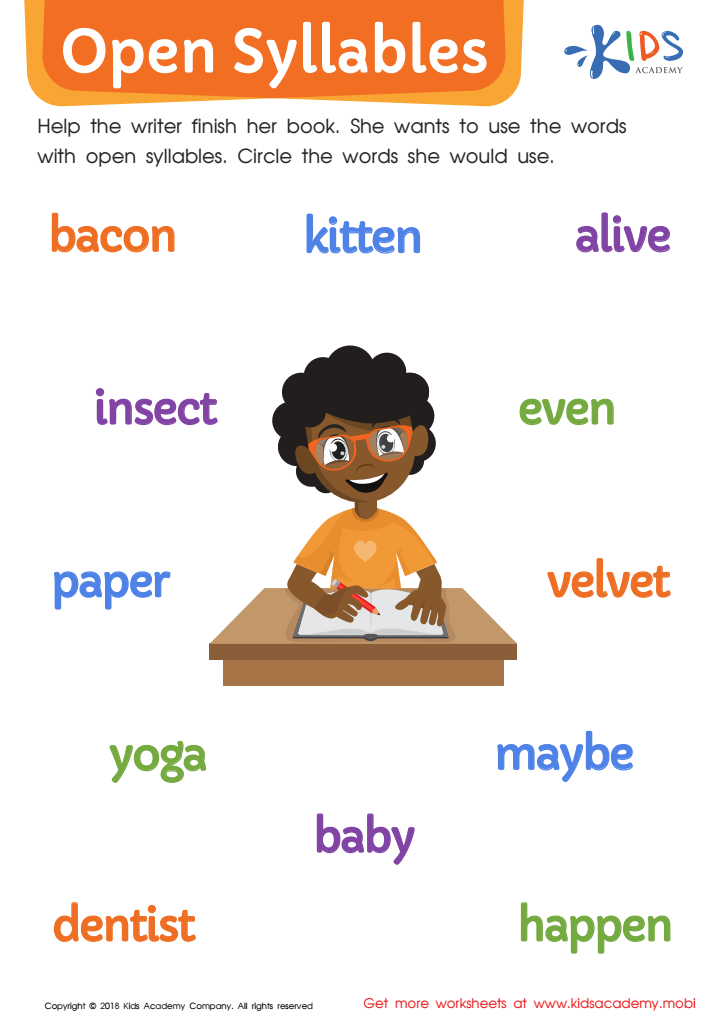
Open Syllables Worksheet
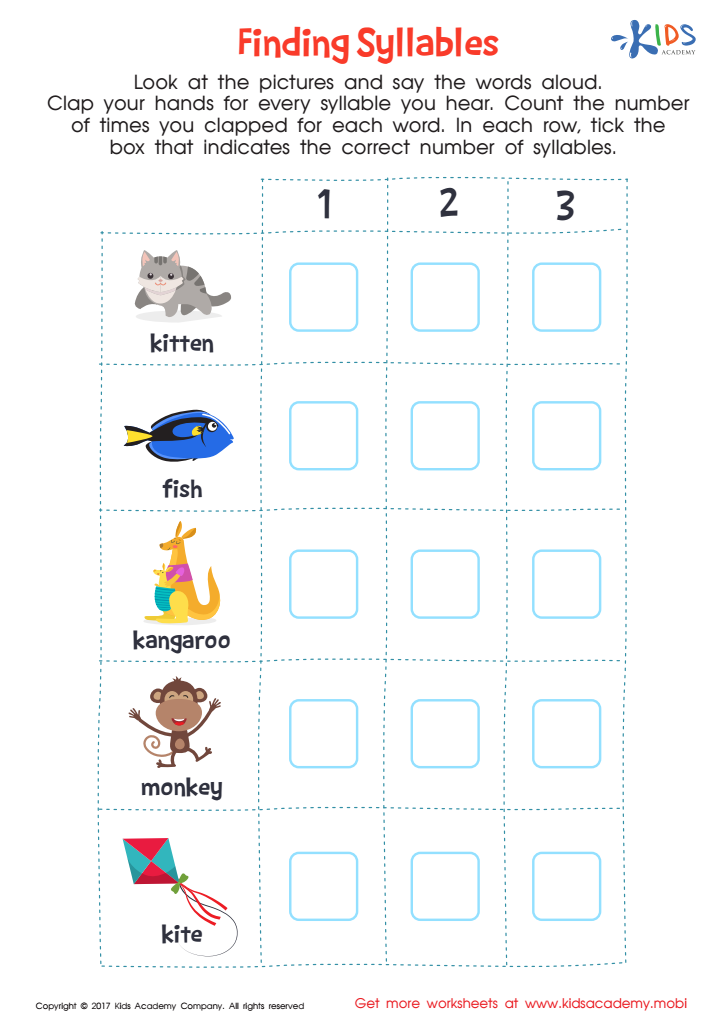
Finding Syllables Word Structure Worksheet
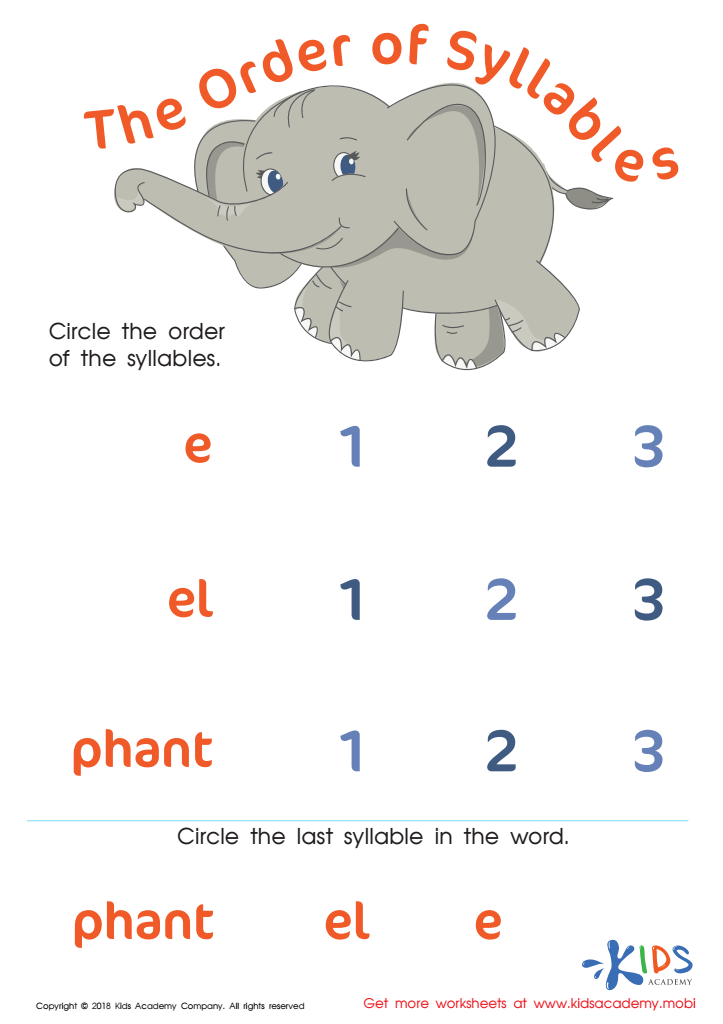
The Order of Syllables Worksheet
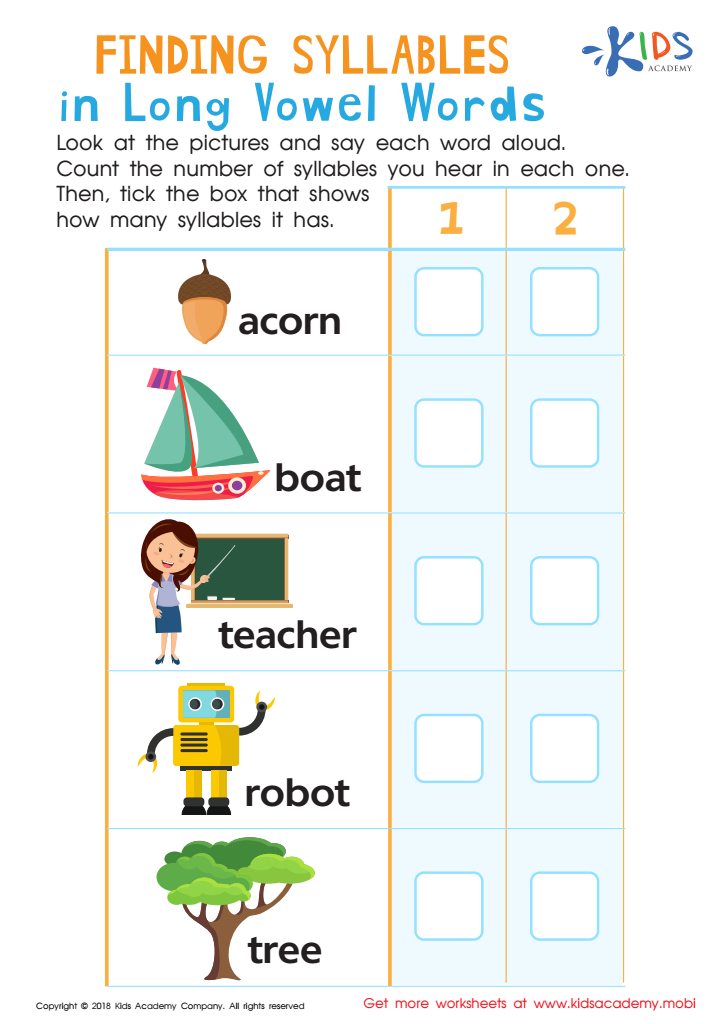
Finding Syllables in Long Vowel Words Worksheet






Understanding syllables is crucial for children aged 5-8, as it lays the foundation for their reading and writing skills. Syllables are the building blocks of words, and recognizing them helps improve phonemic awareness, an essential component of literacy. When parents and teachers emphasize syllable understanding, they enable children to break down words into manageable parts, making decoding and pronunciation easier.
By grasping syllables, children can enhance their vocabulary and spelling abilities. When they learn to clap or tap for each syllable in a word, they also develop auditory discrimination skills, which further supports language development. This skill is vital for early reading, as it aids in segmenting and blending sounds, a key step in learning to read effectively.
Furthermore, syllable awareness promotes confidence in young learners. As they gain mastery over word patterns and structures, they become more proficient readers and writers, fostering a lifelong love for language and literacy. Ultimately, when parents and teachers focus on syllable understanding, they equip children with the tools they need to succeed academically, socially, and emotionally in their formative years and beyond. Encouraging syllable recognition transforms how children interact with language, making it a fundamental aspect of early education.








