
Understanding fractions Normal Fractions Worksheets for Ages 5-8
8 filtered results
Difficulty Level
Grade
Age
-
From - To
Subject
Activity
Standards
"Understanding Fractions Normal Fractions Worksheets for Ages 5-8" is designed to help young students grasp the basics of fractions through engaging and educational activities. These expertly crafted worksheets from Kids Academy offer a variety of exercises that simplify complex concepts into bite-sized lessons, making fractions fun and approachable. Ideal for children in early grades, these resources cover fundamental skills such as identifying, comparing, and creating fractions. Boost your child's math confidence and foundational knowledge with our vibrant, easy-to-use materials that make learning fractions a breeze! Perfect for both classroom settings and at-home practice.
Favorites
With answer key
Interactive
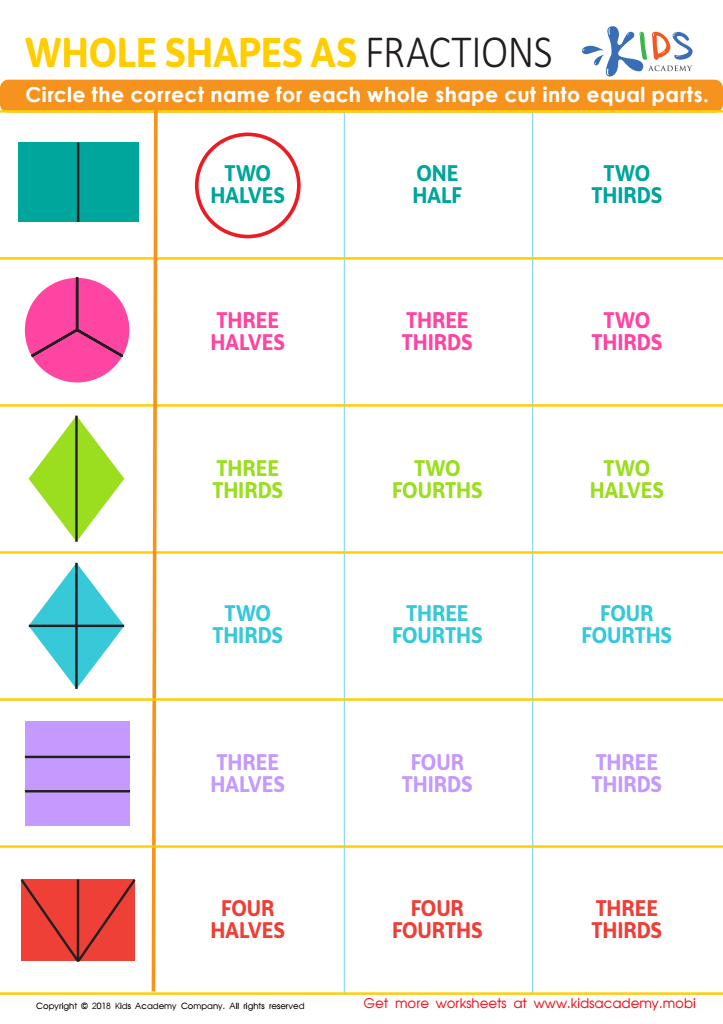
Whole Shapes as Fractions Worksheet
Introduce your child to fractions! After they can draw whole shapes, have them represent them as fractions using a simple worksheet. This will help improve their understanding of naming whole shapes cut into equal parts.
 Assign to My Students
Whole Shapes as Fractions Worksheet
Worksheet
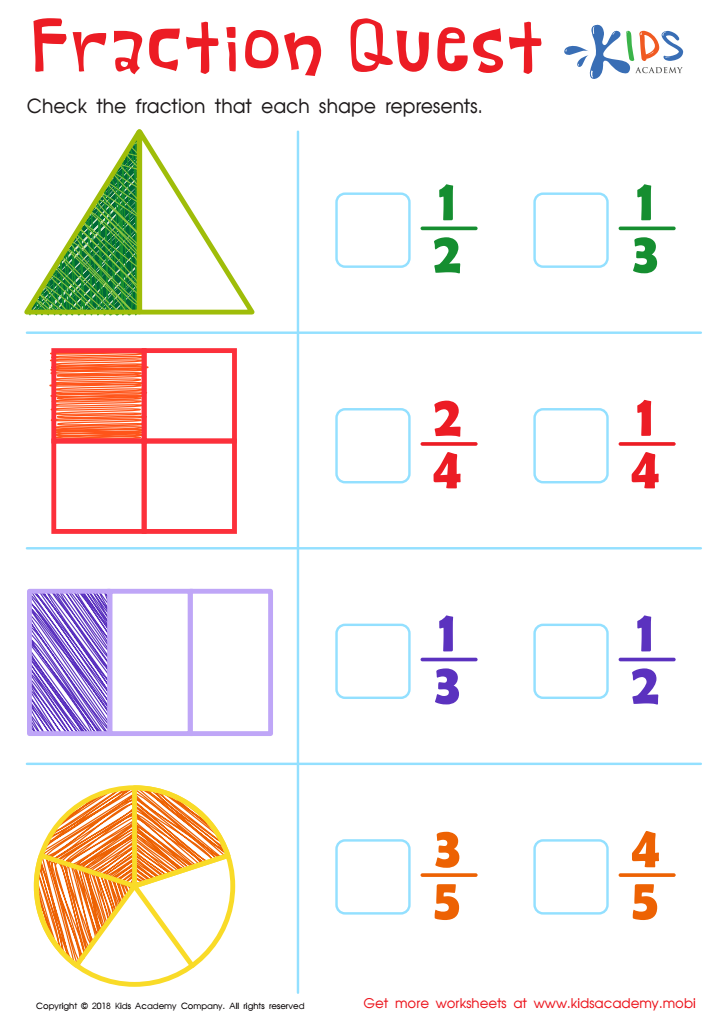
Fraction Quest Worksheet
This colorful and educative worksheet can help kids conquer their fractions struggles. Ask them to identify the four shapes, then the fractions they represent. They can then check the correct answers from the options given.
Fraction Quest Worksheet
Worksheet
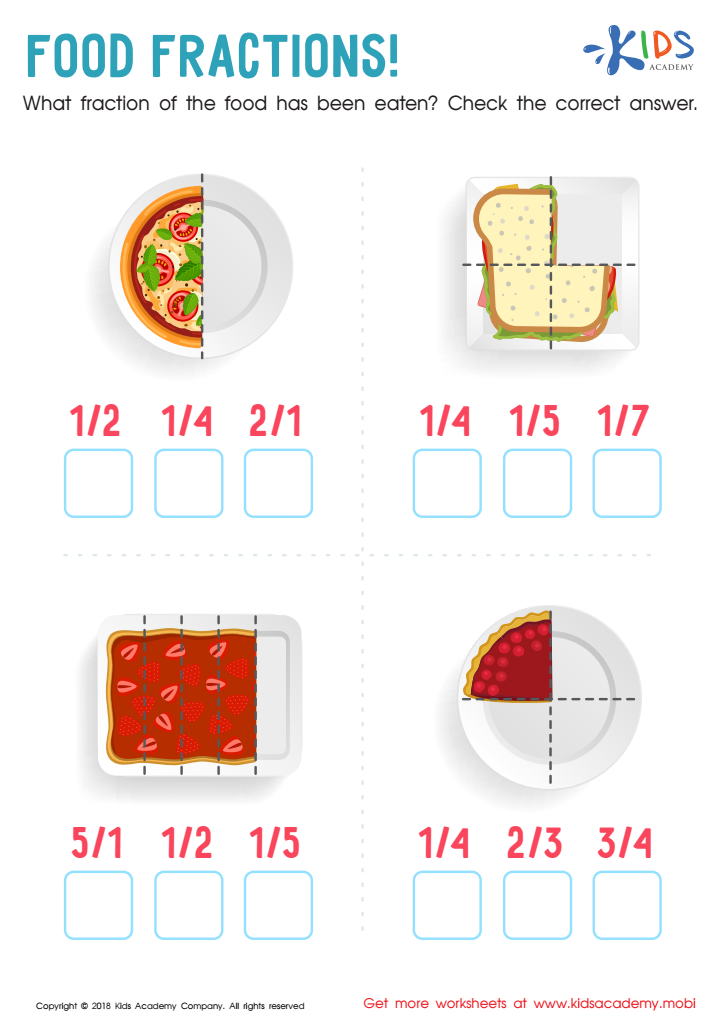
Food Fractions Worksheet
Test your child's understanding of fractions with this Food Fractions worksheet. Ask them to identify what fraction of the food in the four pictures has been eaten and select the correct answer from the options provided. See how well they understand your lessons!
Food Fractions Worksheet
Worksheet
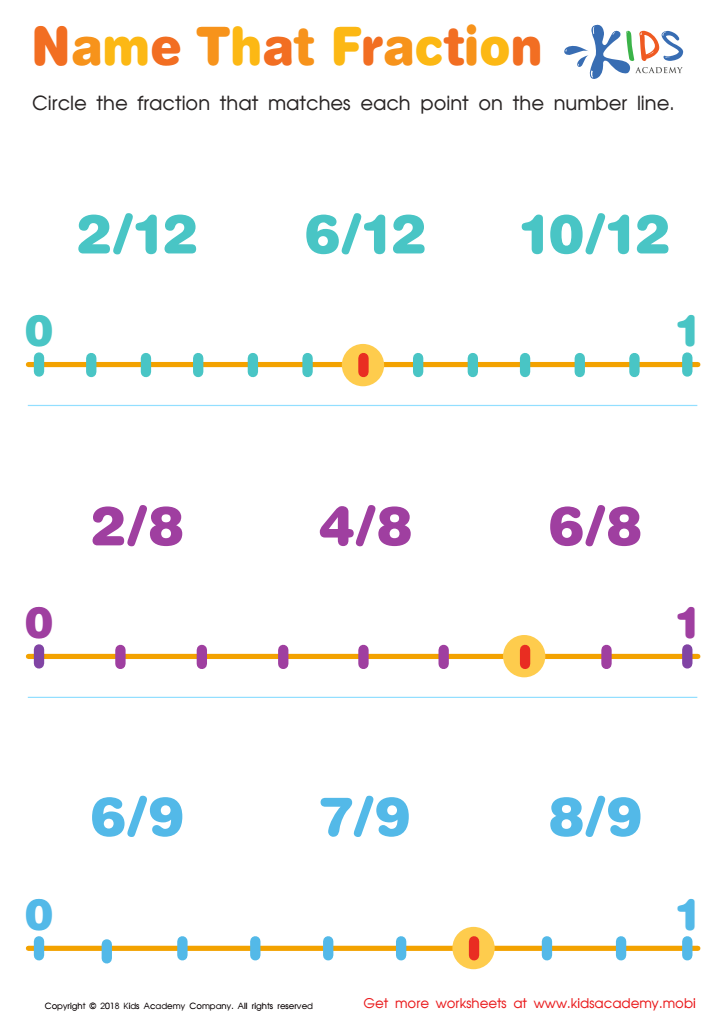
Name That Fraction Worksheet
Kids must learn to identify and name fractions to solve equations. Included in this worksheet are three equations that need solving. Have your child match each point on the number line with the correct fraction and circle it. This exercise helps build their fraction skills.
Name That Fraction Worksheet
Worksheet
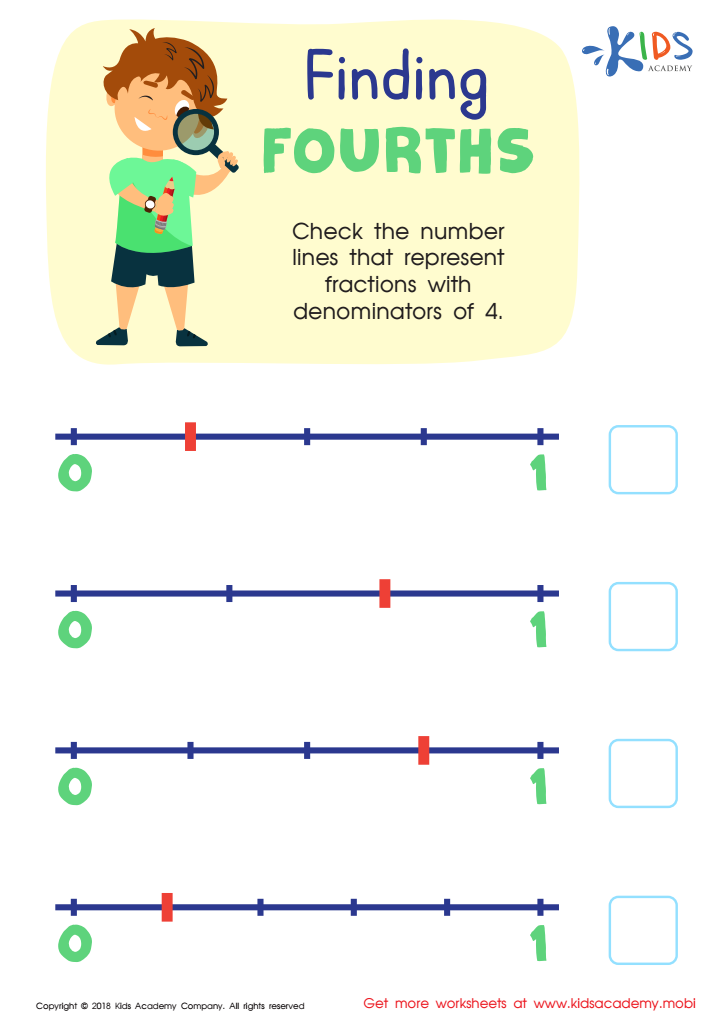
Finding Fourths Worksheet
Help your kids sharpen math skills with extra homework, stimulating exercises, and fun worksheets. This printout features four equations with fractions and number lines. Your child's task is to check the number lines with denominators of 4. Enough to get them thinking and learning.
Finding Fourths Worksheet
Worksheet
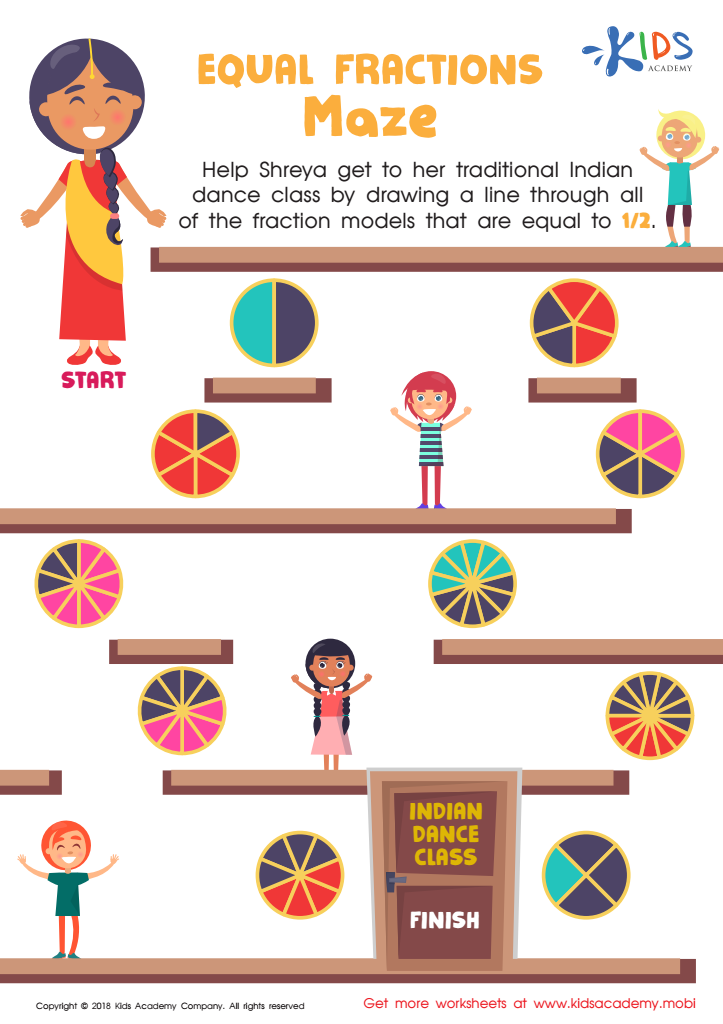
Equal Fractions Maze Worksheet
Help Shreya get to dance class! Draw a line through all fraction models that are equal to ½, starting at the entrance marked 'start'. Guide your kids through the maze paths and help Shreya -- she's an Indian girl who practices her cultures and traditions -- reach the door to her class.
Equal Fractions Maze Worksheet
Worksheet
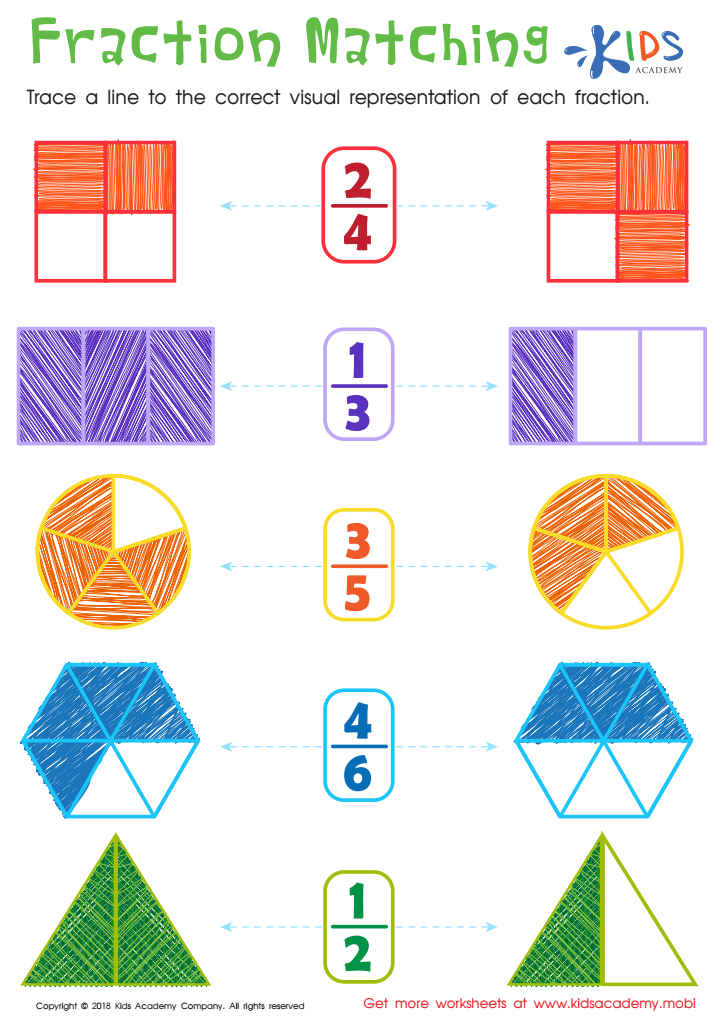
Fraction Matching Worksheet
Teach your kindergartners fractions with this colorful worksheet. Make sure they understand numerators and denominators, then have them trace a line to the correct visual representation of each equation. There are five fractions for them to work on. With the foundation of fractions, mathematics will be much easier for them.
Fraction Matching Worksheet
Worksheet
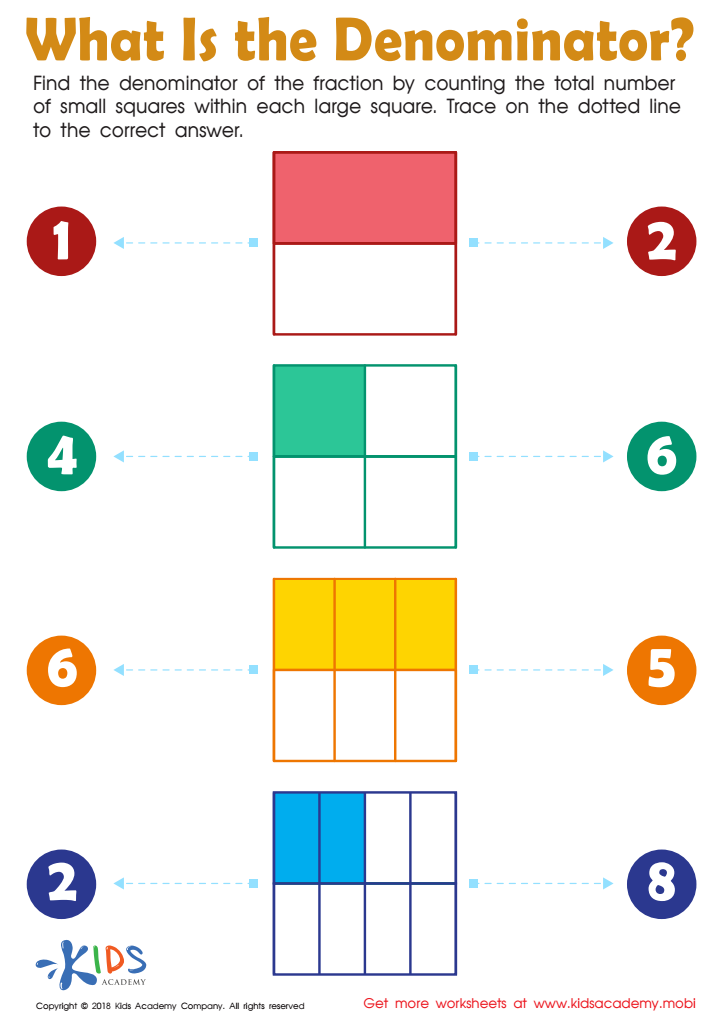
What Is the Denominator? Worksheet
If your kindergartener is struggling with fractions, don't worry. Use this worksheet to help them understand better. Ask them to count the total small squares in each large square to find the denominator, then trace on the dotted line to answer. This printable tracing sheet will help them learn fractions easier.
What Is the Denominator? Worksheet
Worksheet
Join Kids Academy for Free
Who is primarily going to use this learning content?








Understanding fractions at an early age is crucial for children aged 5-8 because it sets the foundation for future mathematical learning and everyday problem-solving skills. Fractions, though often seen as complex, are fundamentally tied to real-world situations such as sharing, measuring, and dividing objects, which young children encounter daily.
For parents and teachers, prioritizing fraction education helps children develop strong number sense and mathematical reasoning. Introducing fractions early enhances their ability to see relationships among numbers and understand concepts like halves, quarters, and thirds, which are practical in dividing snacks, playground time, and assigning tasks. Celebrating a child’s early grasp of fractions encourages persistent curiosity and reduces math anxiety later in school.
Moreover, a child's capacity to master fractions significantly predicts their success in more advanced math topics, such as algebra and geometry, which are crucial for many career paths. Incorporating hands-on activities with toys, food, and other relatable objects makes learning fractions engaging and meaningful. For instance, slicing fruits or cutting paper shapes in class can transform abstract, intimidating numbers into fun, graspable ideas.
In conclusion, by focusing on fractions in the early grades, teachers and parents empower children with critical thinking skills, preparing them for both academic achievements and practical life challenges.








