Spatial reasoning Normal Geometry Worksheets for Ages 5-8
3 filtered results
-
From - To
Explore our engaging Spatial Reasoning Normal Geometry Worksheets designed for children ages 5-8! These worksheets focus on enhancing young learners' ability to visualize and manipulate shapes, fostering foundational skills in geometry. Ideal for both classroom and home use, they feature fun activities that promote critical thinking and problem-solving. Each worksheet is designed to be age-appropriate, ensuring that children can easily grasp essential concepts like shape recognition, spatial awareness, and the relationship between objects. Help your child gain confidence and improve their mathematical abilities while they enjoy learning through these interactive worksheets. Unlock the world of geometry today!
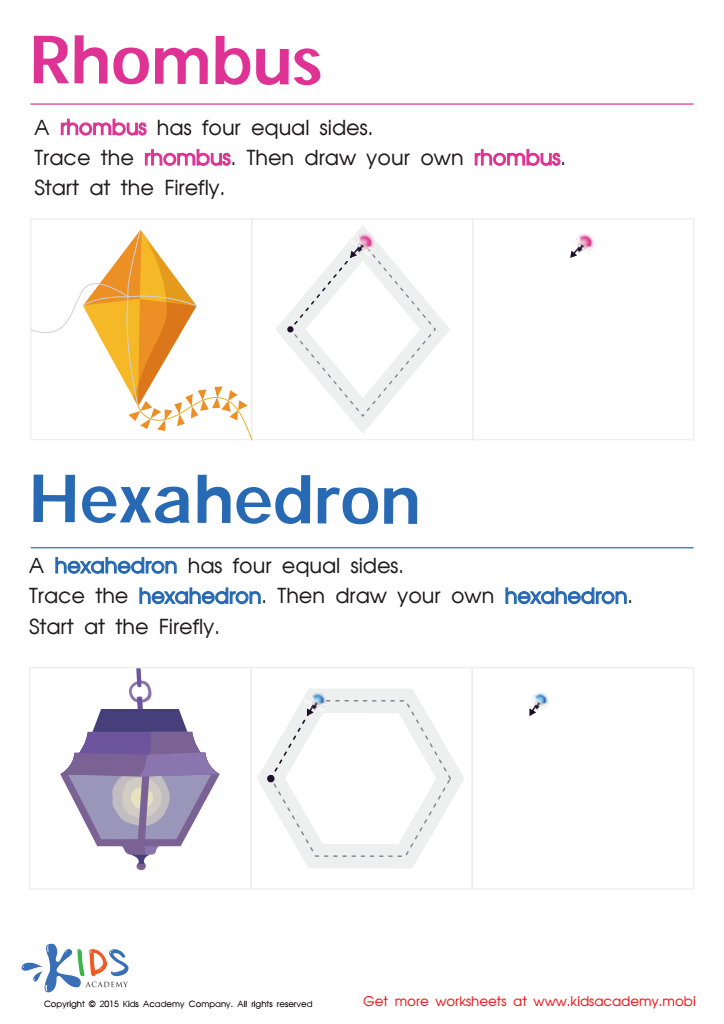
Draw a Rhombus And a Hexahedron Printable
 Assign to My Students











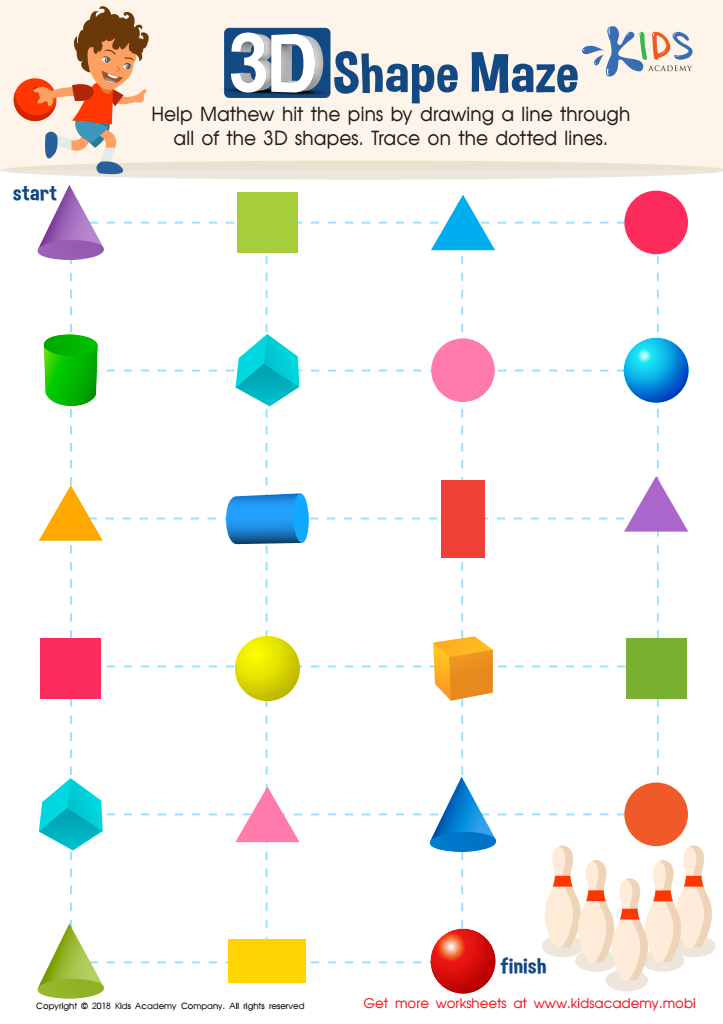
Shapes Maze Geometry Worksheet
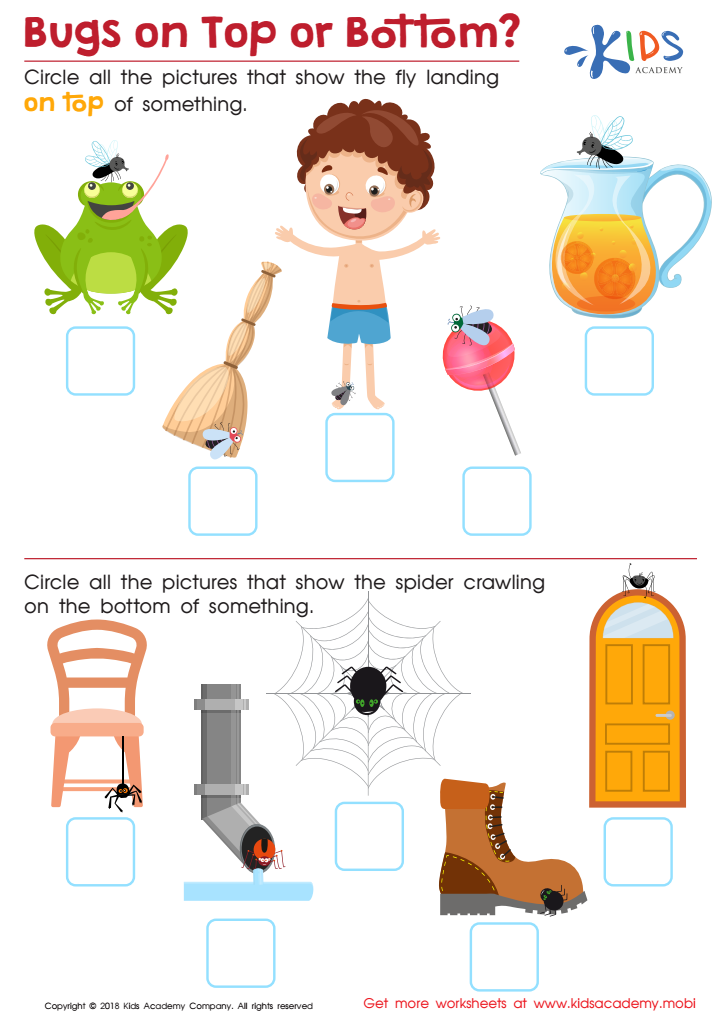
Bugs on Top or Bottom? Worksheet








Spatial reasoning and understanding of basic geometry are essential skills for children aged 5-8, forming the foundation for later mathematical learning and critical thinking. At this age, children are naturally curious, exploring shapes, sizes, and spatial relationships, making it an ideal time for guided exploration. Developing spatial reasoning helps children visualize and manipulate objects mentally, which is vital not only in math but also in daily life activities, such as navigating environments, organizing information, and creative problem-solving.
Teachers and parents should prioritize these skills because they directly correlate with academic success across subjects. A strong understanding of geometry fosters cognitive development by enhancing logical thinking and providing a solid groundwork for algebra and advanced mathematics. Moreover, spatial reasoning is linked to success in science, technology, engineering, and mathematics (STEM) fields, which are increasingly crucial in today's economy.
Furthermore, engaging young learners with spatial reasoning and geometry messages through play and practical activities can make learning enjoyable, fostering a positive attitude towards mathematics. This early intervention can cultivate confidence and competence in future learners, driving their intellectual growth and development in the years to come. Empowering children in these areas lays the groundwork for lifelong learning and problem-solving abilities.








