Visual Learning Normal Geometry Worksheets for Ages 5-8
3 filtered results
-
From - To
Discover our engaging Visual Learning Geometry Worksheets designed specifically for children ages 5-8! These meticulously crafted worksheets help young learners grasp essential geometric concepts visually, promoting better retention and understanding. With a variety of shapes and interactive exercises, children can explore and identify different geometric figures while enhancing their critical thinking skills. Our resources cater to diverse learning styles, ensuring an enjoyable and effective educational experience. Encourage your child’s love for math and geometry through playful activities that make learning a fun adventure! Browse our collection today and empower your child with the foundational skills needed for future success in mathematics.
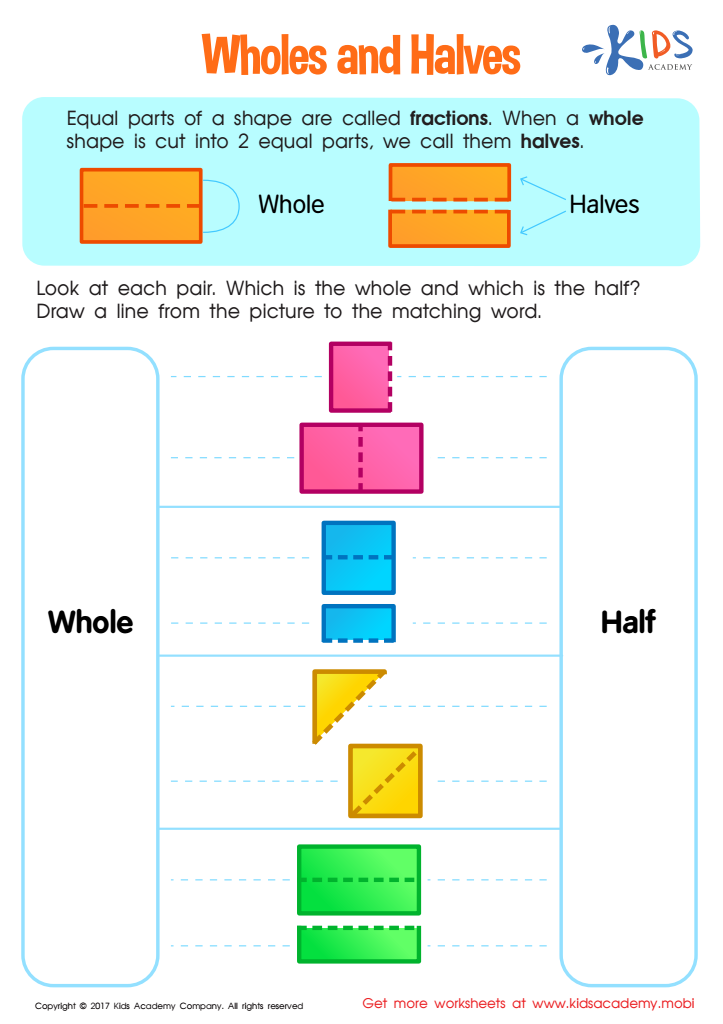
Wholes and Halves Worksheet
 Assign to My Students











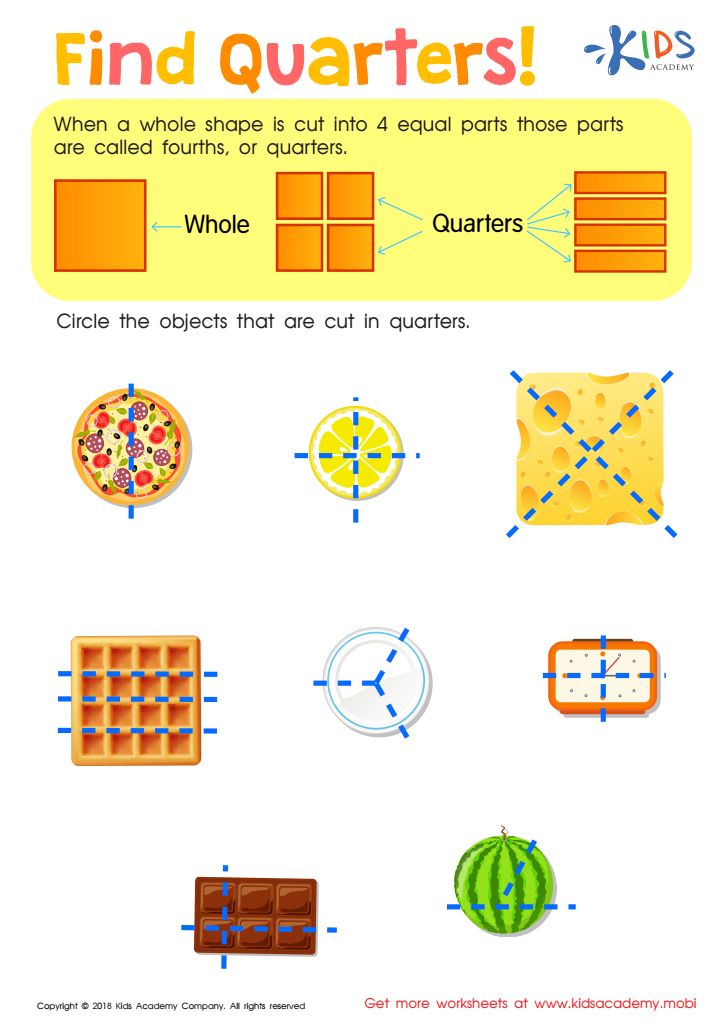
Find Quarters Worksheet
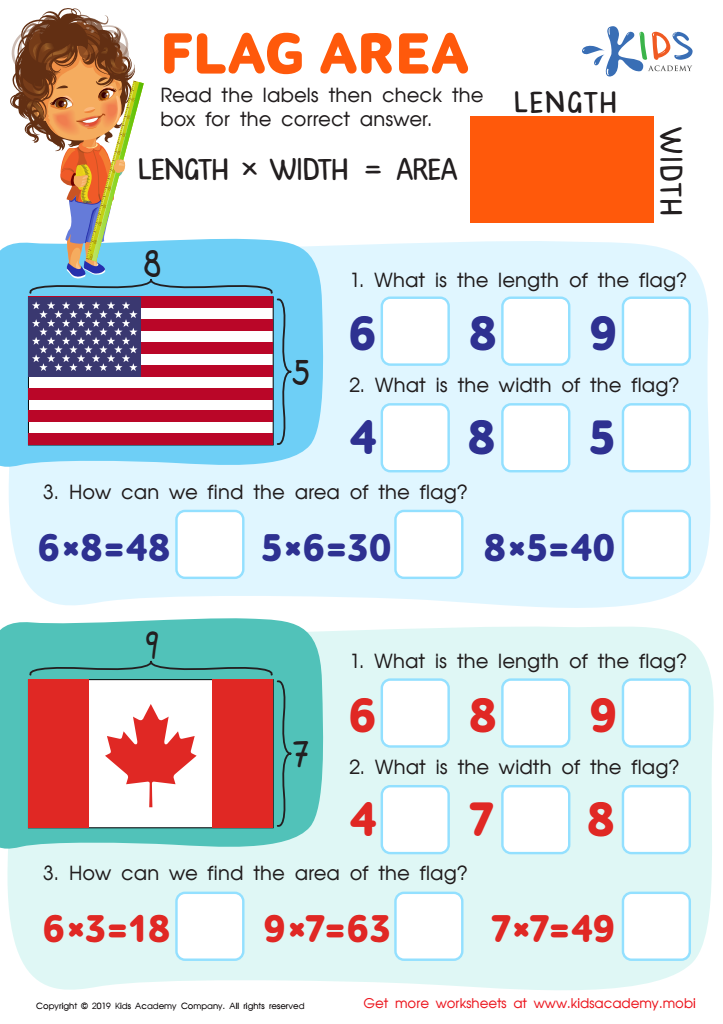
Flag Area Worksheet








Parents and teachers should care about Visual Learning in Normal Geometry for ages 5-8 because this approach significantly enhances children’s understanding of mathematical concepts. At this developmental stage, children are naturally curious and eager to learn through exploration and visualization. Visual learning methods, such as using shapes, patterns, and spatial reasoning, help them grasp essential geometric concepts in a tangible way.
Understanding geometry is foundational for several real-world applications, such as art, architecture, and science, and fosters critical thinking skills that are important for academic success. By introducing children to concepts like symmetry, angles, and three-dimensional shapes through visual aids and manipulatives, educators can cultivate their problem-solving abilities.
Moreover, visual learning caters to diverse learning styles, ensuring that all children, whether visual, auditory, or kinesthetic learners, can engage meaningfully. When children visualize geometric concepts, they build a stronger cognitive framework that aids their future learning experiences in mathematics and beyond.
Investing time in visual geometry education can spark a lifelong appreciation for math, promoting not only academic achievement but also the development of logical reasoning skills vital for everyday life. In summary, prioritizing visual learning in geometry provides children with the tools they need to succeed both in school and as informed individuals.








