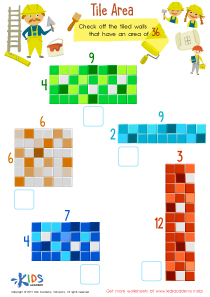
Number comparison Normal Numbers Worksheets for Ages 5-8
5 filtered results
-
From - To
Enhance your child's math skills with our engaging Number Comparison Normal Numbers Worksheets designed for ages 5-8. These interactive worksheets provide young learners with fun activities that promote understanding of numerical relationships and comparative concepts. Through colorful visuals and age-appropriate exercises, children will practice identifying greater than, less than, and equal relationships among numbers. Perfect for homeschooling or classroom use, these resources support early number sense and boost confidence in mathematical reasoning. Explore our collection and help your child master number comparison while fostering a love for learning in a playful environment! Get started today and watch their skills flourish!
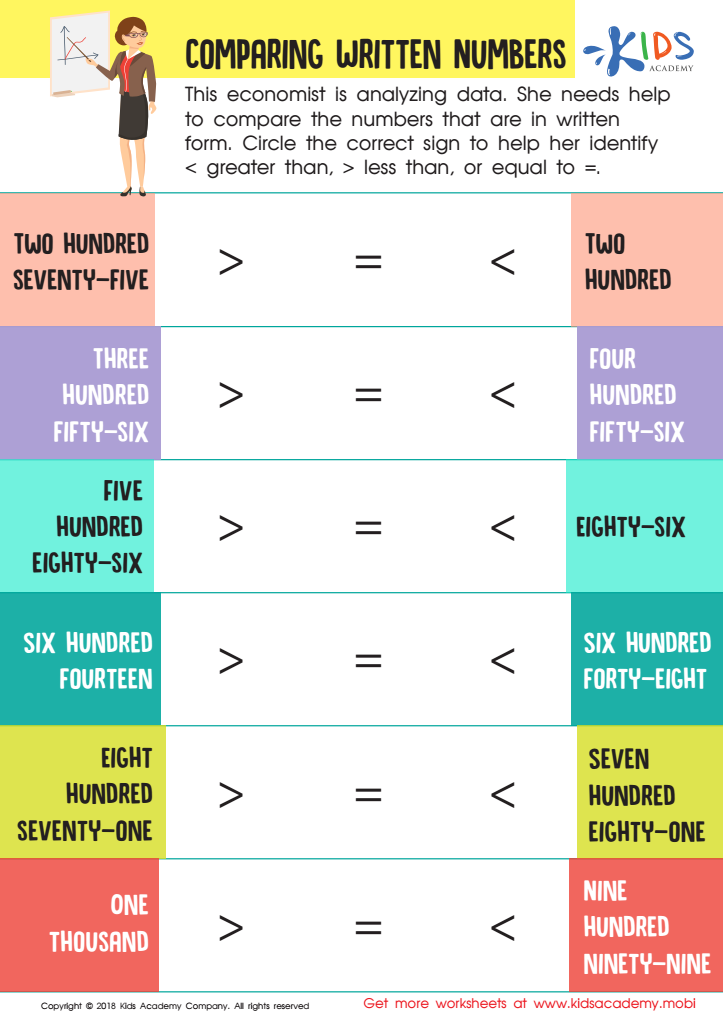
Comparing Written Numbers Worksheet
 Assign to My Students
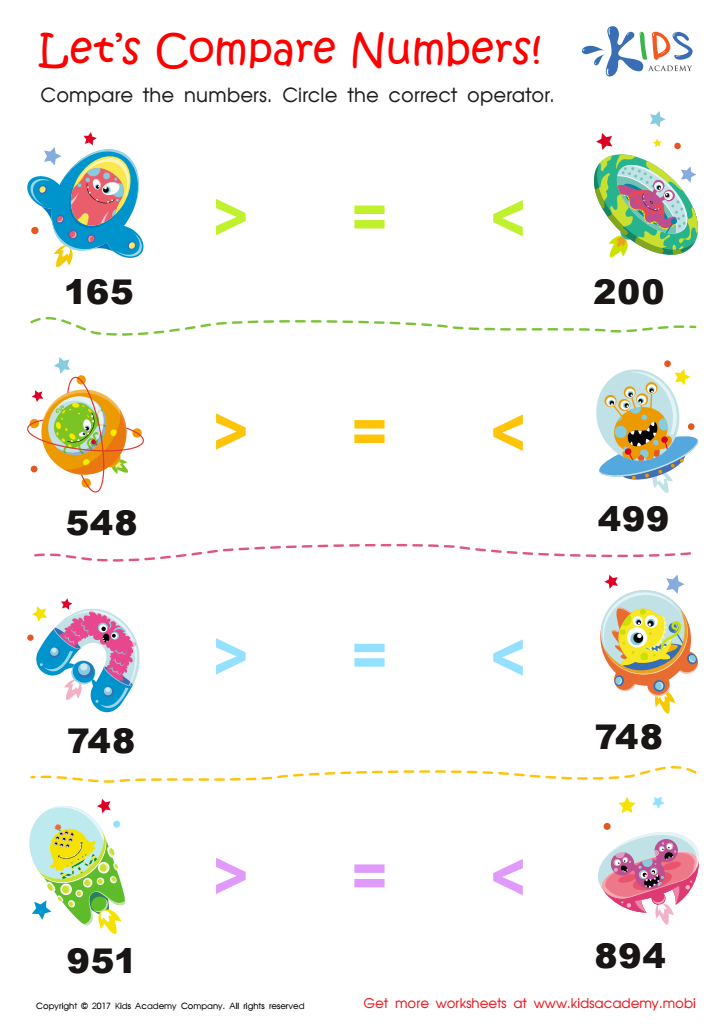
Comparing Numbers Worksheet for 2nd Grade
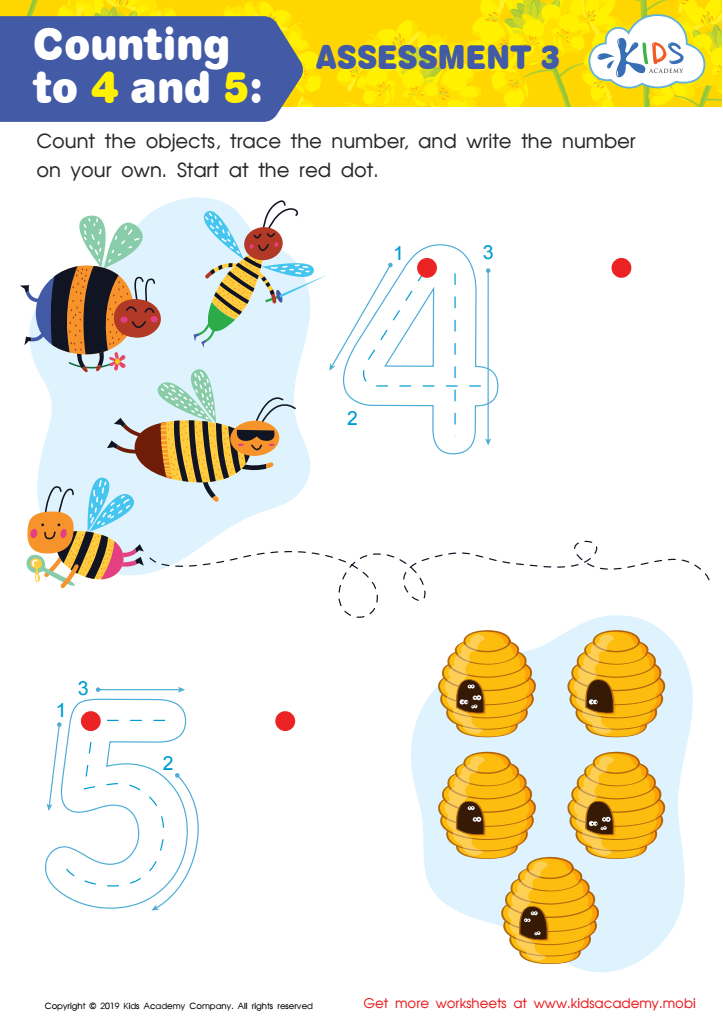
Counting to 4 and 5: Assessment 3 Worksheet
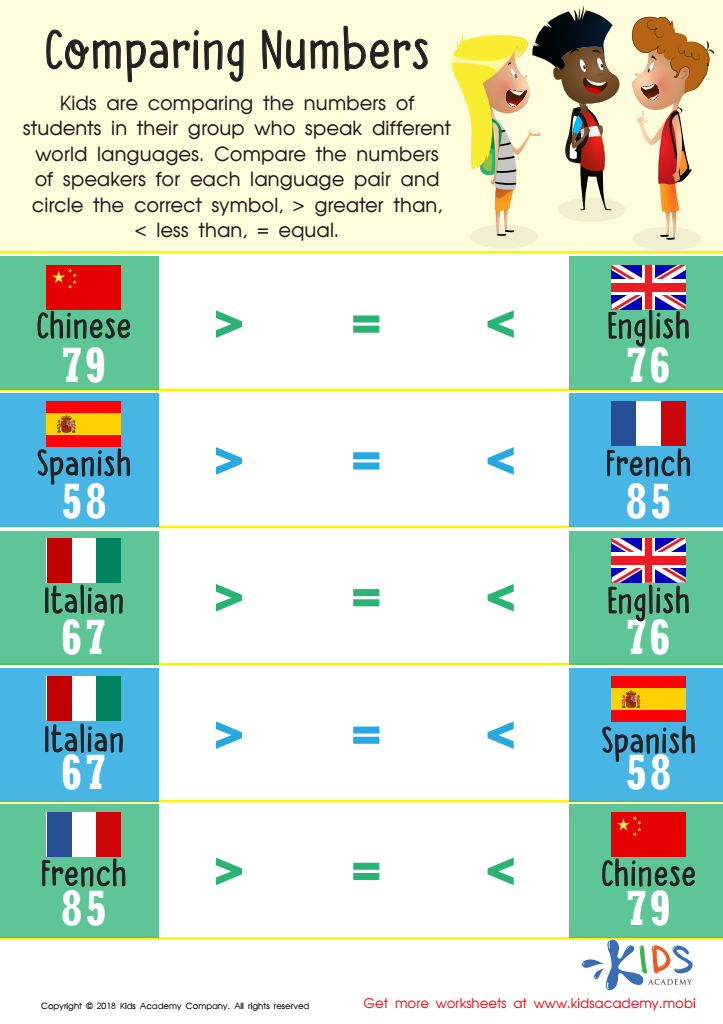
Comparing Numbers Worksheet for 1st Grade
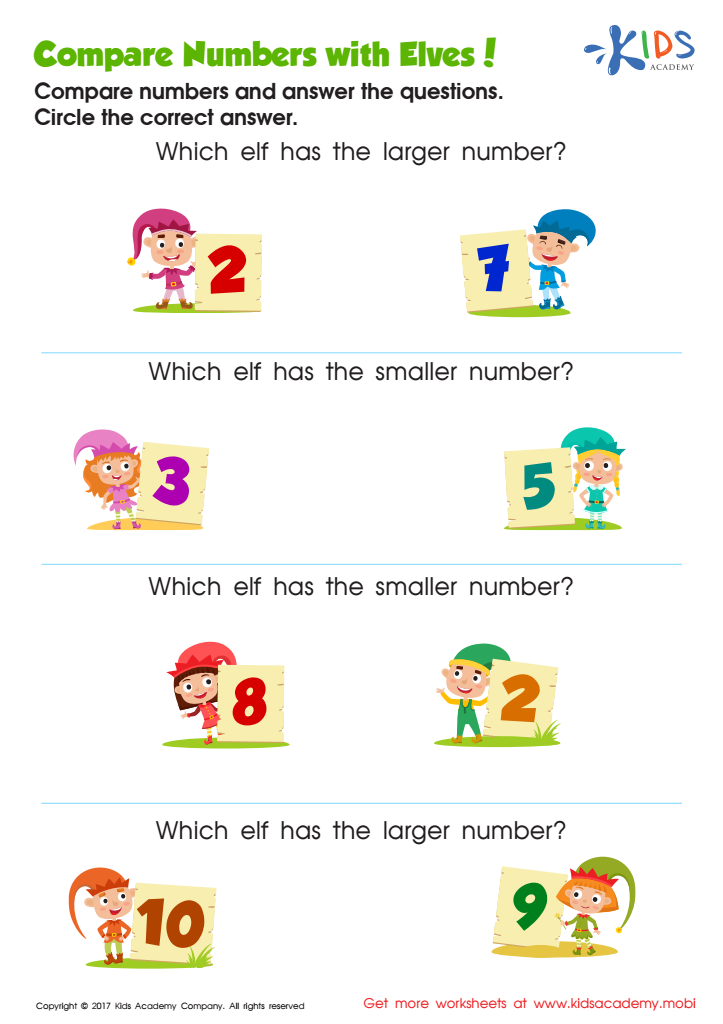
Comparing Numbers Worksheet for Kindergarten








Number comparison and understanding normal numbers are crucial concepts for children aged 5-8, as they lay the foundation for a lifetime of mathematical skills. At this age, children begin to develop their ability to compare numbers, which celebrates basic principles such as greater than, less than, and equal to. Mastering these skills supports critical thinking and problem-solving abilities essential in everyday tasks and future academic pursuits.
Parents and teachers should emphasize number comparison since it directly relates to more advanced math concepts, such as addition, subtraction, and even fractions. When children can accurately compare numbers, they gain confidence in their mathematical abilities, fostering a positive attitude toward learning. Engaging with number comparisons can also motivate children to explore math in a fun and interactive way, using games and activities that sharpen their skills.
Furthermore, understanding number comparisons aligns with educational standards and promotes cognitive development. It encourages analytical thinking as children learn to categorize and organize information, foundational skills useful in all subjects, not just math. Parental involvement and teacher support in these early learning stages can significantly impact a child's educational journey and attitude toward math, fostering lifelong enthusiasm for learning.