Improving counting skills Normal Math Worksheets for Ages 5-8
4 filtered results
-
From - To
Enhance your child’s counting abilities with our expertly designed Normal Math Worksheets for ages 5-8! These engaging activities focus on developing crucial counting skills through fun and interactive exercises. Tailored to meet educational standards, each worksheet provides age-appropriate math challenges that help young learners build a strong numerical foundation. Whether it's counting objects, number sequences, or understanding place value, our resources make learning enjoyable and effective. Strengthen your child’s confidence in math and watch their skills grow with every completed worksheet! Perfect for home practice or classroom use, these worksheets are a valuable tool for any growing mathematician.
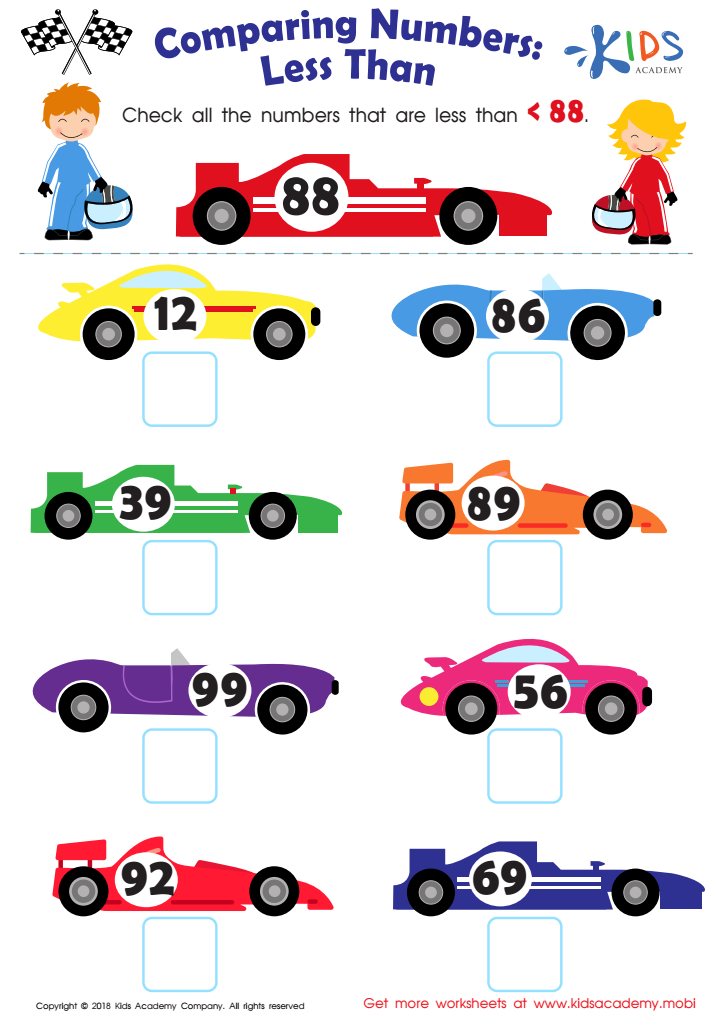
Less Than Worksheet
 Assign to My Students
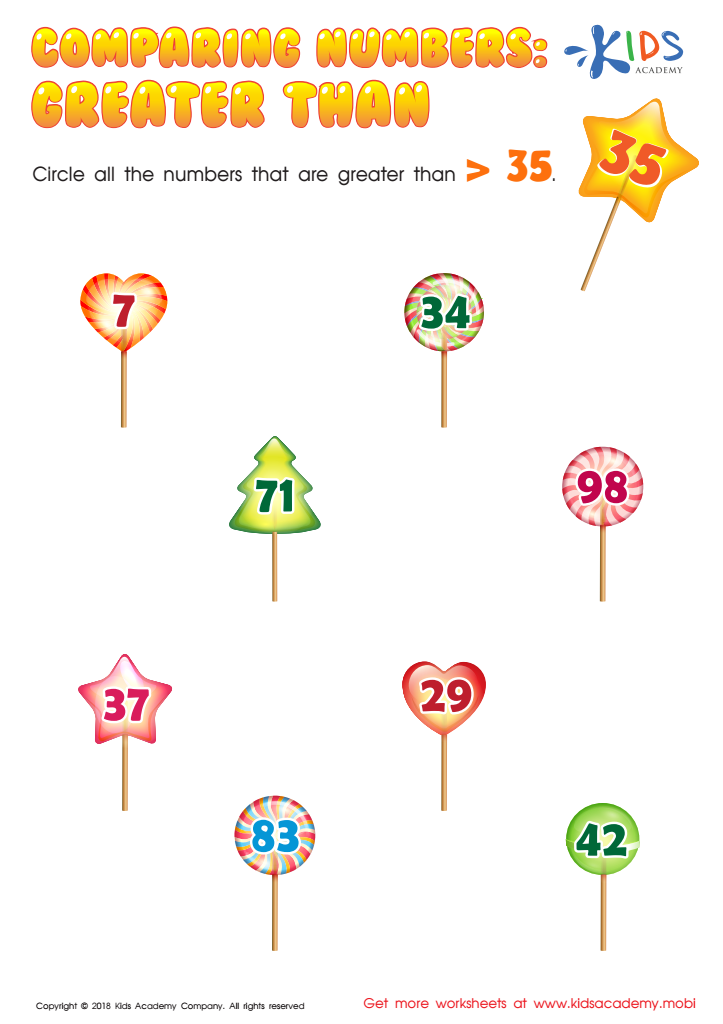
Greater Than Worksheet
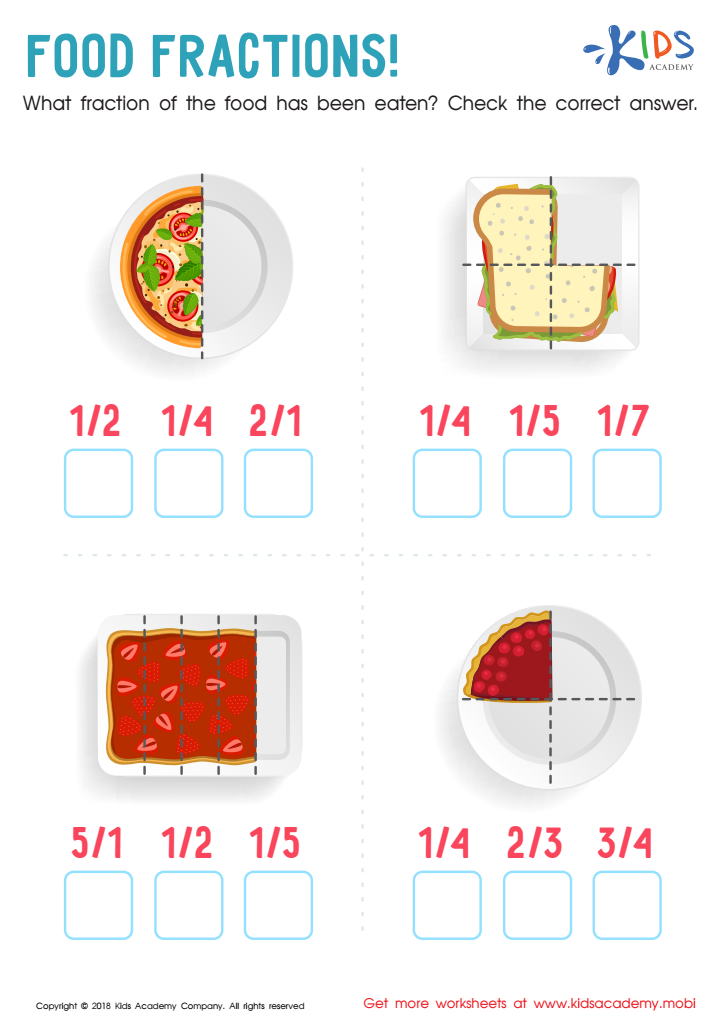
Food Fractions Worksheet
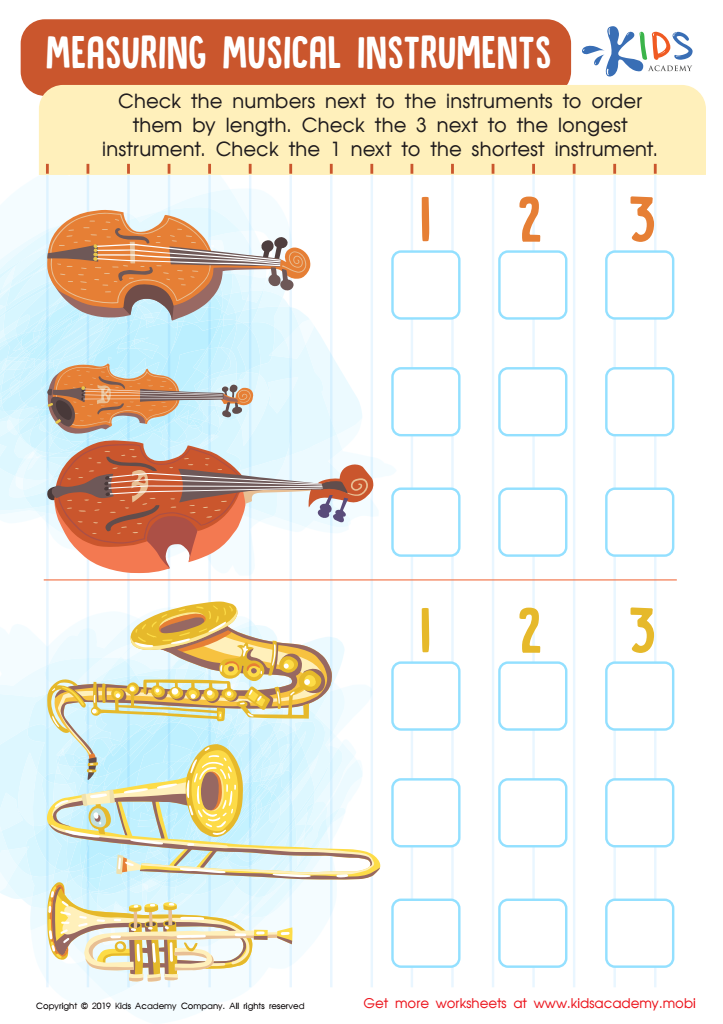
Measuring Musical Instruments Worksheet







Improving counting skills in children aged 5-8 is foundational for their overall mathematical and cognitive development. At this formative stage, counting is not just about reciting numbers; it’s about understanding numerical relationships, order, and the basics of addition and subtraction. Mastering these skills early on sets the groundwork for more complex mathematical concepts later, such as multiplication, division, and fractions.
Counting skills also enhance a child's problem-solving abilities. When children confidently count and understand quantities, they are better equipped to tackle everyday tasks and challenges, such as sharing snacks equally among friends or measuring ingredients for a recipe. This builds their confidence and independence.
Furthermore, strong counting skills are closely linked to improved memory and attention span. Remembering sequences of numbers and counting objects require children to focus and retain information, strengthening their cognitive abilities in other areas.
For teachers and parents, investing time and effort into developing these skills means nurturing a child's academic growth and life skills. Early success in math can boost a child's confidence and enjoyment in learning, fostering a positive attitude toward education. It also ensures they are well-prepared for future academic challenges, thereby promoting their overall intellectual development and lifelong learning attitude.








