Understanding addition Normal Math Worksheets for Ages 5-8
13 filtered results
-
From - To
Unlock young learners' potential with our engaging "Understanding Addition" math worksheets, designed for children ages 5-8. These carefully crafted activities help develop essential addition skills through fun, hands-on practice. From simple sums to slightly more complex problems, kids gain confidence while enhancing their mathematical foundation. Our colorful, printable worksheets make learning enjoyable, encouraging children to explore addition in an interactive and educational way. Perfect for parents and teachers, these resources support early math proficiency and prepare kids for future success. Join Kids Academy in making math exciting and accessible for your child’s developmental journey.
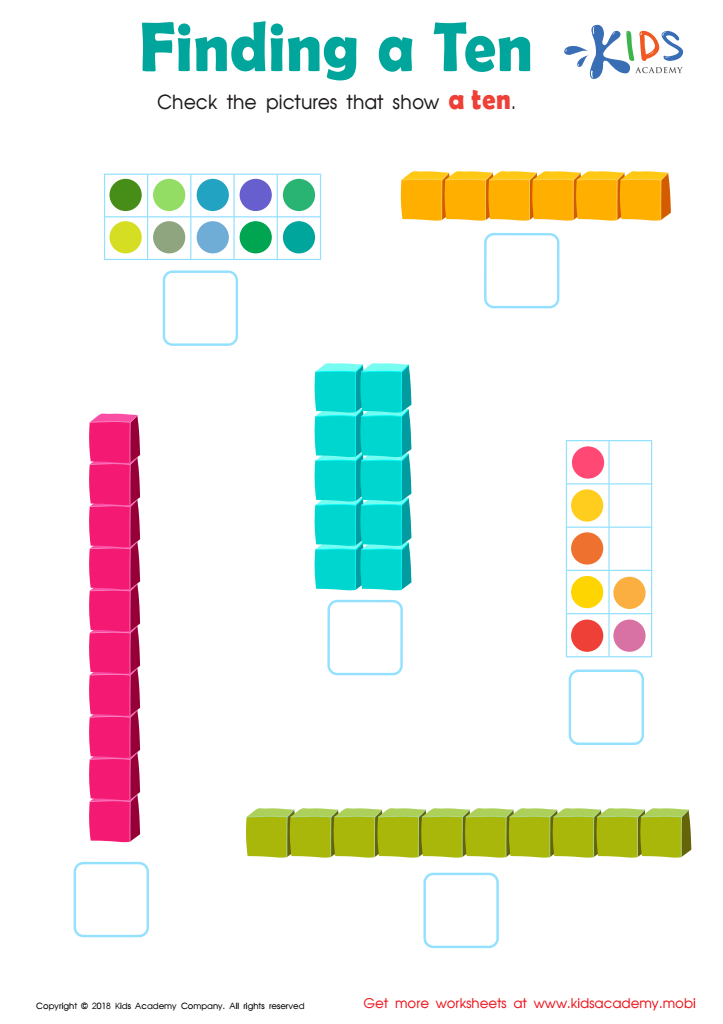
Finding a Ten Worksheet
 Assign to My Students
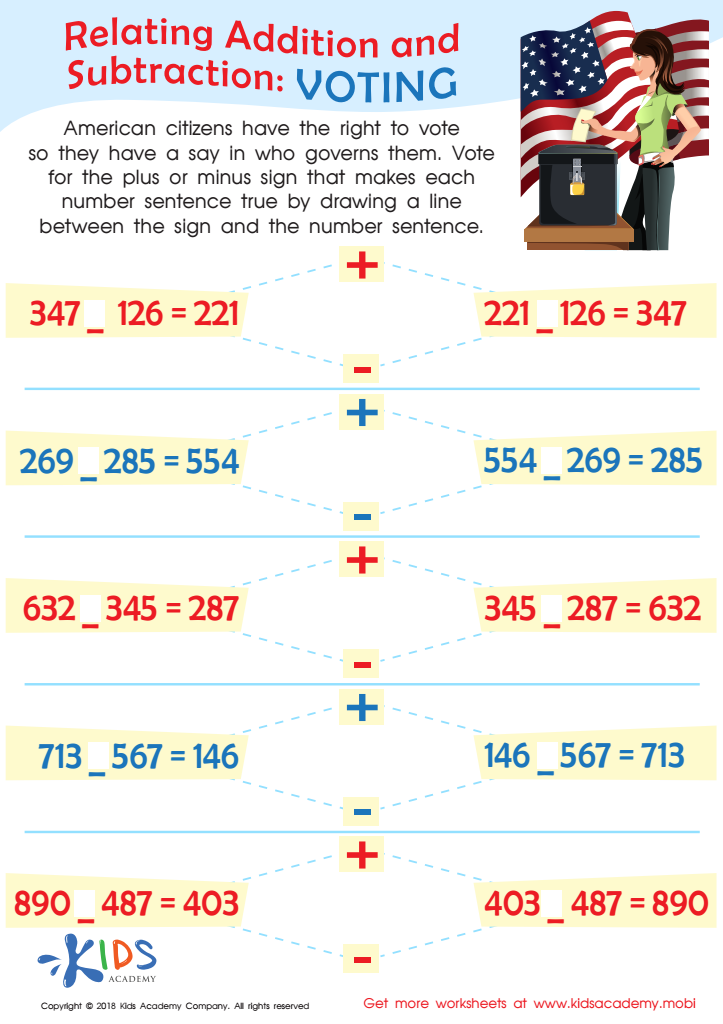
Voting Worksheet
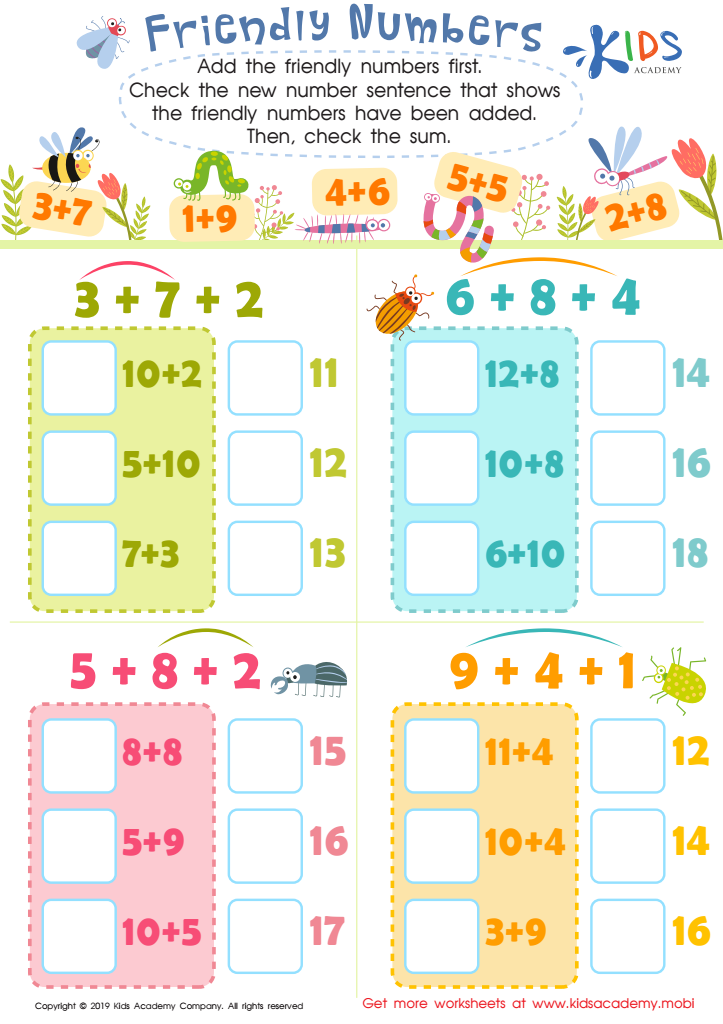
Friendly Numbers Worksheet
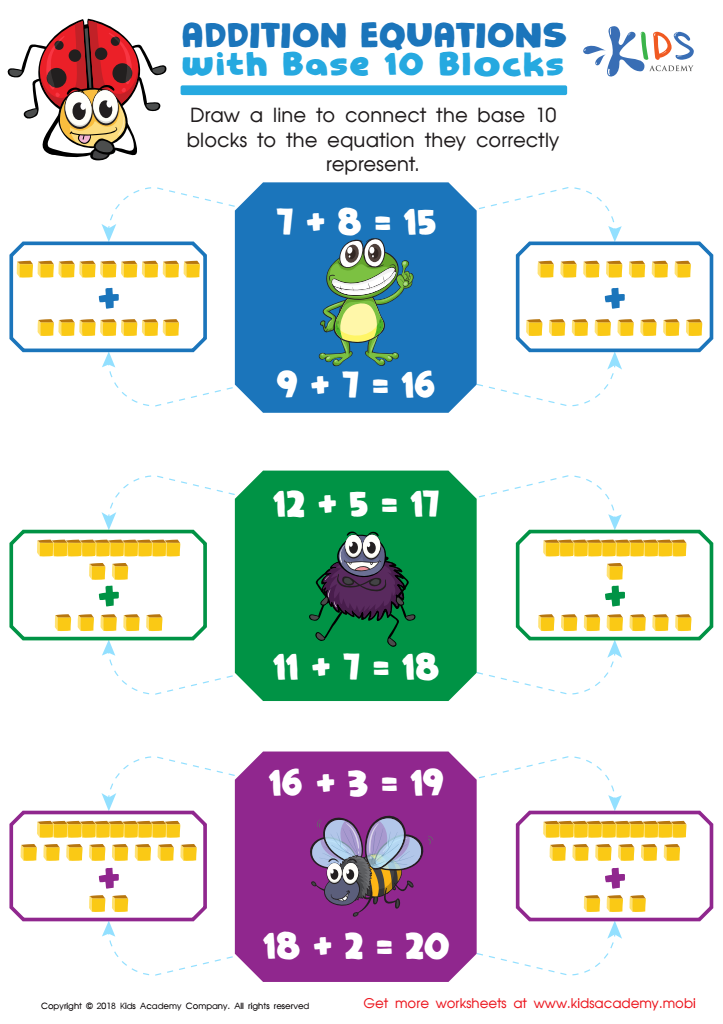
Addition Equations With Base 10 Blocks Worksheet
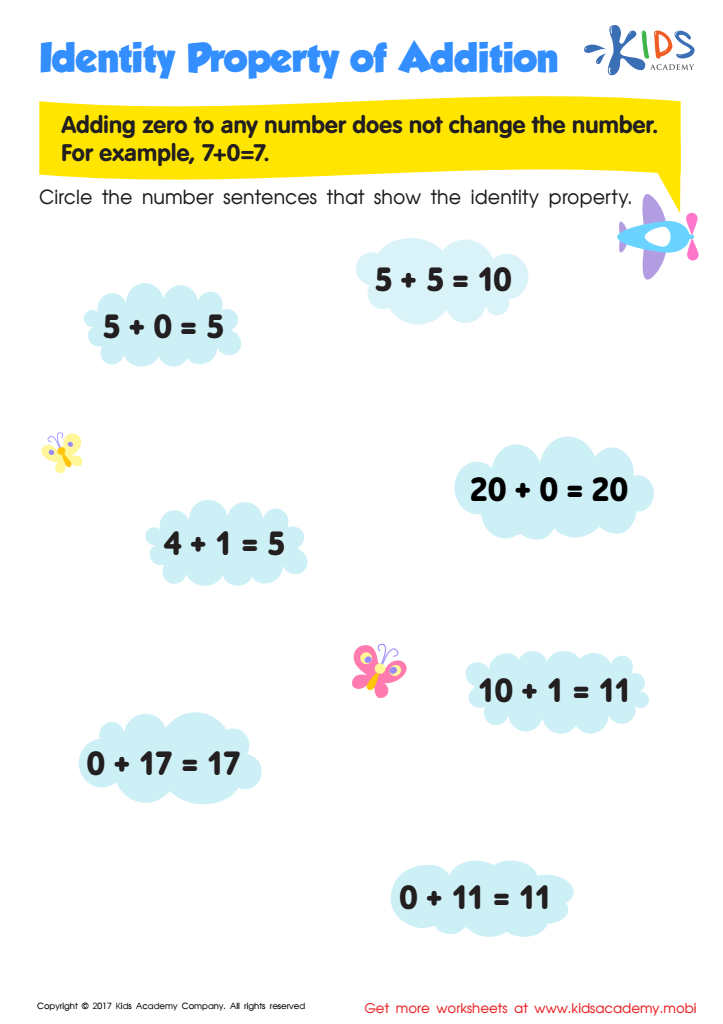
Identity Property of Addition Worksheet
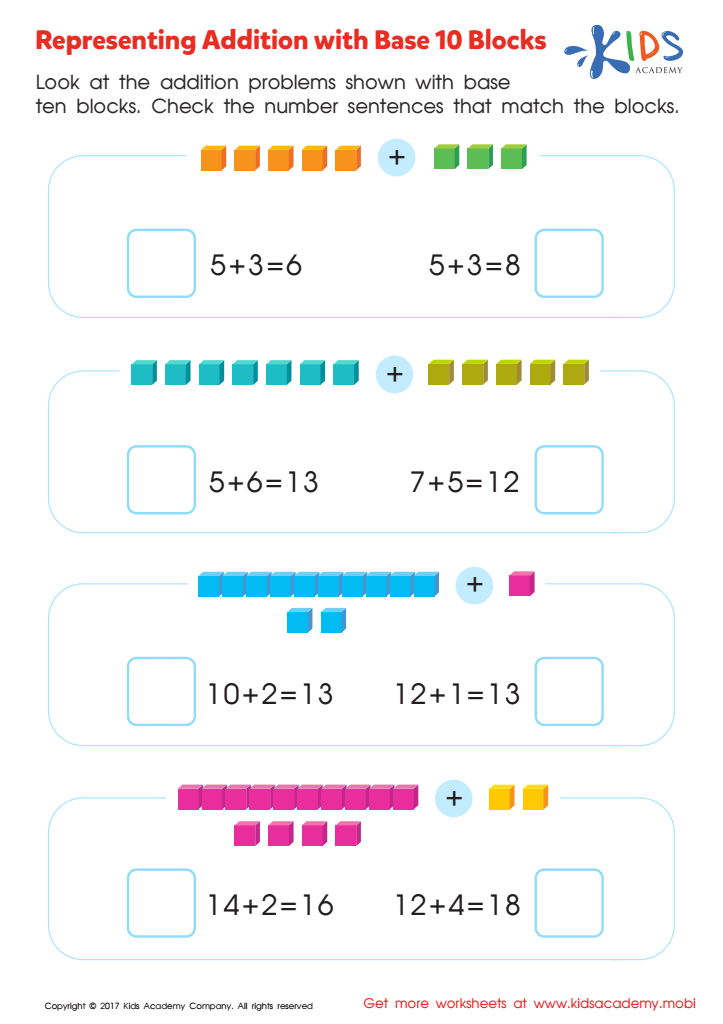
Representing Addition with Base 10 Blocks Worksheet
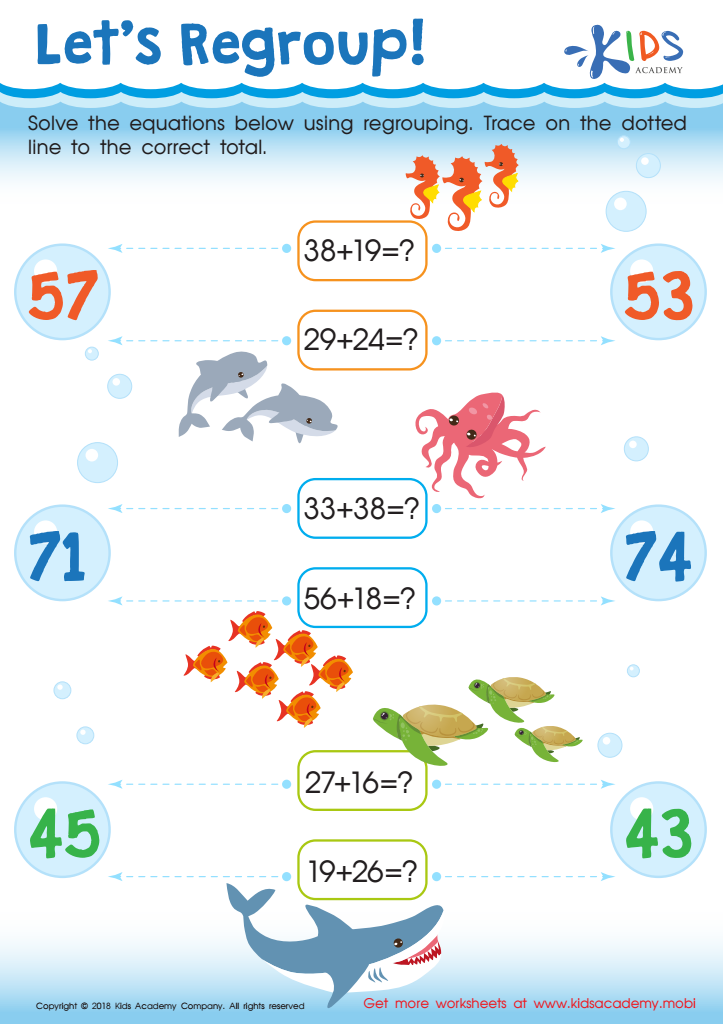
Let's Regroup! Worksheet
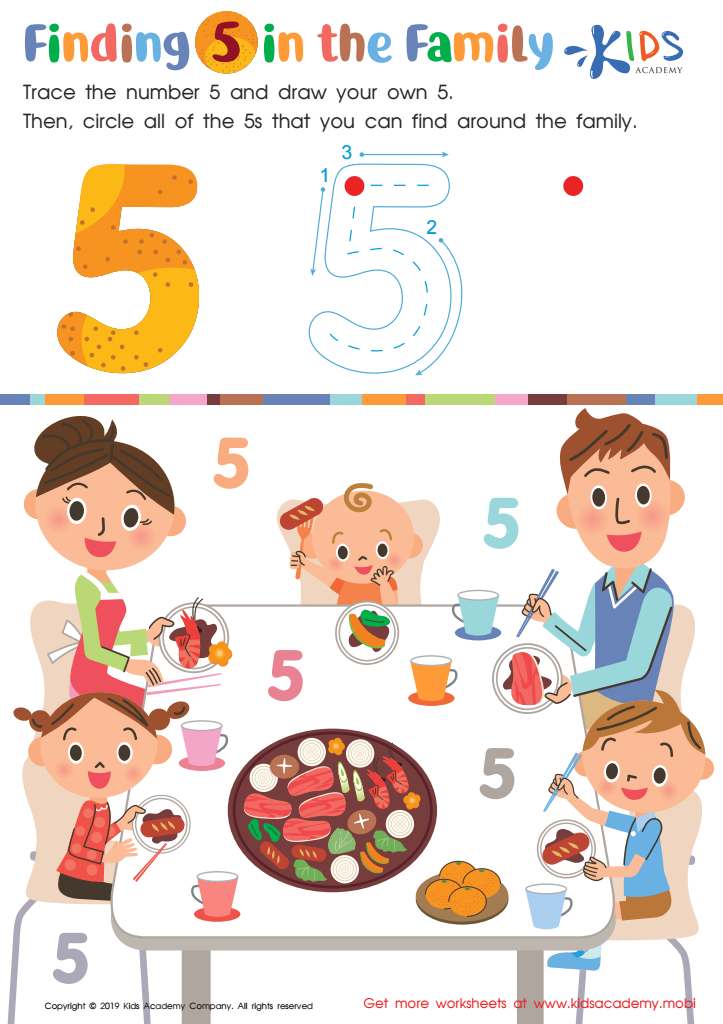
Finding 5 in the Family Worksheet
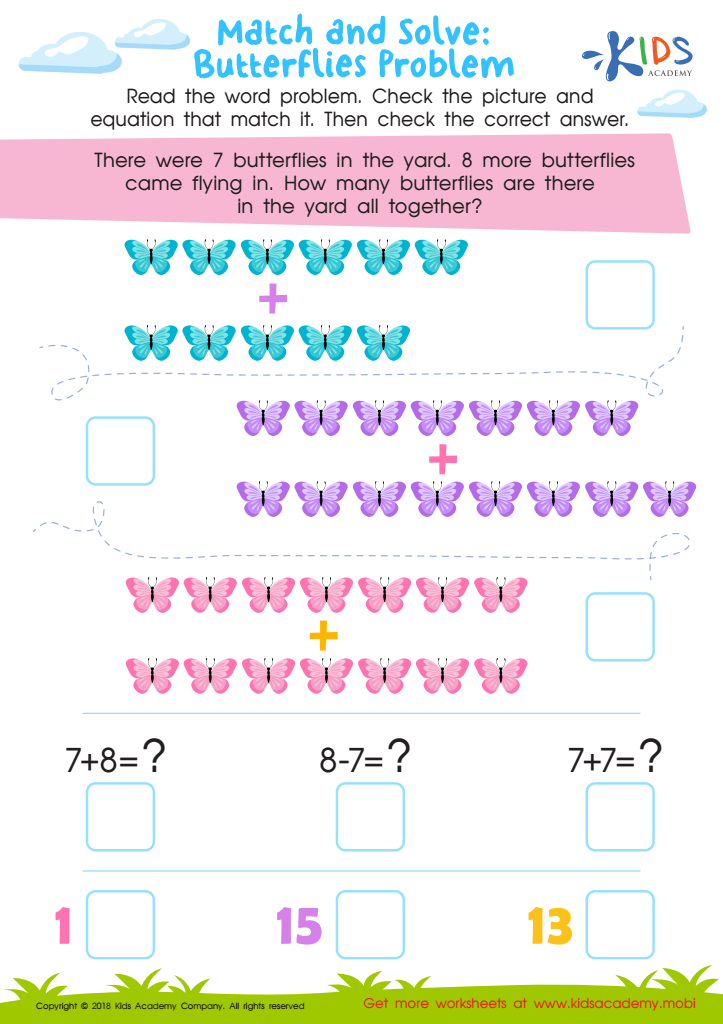
Match and Solve: Butterfly Problem Worksheet
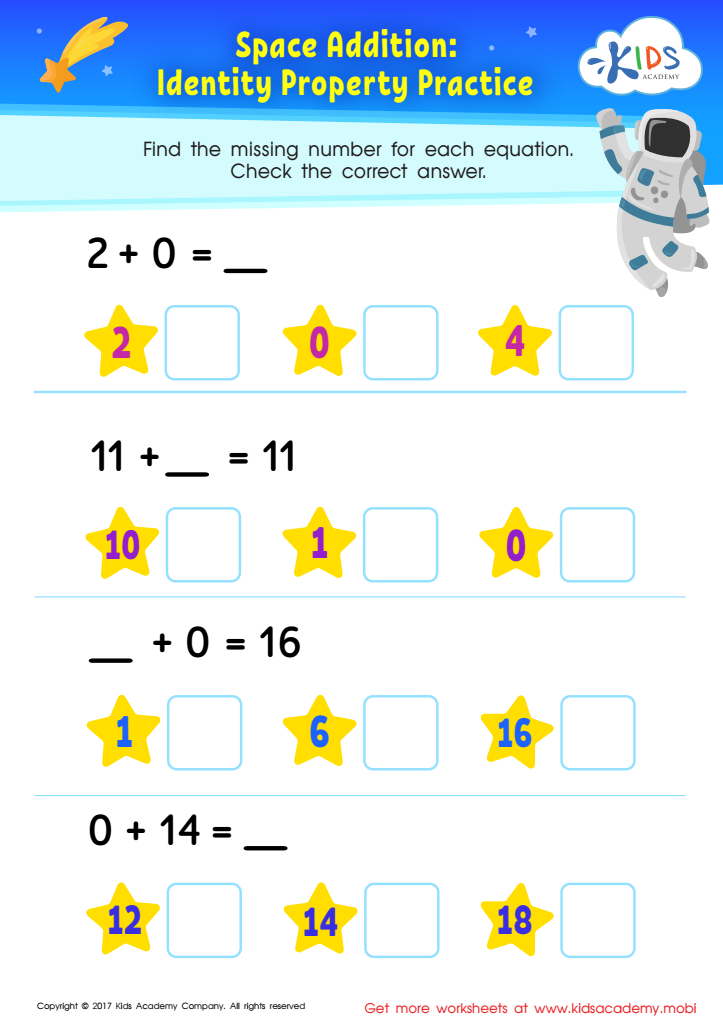
Space Addition: Identity Property Practice Worksheet
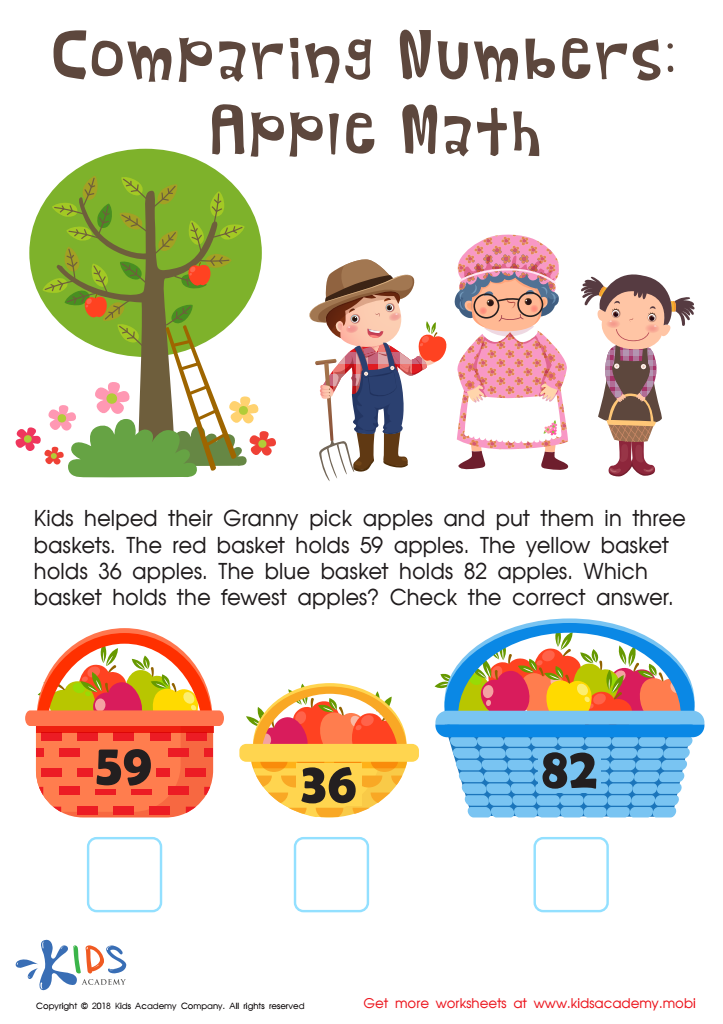
Apple Math Worksheet
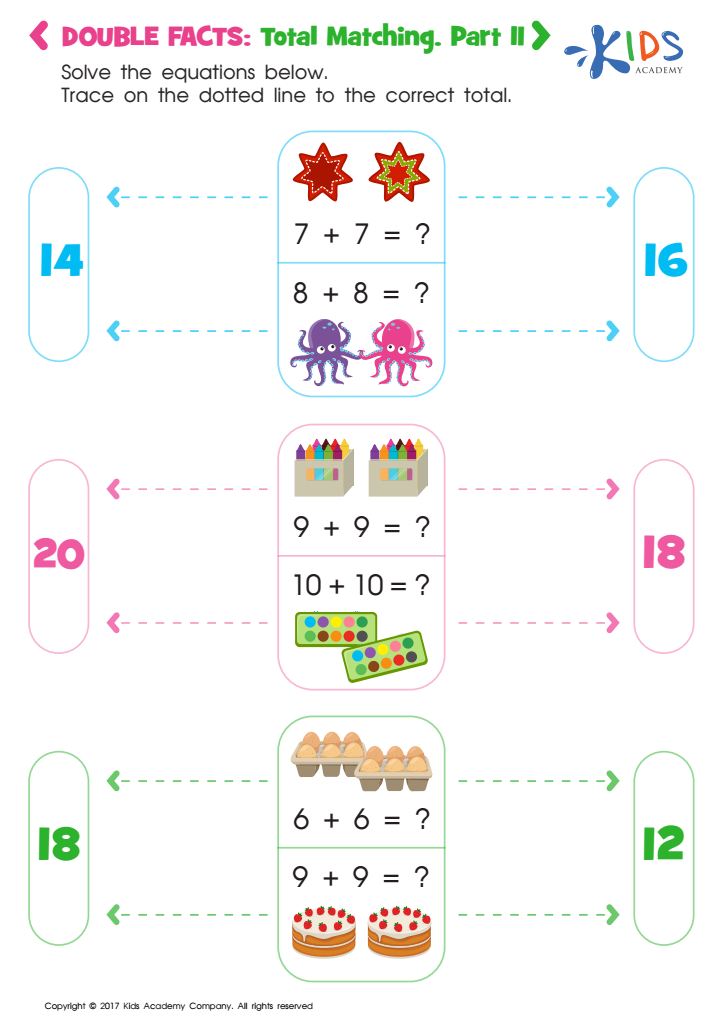
Double Facts: Total Matching 2 Worksheet
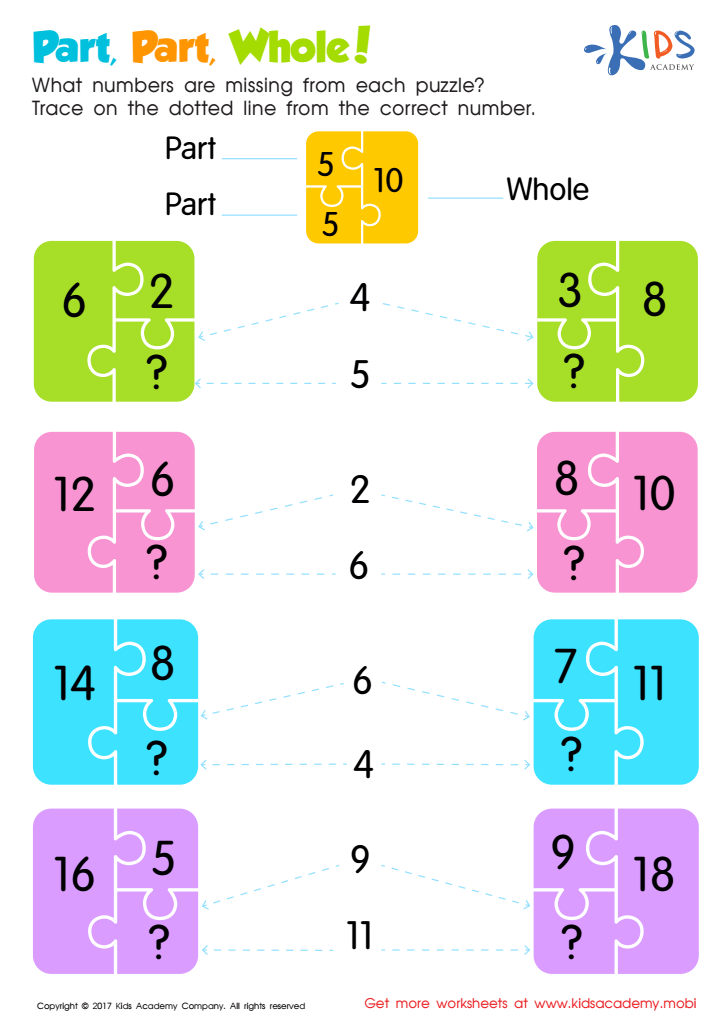
Part, Part, Whole Worksheet








Understanding addition is a fundamental building block of mathematics, essential for children aged 5 to 8. Parents and teachers must emphasize this skill because it forms the basis for more complex math topics. Mastery of addition can boost a child's confidence, setting a positive tone for future learning experiences.
At this age, children are developing their critical thinking and problem-solving abilities. By practicing addition, they learn to recognize patterns and relationships between numbers, which are crucial for logical reasoning. Addition also helps children understand the concept of numbers and how these numbers interact in real-life situations.
Moreover, early proficiency in addition has a ripple effect on other subjects and everyday tasks. Basic arithmetic skills are required not only in advanced mathematics but also in subjects like science, where data interpretation often involves numerical calculations.
For parents and teachers, encouraging addition practice can be achieved through interactive, playful methods such as counting games, real-life scenarios, and visual aids like number blocks. These engaging techniques make learning fun and effective.
In essence, a solid grasp of addition serves as an essential milestone in a child's educational journey, securing their academic and personal success. Prioritizing this skill equips young learners with the foundational tools necessary for their ongoing educational achievements.








