Understanding Quantities Normal Math Worksheets for Ages 5-8
3 filtered results
-
From - To
Boost your child's math skills with our "Understanding Quantities" worksheets designed specifically for ages 5-8. At Kids Academy, we focus on making math fun and engaging, helping young learners grasp the concept of quantities through colorful, interactive exercises. With our expertly crafted worksheets, children will practice counting, comparing, and identifying quantities in a way that reinforces their understanding of numbers. Perfect for early learners, these resources lay a strong foundation for future math success. Encourage your little ones to explore the world of quantities today and watch their confidence and abilities grow!
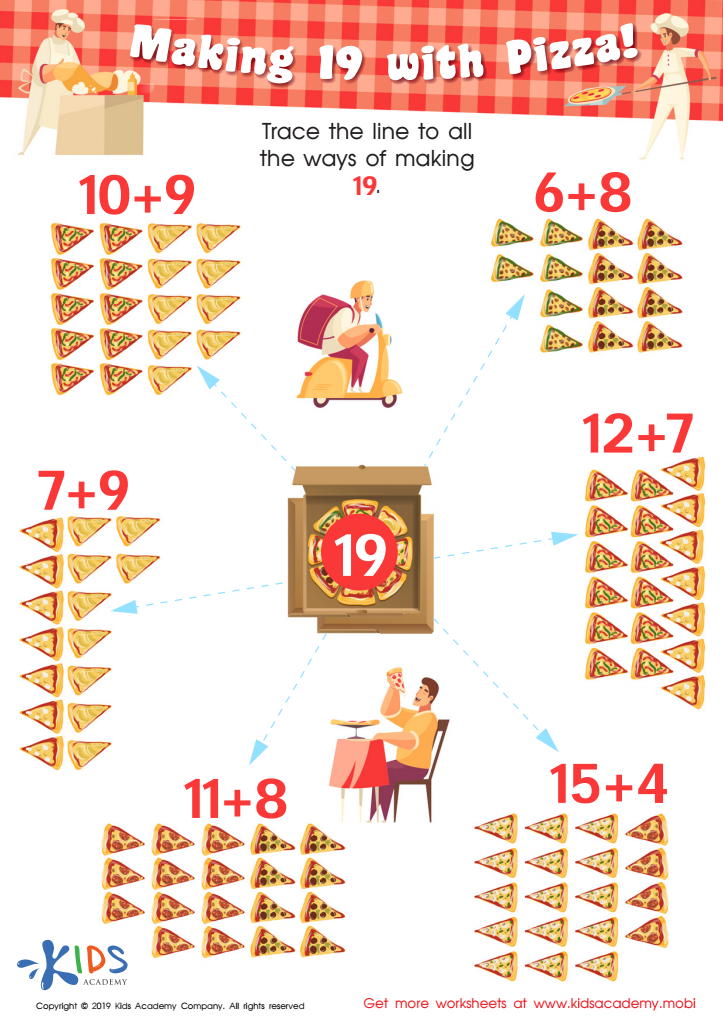
Making 19 with Pizza! Worksheet
 Assign to My Students
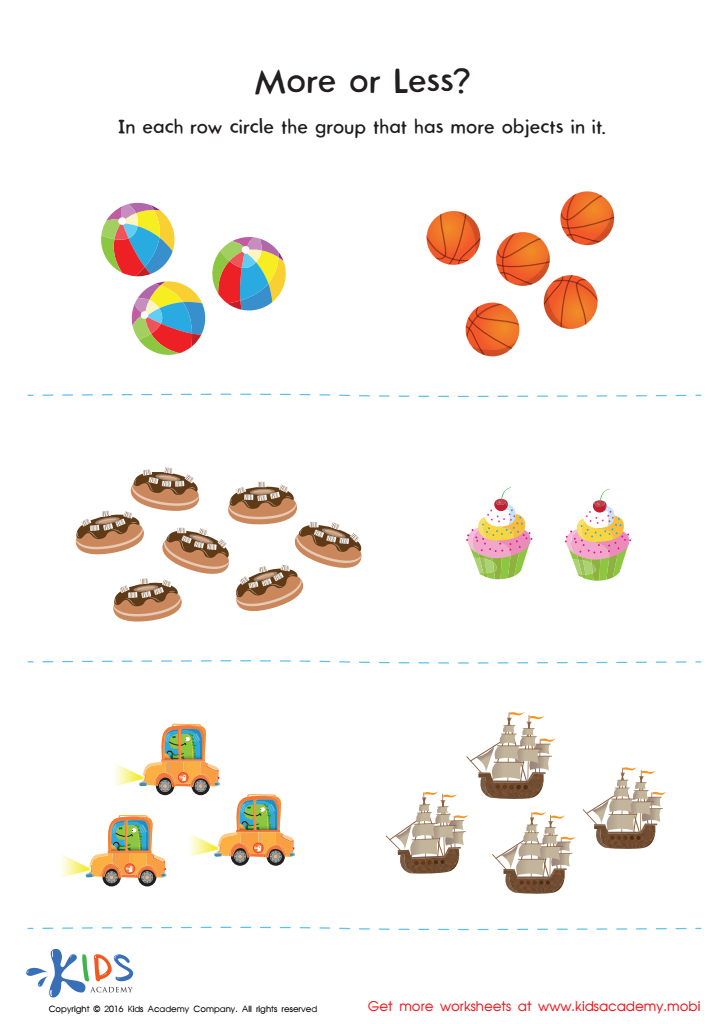
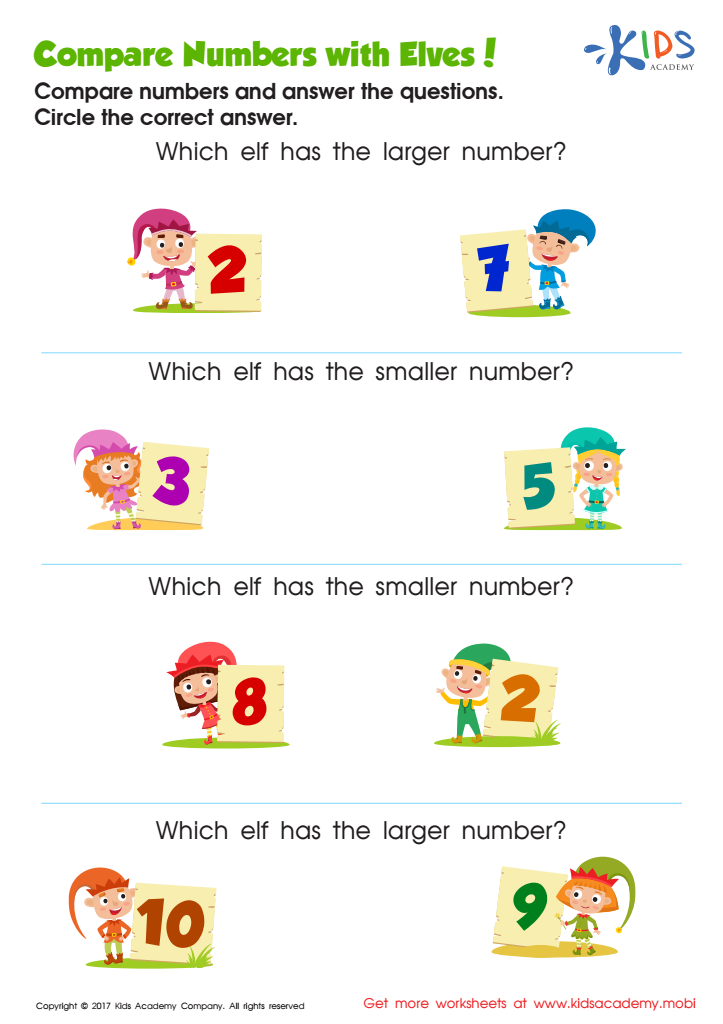
Comparing Numbers Worksheet for Kindergarten








Understanding quantities is foundational for children aged 5-8 because it builds the essential groundwork for more advanced mathematical concepts. At this age, kids are naturally curious and capable of grasping basic mathematical principles through hands-on experiences and everyday activities.
Quantities and number sense involve recognizing numbers, counting, and understanding the amount that these numbers represent. When children master these skills, they can better understand addition, subtraction, and other mathematical operations. For example, knowing that 3 apples and 2 apples together make 5 apples helps a child understand addition conceptually.
Parents and teachers who focus on helping children understand quantities can make learning math a more engaging and interactive experience. This not only fosters a positive attitude towards mathematics but also encourages critical thinking and problem-solving skills. Additionally, a strong number sense in early childhood is linked to future academic success in math.
Practical activities like sorting objects, using counting games, and engaging with real-world scenarios (such as cooking or shopping) make quantity concepts tangible for young learners. In sum, investing time and effort into teaching quantities helps children build a robust mathematical foundation, setting them up for long-term academic and personal growth.








