Pattern recognition Normal Patterns Worksheets for Ages 5-8
5 filtered results
-
From - To
Unlock your child's potential with our Pattern Recognition Normal Patterns Worksheets designed for ages 5-8. These engaging, printable worksheets help young learners develop essential math skills by identifying and creating patterns. Each activity is crafted to stimulate critical thinking, improve problem-solving abilities, and enhance visual perception. Our worksheets are perfect for at-home practice or classroom use, providing a fun and interactive way for kids to master pattern recognition. Foster your child's learning and set the foundation for future math success with our expertly designed worksheets at Kids Academy. Explore now and watch your child thrive!
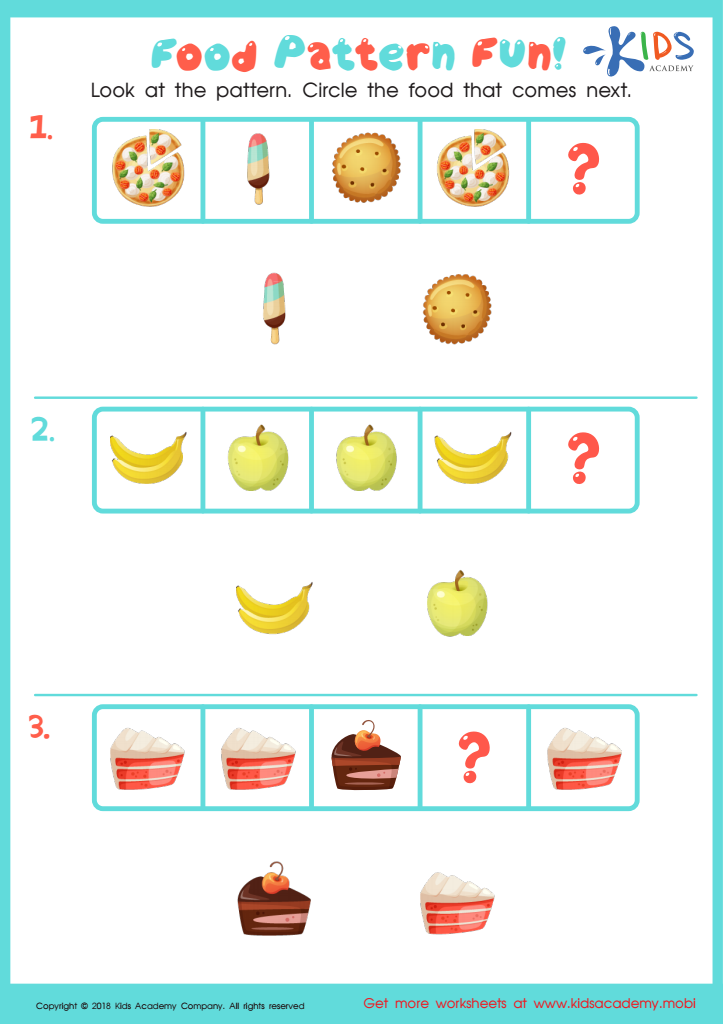
Food Pattern Fun Worksheet
 Assign to My Students
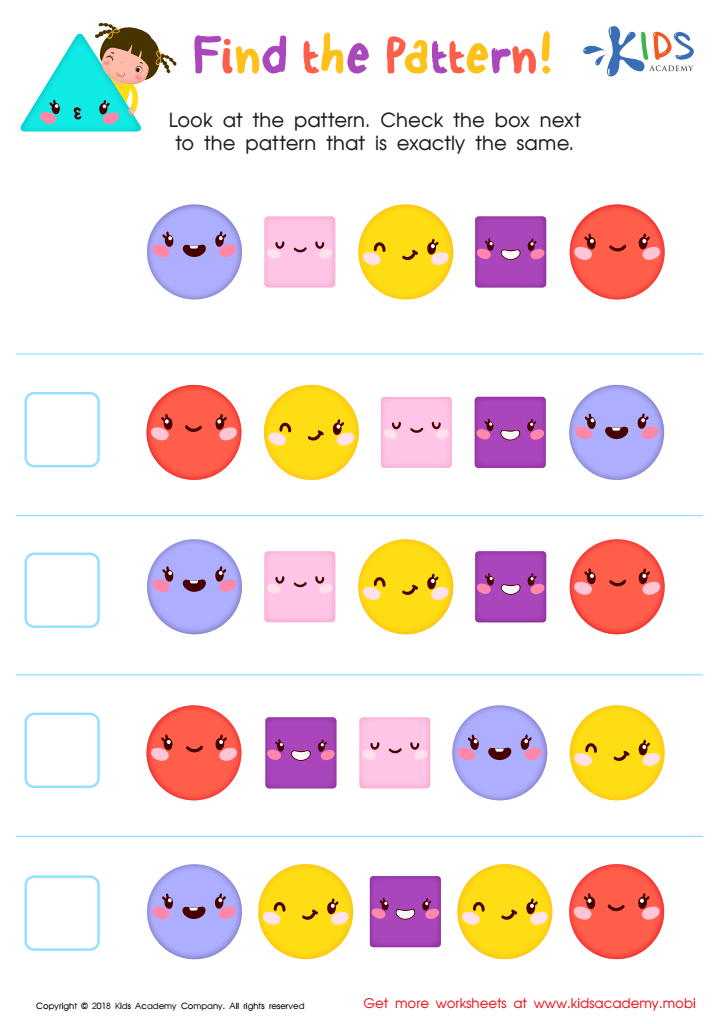
Find the Pattern Worksheet
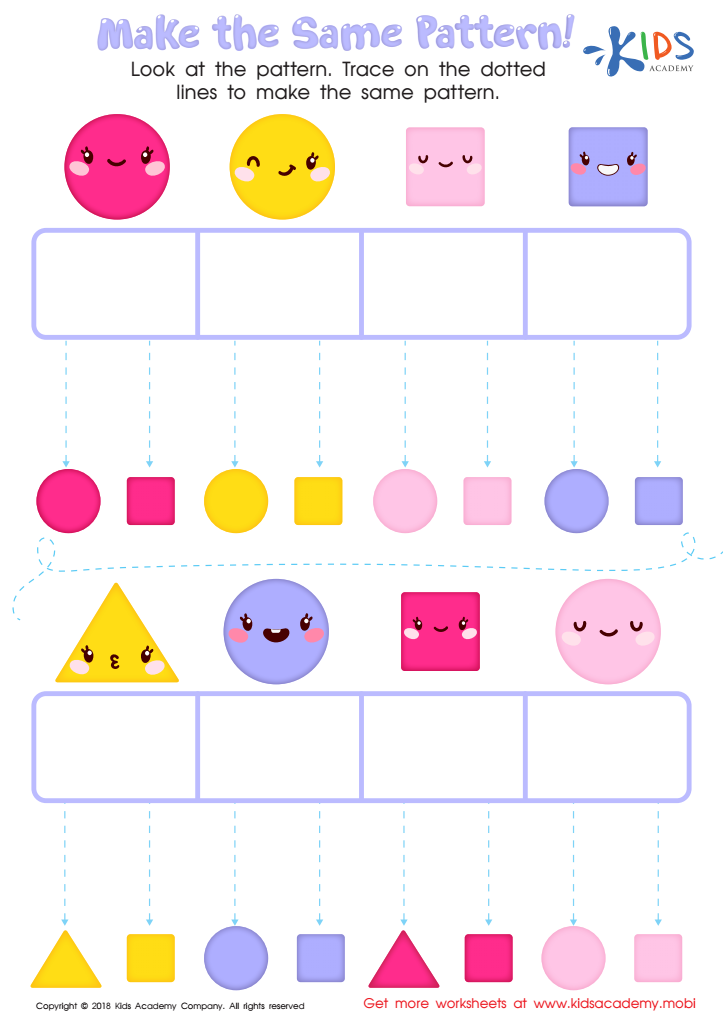
Make the Same Pattern Worksheet
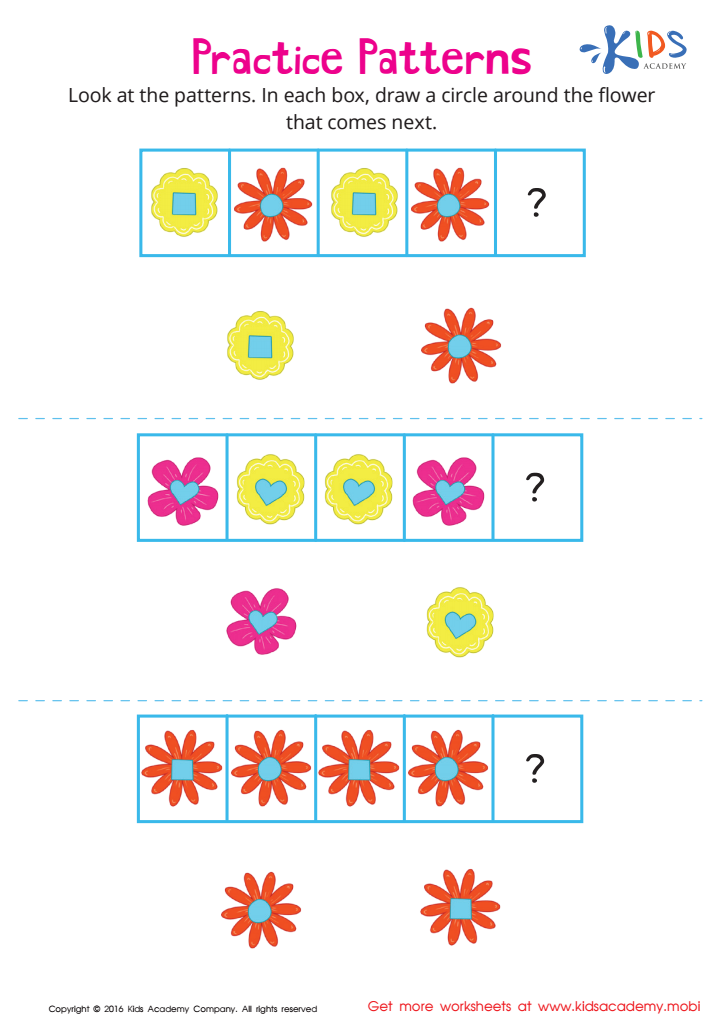
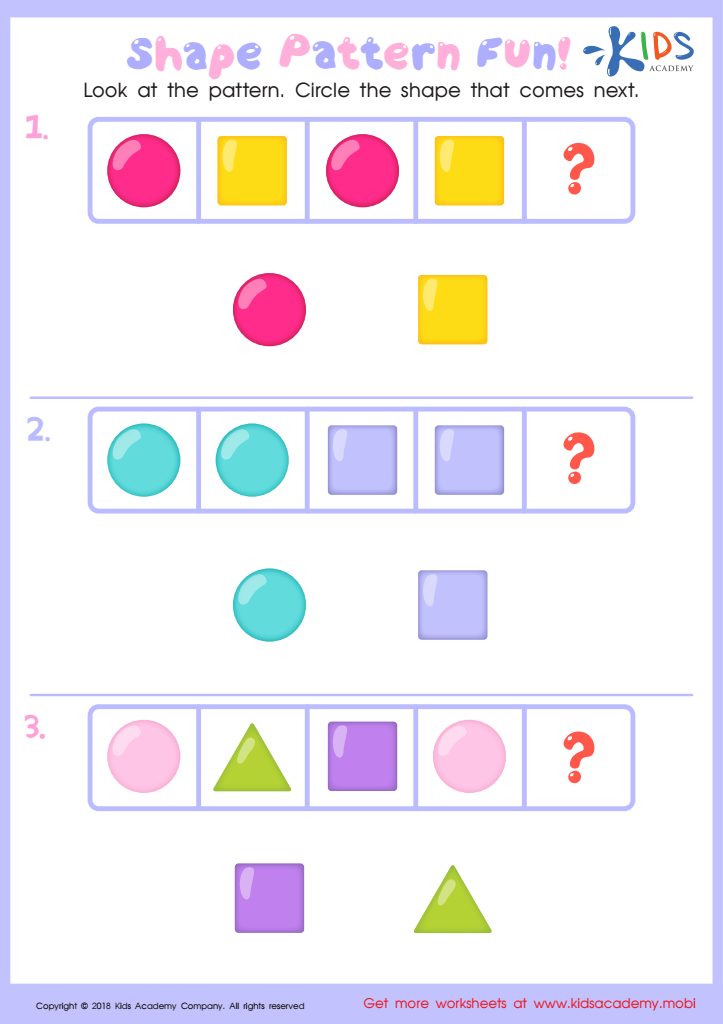
Shape Pattern Fun Worksheet








Pattern recognition is a critical cognitive skill for young children, particularly between the ages of 5-8. Understanding and identifying patterns lays the foundation for essential skills in mathematics, literacy, and problem-solving. By recognizing patterns, children learn to predict and understand the world around them, which contributes to their cognitive development and analytical thinking.
For example, in mathematics, understanding patterns helps children grasp basic concepts of sequencing, addition, subtraction, and more complex operations. Patterns also stream in language development, as grammar and word formation often follow predictable structures. This makes reading and writing more accessible to young learners, enhancing their communication skills.
Parents and teachers should care about fostering these skills because they also support memory retention and attention to detail. Activities such as sorting objects by color, creating bead necklaces with repeating patterns, or rhythm activities in music classes are not just play; they actively cultivate brain function related to pattern recognition.
Furthermore, acknowledging and teaching about normal patterns helps identify and support children who may have learning difficulties. Early intervention can be crucial in providing the appropriate educational strategies and support, thereby ensuring they keep pace with developmental milestones. By encouraging pattern recognition from a young age, parents and teachers effectively prepare children for academic success and a lifelong ability to face and solve complex challenges.








