Sequencing events Normal Reading Worksheets for Ages 5-8
3 filtered results
-
From - To
Discover our engaging Sequencing Events Normal Reading Worksheets designed specifically for children ages 5-8! These worksheets focus on enhancing reading comprehension skills by helping young learners understand the order of events in stories. With colorful visuals and age-appropriate content, students can practice identifying, organizing, and retelling events clearly. Our activities promote critical thinking while making learning enjoyable and interactive. Perfect for parents, teachers, or homeschoolers, these worksheets offer a fantastic way to support literacy development and foster a love for reading. Explore our collection and enrich your child’s reading experience today! Easy to print, fun to use, and essential for early education!
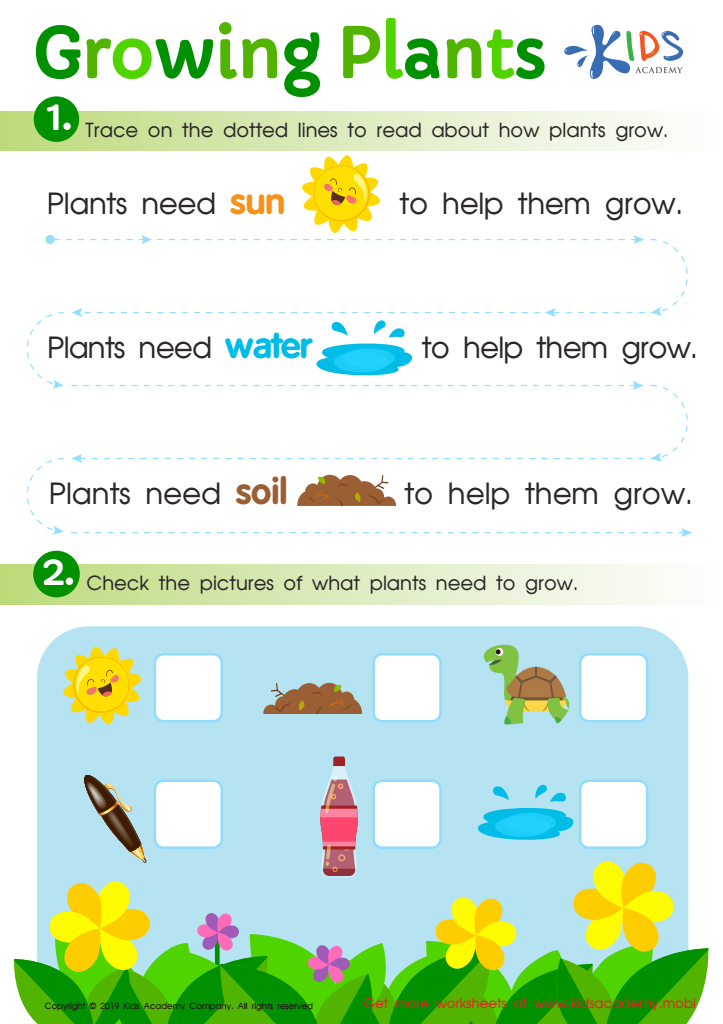
Growing Plants Worksheet
 Assign to My Students
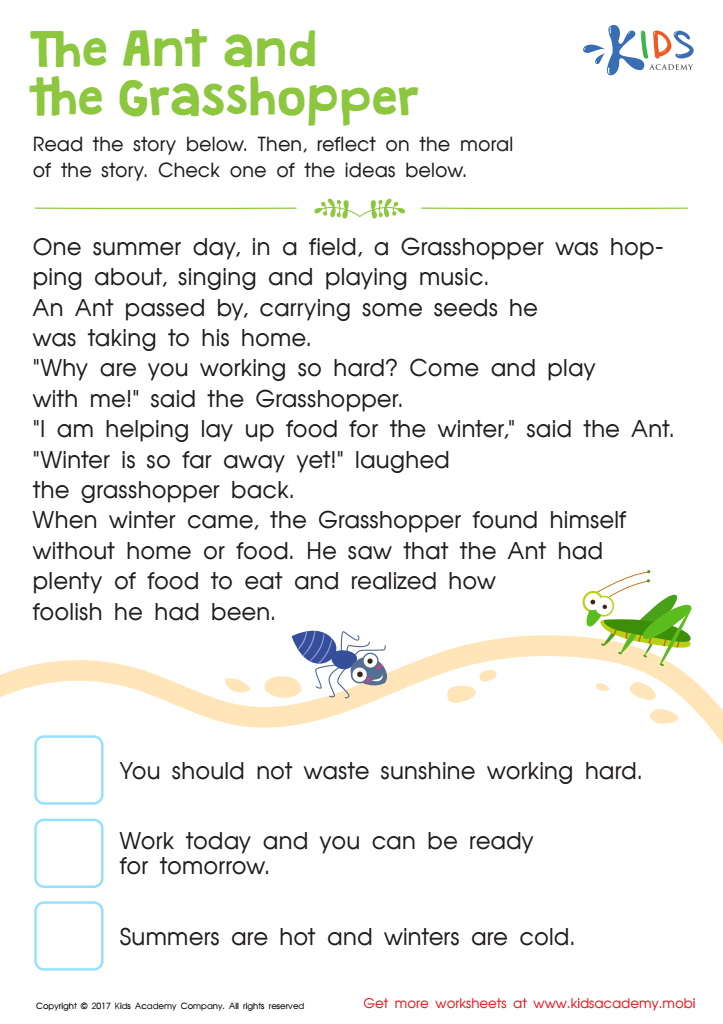
The Ant and The Grasshopper Printable
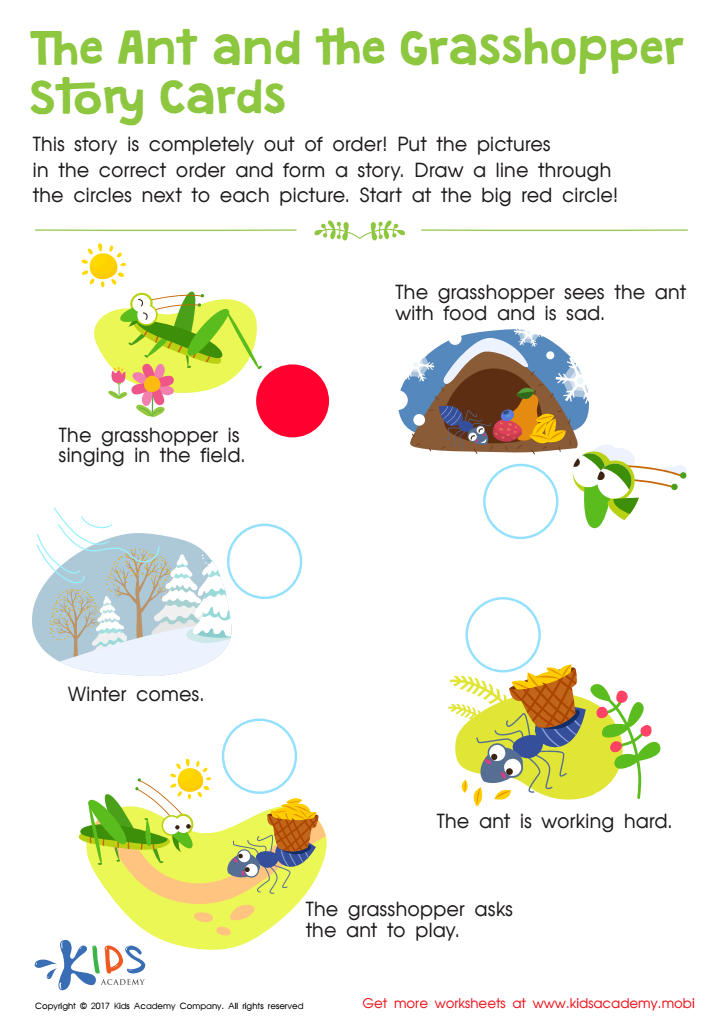
The Ant and The Grasshopper Worksheet








Sequencing events is a critical reading skill for children ages 5-8, as it forms the foundation for comprehension and storytelling. When parents and teachers emphasize this skill, they help young learners understand the logical progression of stories, which enhances their ability to make predictions and connections in texts.
For developing readers, grasping the sequence of events aids in memory retention, enabling them to recall details and comprehend narratives better. It nurtures analytical thinking, prompting children to consider “why” and “how” events unfold, encouraging deeper engagement with the material.
Moreover, sequencing is not limited to reading; it also translates to real-life skills. Children learn to organize their thoughts, plan nearly everyday actions, and respond to complex information—all essential for academic success and everyday problem-solving.
Strengthening these skills in early readers ultimately fosters confidence and a love for reading, as they become more adept at understanding and enjoying stories. Encouraging regular practice through age-appropriate books and activities cultivates comprehension skills and scientific literacy—skills foundational for lifelong learning. Thus, promoting sequencing events in reading should be a priority for both parents and educators.








