Moral lesson understanding Normal Reading Comprehension Worksheets for Ages 5-8
5 filtered results
-
From - To
Our "Moral Lesson Understanding Normal Reading Comprehension Worksheets for Ages 5-8" are designed to enrich young learners' reading skills with an emphasis on moral development. These engaging worksheets feature age-appropriate stories and thought-provoking questions that highlight important ethical themes, such as honesty, kindness, and responsibility. By guiding children to reflect on the actions and choices of characters within the stories, the worksheets help cultivate critical thinking and empathy. Perfect for classroom activities or at-home learning, these resources not only improve reading comprehension but also assist children in understanding and internalizing valuable moral lessons. Enhance your child's educational journey with our specialized worksheets today!
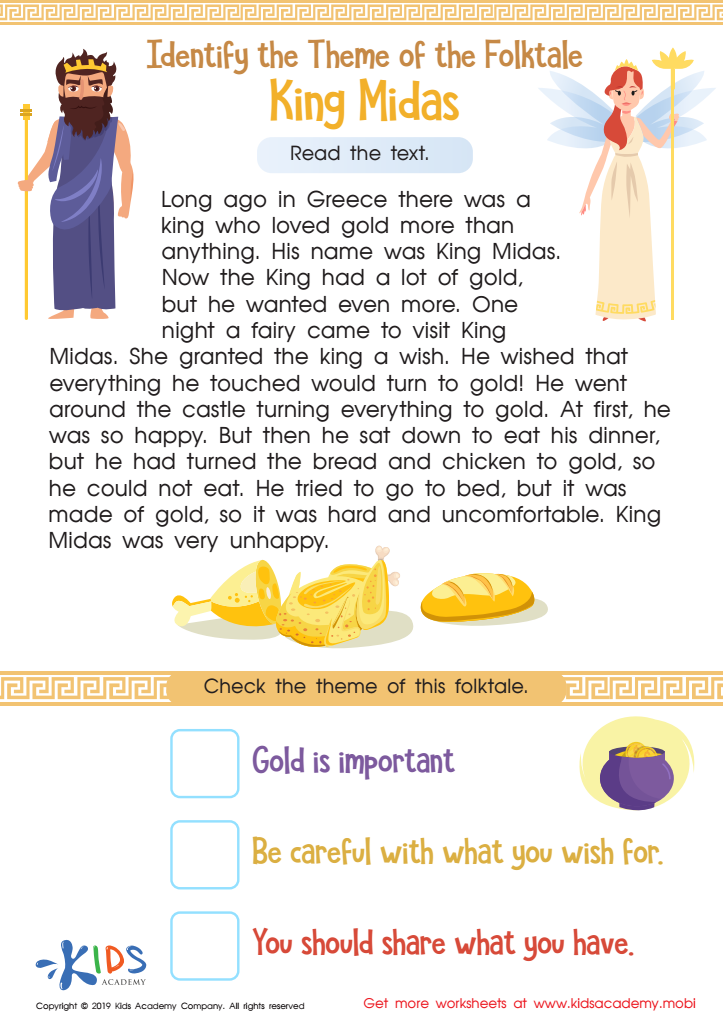
King Midas Worksheet
 Assign to My Students
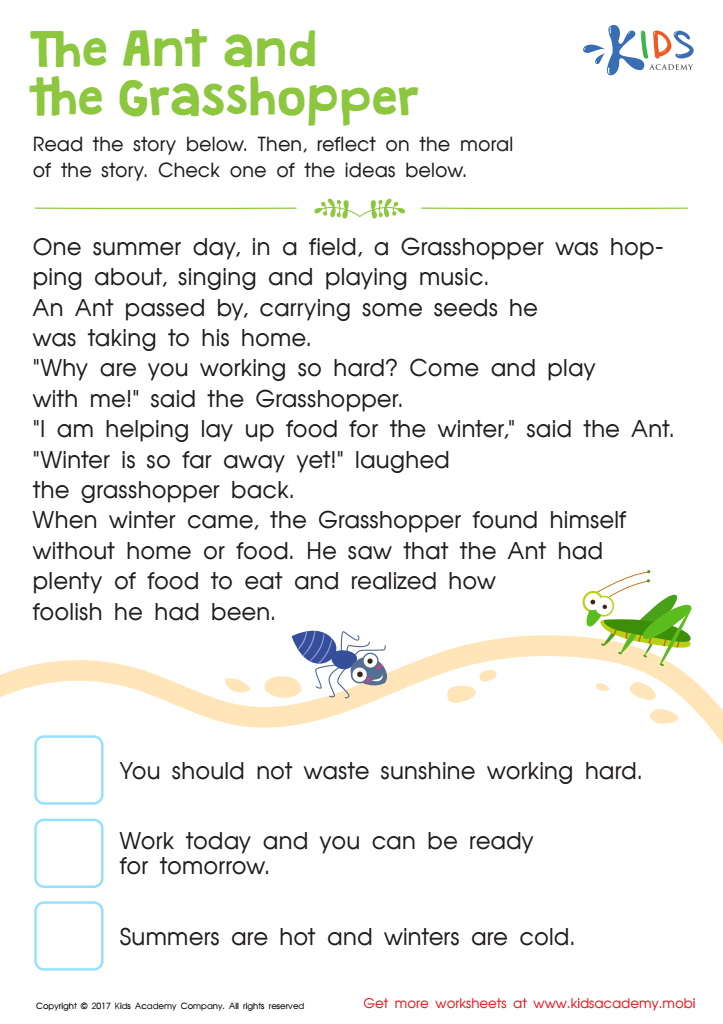
The Ant and The Grasshopper Printable
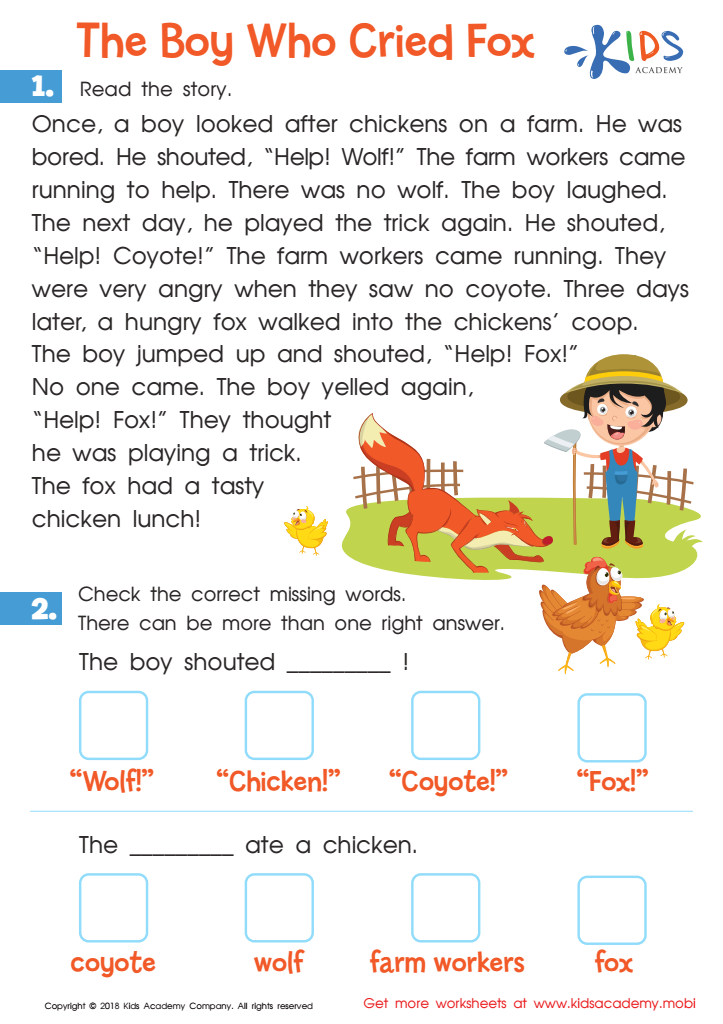
The Boy Who Cried Fox Worksheet
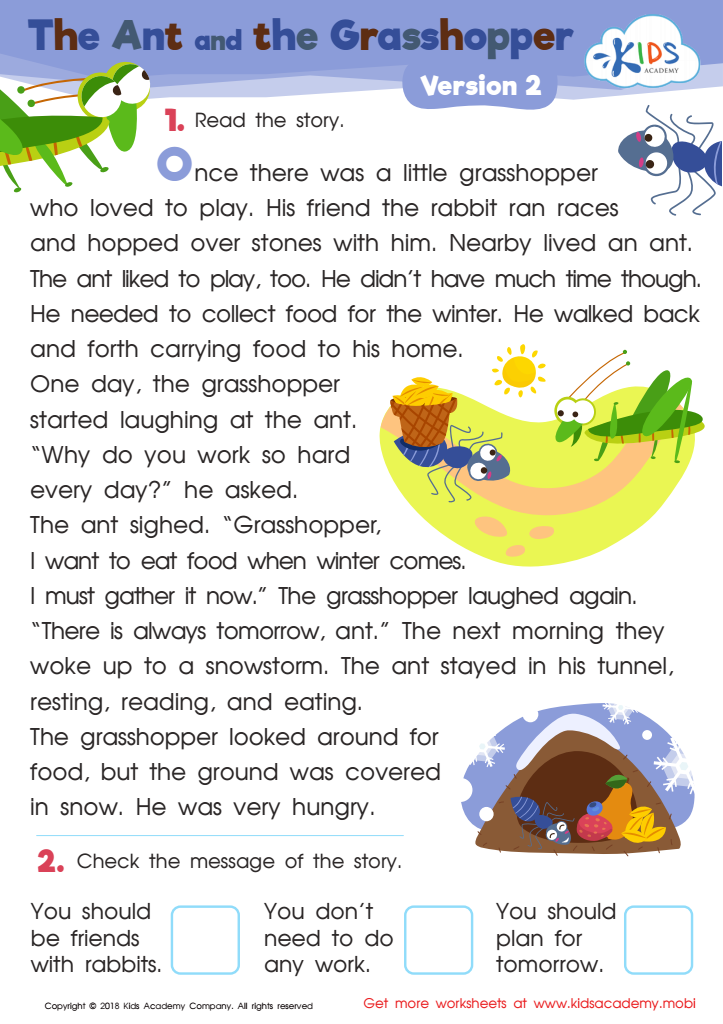
The Ant and The Grasshopper Version 2 Worksheet
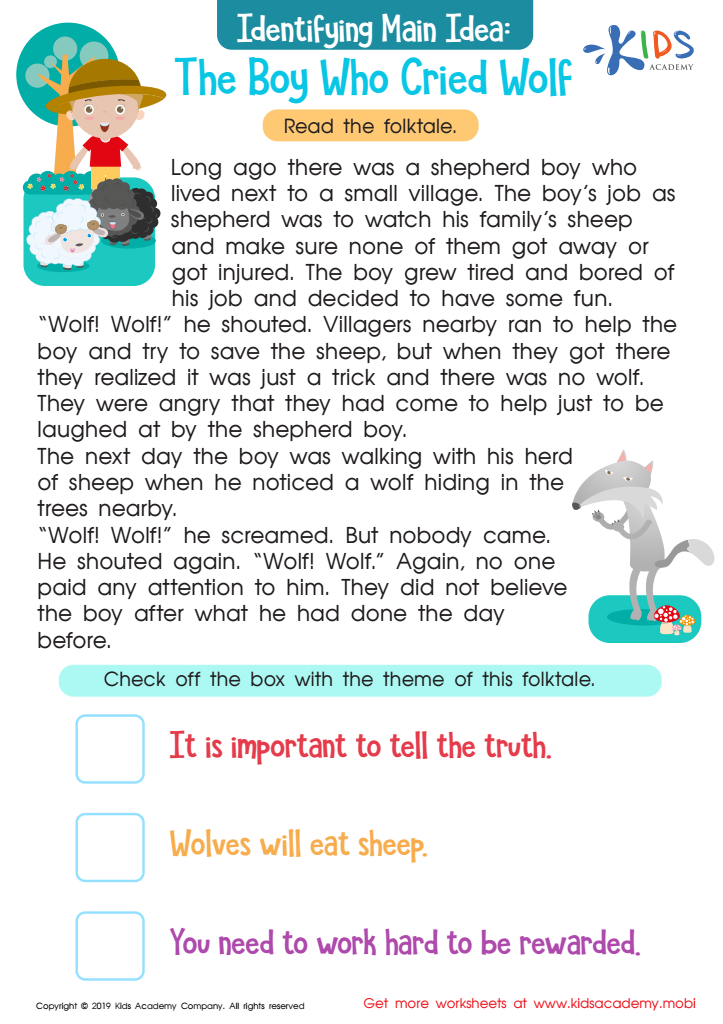
The Boy Who Cried Wolf Part 2 Worksheet






.jpg)

Moral lesson understanding and normal reading comprehension are both vital components in early childhood education for ages 5-8. At this formative stage, children are developing cognitive skills, emotional intelligence, and social awareness. Comprehending moral lessons fosters character development and instills core values such as empathy, honesty, and respect. These lessons help children differentiate between right and wrong, influencing their behavior and interactions with peers and adults. As they navigate social situations, this moral grounding becomes essential for positive relationship building and community participation.
Normal reading comprehension, on the other hand, is crucial for academic success and lifelong learning. It lays the foundation for understanding more complex texts and subjects in later years. Competent reading skills enhance a child's ability to follow instructions, complete assignments, and enjoy literature, fostering a love for learning.
When children grasp both moral lessons and exhibit normal reading comprehension, they become well-rounded individuals. They are not just absorbing information but also applying ethical considerations to their understanding of texts and real-life situations. Parents and teachers play an instrumental role in guiding this process by providing age-appropriate reading materials and engaging in discussions that encourage critical thinking and ethical reasoning, thus ensuring holistic development.








