
Text analysis Normal Reading Comprehension Worksheets for Ages 5-8
3 filtered results
Difficulty Level
Grade
Age
-
From - To
Subject
Activity
Standards
Unlock the power of reading with our engaging Text Analysis Normal Reading Comprehension Worksheets, tailored specifically for children ages 5-8. Designed to enhance critical thinking and comprehension skills, these printable worksheets provide fun and interactive exercises that help young learners analyze texts effectively. Kids will explore characters, settings, and themes while answering questions that encourage deeper understanding. Each worksheet aligns with educational standards, making it easy for parents and teachers to integrate them into learning routines. Foster a love for reading and strengthen literacy skills with our carefully crafted resources—perfect for at-home learning or classroom activities!
Favorites
With answer key
Interactive
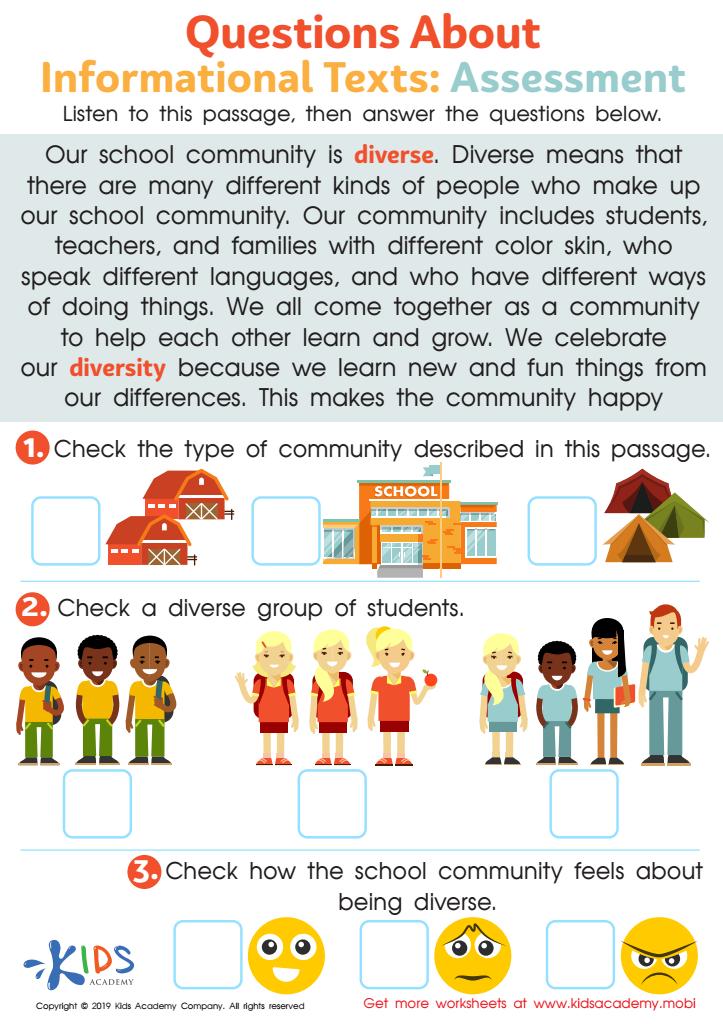
Questions About Informational Texts: Assessment 1 Worksheet
Ask your students: What comes to mind when we talk about a community? What different habits do people practice? What do fellow students do that seems strange? Read this passage aloud to your kindergartners and make sure they understand it. Then, answer the questions at the bottom of the page. (80 words)
 Assign to My Students
Questions About Informational Texts: Assessment 1 Worksheet
Worksheet
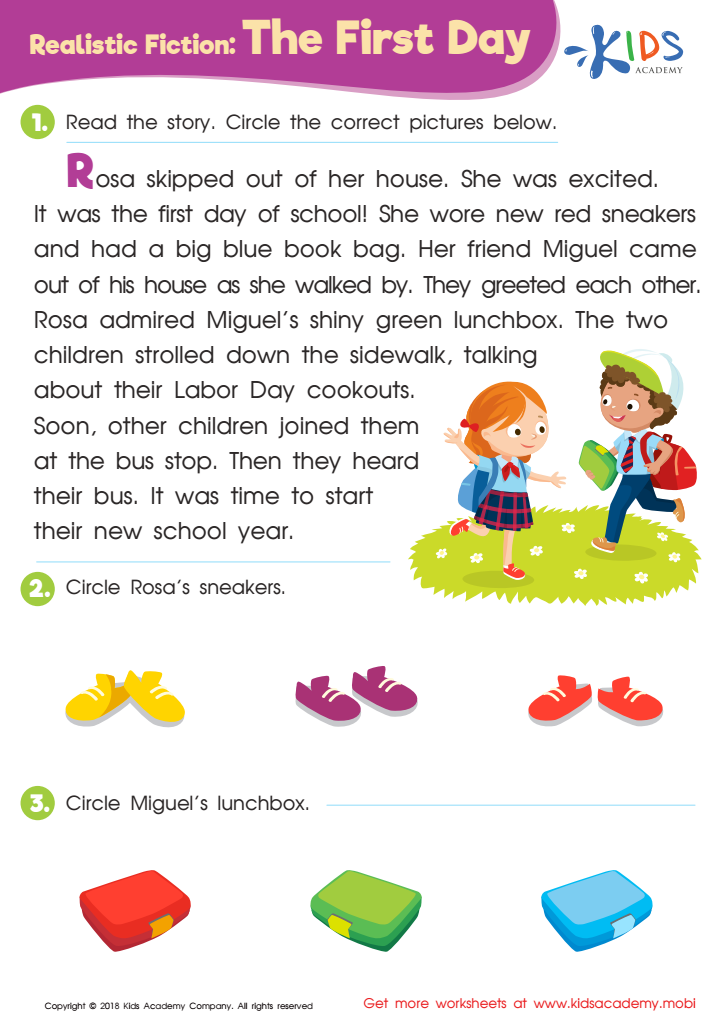
Realistic Fiction: The First Day Worksheet
Fiction is made-up events, so story-writing is fiction writing. In this worksheet, there's a short story about Rosa, her friend Miguel, and their first day back at school. Read the story aloud to your kids and help them circle the right pictures to the questions. Repeat if needed.
Realistic Fiction: The First Day Worksheet
Worksheet
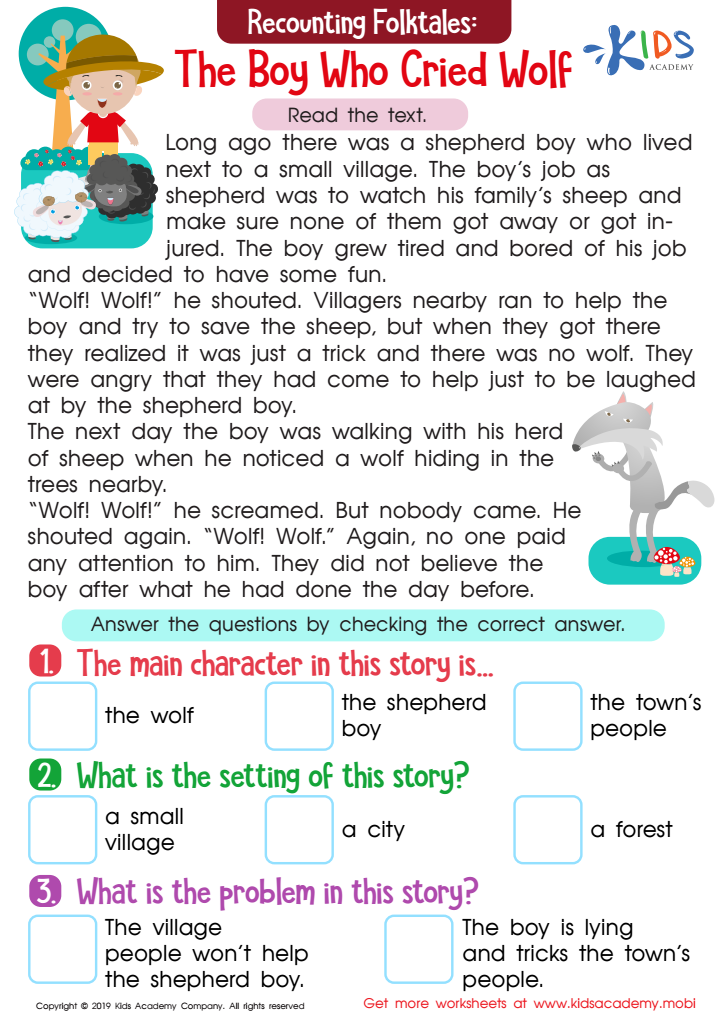
The Boy Who Cried Wolf Part 1 Worksheet
Storytime can be your kid's favorite part of the day. Ask them what their favorite stories are, then read the text in the printout. Read along with them, making sure they understand each word. At the end, go over the questions and have them check the correct answers.
The Boy Who Cried Wolf Part 1 Worksheet
Worksheet
Join Kids Academy for Free
Who is primarily going to use this learning content?








Understanding text analysis and normal reading comprehension is crucial for children aged 5-8, as this stage lays the foundation for their future academic success. Parents and teachers should prioritize these skills because early literacy development significantly impacts overall learning and cognitive growth.
During these formative years, children are not only learning to read but also reading to learn. Text analysis encourages them to engage with stories and informational texts, enhancing their vocabulary and comprehension skills. This level of understanding enables kids to identify main ideas, draw inferences, and make connections between texts and their own experiences—all critical skills for navigating more complex material in later grades.
Focusing on reading comprehension helps educators and parents identify children who may struggle while there’s still time to intervene with appropriate strategies. Early detection of reading difficulties allows for tailored support, ensuring every child has the opportunity to thrive academically.
Furthermore, fostering a love for reading at this early age strengthens children’s imagination and empathy. When parents and teachers collaborate to enhance reading comprehension, they are equipping children with essential life skills, paving the way for lifelong learning and personal growth. Prioritizing these competencies enriches not just academic settings but also everyday experiences for young learners.








