Understanding ecosystems Normal Animals Worksheets for Ages 5-8
3 filtered results
-
From - To
Dive into the fascinating world of ecosystems with our "Understanding Ecosystems: Normal Animals Worksheets for Ages 5-8." Tailored for young learners, these engaging worksheets help children explore the intricate relationships between animals and their environments. Through fun and educational activities, kids will discover how animals adapt, survive, and thrive in various ecosystems. These worksheets are designed to align with educational standards, ensuring that kids develop essential science skills while enjoying hands-on learning. Perfect for both classroom and home use, our worksheets inspire curiosity and foster a deep appreciation for the natural world. Start your child's journey into ecosystems today!
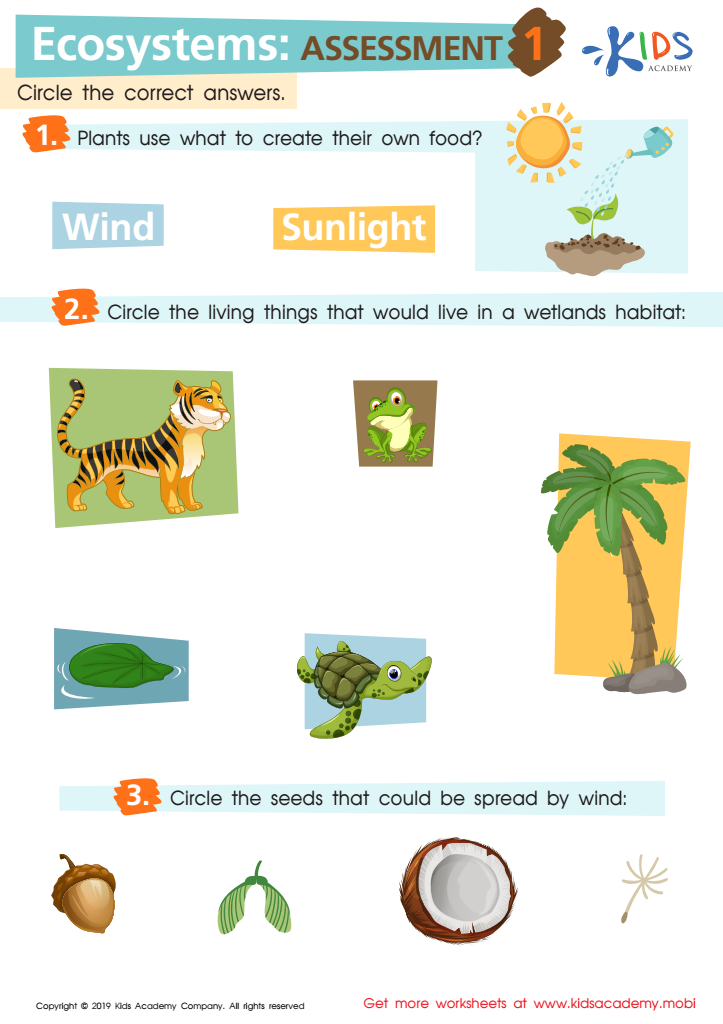
Ecosystems: Assessment 1 Worksheet
 Assign to My Students
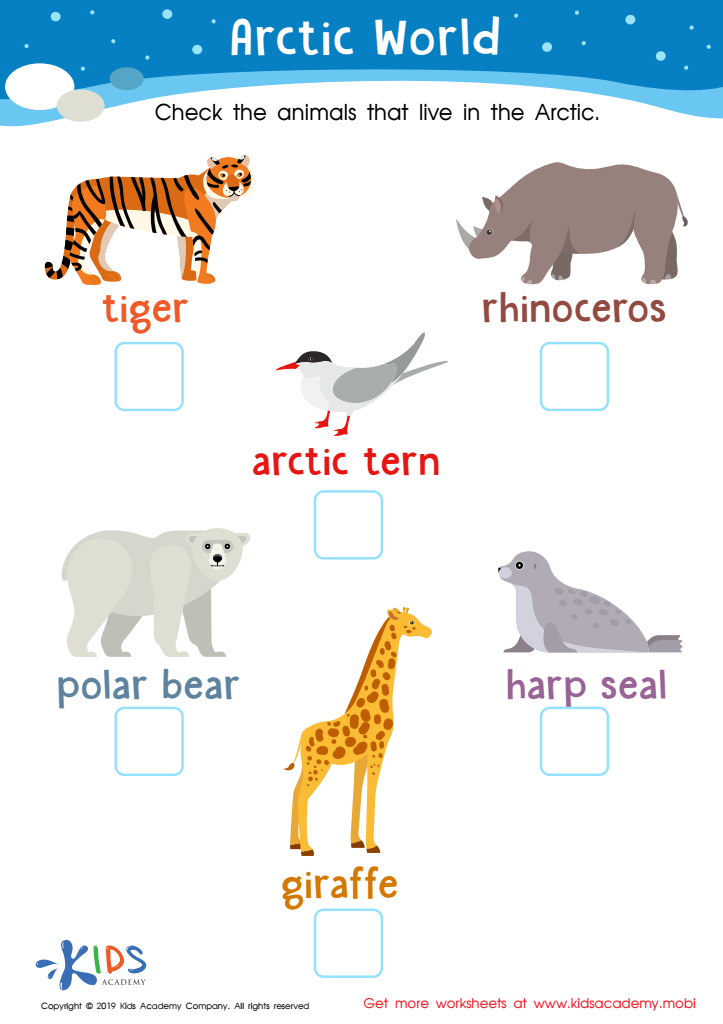
Arctic World Worksheet
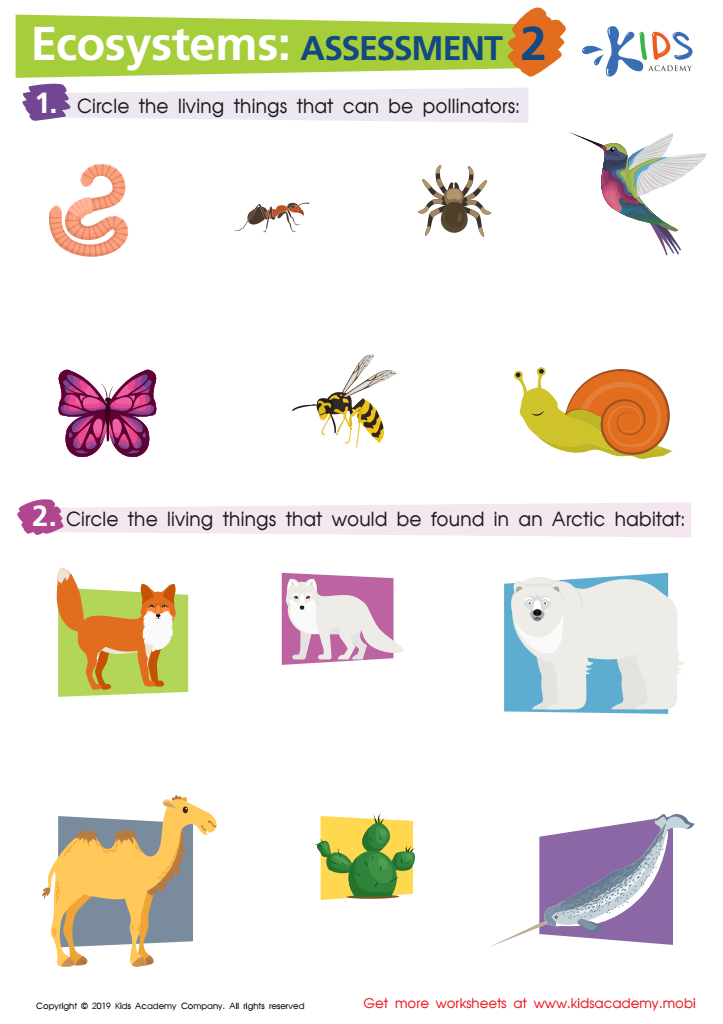
Ecosystems: Assessment 2 Worksheet




%20(1).jpg)



Understanding ecosystems and normal animals is foundational for young children because it shapes their perspective on the natural world and fosters a sense of responsibility towards it. At ages 5-8, children are unusually curious and their brains are rapidly developing, making it an optimal time to instill crucial knowledge about the environment.
Firstly, learning about ecosystems helps children grasp the interconnectedness of life. They learn that animals, plants, water, and air rely on each other to survive. For example, understanding how bees pollinate flowers, which in turn provide food for other animals, helps children appreciate the delicate balance of nature.
Secondly, knowing more about normal animals and their habitats encourages empathy and respect. Many kids love animals and are naturally inclined to listen and care about stories involving them. Through studying animals’ behaviors and needs, children develop compassion and understand the impact humans have on natural habitats.
Finally, this knowledge can inspire future scientists, conservationists, and informed citizens. Early education in ecosystems and wildlife lays the groundwork for sustainable thinking, inspiring behaviors and attitudes that protect and preserve our planet. By nurturing an early interest in nature, parents and teachers help cultivate a generation capable of facing environmental challenges with knowledge and empathy.








