Logical Reasoning Normal Science Worksheets for Ages 5-8
8 filtered results
-
From - To
Discover our engaging "Logical Reasoning Normal Science Worksheets" designed specifically for children aged 5-8! These worksheets provide an excellent way for young learners to enhance their critical thinking and problem-solving skills through fun, interactive activities. Each printable worksheet features age-appropriate scenarios that encourage kids to draw conclusions, identify patterns, and analyze information using scientific reasoning. With a focus on fostering curiosity and a love for science, our logical reasoning worksheets help children build a strong foundation in scientific concepts while making learning enjoyable. Perfect for home or classroom use, these resources support early education in a playful and effective way!
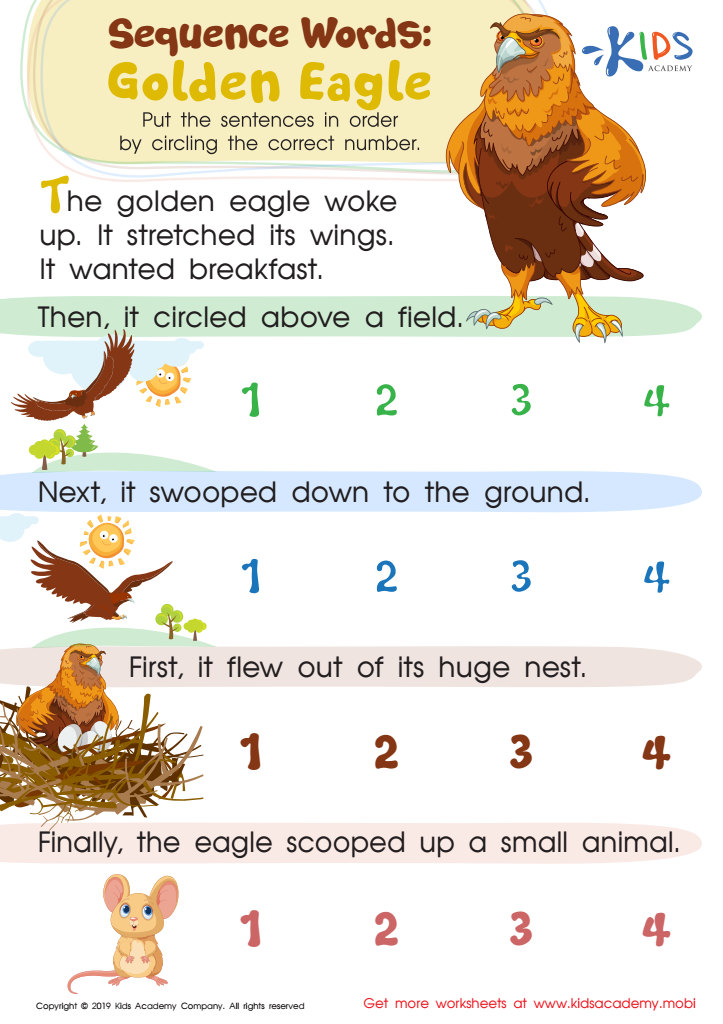
Sequence Word Eagle Worksheet
 Assign to My Students
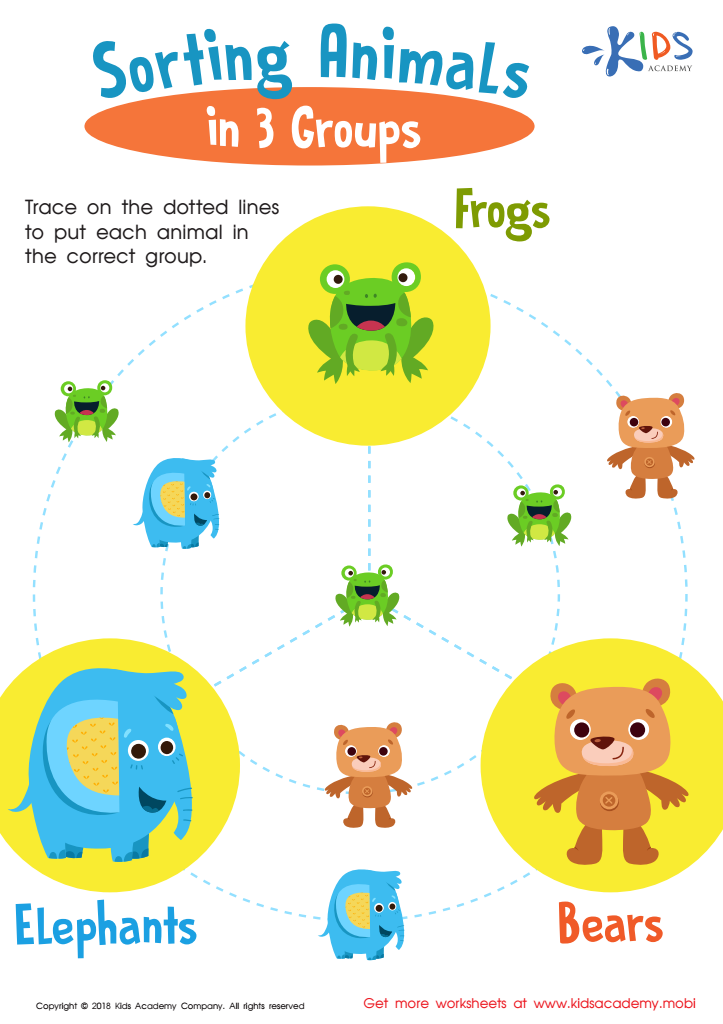
Sorting Animals in 3 Groups Worksheet
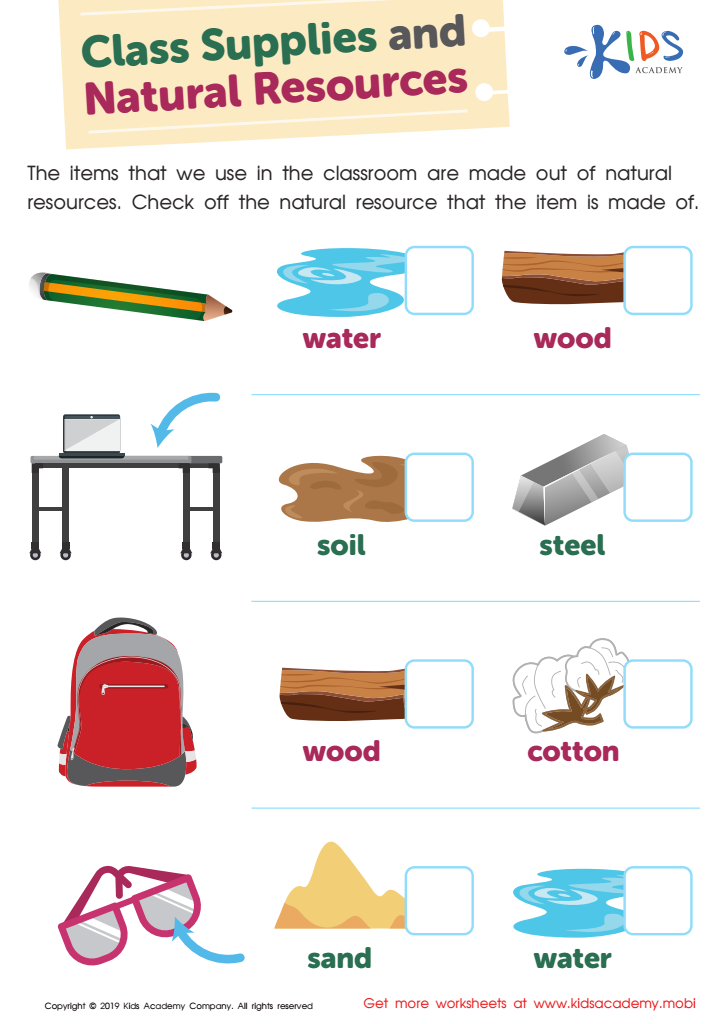
Class Supplies and Natural Resources Worksheet
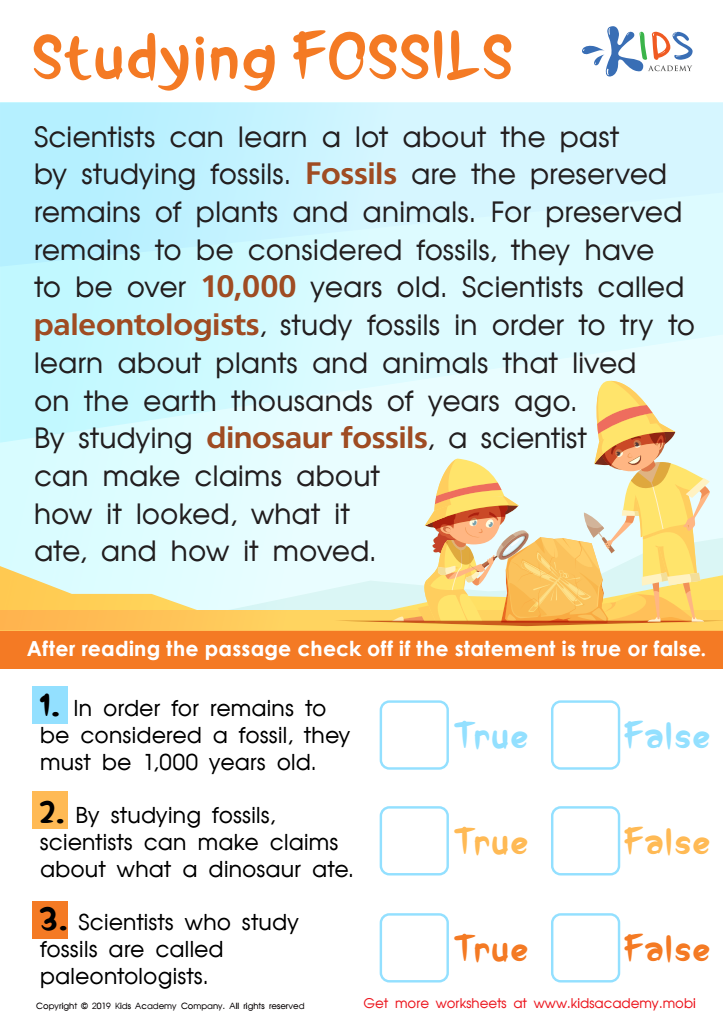
Studying Fossils Worksheet
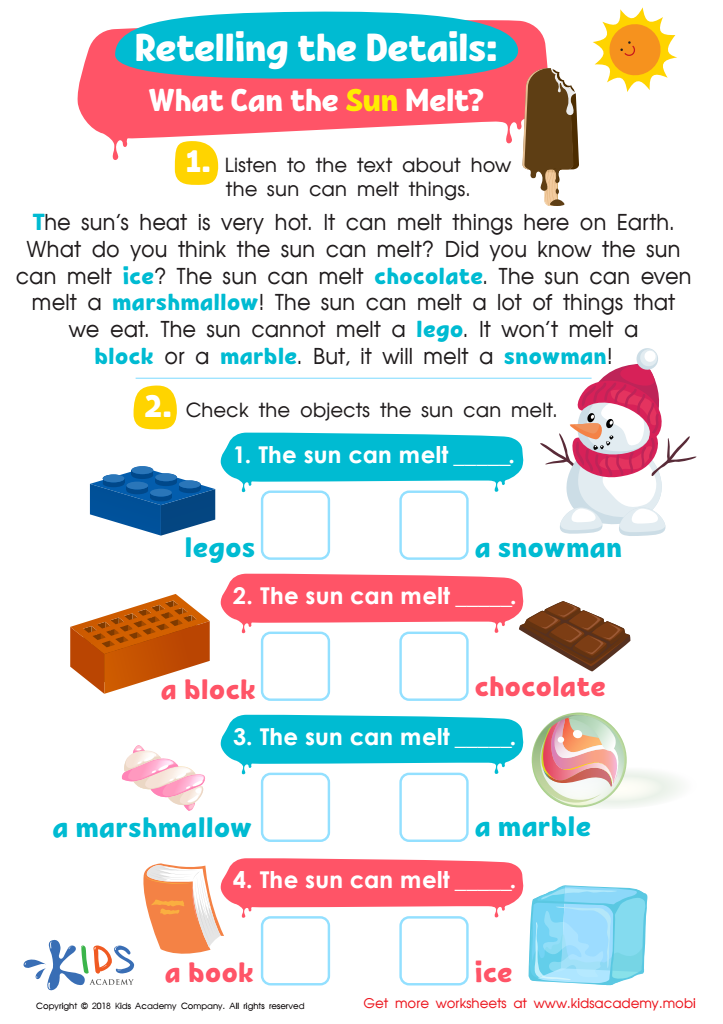
Retelling the Details: What Can the Sun Melt? Worksheet
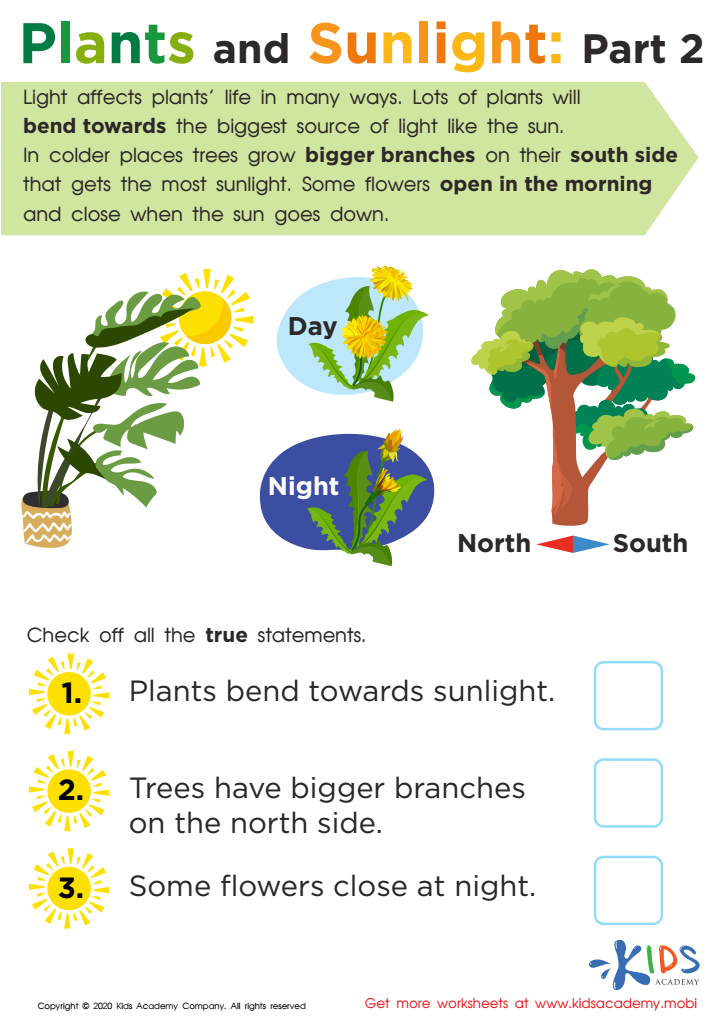
Plants and Sunlight: Part 2 Worksheet
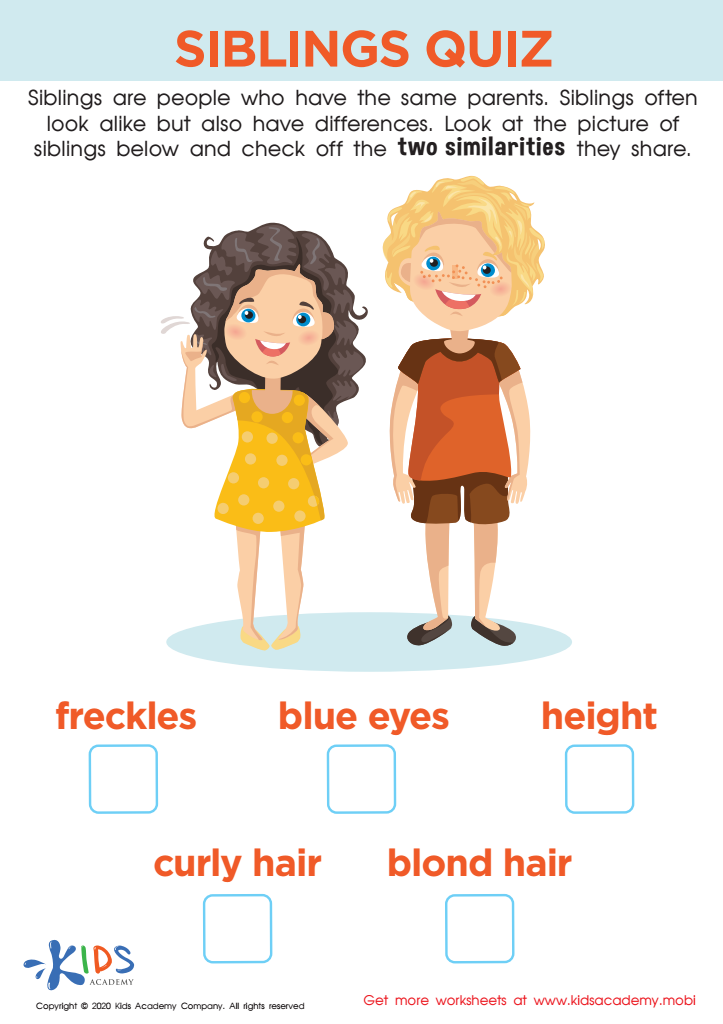
Siblings Quiz Worksheet
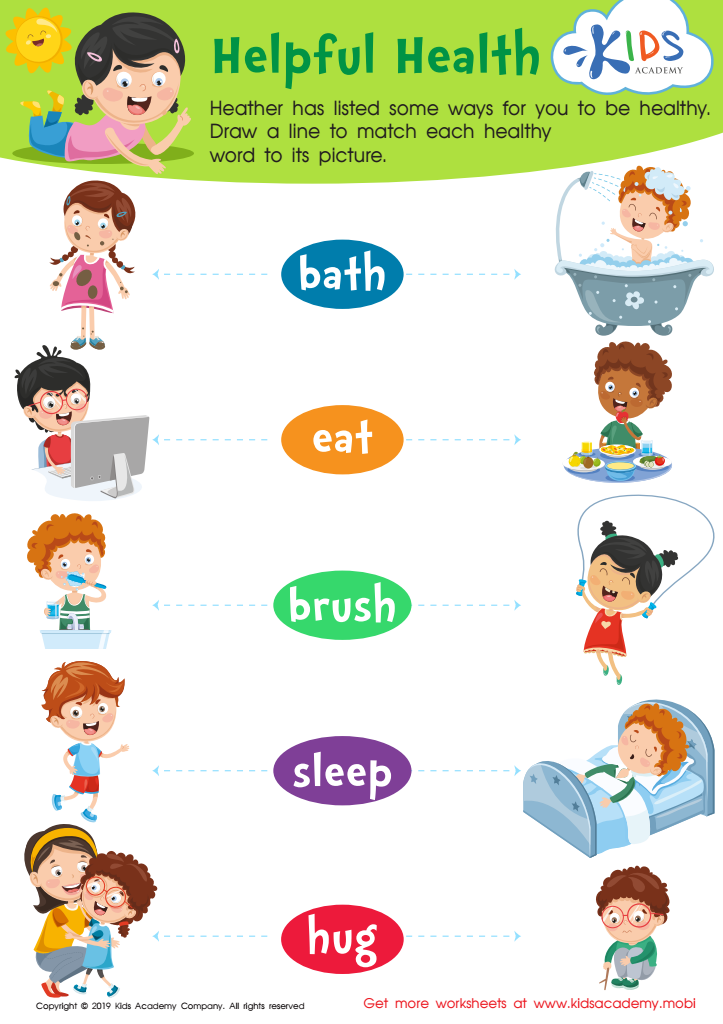
Helpful Health Worksheet




.jpg)
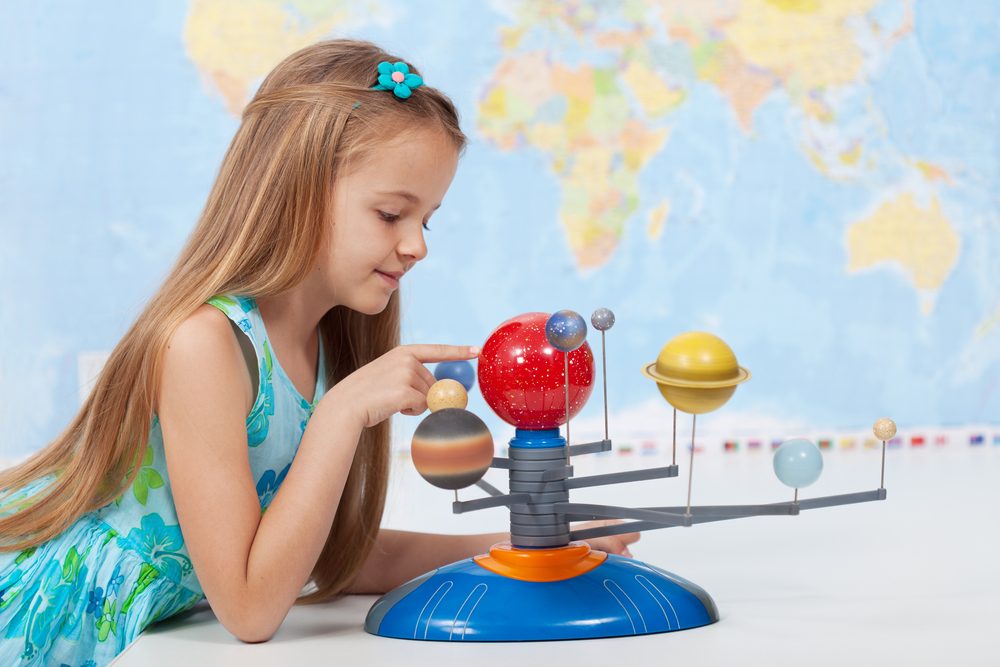


Logical reasoning is a fundamental skill that serves as the foundation for critical thinking and problem-solving. Parents and teachers should prioritize logical reasoning in children aged 5-8 as it enhances cognitive development at a crucial time in their growth. During this developmental stage, children are naturally curious and eager to make sense of the world around them. Incorporating logical reasoning activities and games can engage this curiosity while helping children identify patterns, draw conclusions, and understand cause-and-effect relationships.
Activities rooted in logical reasoning, such as puzzles, riddles, and simple scientific experiments, ignite a child's interest in exploration and experimentation. This not only deepens their understanding of basic scientific concepts but also nurtures their analytical skills. Moreover, enhancing logical thinking at an early age encourages sound decision-making and boosts children's confidence in their academic abilities.
Understanding logical reasoning fosters a sense of discipline and persistence in problem-solving, qualities that are crucial in every aspect of life. By prioritizing logical reasoning, parents and teachers equip children with essential tools that will benefit them academically and in their everyday interactions, ultimately supporting their growth into thoughtful, independent thinkers.







