Understanding natural resources Normal Our Planet and Environment Worksheets for Ages 5-8
4 filtered results
-
From - To
Explore the wonders of our planet with our "Understanding Natural Resources" worksheets, designed specifically for children aged 5-8! These engaging resources introduce young learners to essential concepts about natural resources, fostering a deeper appreciation for our environment. Through interactive activities, kids will discover various materials our planet offers, such as water, trees, and minerals, and understand their importance in our daily lives. Our easy-to-follow worksheets encourage critical thinking and promote discussion about sustainability and conservation. With colorful illustrations and age-appropriate content, your child will enjoy learning while developing foundational science skills. Start their journey to being eco-conscious citizens today!
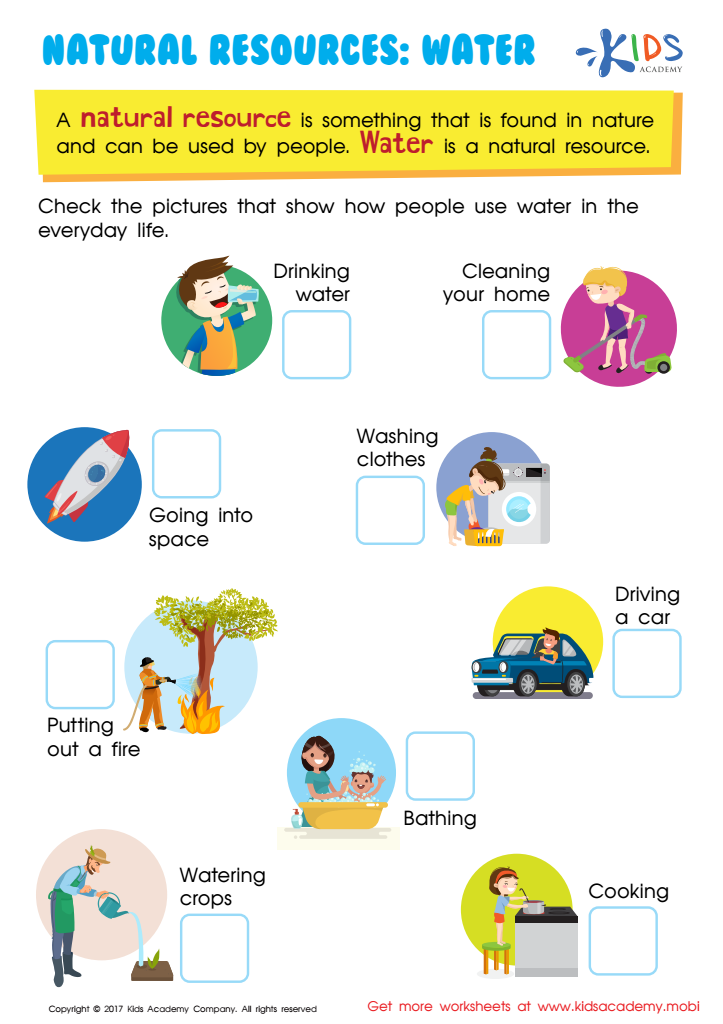
Natural Resources: Water Worksheet
 Assign to My Students
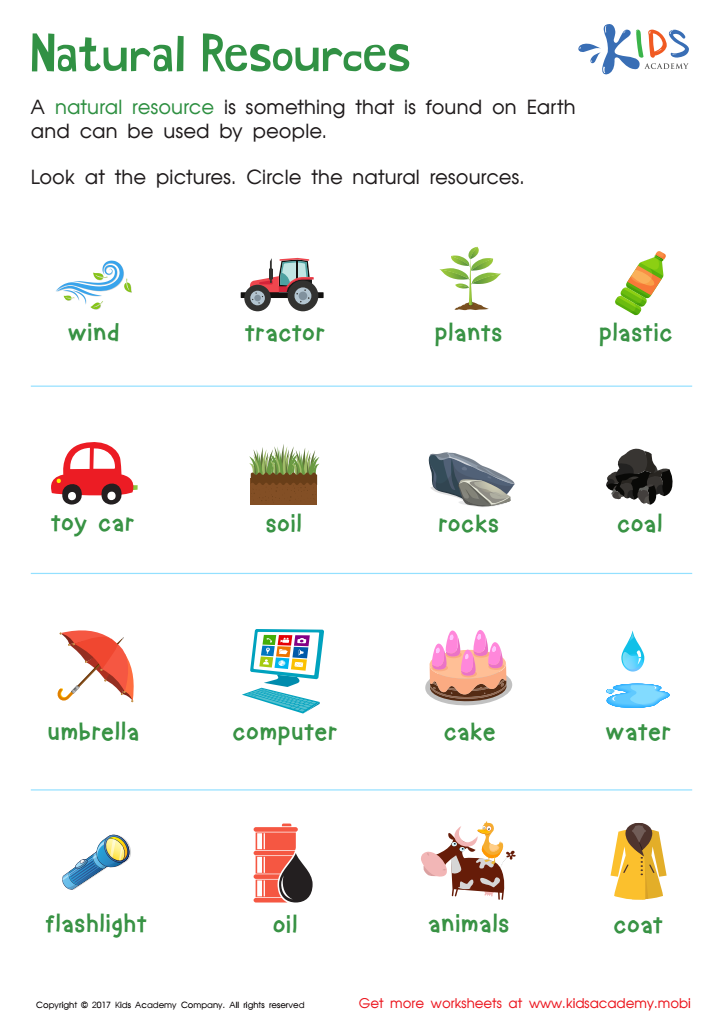
Natural Resources Worksheet
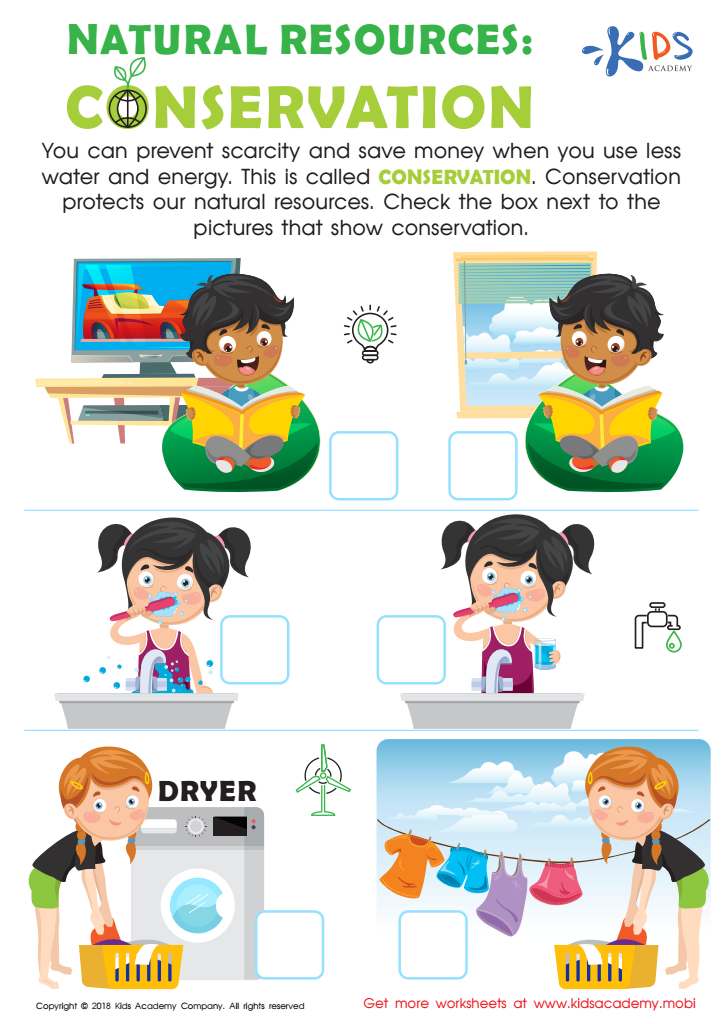
Natural Resources: Conservation Worksheet
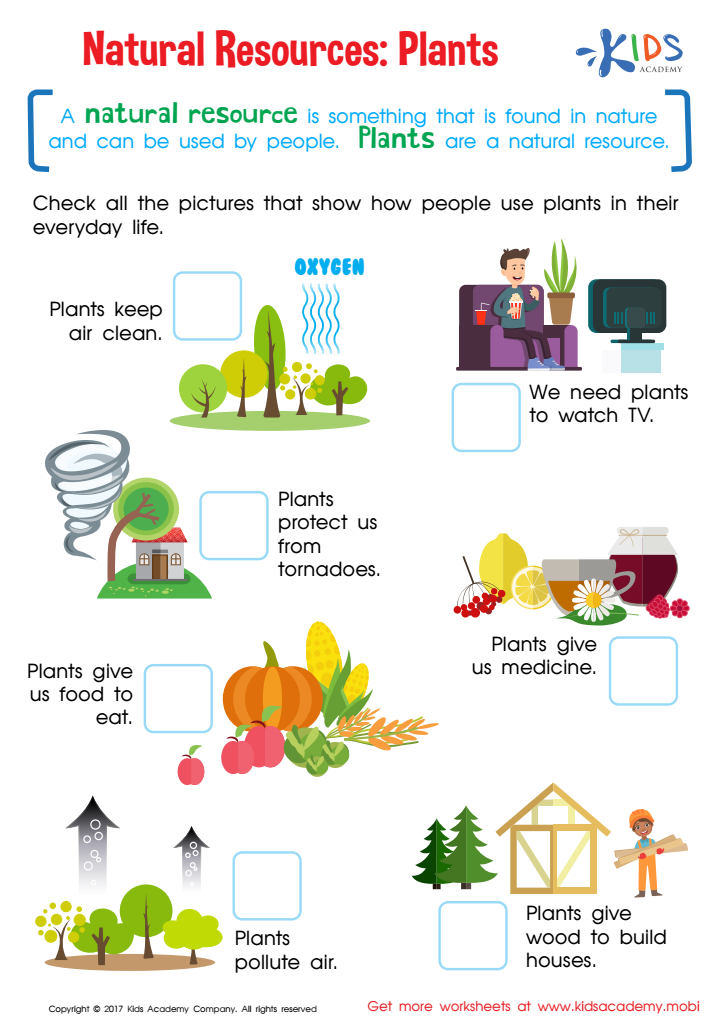
Natural Resources: Plants Worksheet





Understanding natural resources and our planet is crucial for children aged 5-8 as it lays the foundation for environmental literacy and stewardship. At this young age, children are naturally curious and open to learning about their surroundings, making it an ideal time to instill a sense of responsibility towards the Earth and its resources.
Parents and teachers play a vital role in shaping this understanding. By familiarizing children with concepts like renewable versus non-renewable resources, they can foster appreciation and respect for nature. Activities such as nature walks, gardening, or simple science experiments can engage young minds and help them connect the dots between their actions and the environment.
Additionally, teaching about natural resources instills values like conservation and sustainability, essential for nurturing a generation that prioritizes environmental health. It encourages critical thinking about how everyday choices impact the planet.
Moreover, instilling eco-awareness at an early age can inspire lifelong habits of responsible consumption and activism, ensuring the well-being of the planet for future generations. In essence, by integrating environmental education into early learning, parents and teachers can empower children to become conscientious caretakers of the Earth and its abundant resources.







