Verb identification Normal Writing Worksheets for Ages 5-8
6 filtered results
-
From - To
Discover the perfect resource for teaching young children verb identification with our Normal Writing Worksheets for Ages 5-8 from Kids Academy. These engaging, age-appropriate worksheets are designed to make learning fun and effective for early learners. Each sheet focuses on identifying verbs within sentences, helping children develop critical grammar skills. With a variety of activities and colorful illustrations, your children will stay motivated and enjoy enhancing their writing abilities. Ideal for classrooms or at-home learning, our worksheets provide valuable practice in a way that captures the interest and imagination of young minds. Start building strong foundational grammar skills today!
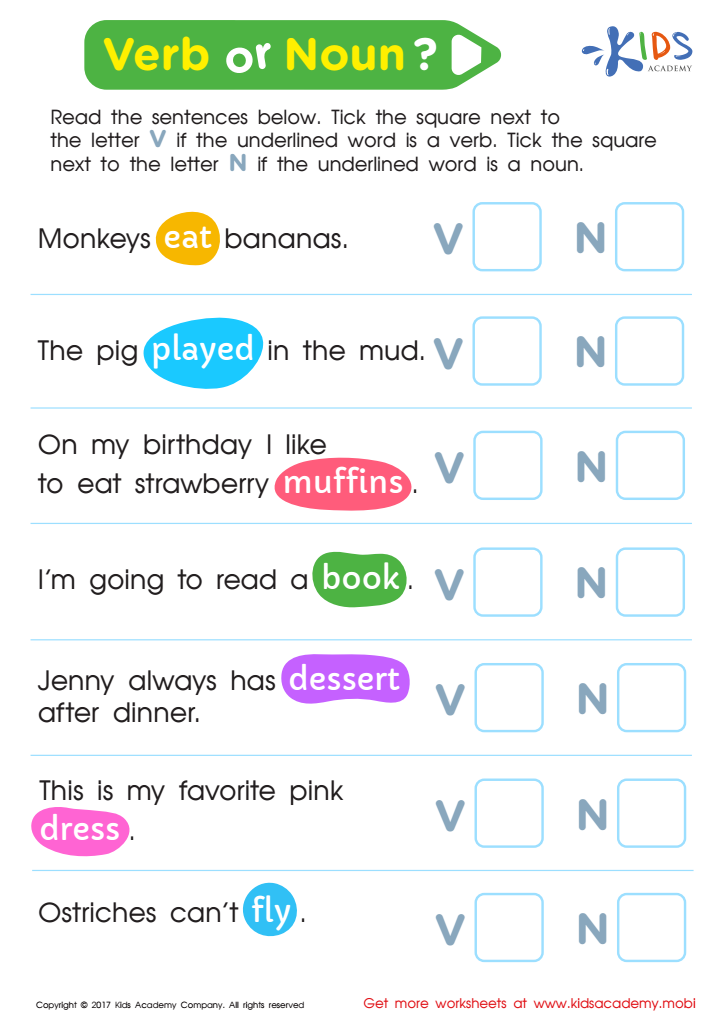
Verb or Noun Worksheet
 Assign to My Students
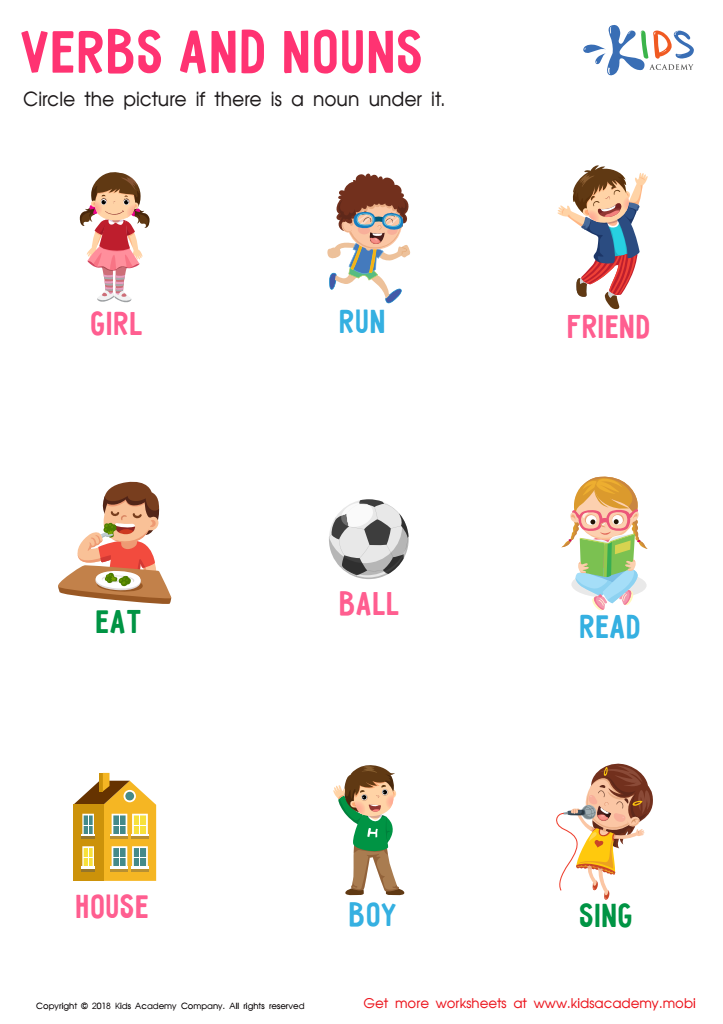
Verbs and Nouns Worksheet
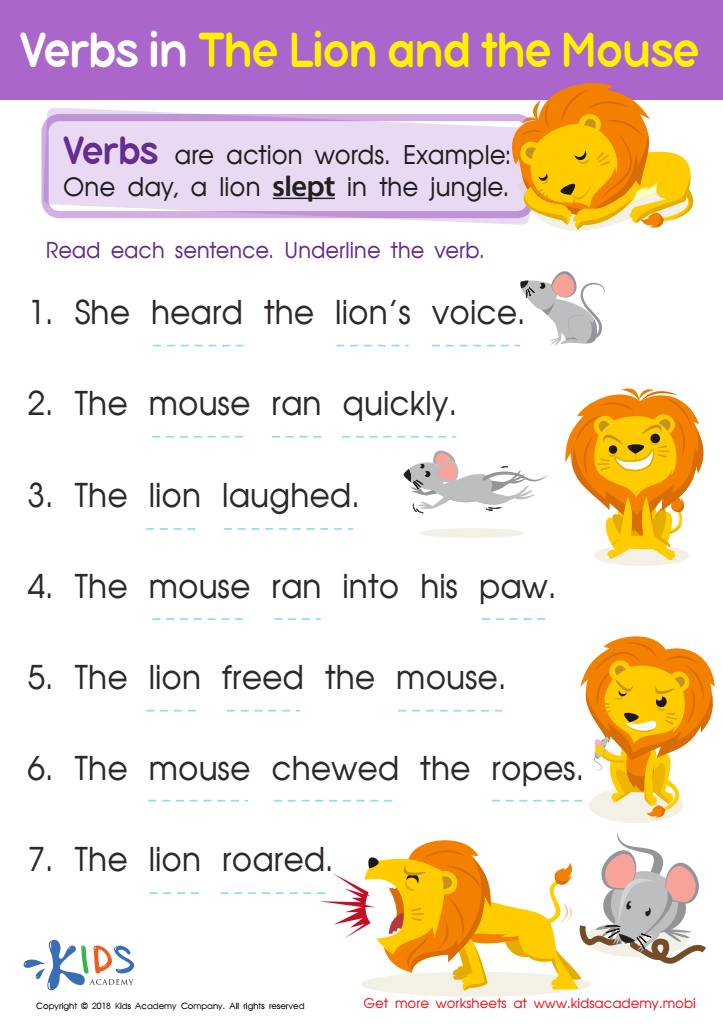
Verbs in The Lion and the Mouse Worksheet
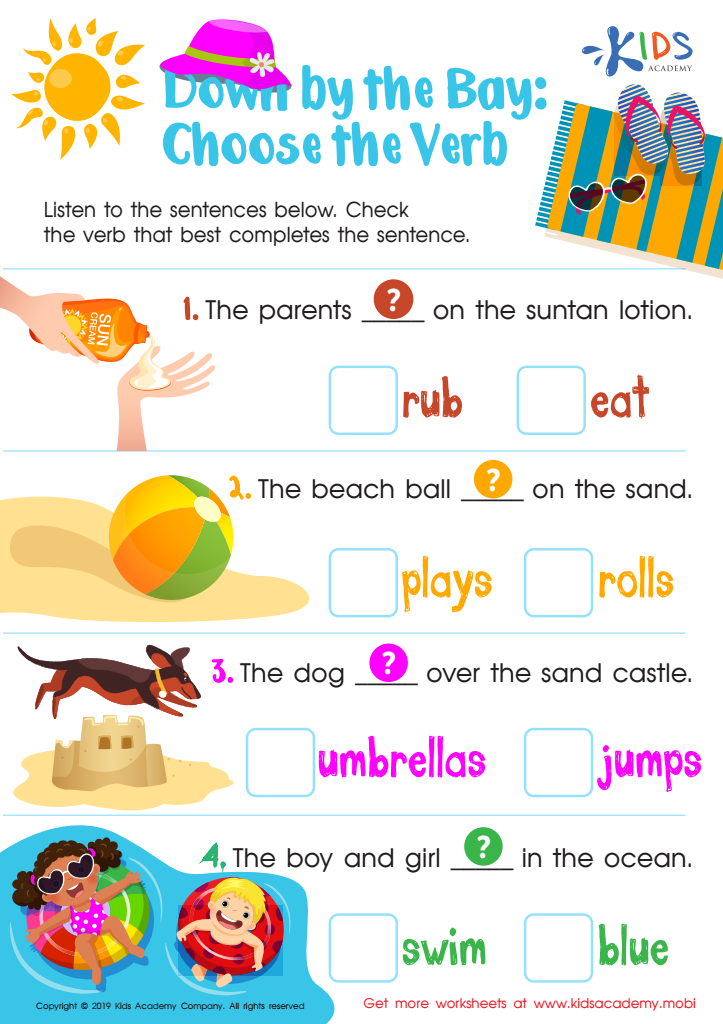
Down by the Bay: Choose the Verb Worksheet
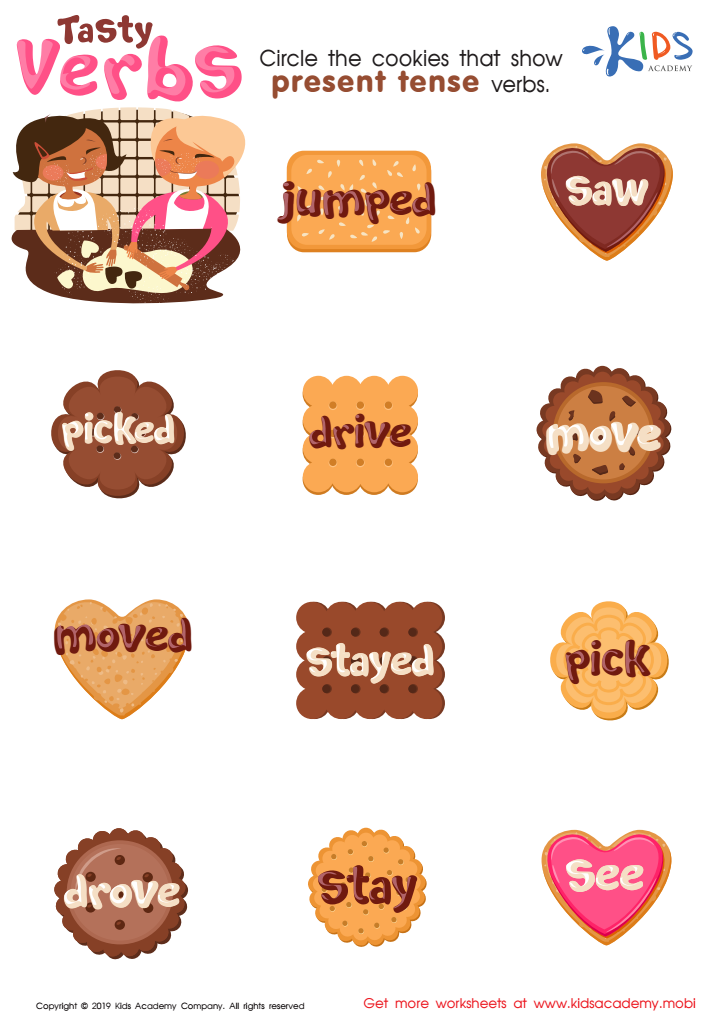
Tasty Verbs Worksheet
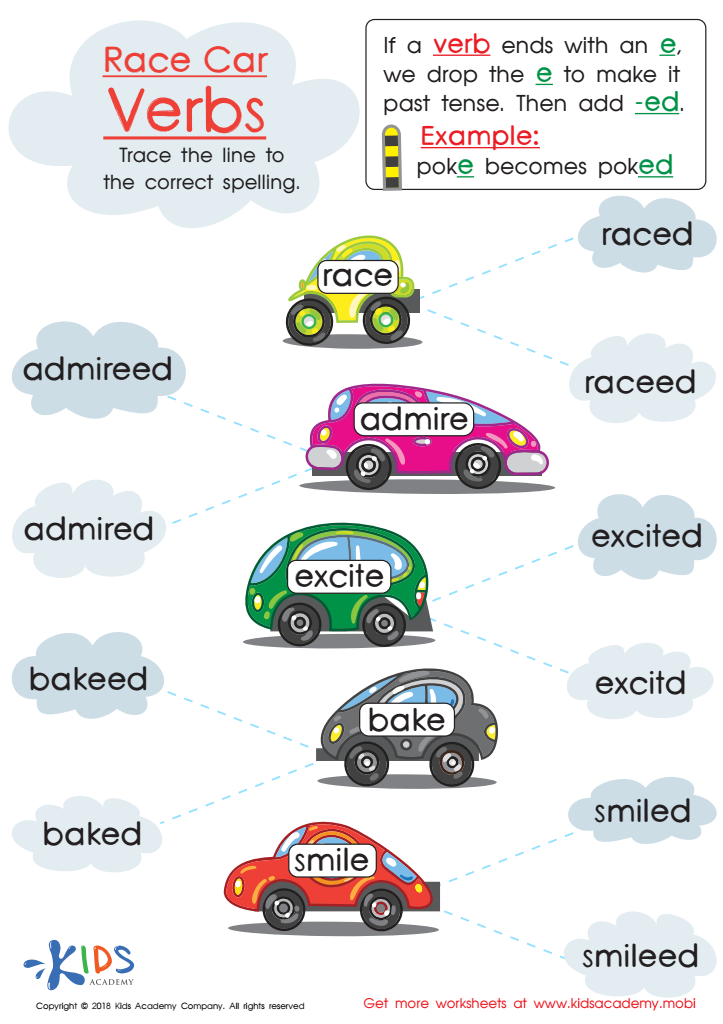
Race Car Verbs Worksheet








For children aged 5-8, learning to identify verbs is crucial since verbs are the action words that drive sentences and convey movement and activity. Knowing verbs enhances linguistic development by expanding vocabulary, which aids in more effective communication. This age is when children's linguistic and cognitive faculties are most malleable, making it an ideal time to instill fundamental grammar skills.
Parents and teachers should care because a strong grasp of verbs helps children read more fluently and comprehend what they are reading. As kids recognize verbs, they start forming more complex sentences, contributing to better writing skills. Identifying daily actions like "run," "eat," and "play" builds their ability to express experiences and ideas, crucial for both academic and social interactions.
Processing verbs also supports children's ability to follow instructions, participate in discussions, and engage with stories more deeply. Consequently, they can develop critical thinking, sequencing, and narrative skills. Academic performance across subjects improves since clear communication is essential in math, science, and other areas.
Investing time in teaching verbs equips children with linguistic tools to navigate and actively participate in their environments, fostering confidence and competence in language use that benefits lifelong learning.