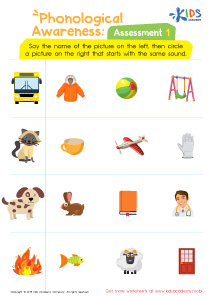
Normal Vowels and Consonants Worksheets for Ages 5-9 - Page 2
26 filtered results
-
From - To
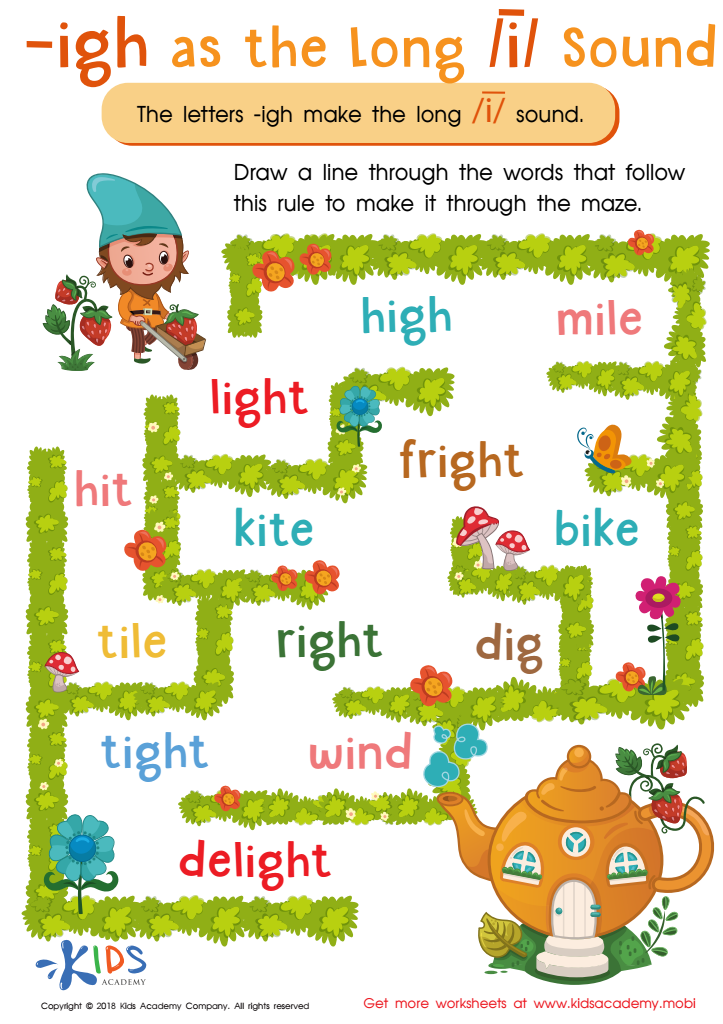
Reading: IGH as Long I Worksheet
 Assign to My Students
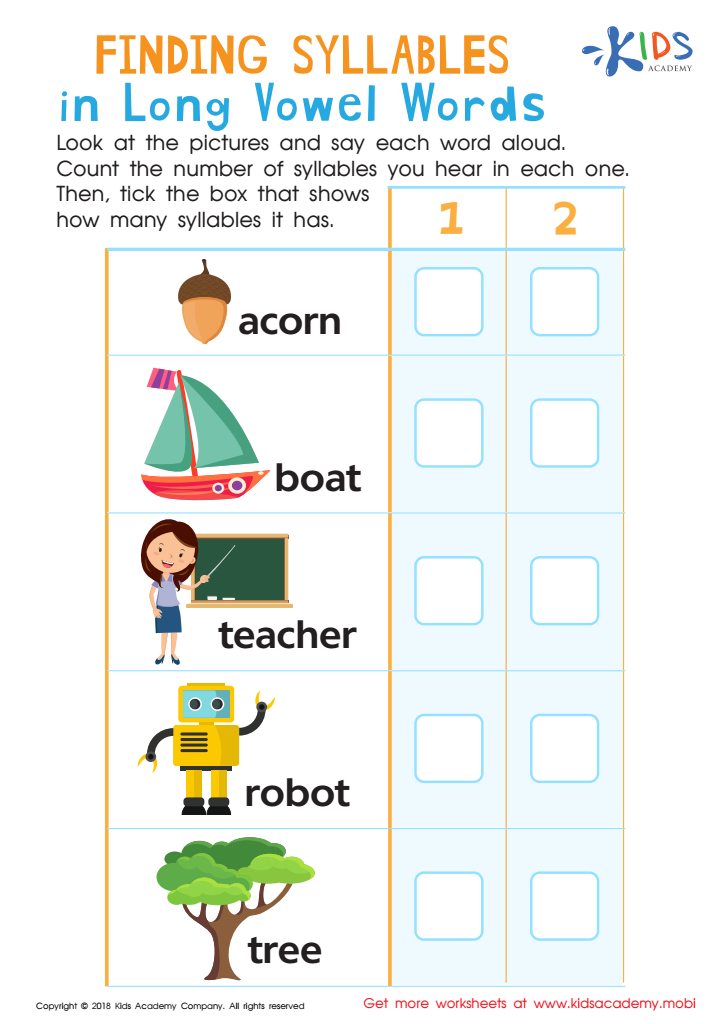
Finding Syllables in Long Vowel Words Worksheet



Parents and teachers play a crucial role in the early literacy development of children aged 5-9, and understanding normal vowels and consonants is essential. At this age, children begin to decode words and recognize phonetic patterns, which are foundational skills for reading and writing.
Normal vowels (a, e, i, o, u) and consonants represent the building blocks of language. By mastering these sounds, children can successfully form words and sentences, improving their communication skills. Teaching children the differences between short and long vowel sounds, alongside consonant sounds, enhances phonemic awareness—critical for reading proficiency.
Encouraging an environment that values phonics also benefits spelling and promotes confidence in children as they engage with text. When children grasp these concepts, they become more enthusiastic readers, often leading to lifelong learning.
Furthermore, a strong understanding of vowel and consonant rules simplifies the task of learning more complex language structures in the future. As parents and teachers model correct usage and provide engaging activities that highlight these sounds, children gain a comprehensive foundation, fostering their overall academic success while preparing them for more advanced literacy skills as they grow. In summary, prioritizing vowels and consonants is key to nurturing competent, confident readers and communicators.