Learning about ecosystems Normal Worksheets for Ages 5-9
3 filtered results
-
From - To
Discover the fascinating world of ecosystems with our engaging Normal Worksheets designed for children ages 5-9. These fun and interactive activities help young learners understand the complexities of different habitats, the plants and animals that reside within them, and their vital roles in maintaining ecological balance. From coloring pages to matching games, our worksheets promote hands-on learning and critical thinking skills, empowering your child to explore nature in an educational way. Perfect for homework, classroom activities, or at-home learning, these resources encourage curiosity and appreciation for the environment. Instill a love for the planet in your young ones today!
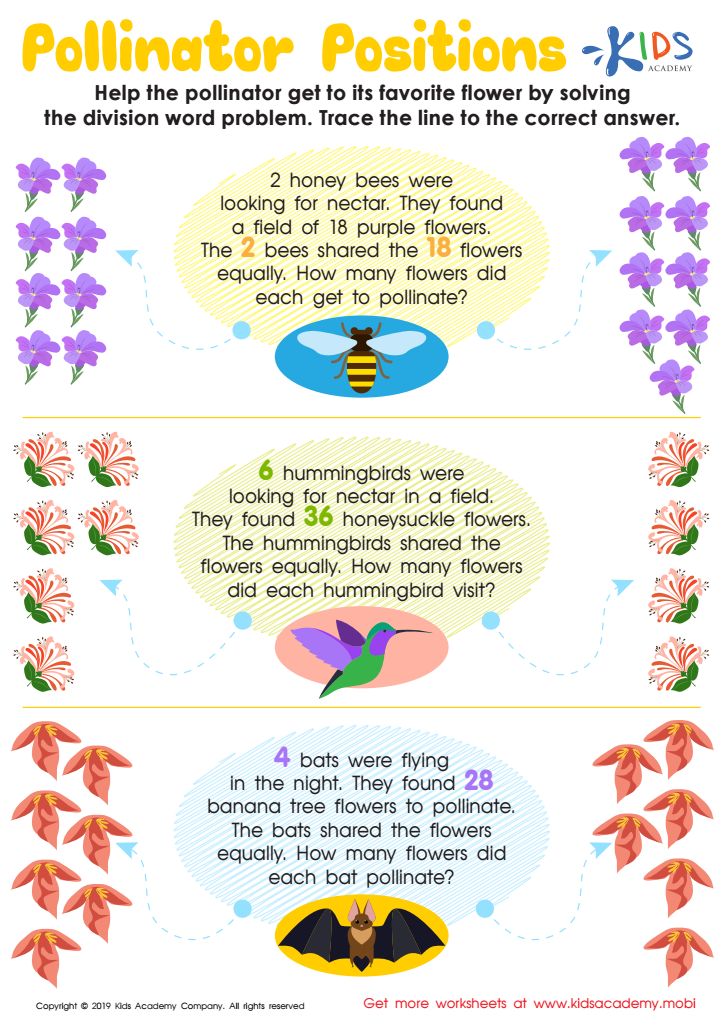
Pollinator Positions Worksheet
 Assign to My Students
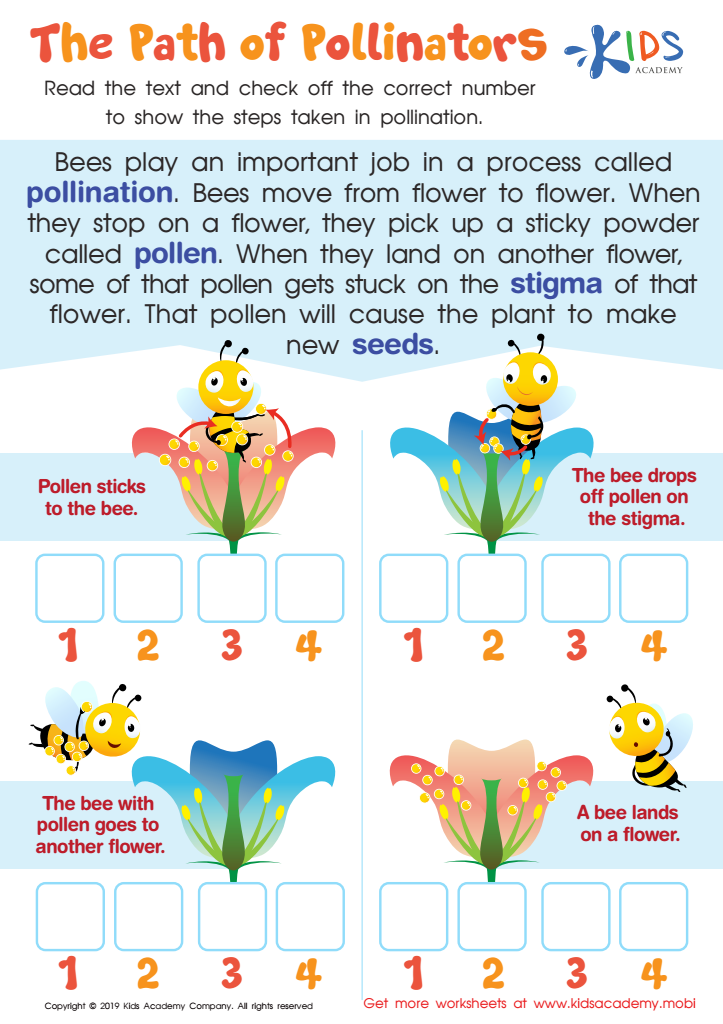
The Path of Pollinators Worksheet
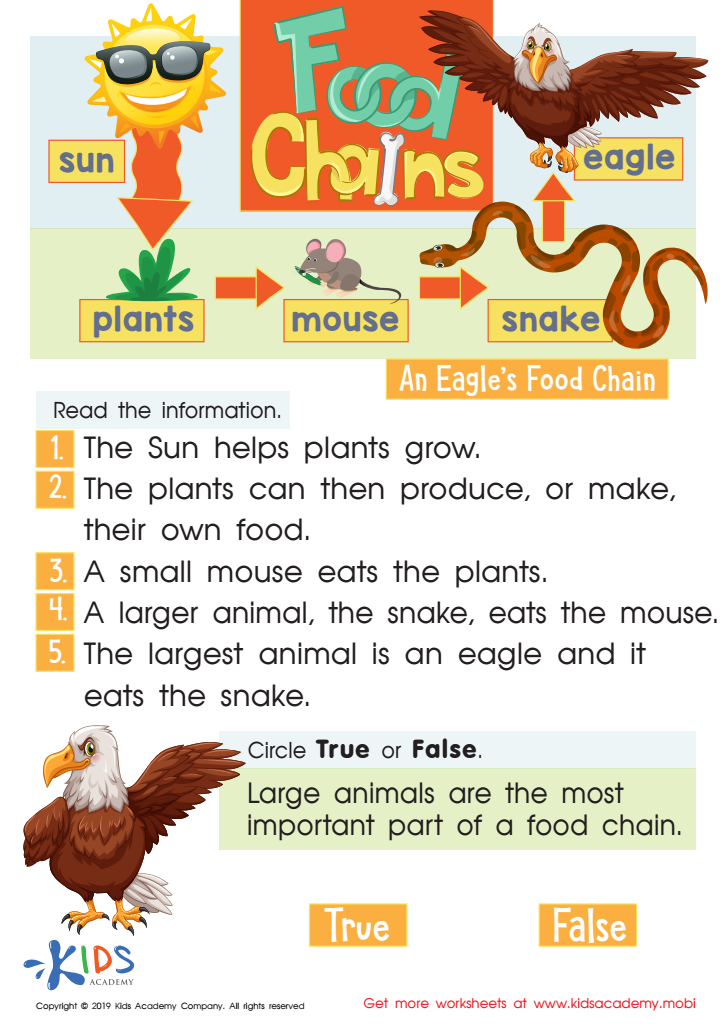
Food Chains Worksheet








Parents and teachers should care about helping children learn about ecosystems because this knowledge forms the foundation for understanding the environment and our place in it. At ages 5 to 9, children are naturally curious and eager to explore, making it the perfect time to introduce concepts about plants, animals, and their interactions.
Understanding ecosystems helps children grasp how living things depend on each other for survival. For instance, they learn about the roles of producers, consumers, and decomposers, developing respect for nature and the importance of biodiversity. By exploring local ecosystems, like parks or gardens, children can enhance observational skills and engage in hands-on learning.
Moreover, knowledge about ecosystems fosters a sense of responsibility toward the environment. Educating children about the impact of pollution and deforestation can instill values of stewardship and encourage sustainable practices from a young age.
Emphasizing ecosystems in the curriculum also supports critical thinking, as children ask questions and solve problems related to environmental changes. Overall, teaching about ecosystems cultivates environmental awareness in children, ensuring that they grow into informed, caring adults who value and protect our planet.








