Observational skills development Normal Worksheets for Ages 5-9
3 filtered results
-
From - To
Enhance your child's observational skills with our engaging worksheets designed for ages 5-9. These resources are perfect for young learners, focusing on activities that promote critical thinking and attention to detail. Our carefully crafted worksheets encourage children to observe their surroundings, identify patterns, and make connections, all while having fun! Each worksheet features age-appropriate content that suits various learning styles, ensuring an enjoyable learning experience. Whether at home or in the classroom, these worksheets provide an excellent opportunity for parents and educators to support children's cognitive growth. Discover the importance of observation in a child's development and watch their skills flourish!
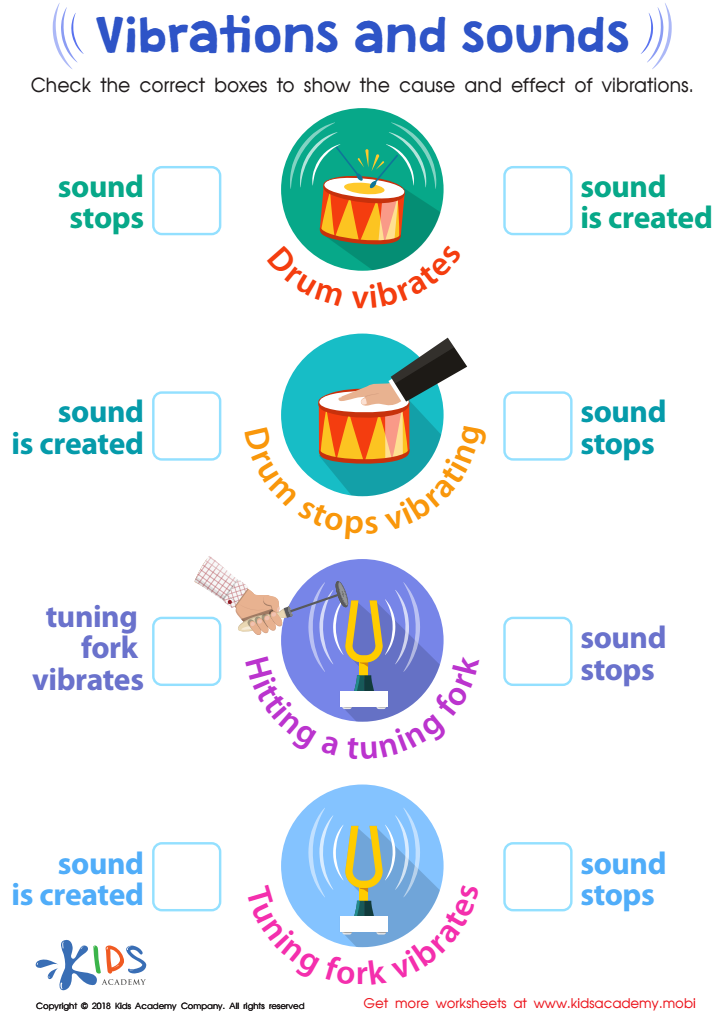
Vibrations and Sounds Worksheet
 Assign to My Students
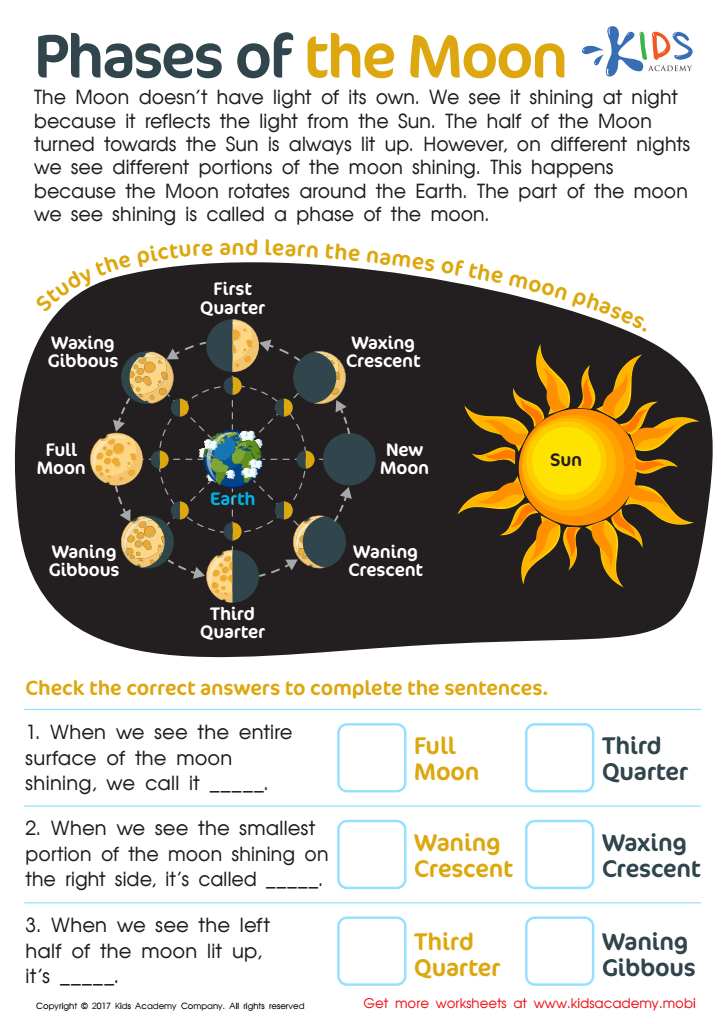
Phases of The Moon Worksheet
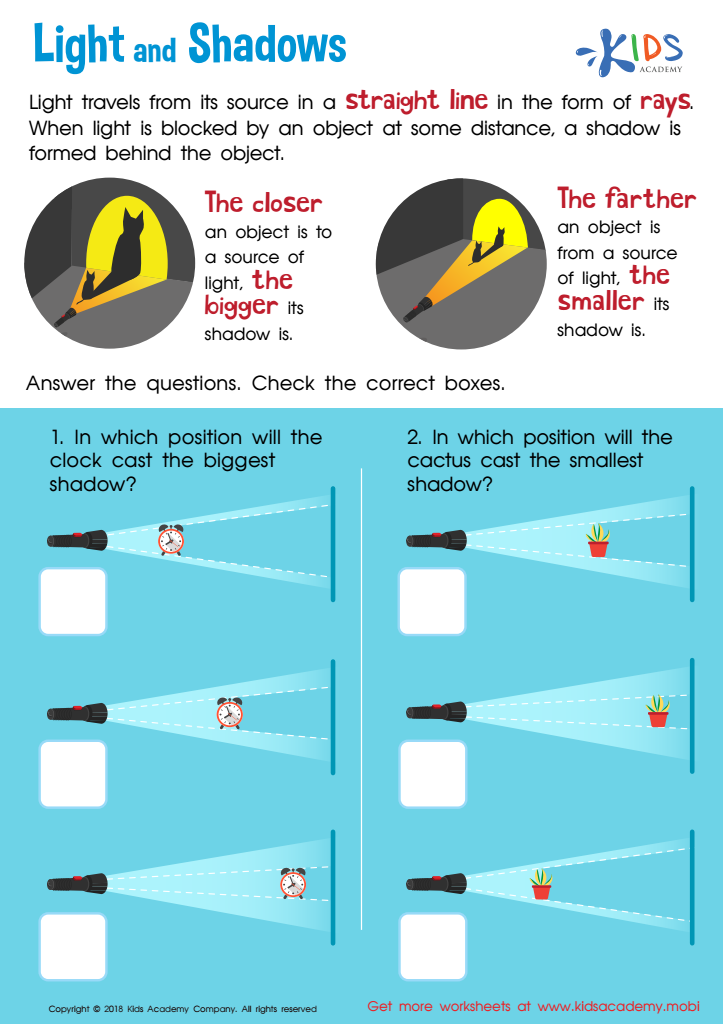
Light and Shadow Worksheet for Grade 3




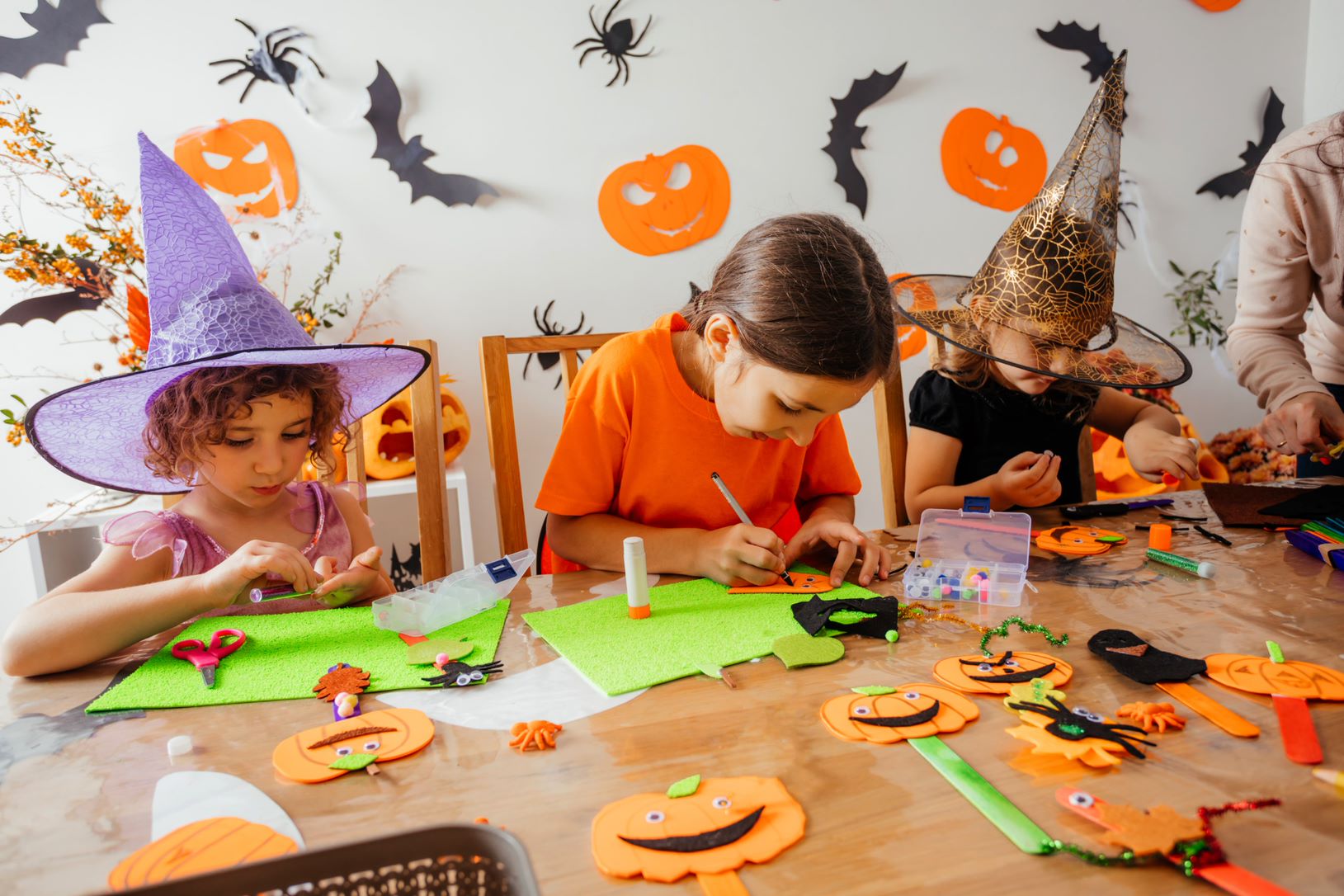



Observational skills are fundamental to a child’s cognitive and emotional development, especially for those aged 5-9. During these formative years, children begin to engage more deeply with their surroundings, making observation essential for learning and problem-solving. Parents and teachers should recognize that developing these skills enhances a child’s ability to gather information, understand relationships, and identify patterns, which are critical for success across various subjects, particularly in science and mathematics.
Moreover, strong observational skills contribute to social-emotional development. Children who can keenly observe social cues and interact meaningfully with peers tend to form better relationships and navigate conflicts more effectively. This results in a more inclusive and supportive classroom atmosphere and boosts a child's self-esteem and sense of belonging.
Additionally, these skills encourage curiosity and creativity. By observing the world attentively, children are motivated to ask questions and explore, laying the foundation for lifelong learning. Ultimately, parents and teachers play a vital role by fostering environments that nurture observational acuity—through guided activities, open-ended questions, and encouraging reflection—thereby equipping children with essential tools for academic success and personal growth. Cultivating these skills will have lasting impacts, positively influencing their approach to education and interactions throughout their lives.








