Understanding economics Normal Worksheets for Ages 5-9
3 filtered results
-
From - To
Discover our "Understanding Economics" worksheets, designed specifically for children ages 5-9. Our engaging and educational worksheets introduce young learners to the basics of economics through fun and interactive activities. Concepts such as trade, money, goods and services, and decision-making are simplified to ensure clear understanding and enjoyment. These printable resources are perfect for parents and educators looking to foster early learning skills and critical thinking in their students. With colorful illustrations and age-appropriate content, watch your child's knowledge of economics grow while having fun. Transform learning into an adventure with our expertly crafted worksheets today!
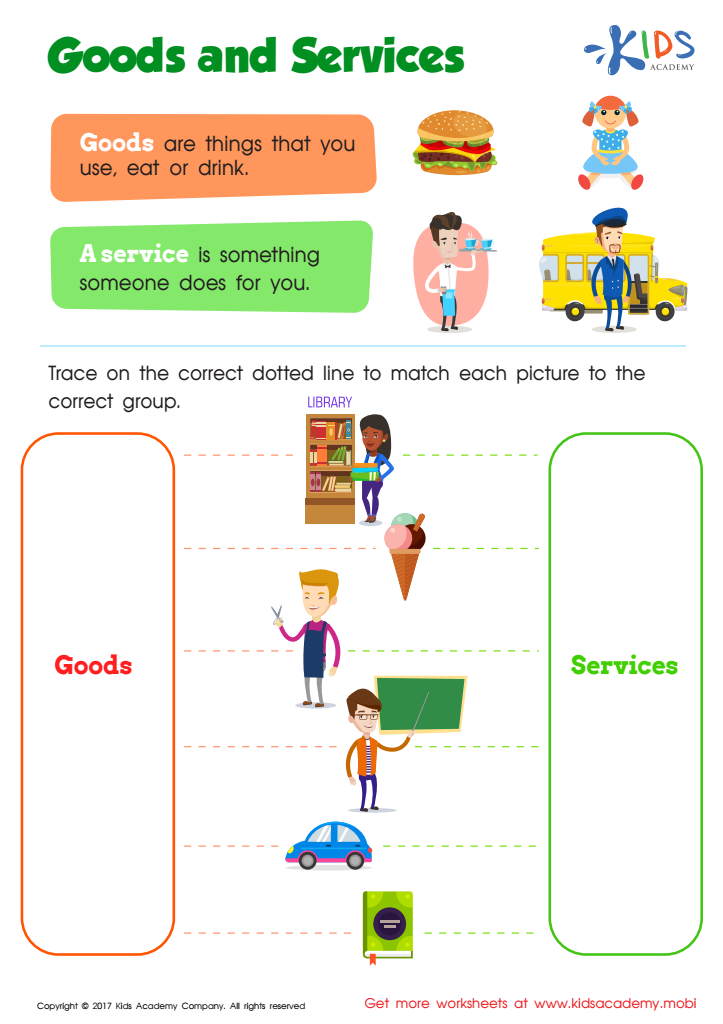
 Assign to My Students
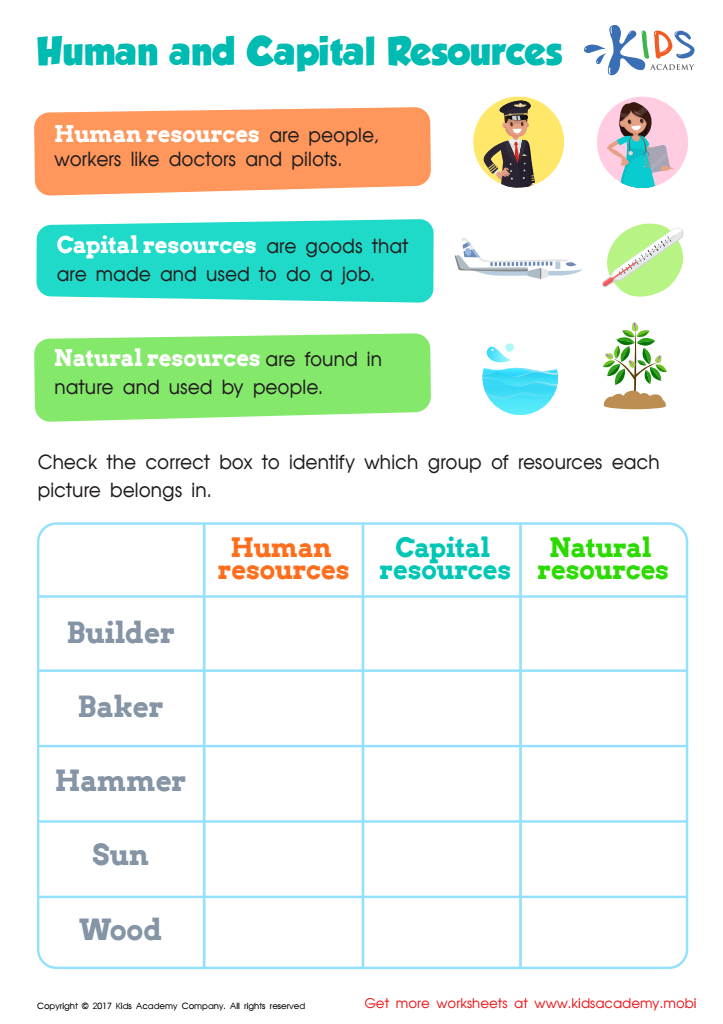
Human and Capital Resources Worksheet
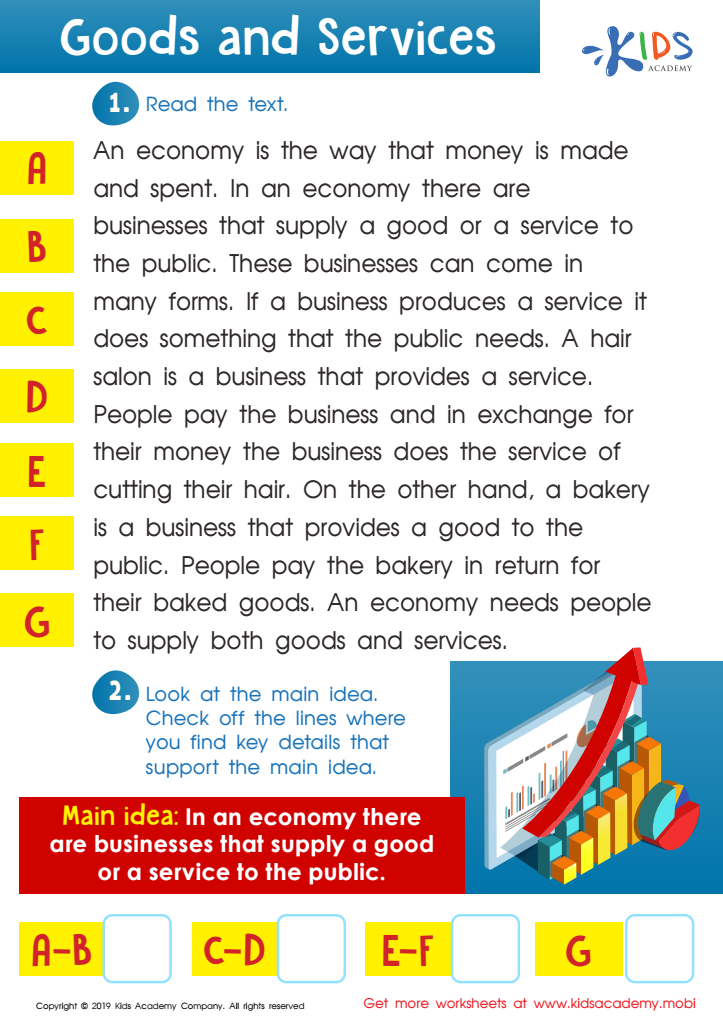
Goods and Services Worksheet






Understanding basic economic principles at an early age provides a foundation for wiser financial habits and better decision-making in later life. For children aged 5-9, learning simple concepts such as saving, spending, and sharing may seem minor, but these lessons form the bedrock of financial literacy.
One primary reason parents and teachers should care about instilling these principles early on is that it helps children develop a sense of responsibility. When kids learn about saving and prioritizing, they begin to understand the value of money and resources, promoting a mindset geared towards sustainability and smart choices. This foundational knowledge benefits them as they age, helping them navigate consumer society thoughtfully.
Moreover, early exposure to economics can foster critical thinking and problem-solving skills. Through simple activities like managing an allowance or engaging in trading games, children learn to weigh options, anticipate outcomes, and make informed decisions. These skills are crucial across all domains of learning and personal development.
Additionally, understanding basic economics encourages empathy and cooperation. Concepts of sharing and donations teach young kids about fairness, generosity, and community involvement, preparing them for better social relationships.
Therefore, integrating economic principles in early education provides lifelong benefits, helping mold financially savvy, responsible, and empathetic individuals.








