
Word identification Normal Worksheets for Ages 5-9
9 filtered results
Difficulty Level
Grade
Age
-
From - To
Subject
Activity
Standards
Enhance your child's reading skills with our Word Identification Normal Worksheets for ages 5-9. Designed to make learning engaging and interactive, these worksheets foster critical reading ability by helping young learners recognize and understand words in context. Perfect for early-grade students, each worksheet builds foundational skills essential for developing literacy. Packed with fun activities, colorful images, and age-appropriate content, our resources ensure that learning remains enjoyable and effective. Ideal for home or classroom use, our Word Identification Worksheets offer the support children need to become confident readers. Make reading fun and enriching with Kids Academy!
Favorites
With answer key
Interactive
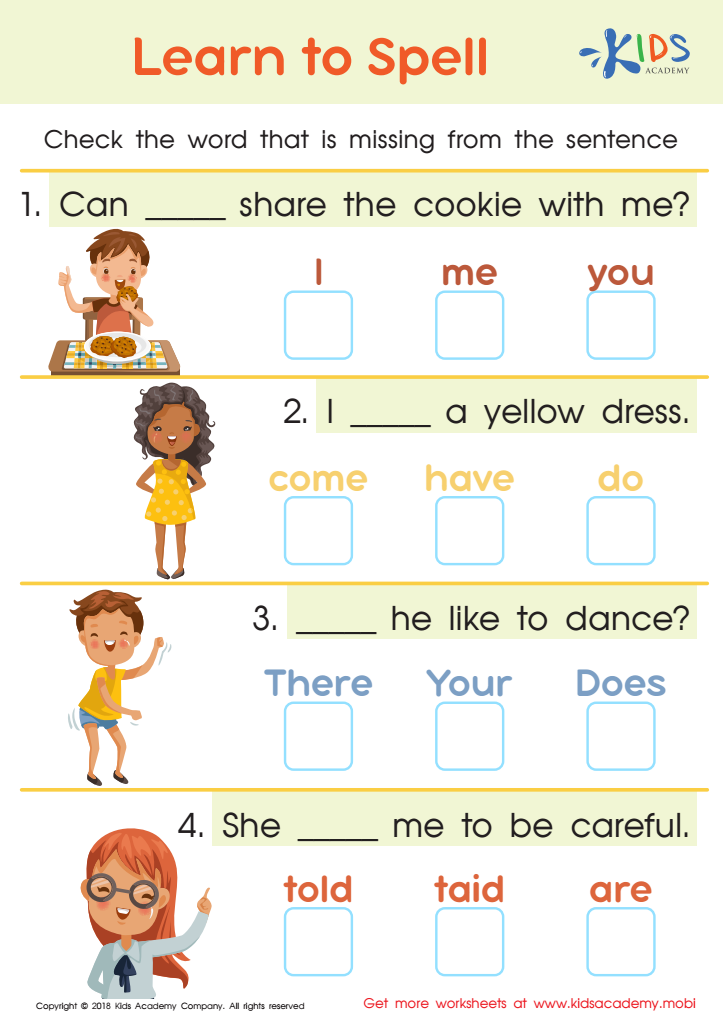
Learn to Spell Worksheet
Help sharpen spelling skills with a simple worksheet. Read sentences aloud and show which word is missing. Ask students to pick the correct word from the options. Ensure they check the missing word for accuracy.
Learn to Spell Worksheet
Worksheet
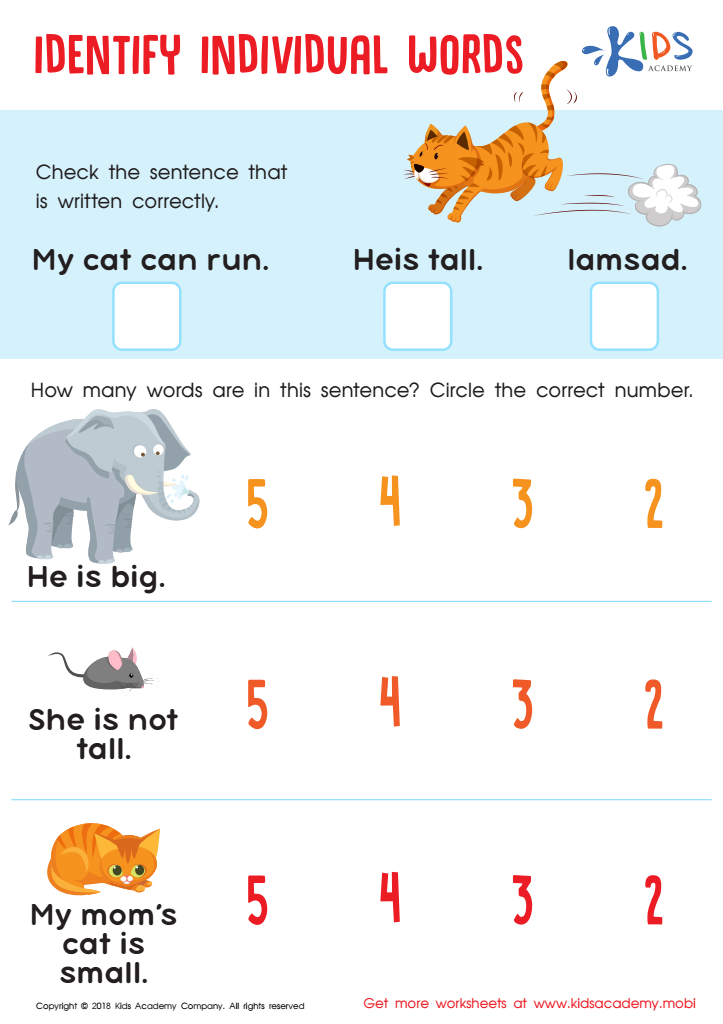
Identify Individual Words Worksheet
Does your child have trouble constructing sentences? Check out this worksheet! It will help them identify words that make up sentences and assess how well they can read and answer questions. The first part tests how well they can recognize a written sentence. The second part has them read questions and circle the correct number of words. Give it a try!
Identify Individual Words Worksheet
Worksheet
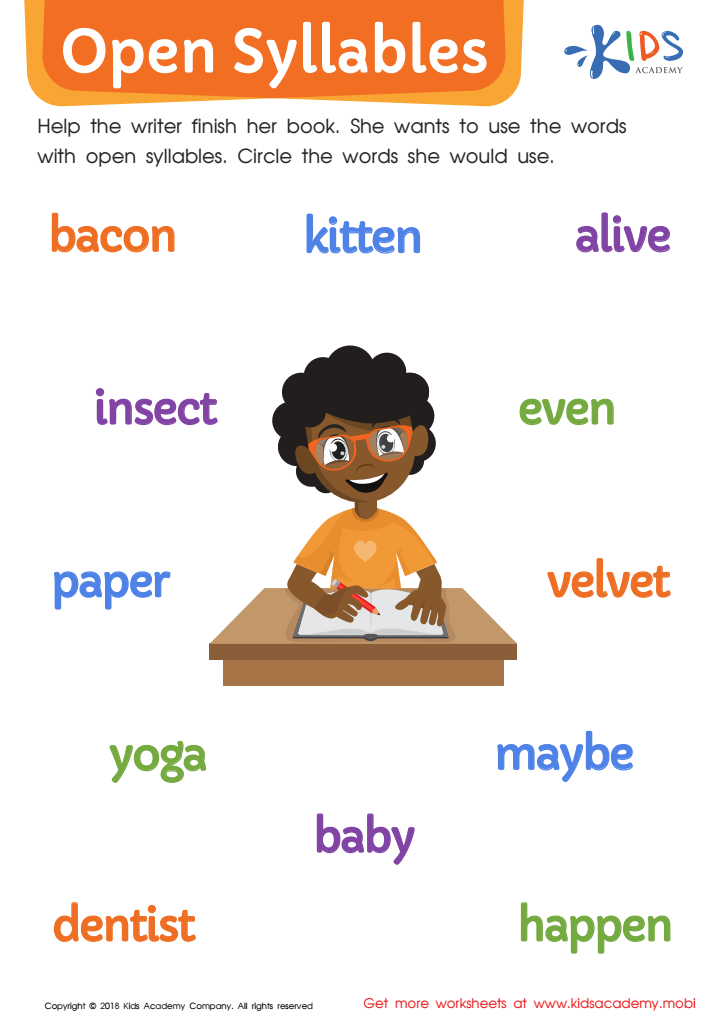
Open Syllables Worksheet
Before beginning this worksheet, make sure your child knows what open syllables are. If not, take time to teach them with examples. Then, help the writer finish her book by circling words with open syllables. She needs your child's help!
Open Syllables Worksheet
Worksheet
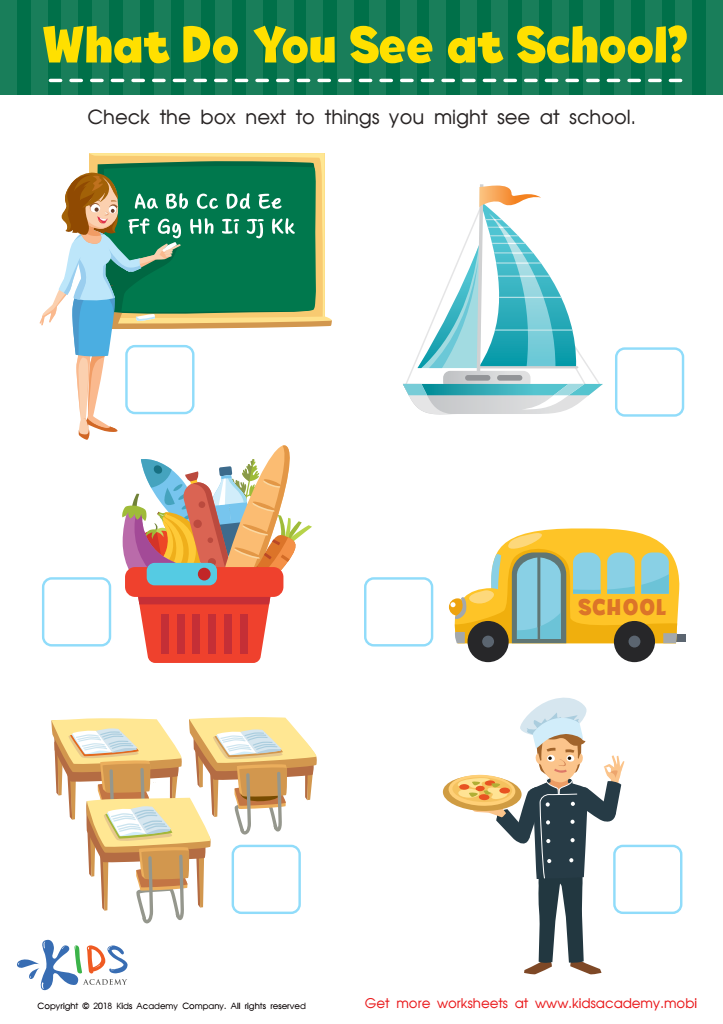
What Do you See at School? Worksheet
Have your kids give you a list of things they see at school. Then, view the worksheet together. Ask them to check the boxes next to the school items. Look for objects that can be found at school and those that don't belong. This is a great way to check their knowledge of what they see at school daily, except on weekends and holidays.
What Do you See at School? Worksheet
Worksheet
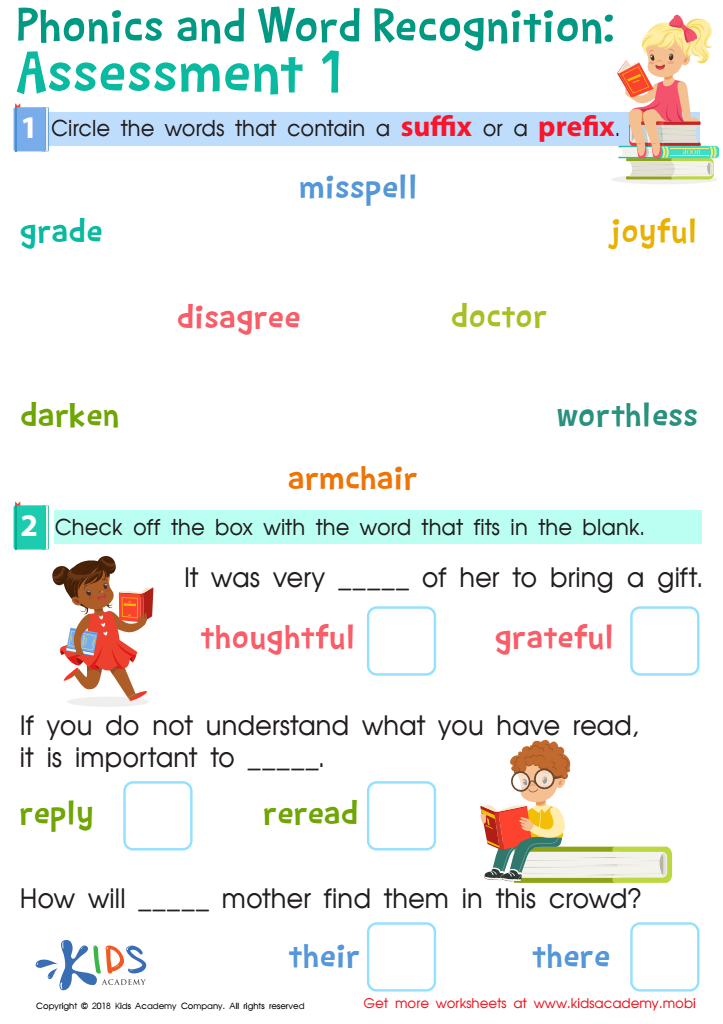
Phonics and Word Recognition: Assessment 1 Worksheet
Explain prefixes (words added to start of another word to give it a new meaning) and suffixes (added to end of word to change its meaning) to your kids with examples like 'unhappy' (prefix) and 'forgetful' (suffix). Now, help your child complete this worksheet, including circling words and checking boxes.
Phonics and Word Recognition: Assessment 1 Worksheet
Worksheet
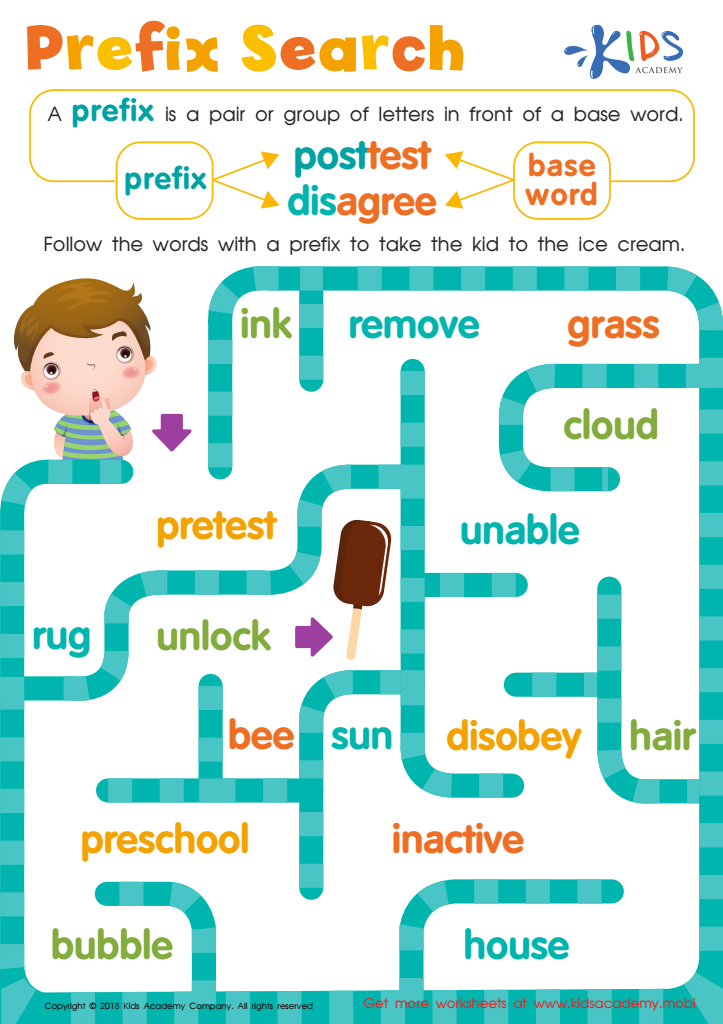
Reading: Prefix Search Worksheet
Maze your way through prefixes! This worksheet helps students practice reading new words with a prefix and figuring out the base word. An understanding of prefixes gives students the skills to comprehend new words. A fun and useful activity for the reading classroom!
Reading: Prefix Search Worksheet
Worksheet
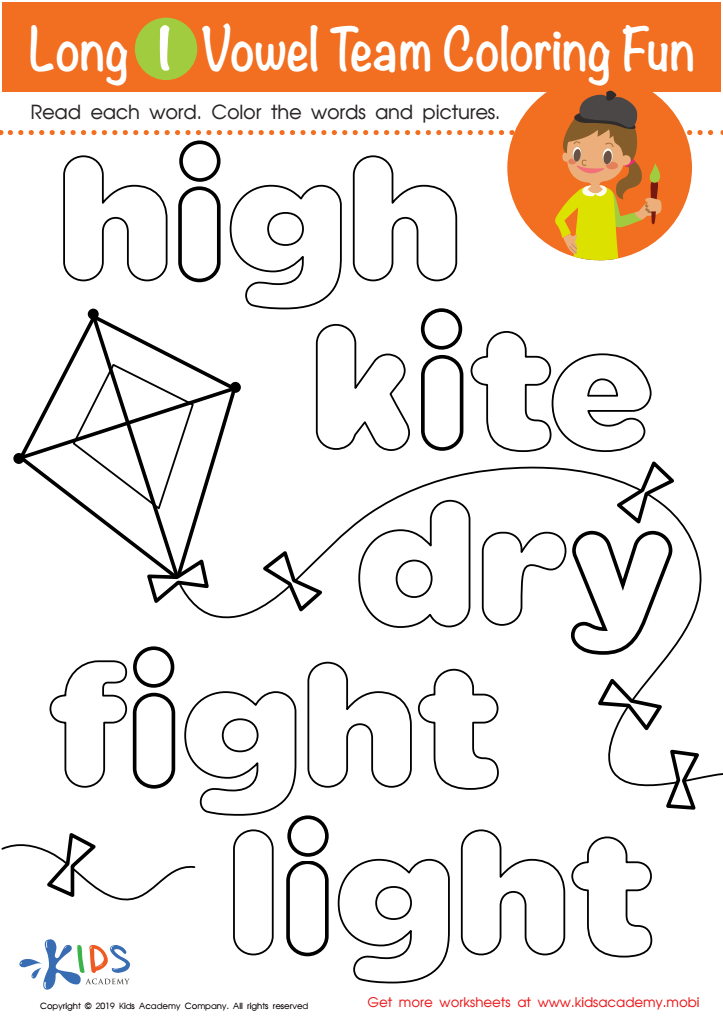
Long I Vowel Team Coloring Worksheet
This worksheet provides practice with letter combinations that make the long "i" sound while enhancing creativity and motor skills with a fun coloring activity. Unknowingly, new readers learn key phonics skills while having fun!
Download (PDF)
 Assign to My Students
Assign to My Students
Long I Vowel Team Coloring Worksheet
Worksheet
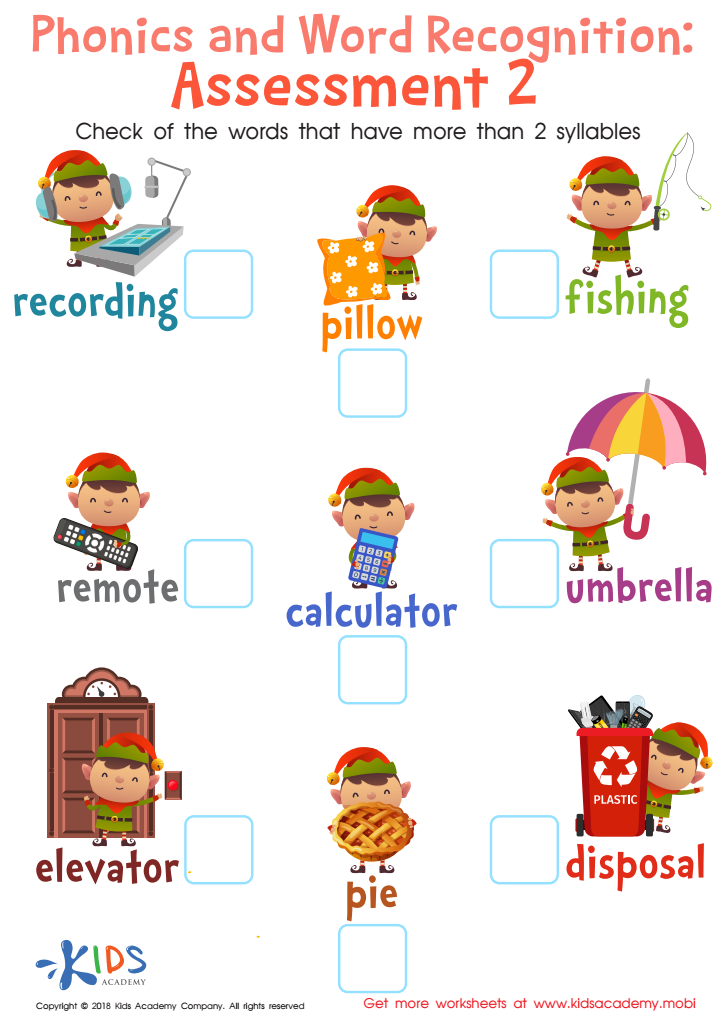
Phonics and Word Recognition: Assessment 2 Worksheet
Help your kids learn proper pronunciation by counting syllables. Most words they'll encounter have 1-3 syllables, making them simple to say. Have them repeat the words in your worksheet after you. Focus on longer words with more than two syllables.
Phonics and Word Recognition: Assessment 2 Worksheet
Worksheet
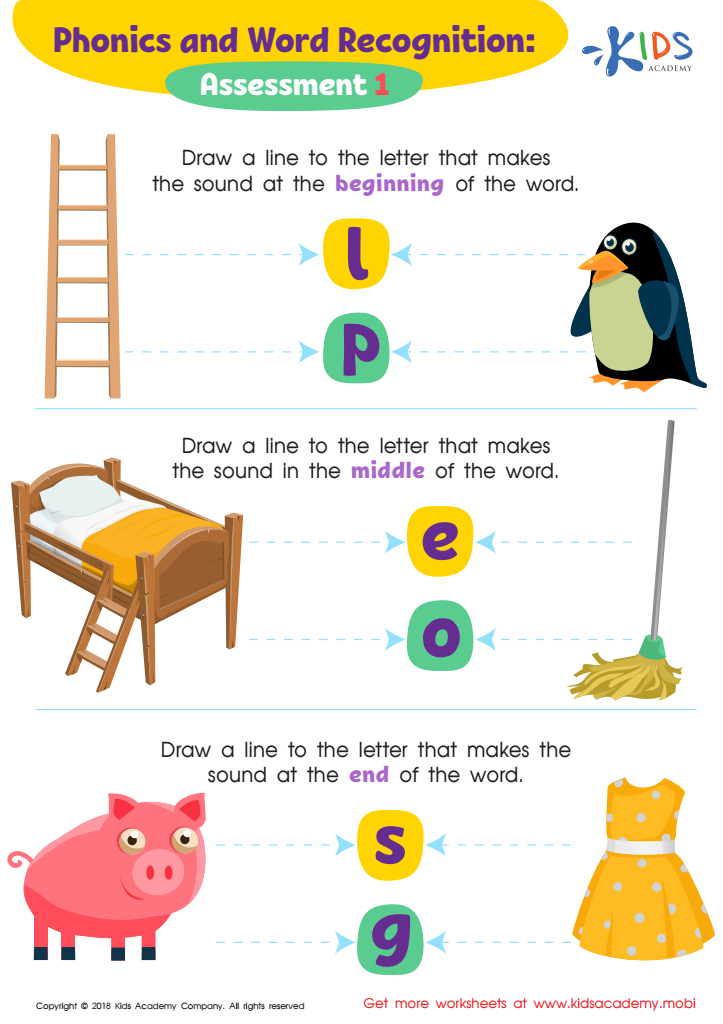
Phonics and Word Recognition: Assessment 1 ELA Worksheet
This fun worksheet tests your child's sound recognition skills for each part of a word. Ask your child to name each image and trace the line to match it with the corresponding letter. Listen for beginning sounds on 1st, middle sounds on 2nd, and ending sounds on 3rd. Encourage learning with this colorful and interactive activity!
Phonics and Word Recognition: Assessment 1 ELA Worksheet
Worksheet
Join Kids Academy for Free
Who is primarily going to use this learning content?






Word identification is a fundamental skill for children ages 5-9 as it lays the groundwork for reading comprehension, academic success, and lifelong learning. For parents and teachers, understanding its importance is crucial.
Firstly, word identification involves recognizing and understanding words quickly and accurately, which is essential for fluid reading. At this age, children transition from "learning to read" to "reading to learn." If they can identify words comfortably, they expend less cognitive effort on decoding, allowing them to focus more on comprehension and extracting meaning from the text.
Secondly, successful word identification skills foster confidence and a positive attitude towards reading. When children recognize words easily, they're more likely to enjoy reading, leading to increased practice and improvement. Conversely, struggling with word identification can cause frustration, leading to a lack of motivation and interest in reading.
Thirdly, early word identification predicts later academic achievement. Being able to read proficiently by the end of third grade is a strong indicator of future academic success. Poor early reading skills can set a precedent for ongoing challenges in various subjects, as much of the learning process hinges on reading ability.
Therefore, parents and teachers should prioritize activities and strategies that support word identification skills, such as phonics instruction, sight word practice, and reading aloud, to ensure a strong reading foundation for overall academic and future success.








