Reading comprehension Normal Geometry Worksheets for Ages 5-9
4 filtered results
-
From - To
Develop your child's reading and math skills simultaneously with our Reading Comprehension Normal Geometry Worksheets for ages 5-9. Perfectly tailored to young learners, these worksheets blend engaging geometric shapes with captivating stories that enhance reading comprehension. Kids will solve geometry-related problems while practicing their reading, ensuring a holistic educational experience. Dive into entertaining exercises designed to build a strong foundation in both math and literacy. Ideal for home or classroom use, our worksheets make learning fun and effective. Help your child excel in both subjects with interactive, expertly crafted resources available at Kids Academy.
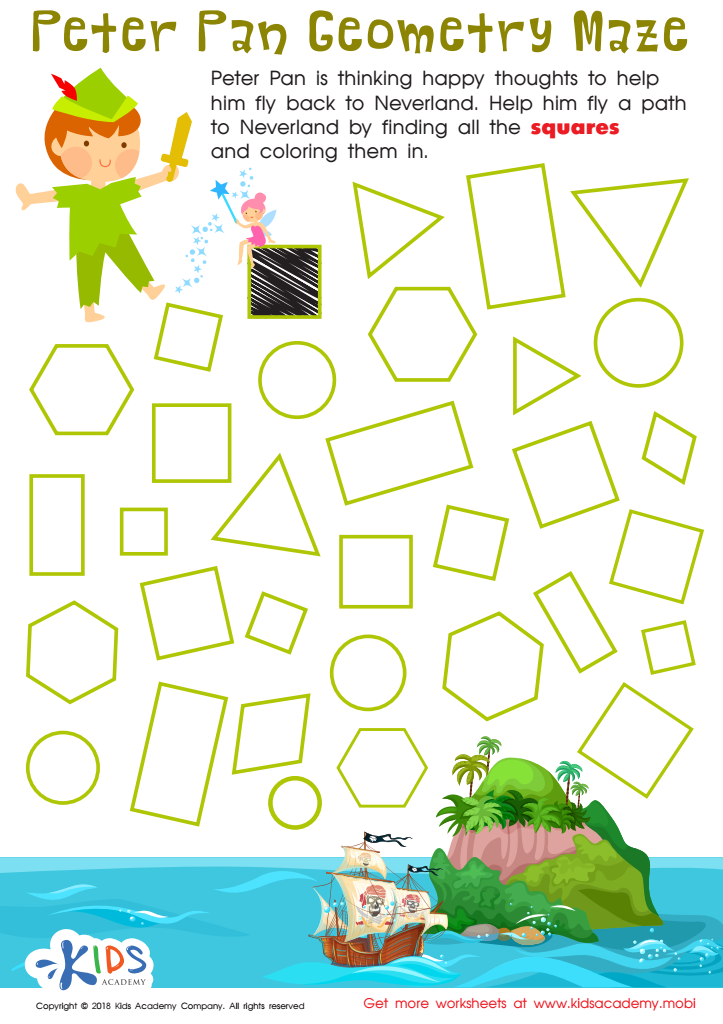
Peter Pan Worksheet
 Assign to My Students











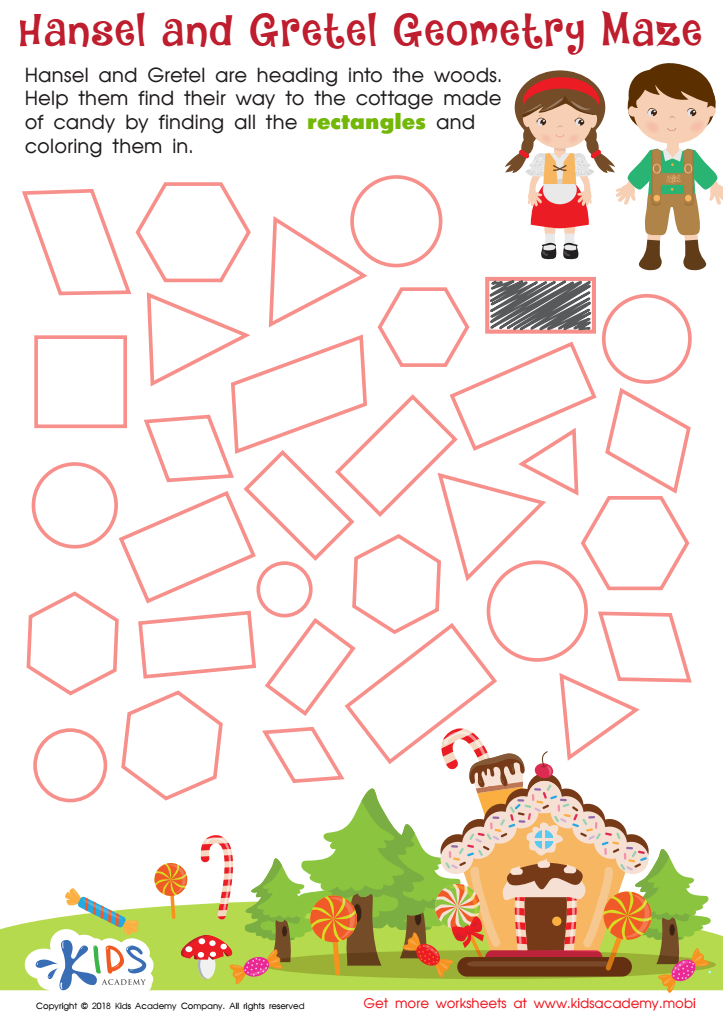
Hansel and Gretel Geometry Maze Worksheet
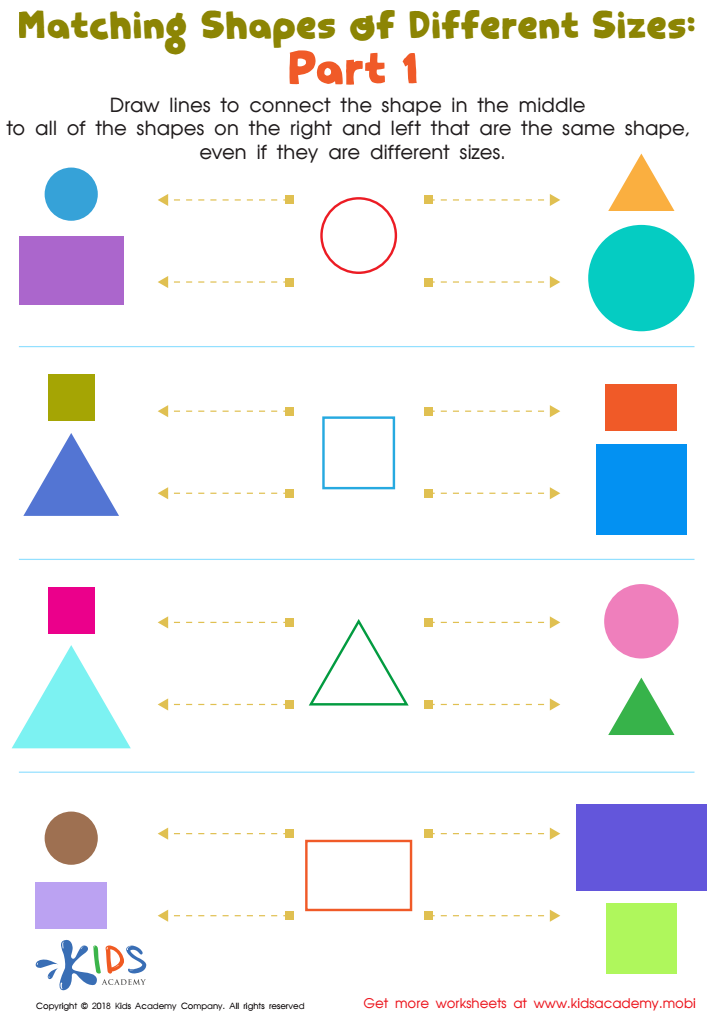
Geometry: part 1 Worksheet
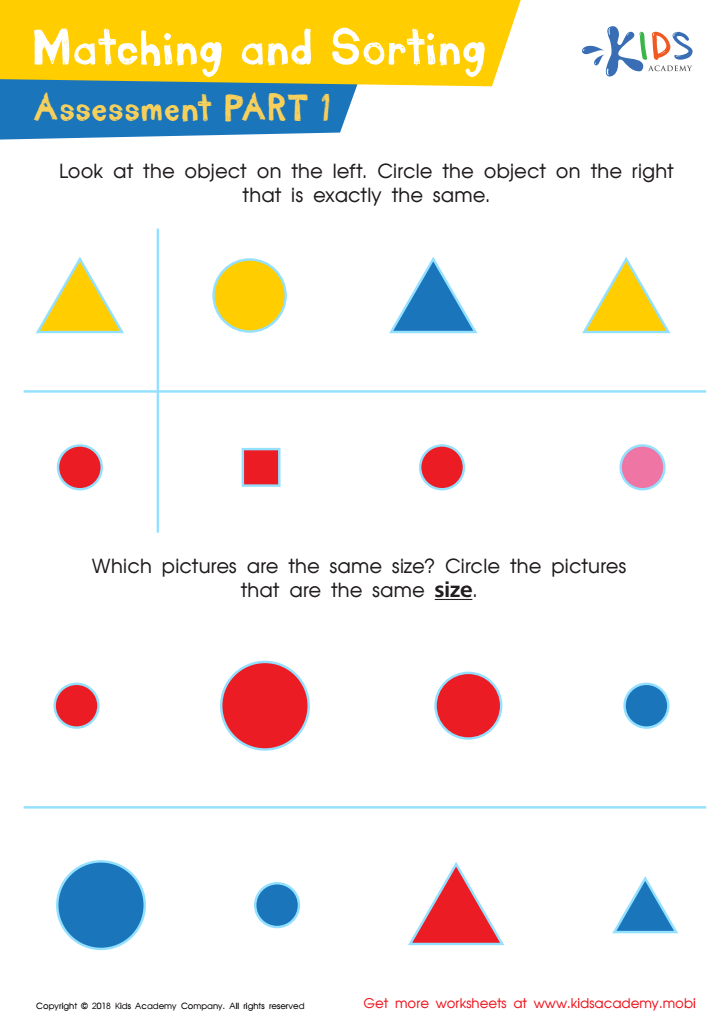
Matching and Sorting for Kindergarten: Assessment 1 Worksheet








Reading comprehension and an understanding of basic geometry are foundational skills for young children between the ages of 5-9 and are crucial for their academic and personal development.
First, strong reading comprehension skills enable children to understand and enjoy stories, follow instructions, and grasp information from texts across different subjects. This not only aids their academic success but also fosters a love for reading, which can be a lifelong source of pleasure and knowledge. Children who can comprehend what they read are more likely to engage actively in classroom discussions and activities, leading to greater self-confidence and motivation.
Simultaneously, a grasp of basic geometry helps young children recognize and describe shapes and spatial relationships, which are essential skills for math and science learning. Geometry can also be integrated into everyday activities—like puzzle-solving, building with blocks, and drawing—which enhance spatial awareness and problem-solving abilities. These activities make learning interactive and fun, encouraging cognitive development and creativity.
Both reading comprehension and basic geometry lay the groundwork for later, more complex subjects. They support critical thinking skills, help build a strong academic base, and encourage intellectual curiosity. By investing in these areas during the early formative years, parents and teachers set the stage for a child's future educational success and personal growth.








