Understanding fractions Normal Geometry Worksheets for Ages 5-9
6 filtered results
-
From - To
Welcome to our "Understanding Fractions" Normal Geometry Worksheets designed for children aged 5-9! These engaging and interactive resources focus on helping young learners grasp the fundamentals of fractions through fun, age-appropriate activities. Our worksheets support the development of critical math skills, enabling kids to visualize and identify fractional parts in various shapes. Perfect for classroom use or at-home learning, these materials combine colorful graphics and clear instructions to make learning fractions enjoyable. Encourage your child’s mathematical journey with our comprehensive worksheets that promote confidence and build a solid foundation in geometry and fractions. Start exploring today!
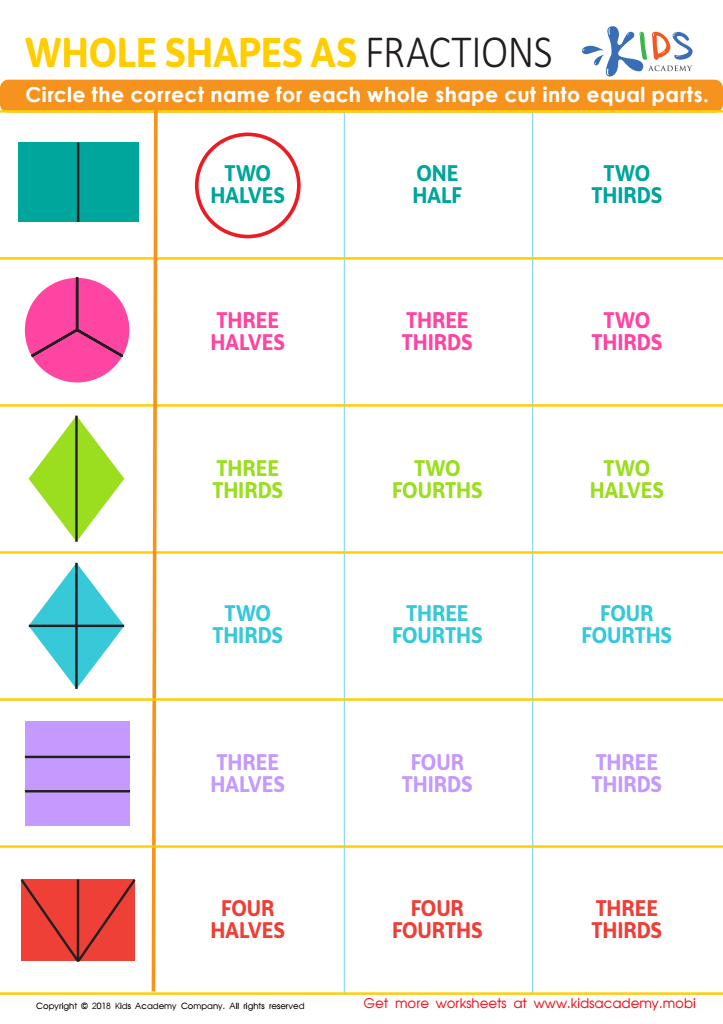
Whole Shapes as Fractions Worksheet
 Assign to My Students











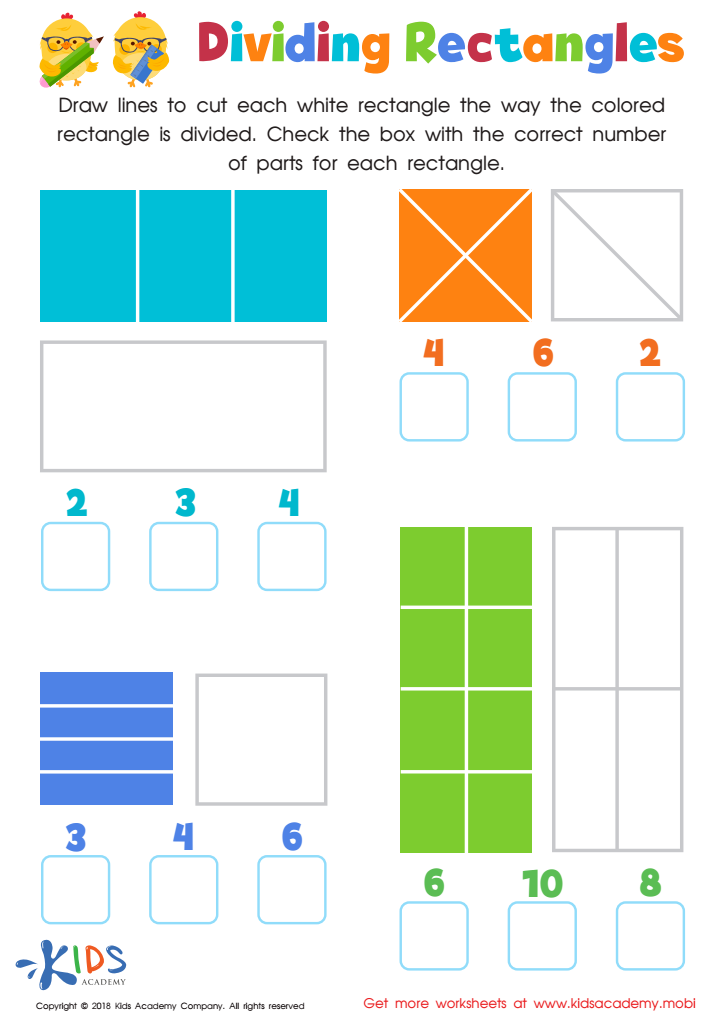
Dividing Rectangles Worksheet
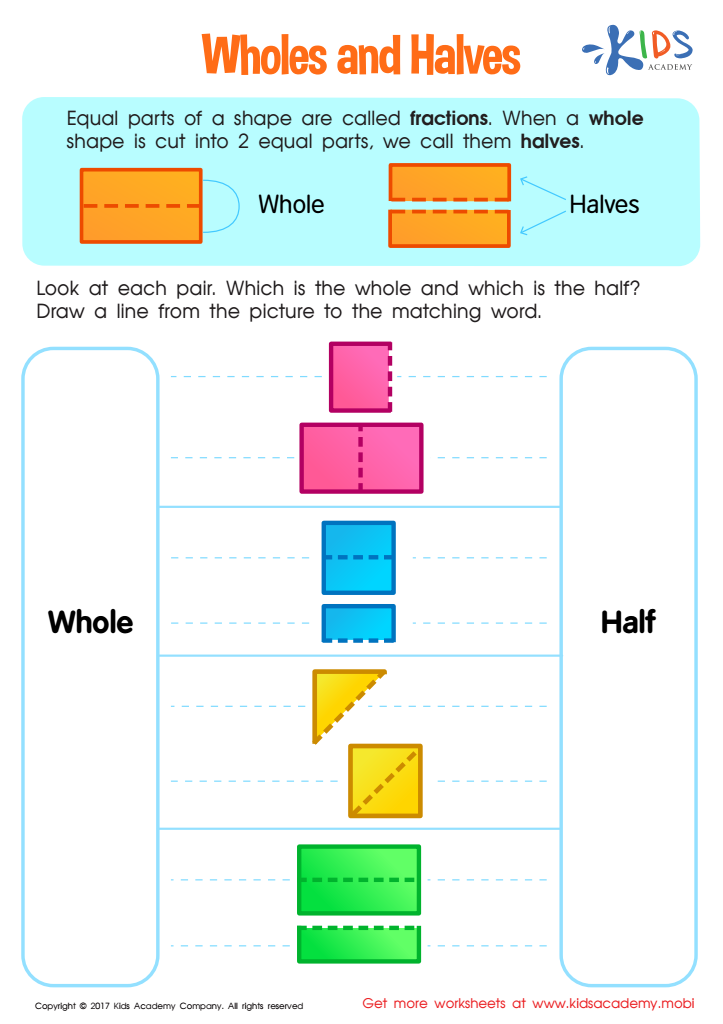
Wholes and Halves Worksheet
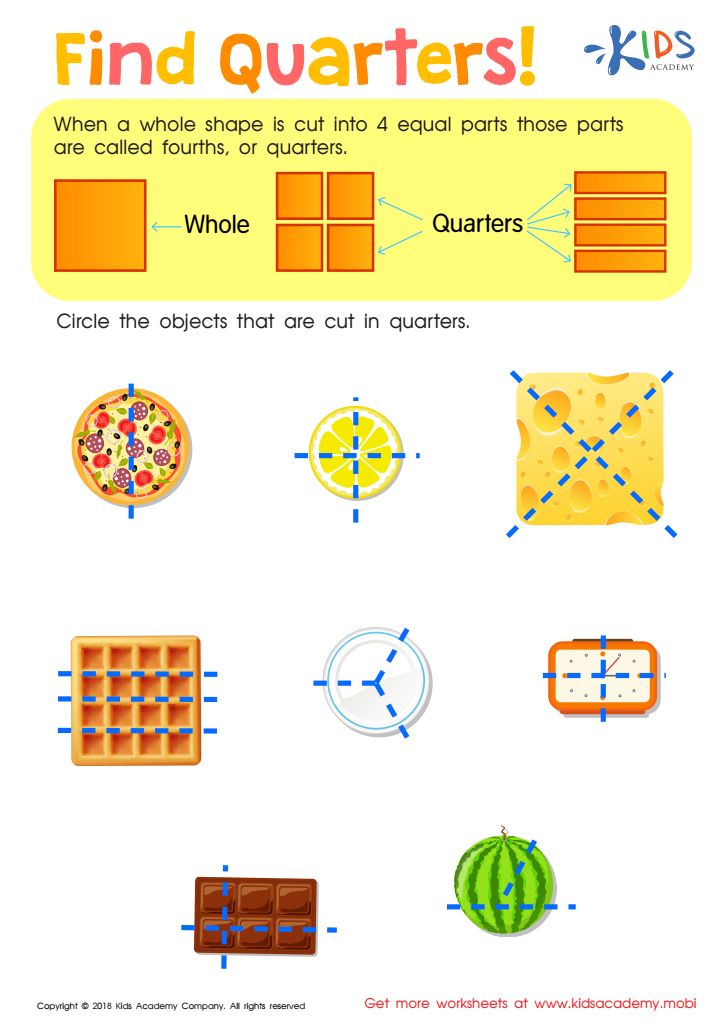
Find Quarters Worksheet
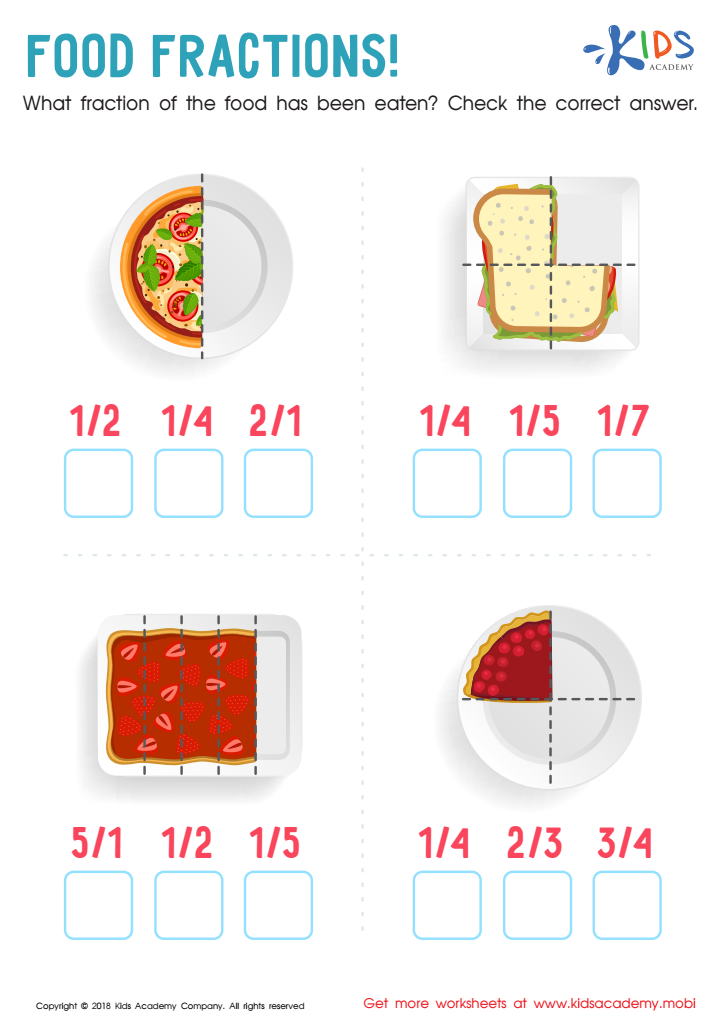
Food Fractions Worksheet
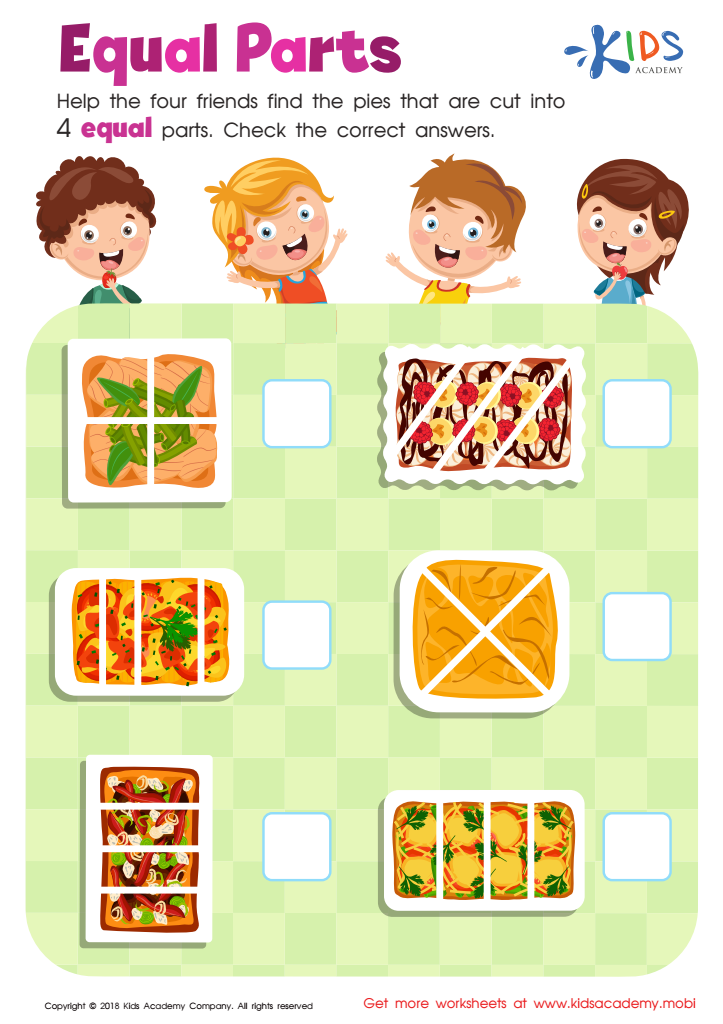
Equal Parts: Food Worksheet








Understanding fractions and basic geometry is crucial for children aged 5-9, and parents or teachers should prioritize it for several reasons. First, these mathematical concepts are foundational skills that pave the way for future learning. Grasping the basics of fractions helps children understand parts of a whole, which is essential not only in math but also in real-life situations, such as cooking or sharing.
Moreover, engaging with geometry enhances spatial awareness and critical thinking skills. Young learners start making sense of the world around them through shapes and sizes, improving their ability to solve problems and articulate their understanding.
Additionally, fostering these skills during early childhood can build confidence in math, making students more likely to excel in this subject area as they progress. Early exposure helps establish a positive mindset towards learning, reducing anxiety and fostering enjoyment.
Lastly, these mathematical concepts interconnect with other subjects, including science and art, promoting a more integrated educational experience. By prioritizing understanding fractions and geometry, parents and teachers can support children's overall cognitive development, critical thinking, and real-world applications, setting them up for success in both academic and everyday contexts.








