Associative learning Normal Math Worksheets for Ages 5-9
3 filtered results
-
From - To
Unlock your child's potential with our Associative Learning Normal Math Worksheets designed specifically for ages 5-9! These engaging, easy-to-understand worksheets introduce foundational math concepts by connecting ideas and fostering a deeper understanding through associative learning techniques. Suitable for home or classroom use, our resources enhance critical thinking, problem-solving, and numeracy skills while keeping learning fun. Parents and teachers will appreciate the variety of activities tailored to different learning styles. With vibrant visuals and age-appropriate challenges, our worksheets encourage young learners to explore mathematical relationships and build confidence in their abilities. Dive into an exciting math journey today!
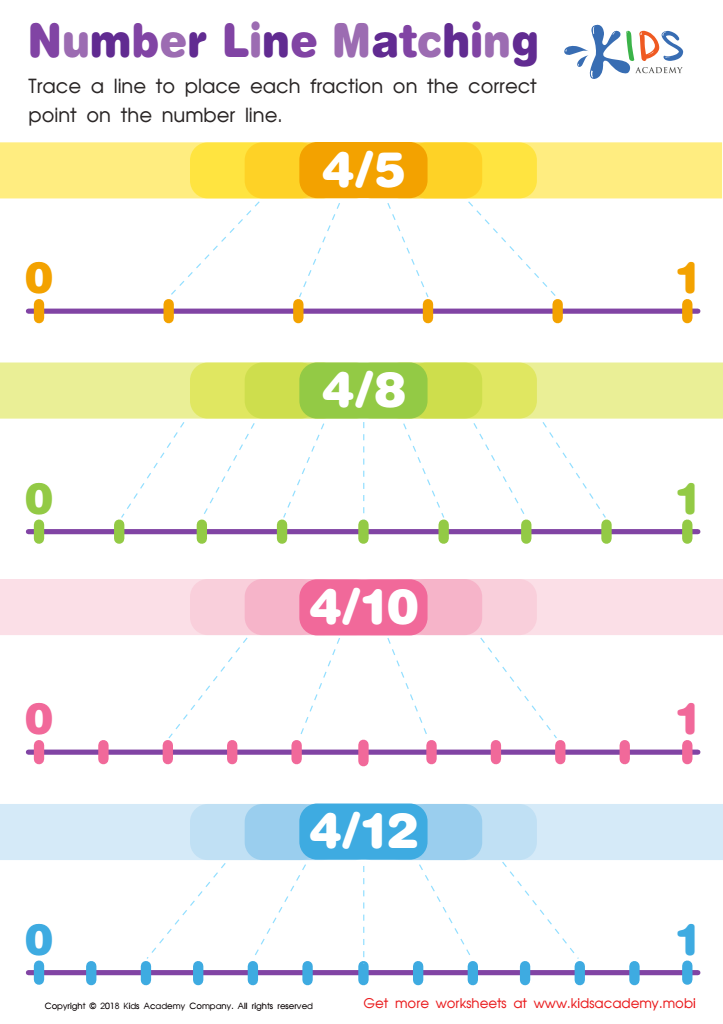
Number Line Matching Worksheet
 Assign to My Students
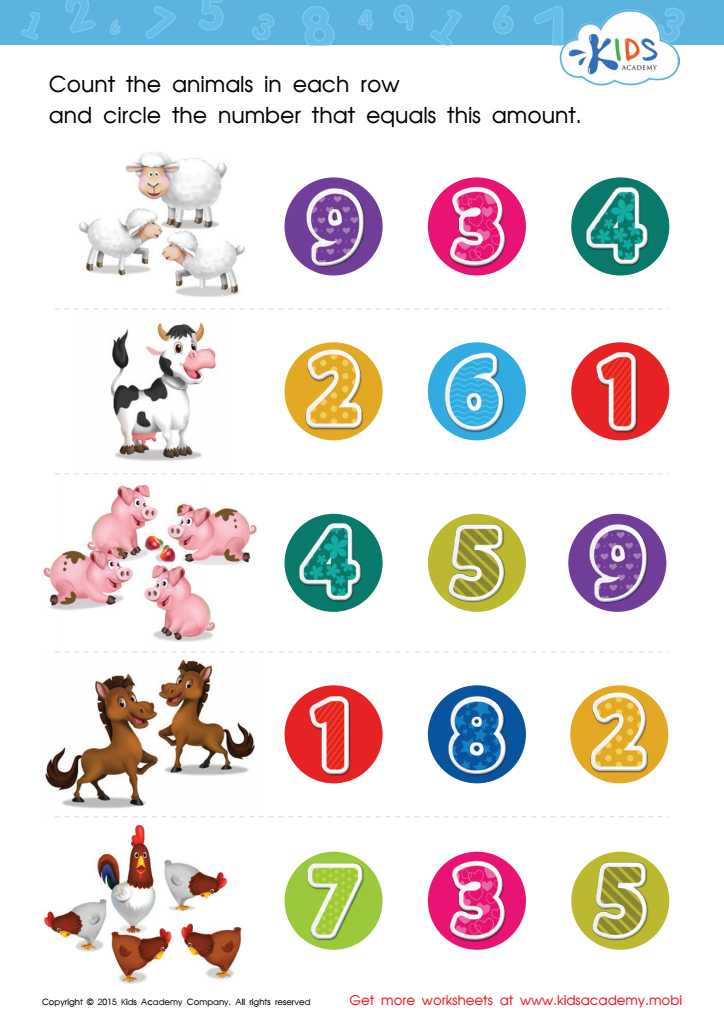
Count and Match 1 – 5 Math Worksheet
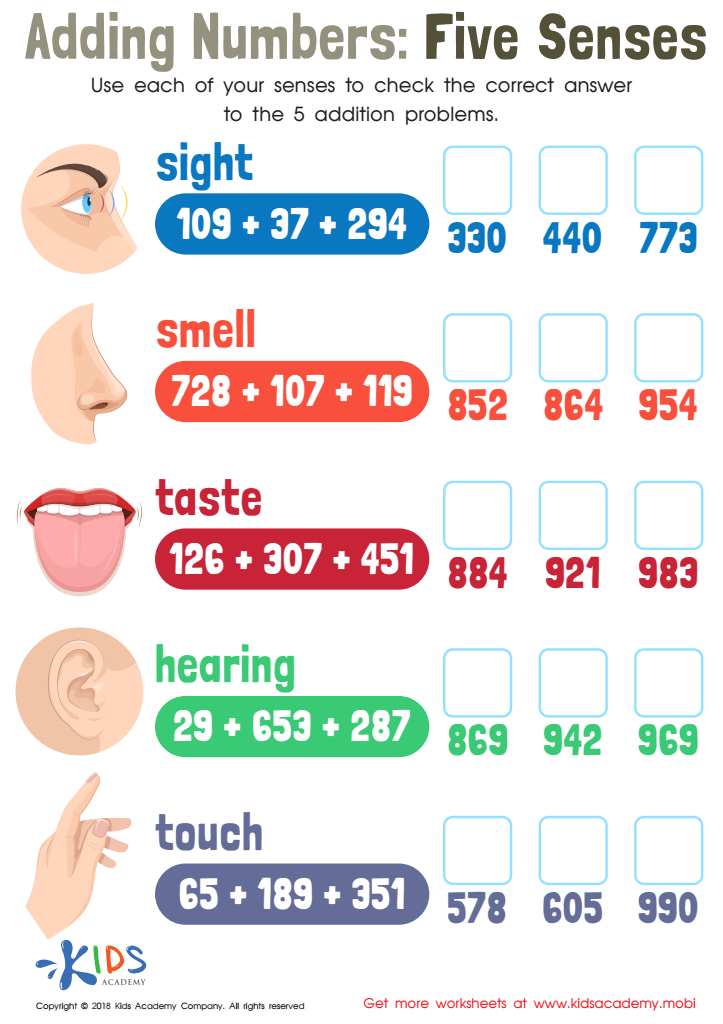
Adding Numbers: Five Senses Worksheet







Associative learning, particularly in the context of normal math for ages 5-9, is crucial for developing foundational skills that will serve children throughout their academic journey. This learning approach involves connecting new information with prior knowledge, helping children understand mathematical concepts more deeply. For example, when students relate addition to real-life situations, such as counting apples, they grasp the concept more naturally.
Parents and teachers should care about this method because it enhances critical thinking and problem-solving skills. When children learn to associate math with everyday experiences, they gain confidence in their abilities and see the relevance of math in daily life. This encourages a more positive attitude towards learning.
Additionally, associative learning fosters retention; children are more likely to remember information when they can connect it to something familiar. By focusing on this method, educators can make lessons engaging and relatable, fostering a supportive learning environment.
Ultimately, investing in associative learning not only strengthens mathematical skills but also nurtures a lifelong love for learning in young children. As they master the basic math concepts, they build a versatile toolkit for future academic challenges and everyday decision-making.








