Comparing sizes Normal Math Worksheets for Ages 5-9
3 filtered results
-
From - To
Enhance your child's mathematical skills with our "Comparing Sizes Normal Math Worksheets" designed specifically for ages 5-9. These engaging worksheets provide a fun and interactive way for young learners to understand and compare sizes visually. Through various exercises, kids will practice identifying smaller and larger objects, developing their critical thinking and observational skills. Our resources are tailored to align with standard learning goals, making them an ideal supplement for classroom activities or home study. Perfect for parents and teachers alike, these worksheets foster a love for learning while helping children gain confidence in their mathematical abilities. Explore our worksheets today!
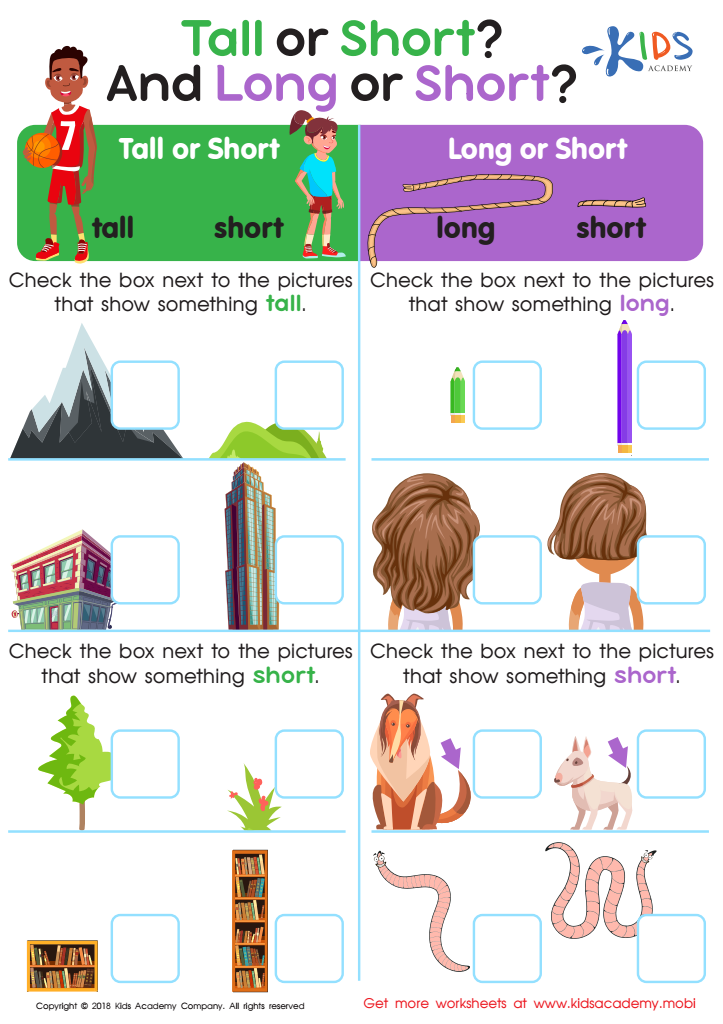
Tall or Short and Long or Short? Worksheet
 Assign to My Students
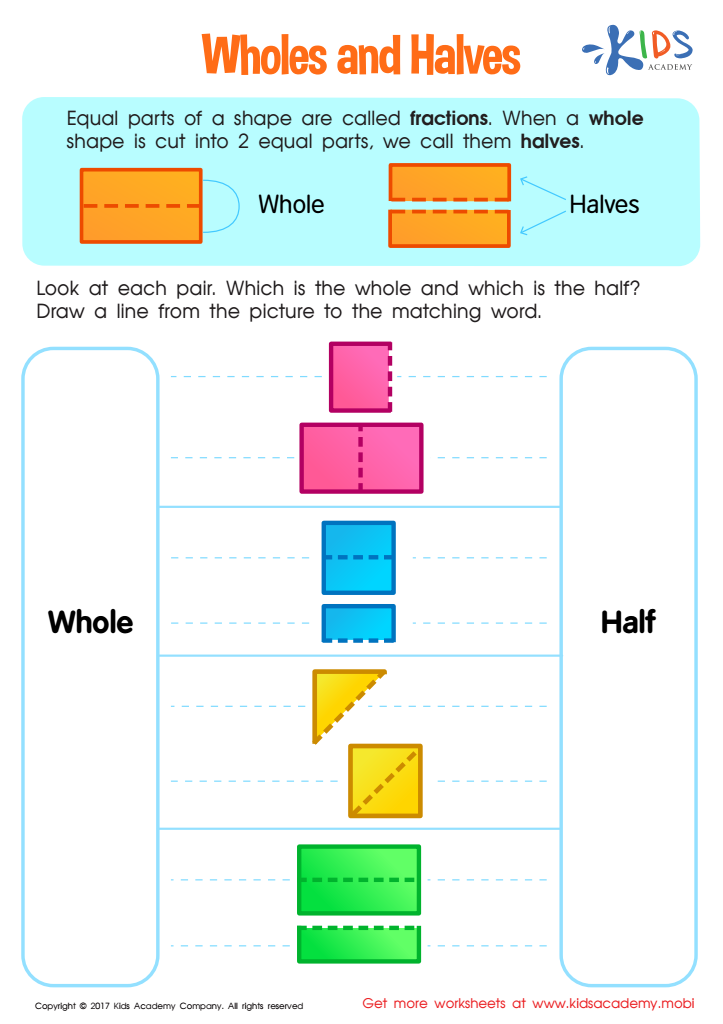
Wholes and Halves Worksheet
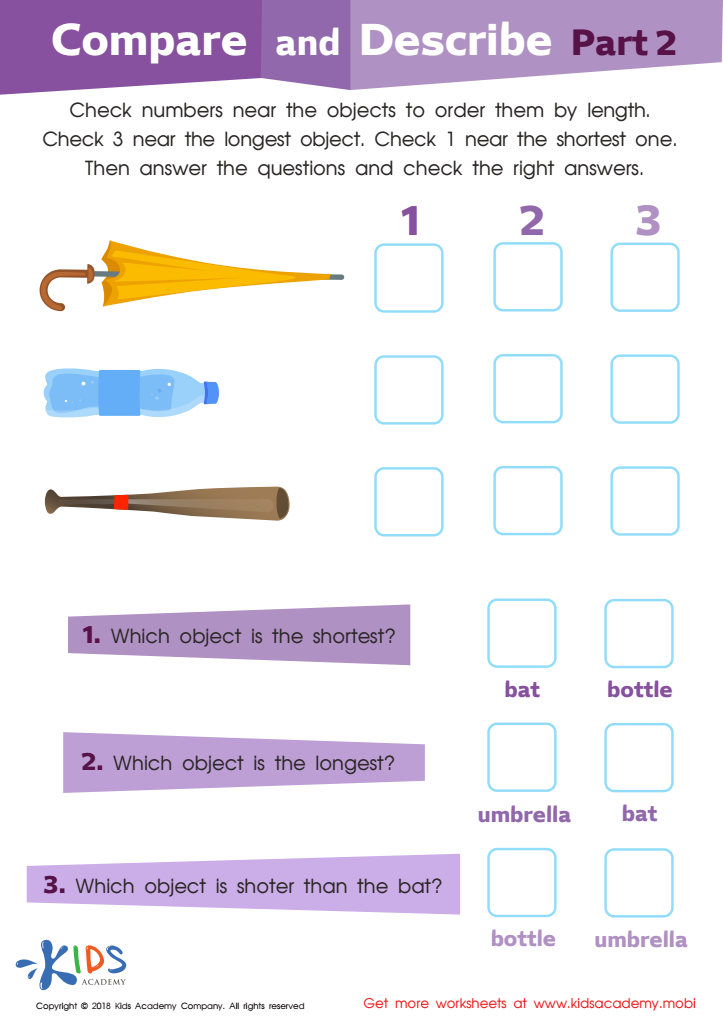
Compare and Describe: Part 2 Worksheet








Comparing sizes is an essential mathematical skill for children ages 5-9, and both parents and teachers should prioritize its learning. At this developmental stage, children are naturally curious and are beginning to explore concepts of measurement and quantity. Understanding how to compare sizes helps children develop critical thinking and problem-solving skills. It lays the groundwork for more complex mathematical concepts such as addition, subtraction, and fractions.
Moreover, comparing sizes in early math enhances children's ability to classify objects, build visual-spatial awareness, and engage in mathematical reasoning. This learning can be extended to real-life scenarios, such as comparing heights of friends or the lengths of objects, making math relatable and practical.
Parents and teachers play a crucial role in fostering a positive learning environment that promotes exploration and curiosity. By actively engaging children in activities that involve comparing sizes—through games, hands-on activities, and everyday scenarios—caretakers can support the child's mathematical understanding.
Ultimately, mastering size comparison builds a strong foundation for future math skills and boosts confidence in young learners, encouraging a lifelong appreciation for mathematics. Investing time and resources in this foundational skill will pay off as children advance in their education.








