
Interpreting data Normal Math Worksheets for Ages 5-9
3 filtered results
Difficulty Level
Grade
Age
-
From - To
Subject
Activity
Standards
Discover our engaging "Interpreting Data Normal Math Worksheets" designed for children aged 5-9. These worksheets provide a fun and interactive way for young learners to understand basic data interpretation skills. Through colorful visuals and relatable activities, kids will practice reading charts, graphs, and pictograms, fostering their analytical thinking early on. Each worksheet is crafted to challenge their understanding while ensuring a positive learning experience. Perfect for classroom settings or at-home practice, our resources help build a strong math foundation and encourage curiosity in data analysis. Explore our collection today and watch your child flourish in their understanding of interpreting data!
Favorites
With answer key
Interactive
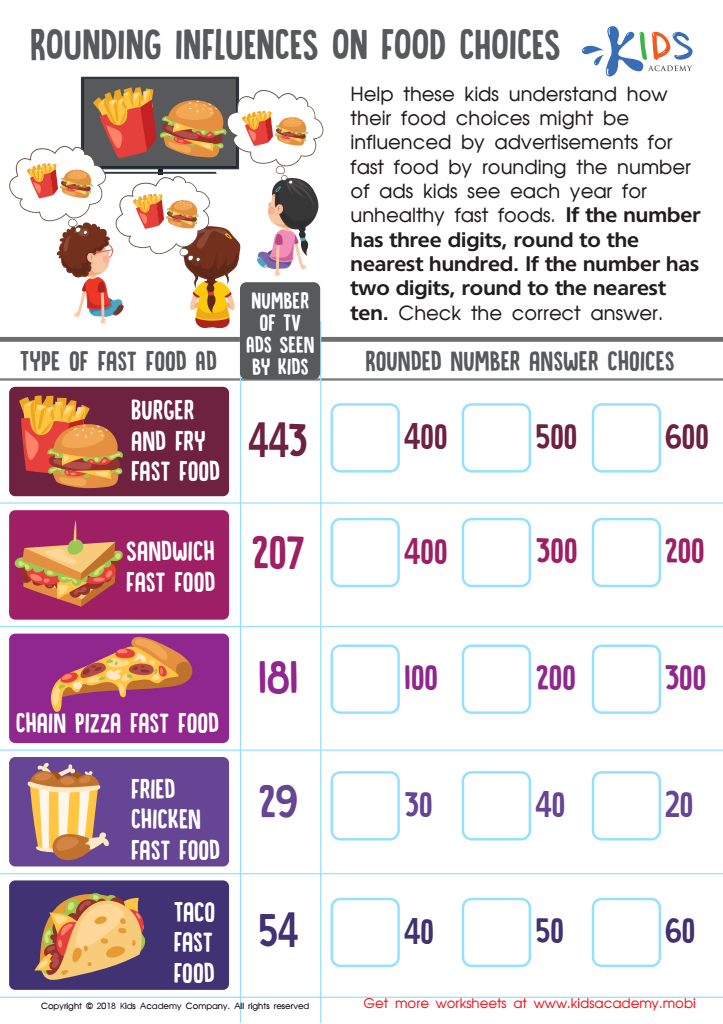
Rounding Influences Food Choices Worksheet
Kids find math more enjoyable when it reflects real-life scenarios. This free worksheet combines math and health! Kids view data on the number of ads they're exposed to in a year and must round the numbers to the nearest ten or hundred. Solve and check the correct answers to finish.
 Assign to My Students
Rounding Influences Food Choices Worksheet
Worksheet
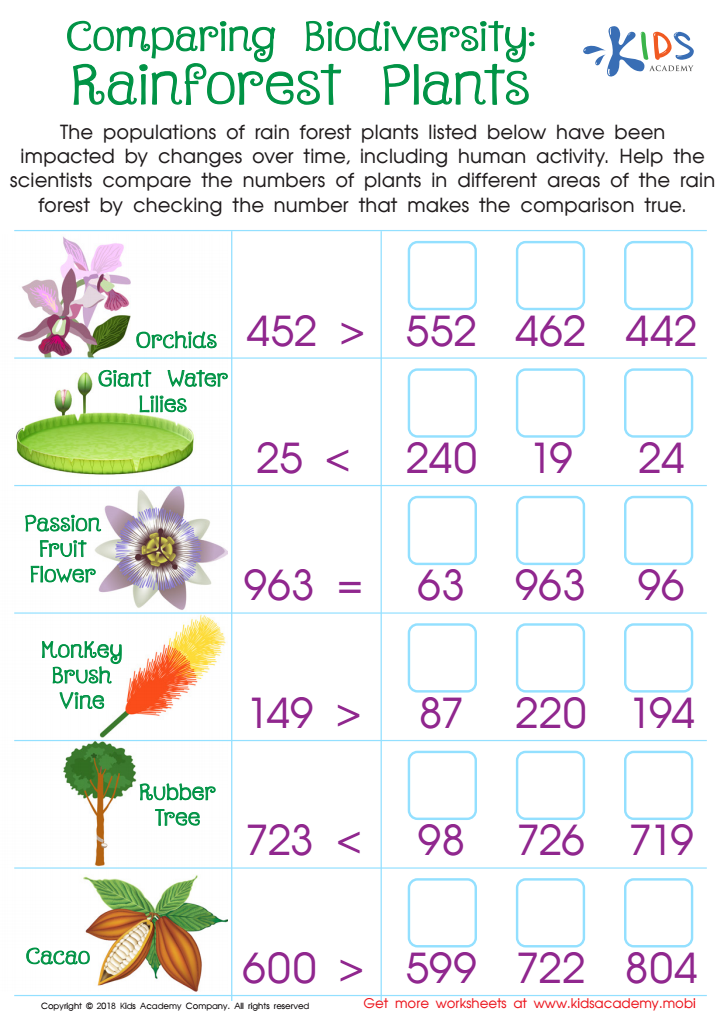
Comparing Biodiversity: Rainforest Plants Worksheet
Have your students learn about biodiversity in the rainforest and practice number sense and reasoning with this colorful PDF worksheet. Comparing the numbers of plants found in different areas of the rainforest, they'll combine eco-friendly science and math to make the number comparisons true.
Comparing Biodiversity: Rainforest Plants Worksheet
Worksheet
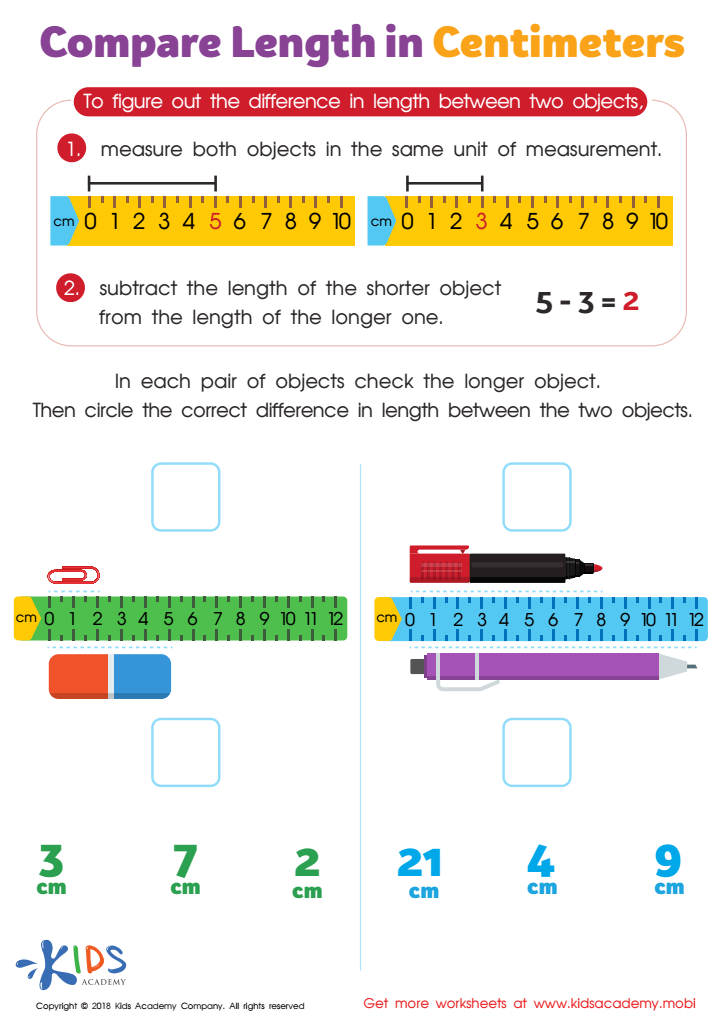
Compare Length in Centimeters Worksheet
To do this worksheet, your child needs to be able to measure accurately, add and subtract. They must measure both items and subtract the shorter from the longer to work out the difference in length.
Compare Length in Centimeters Worksheet
Worksheet
Join Kids Academy for Free
Who is primarily going to use this learning content?








Interpreting data in a Normal Math context for children ages 5-9 is pivotal for several reasons. First and foremost, it fosters critical thinking and analytical skills. At this age, children are developing cognitive abilities, and engaging them in simple data interpretation tasks—such as understanding basic charts, graphs, and patterns—helps sharpen their reasoning.
Moreover, early exposure to data interpretation lays a solid foundation for mathematics and science. As students learn to recognize and analyze data, they become more proficient in problem-solving and decision-making, skills essential for success in higher education and various careers. It also encourages curiosity, as children learn to ask questions like, “What does this data tell us?” or “How can we use this information?”
Additionally, incorporating data interpretation into learning fosters communication skills. When students share their findings or insights with peers or adults, they practice articulating their thoughts coherently.
Finally, parents and teachers play a critical role in guiding children through this learning process, ensuring they can apply these skills in real-world contexts. By engaging with data, children learn that math is not just numbers but also a way to understand the world around them, making learning both relevant and exciting.








