
Reading skills improvement Normal Alphabet Worksheets for 5-Year-Olds
6 filtered results
Difficulty Level
Grade
Age
-
From - To
Subject
Activity
Standards
Unlock your 5-year-old's reading potential with our Normal Alphabet Worksheets! Designed to empower young learners, these engaging worksheets focus on enhancing reading skills through interactive alphabet exercises. Each worksheet blends fun activities with educational content to foster letter recognition, phonemic awareness, and early literacy. Perfect for preschoolers and kindergarteners, our resources support a smooth transition into reading by offering systematic and enjoyable practice. Encourage your child's love for reading while laying a strong foundation for their academic success with our expertly crafted worksheets. Start building essential reading skills today!
Favorites
With answer key
Interactive
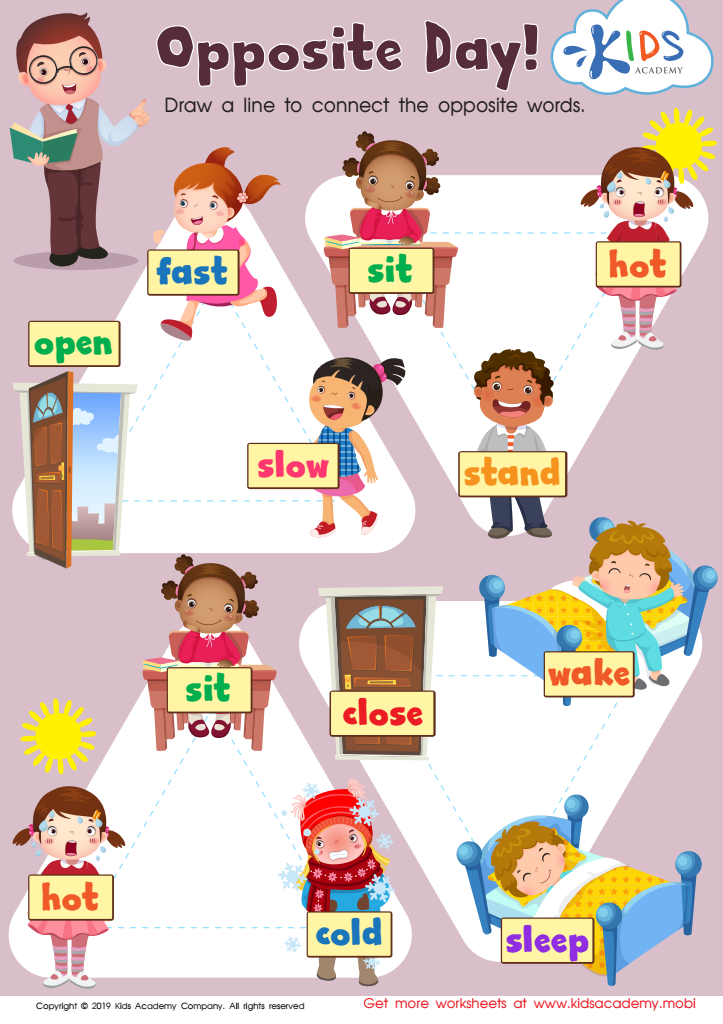
Opposite Day Worksheet
Early learners need to know about opposites to improve their higher-order thinking and critical thinking. This fun worksheet helps them understand the concept, practice opposite words, read high-frequency words and work on fine motor skills. Download the traceable PDF to get started.
 Assign to My Students
Opposite Day Worksheet
Worksheet
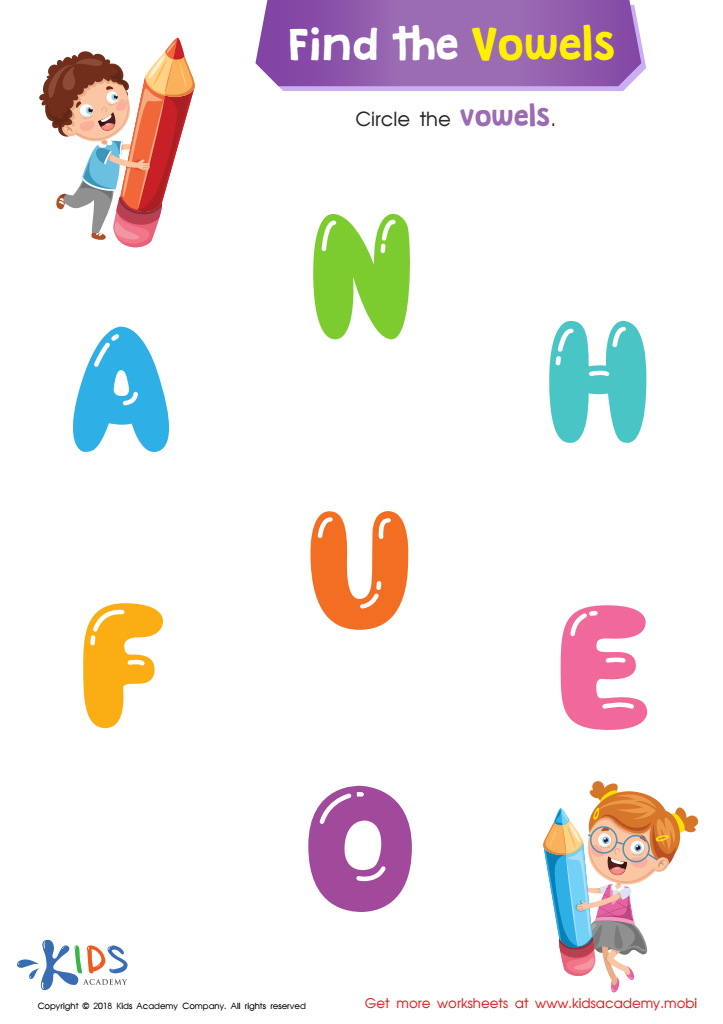
Find the Vowels Reading Worksheet
This worksheet helps kids identify vowels with bright colors and engaging activities to strengthen their visual discrimination and fine motor skills. Young learners will find it easy to succeed and be excited to keep reading!
Find the Vowels Reading Worksheet
Worksheet
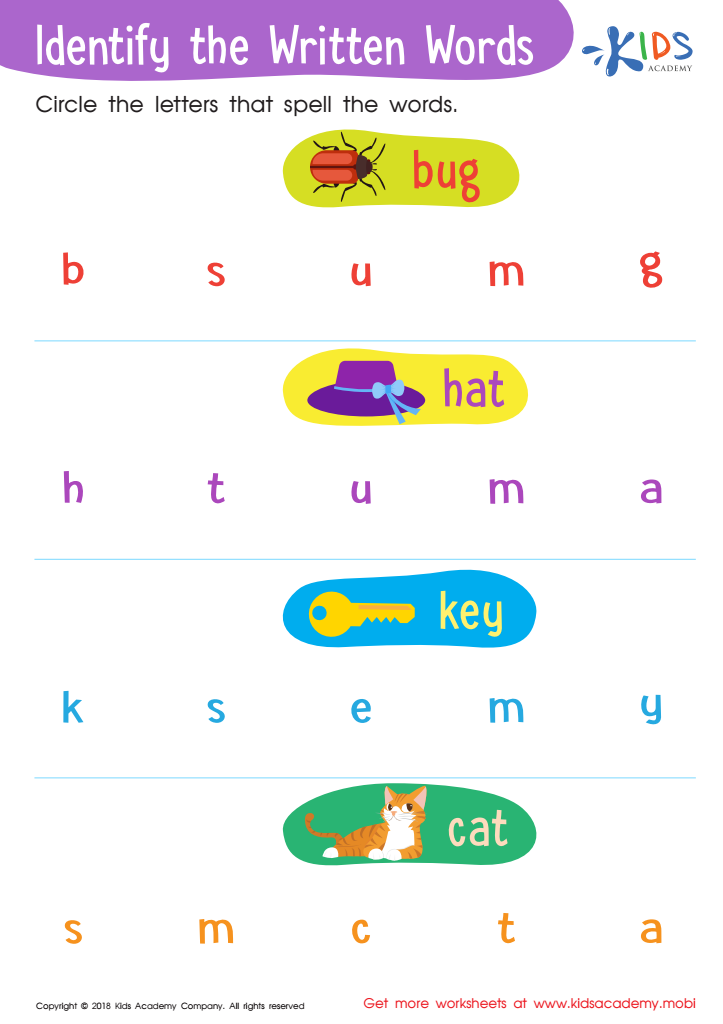
Identify the Written Words Worksheet
Have your students identify the objects on the printout, then spell the words. If they already know how to spell, this exercise should be easy. Help them circle the correct letters from the set to spell out the words. This is a great way to reinforce reading and spelling skills. Max 80 words.
Identify the Written Words Worksheet
Worksheet
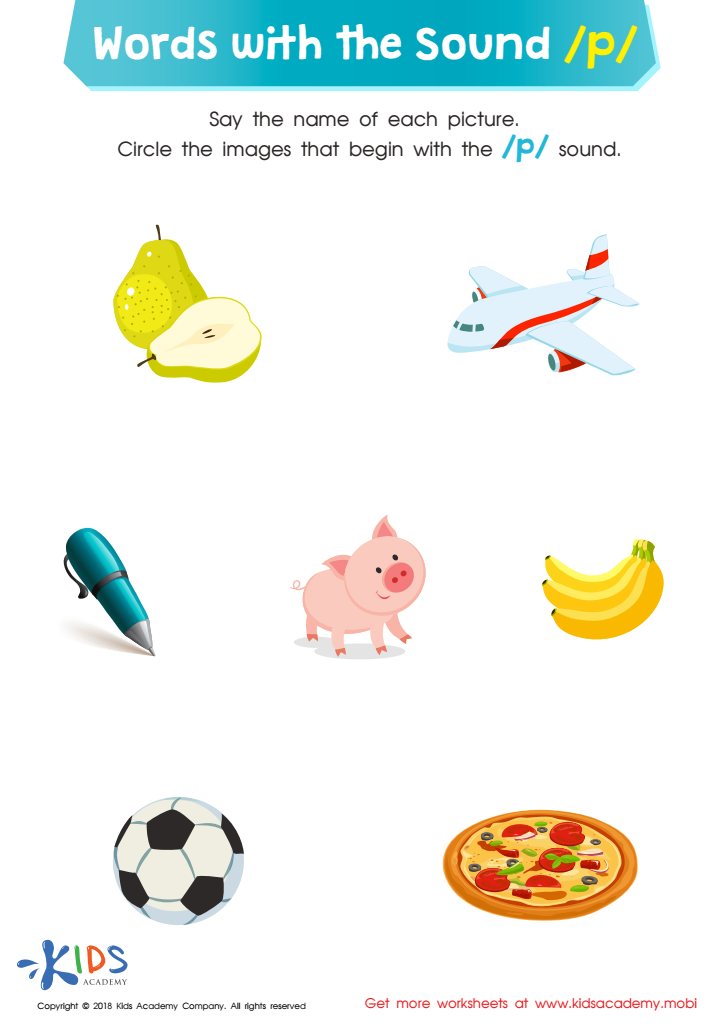
Words with sound p Reading Worksheet
Working on this fun worksheet? Name each picture aloud and listen carefully before circling those that start with the letter «p»! Pizza, pig, plane, or banana - practice phonics to help your child recognize the letter «p» sound for successful early reading and decoding!
Words with sound p Reading Worksheet
Worksheet
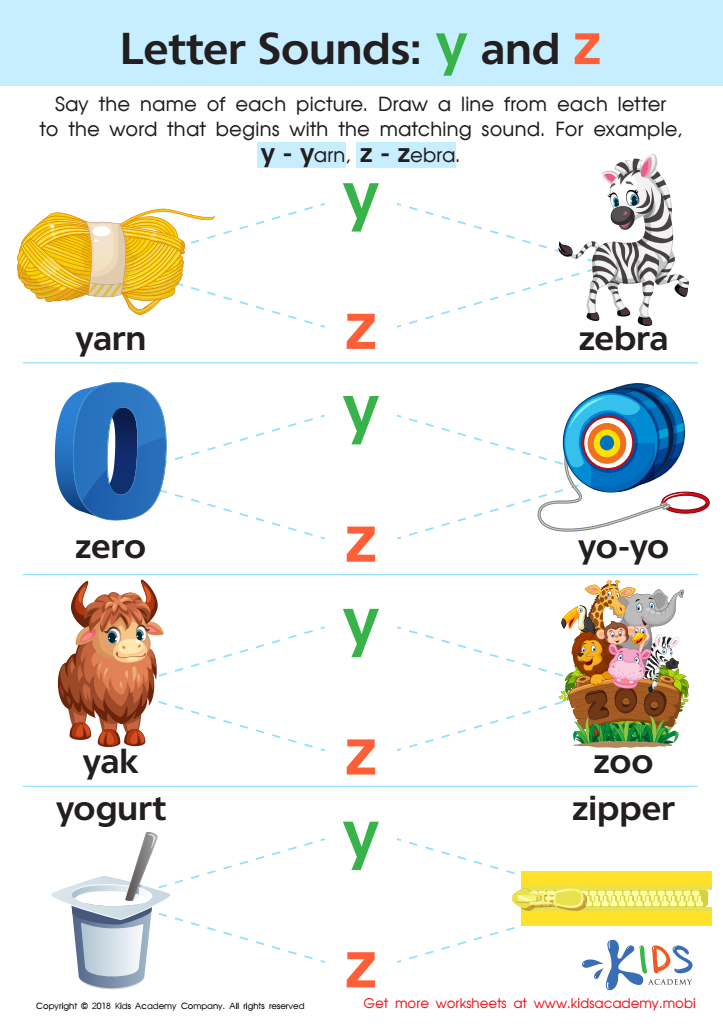
Letter Y and Z Sounds Worksheet
Y and Z can be tricky for kids to learn. Kids Academy has the answer with a great worksheet. "Yo-yo", "yak" and "zebra" help kids recognize, say and trace each letter. Plus, they can read the words and match them to images! Let your child try and help them master phonics at the end of the alphabet.
Letter Y and Z Sounds Worksheet
Worksheet
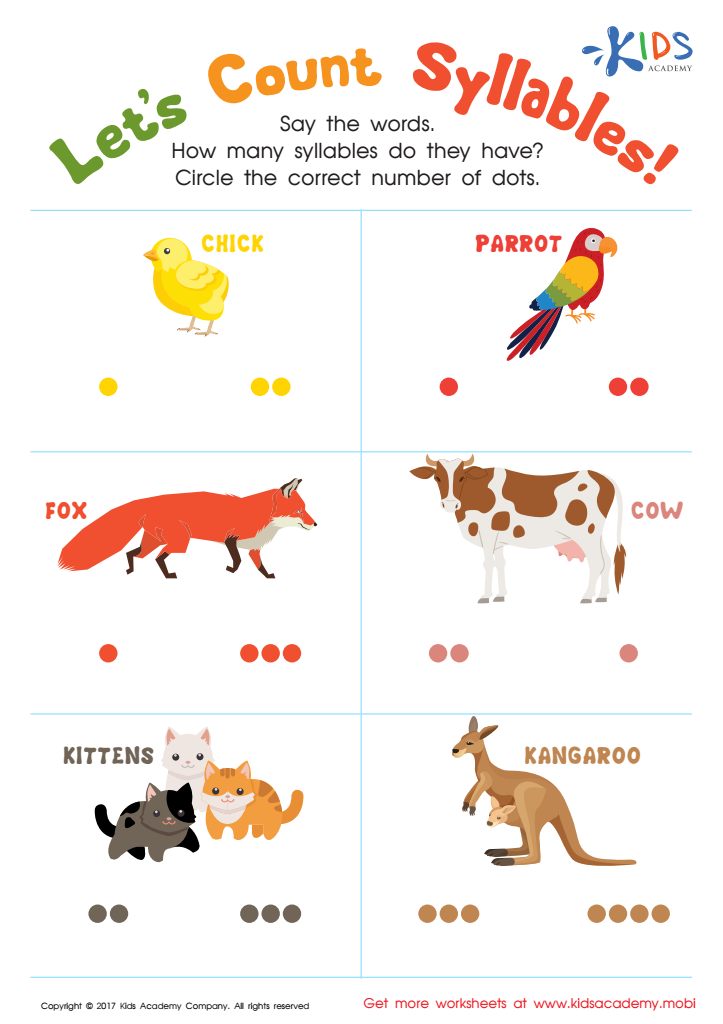
Lets Count Syllables Worksheet
This fun animal worksheet makes learning to read easier by breaking words into syllables. Bright, cheery pictures give context and help kids choose the right syllable count. Count together and enjoy as your child learns and gains success!
Lets Count Syllables Worksheet
Worksheet
Join Kids Academy for Free
Who is primarily going to use this learning content?








Parents and teachers should place significant emphasis on improving reading skills for 5-year-olds because early literacy forms the foundation for all future learning. During this crucial developmental stage, children's brains are highly receptive to new information, making it the perfect time to establish strong reading habits. Proficient reading skills enhance cognitive development, expanding a child's vocabulary, comprehension, and critical thinking abilities.
Moreover, reading fosters social and emotional growth by exposing children to different perspectives and emotions, helping them develop empathy and better interpersonal skills. Improved reading abilities also boost a child's confidence and academic performance, ensuring they can keep up with their peers and reducing the likelihood of future learning difficulties.
Reading is a fundamental skill that is interconnected with all other areas of learning: math, science, and even physical education. Being a confident reader bolsters students' overall academic achievement. In today's information-rich world, reading efficiently translates to better opportunities for lifelong success.
Finally, improving reading skills by the age of 5 sets the groundwork for a lifelong love of learning and curiosity. By prioritizing reading, parents and teachers can cultivate a nurturing environment that encourages children to explore the world of books, setting them on a path to continuous personal and academic growth.







