Visual discrimination skills Normal Worksheets for 5-Year-Olds
5 filtered results
-
From - To
Enhance your child's visual discrimination skills with our engaging worksheets designed specifically for 5-year-olds. These tailored activities help young learners identify differences and similarities among objects, promoting critical thinking and observation skills. Each worksheet features fun illustrations that captivate children’s attention while reinforcing essential visual processing abilities. By completing these exercises, children will not only improve their concentration and attention to detail but also gain confidence in their problem-solving skills. Perfect for classroom use or at-home learning, our visual discrimination worksheets provide an enjoyable way for kids to learn and grow. Start fostering strong foundational skills today!
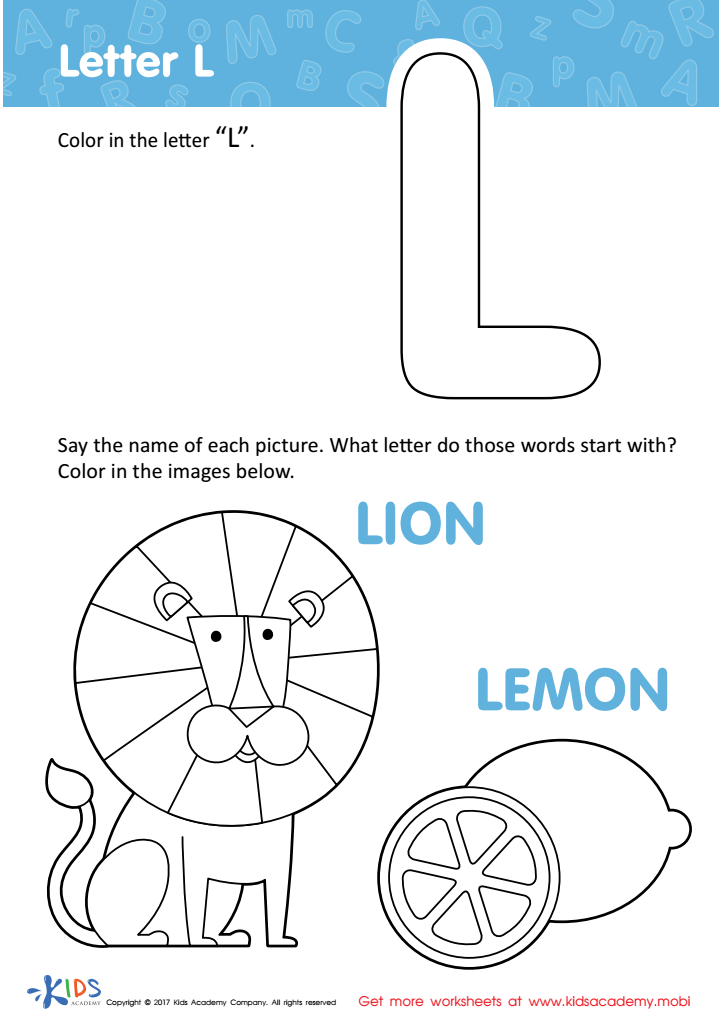
Letter L Coloring Sheet
 Assign to My Students
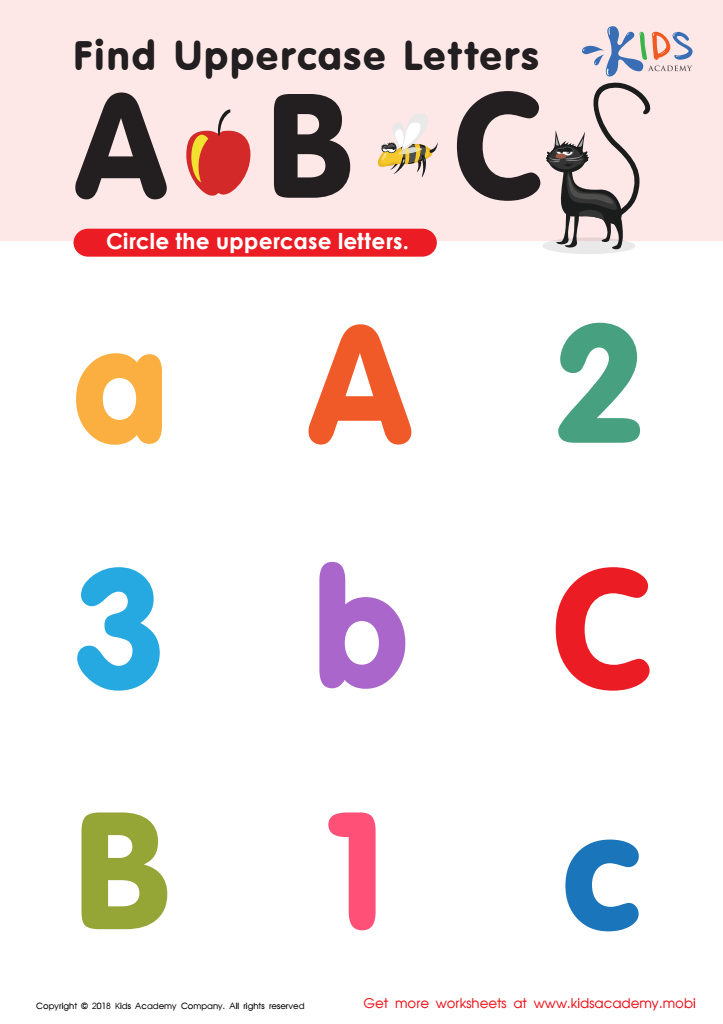
Find Uppercase Letters A, B, and C Worksheet
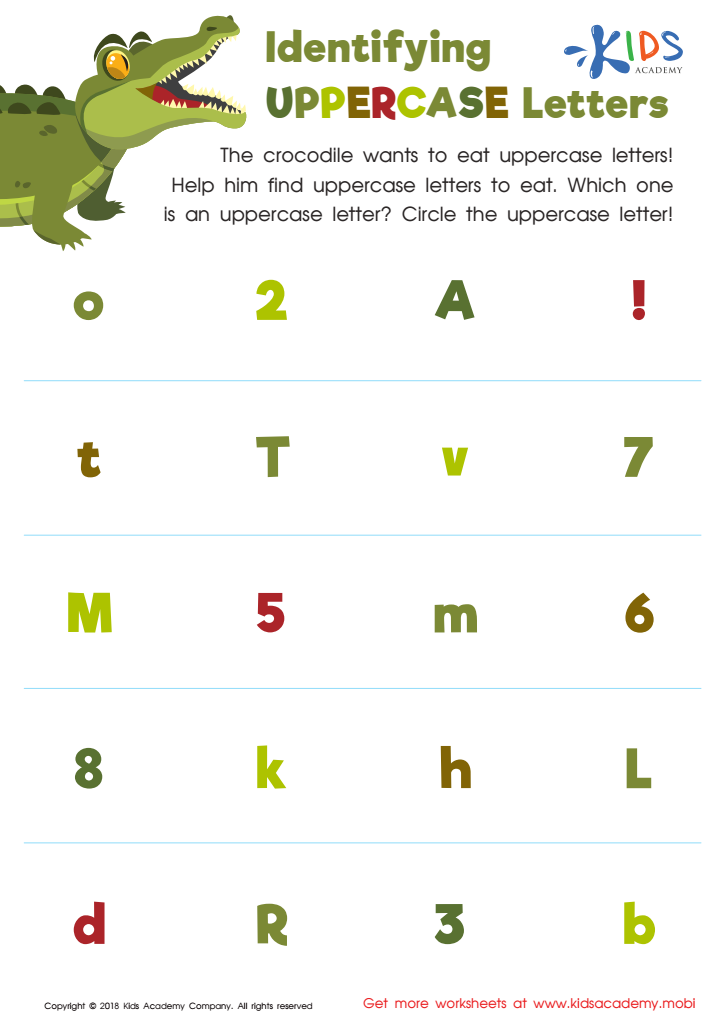
Identifying Uppercase Letters Worksheet
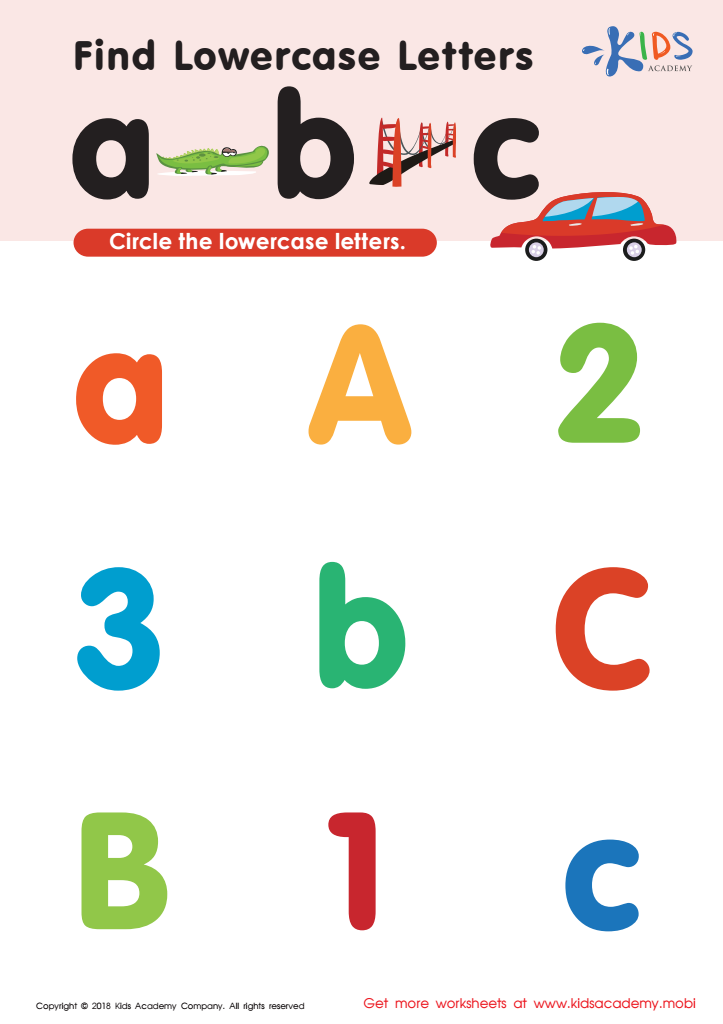
Find lowercase letters a b c Worksheet
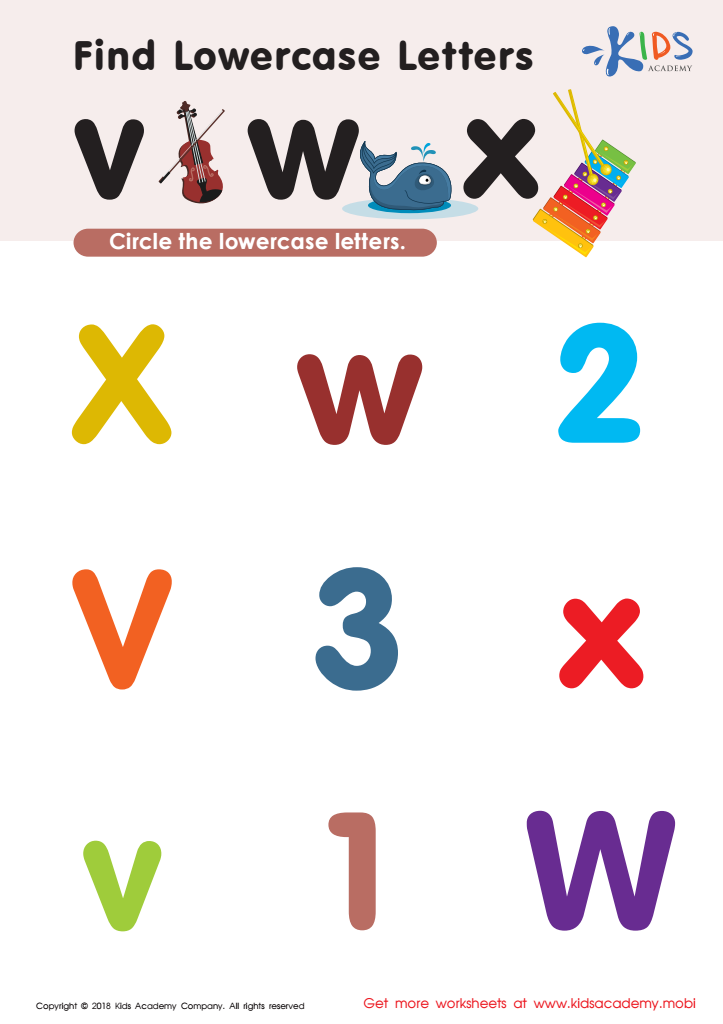
Find Lowercase Letters v w x Worksheet








Visual discrimination skills are crucial for 5-year-olds as they lay the foundation for various academic and critical life skills. At this stage, children are navigating a world rich in visual stimuli; the ability to discern differences and similarities among shapes, colors, letters, and objects significantly aids their learning. Parents and teachers should care about developing these skills because they enhance early literacy and numeracy. For example, recognizing letters in different fonts, identifying patterns, and distinguishing between similar objects can directly impact reading readiness and mathematical understanding.
Moreover, good visual discrimination contributes to a child's overall development, fueling confidence and curiosity during formative years. Children with strong visual skills are often more successful in tasks such as identifying emotions in social interactions, which is essential for building relationships with peers. Encouraging activities like puzzles, matching games, or sorting objects can boost these skills in fun and engaging ways.
In a world increasingly reliant on visual information—think screens, books, and educational materials—solid visual discrimination abilities prepare children not just for academic achievements but for future problem-solving and critical thinking. Thus, fostering these skills is vital for a child's overall development and success as they progress through their educational journey.








