Basic Arithmetic Normal Addition & Subtraction Worksheets for 5-Year-Olds
6 filtered results
-
From - To
Unleash your child's math potential with our carefully curated Basic Arithmetic Normal Addition & Subtraction Worksheets designed specifically for 5-year-olds. These engaging worksheets are crafted to make learning addition and subtraction fun and easily understandable. Available at Kids Academy, they assist in building a solid arithmetic foundation through vibrant visuals and interactive exercises. Ideal for young learners, these resources support the development of essential math skills, ensuring a smooth transition to more advanced concepts. Empower your child's educational journey today with our free, printable worksheets!
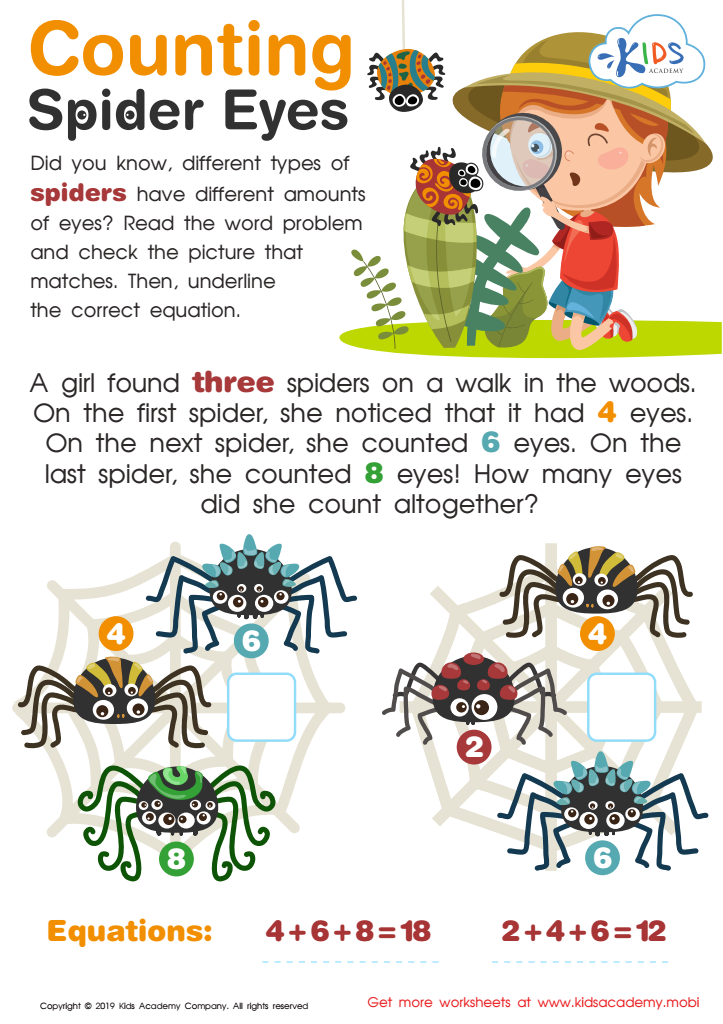
Counting Spider Eyes Worksheet
 Assign to My Students
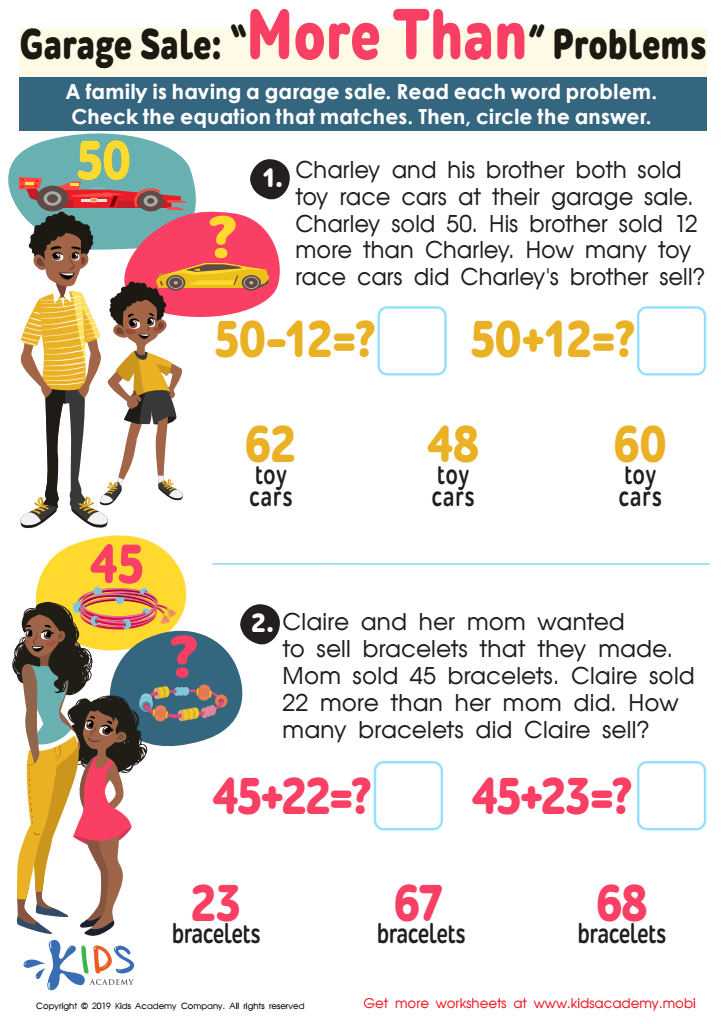
Garage Sale - More yhan Worksheet
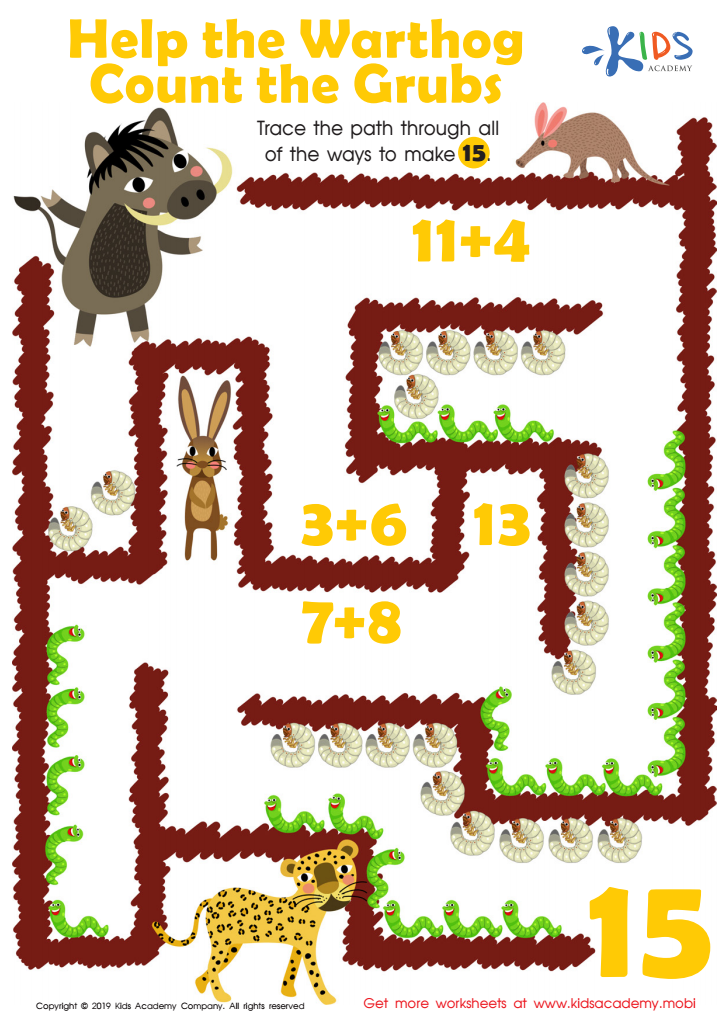
Help the Warthog Count the Grubs Worksheet
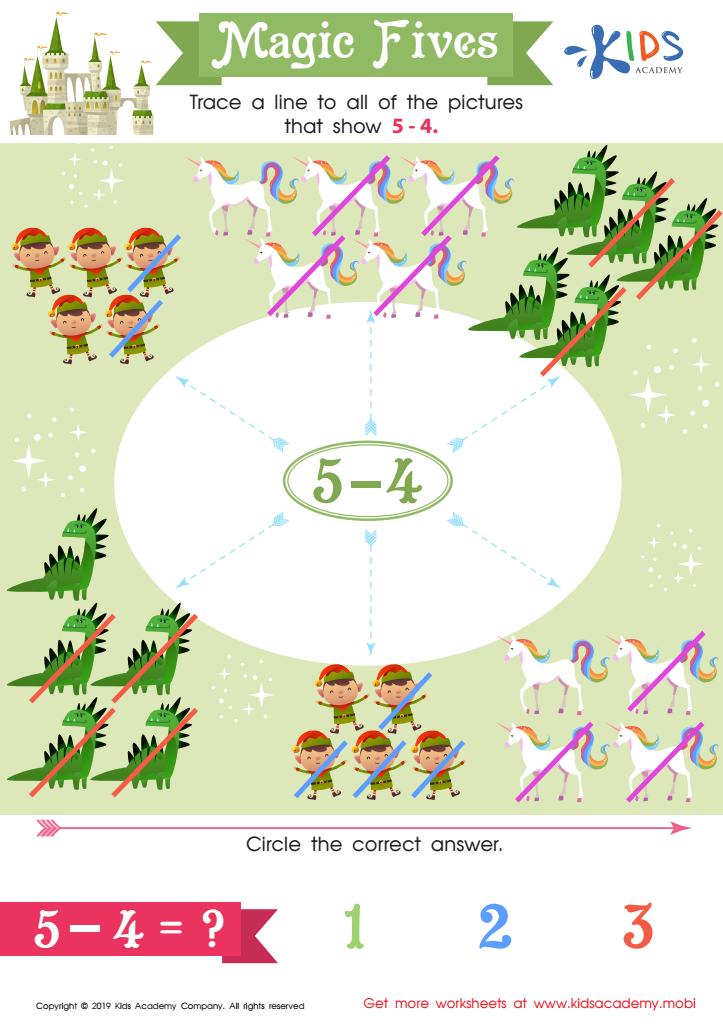
Magic Fives Worksheet
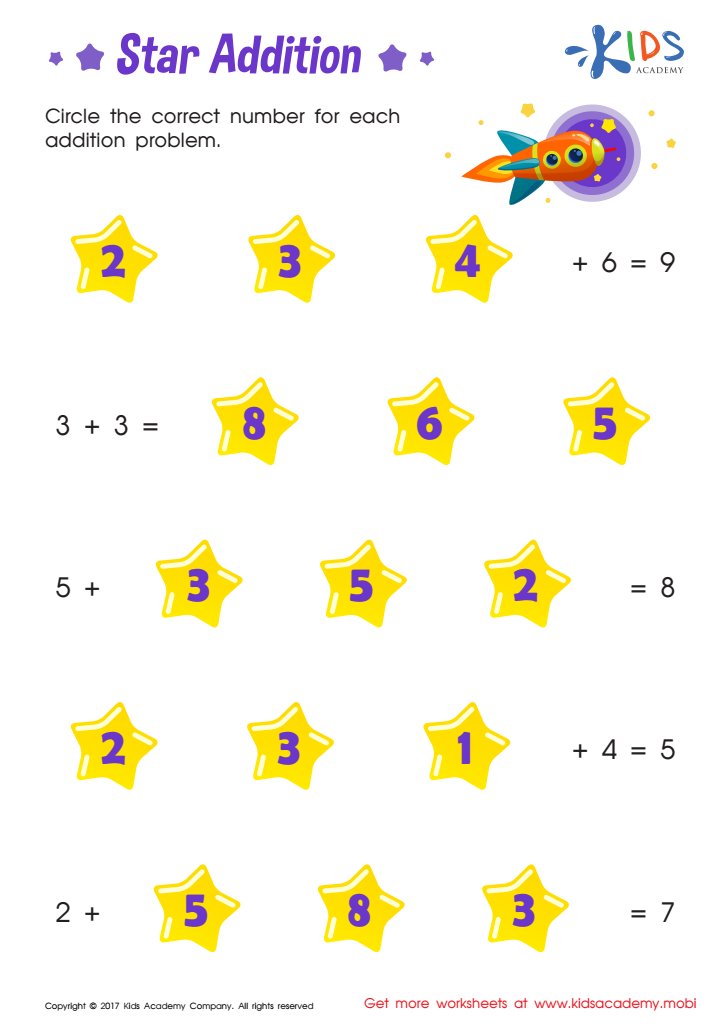
Star Addition Printable
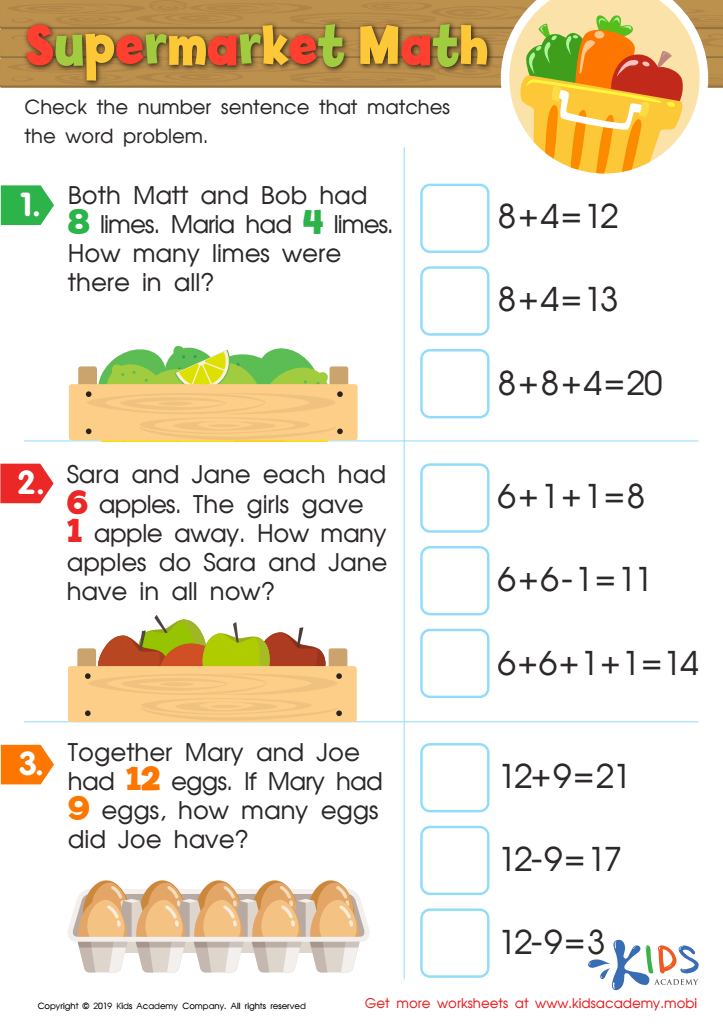
Supermarket Math Worksheet








Parents and teachers should prioritize basic arithmetic skills, such as normal addition and subtraction, for 5-year-olds because these foundational skills are crucial for their mathematical development and overall cognitive growth. Mastery of basic arithmetic enhances a child's ability to understand more complex mathematical concepts, fostering a strong sense of number and pattern recognition.
Building these skills early helps develop children's problem-solving abilities. Simple tasks like adding and subtracting build logical thinking and strengthen memory, which are important for tackling various challenges both in and out of the classroom. Moreover, a solid grasp of basic arithmetic boosts confidence and encourages a positive attitude towards learning, reducing math-related anxiety as children advance to more demanding subjects.
Incorporating addition and subtraction into daily routines can make learning fun and relatable. Using everyday objects like toys, snacks, or household items can help children see the practical applications of math in their lives, enhancing their engagement and curiosity. Furthermore, early math competence is linked to better academic performance in other areas, such as reading and science, due to the cognitive skills involved.
Investing time in teaching these basic arithmetic skills equips young learners with essential tools for future academic and real-life success, making it a fundamental aspect of early childhood education.








