Counting skills Normal Geometry Worksheets for 5-Year-Olds
6 filtered results
-
From - To
Enhance your child's counting skills with our engaging Normal Geometry Worksheets designed specifically for 5-year-olds! These worksheets combine fundamental counting practices with colorful geometric shapes, making learning both fun and effective. Kids will explore counting through visually stimulating exercises that encourage recognition of numbers and shapes. Our carefully crafted activities help foster a solid foundation in math basics, preparing young learners for upcoming challenges. Accessible and easy to use, these printable worksheets are perfect for teachers and parents who want to support their child’s early mathematical journey. Discover the joy of counting and geometry with our user-friendly resources!
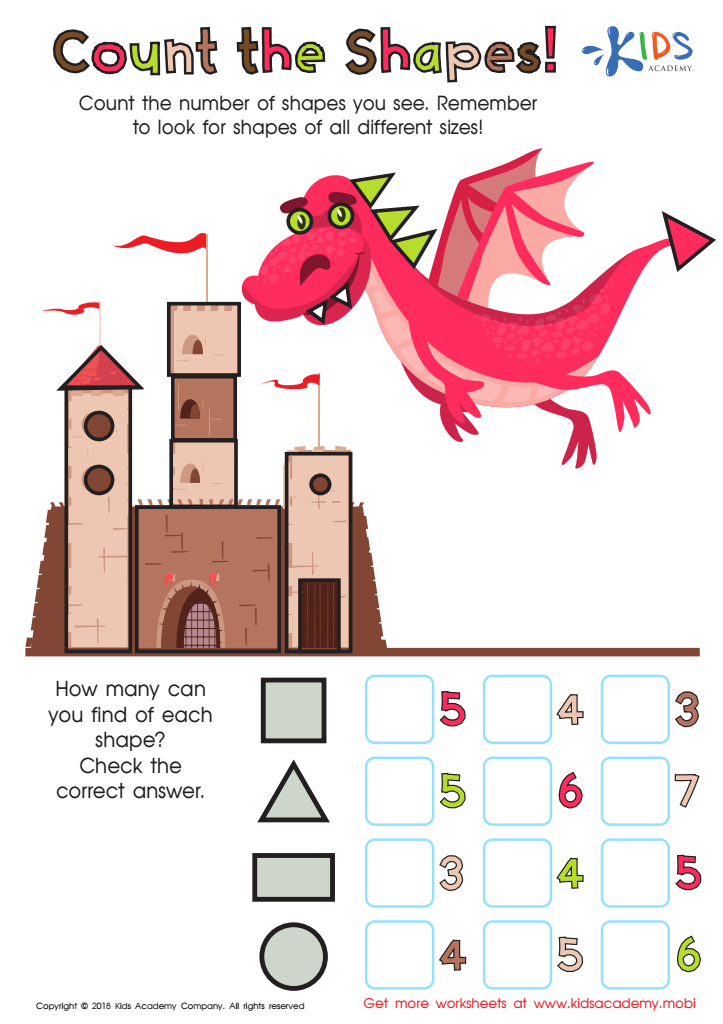
Count the Shapes Worksheet
 Assign to My Students











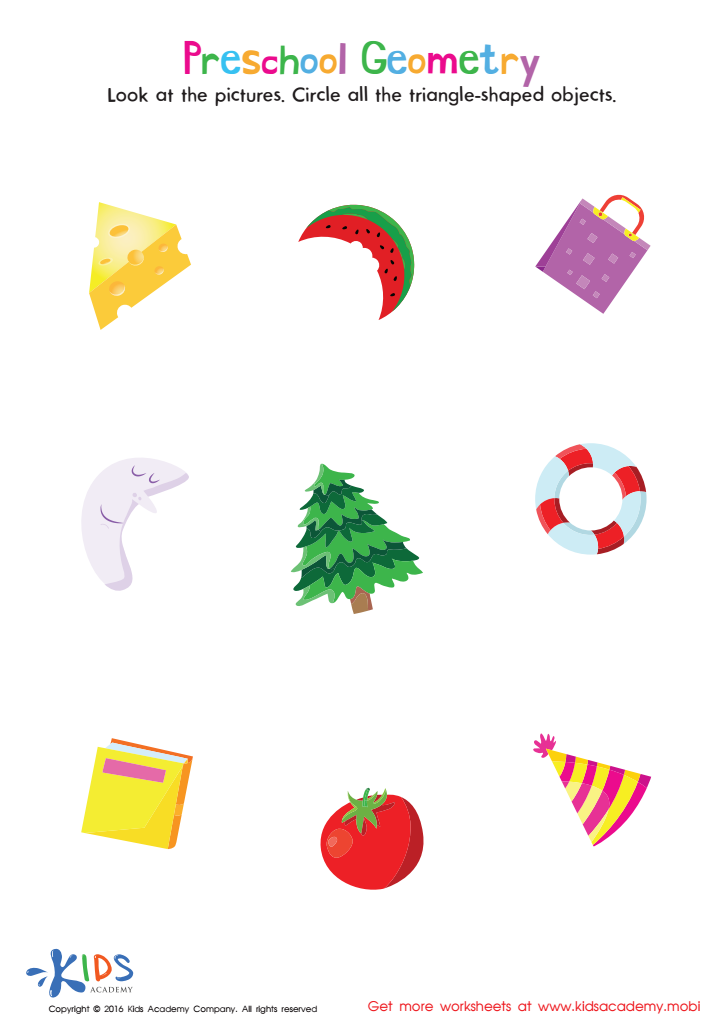
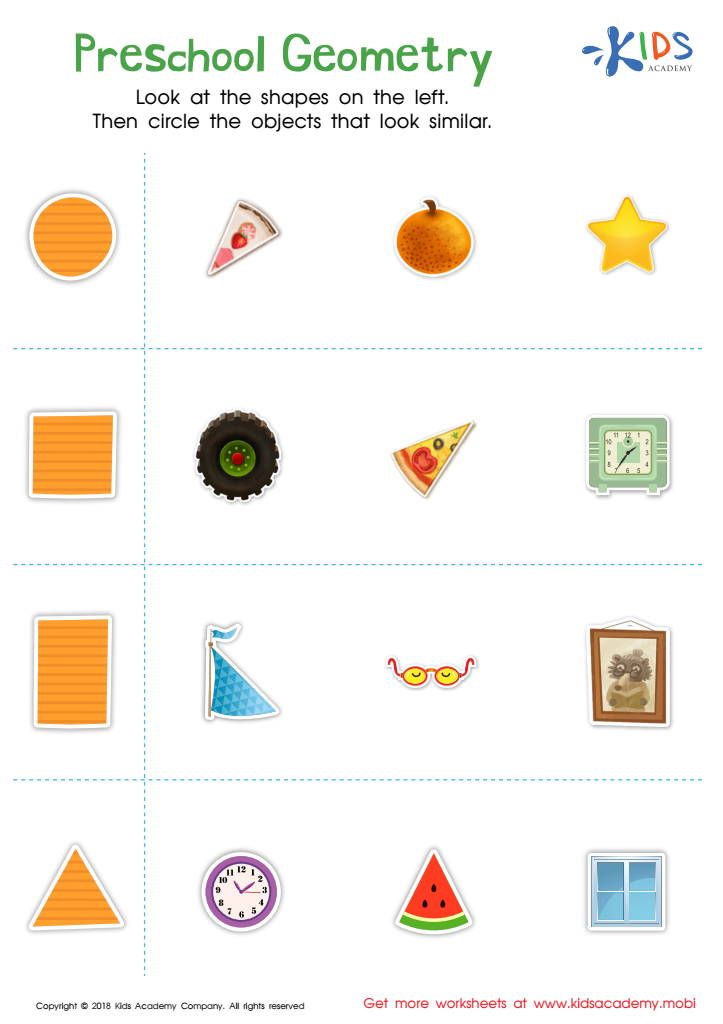
Preschool Geometry Worksheet
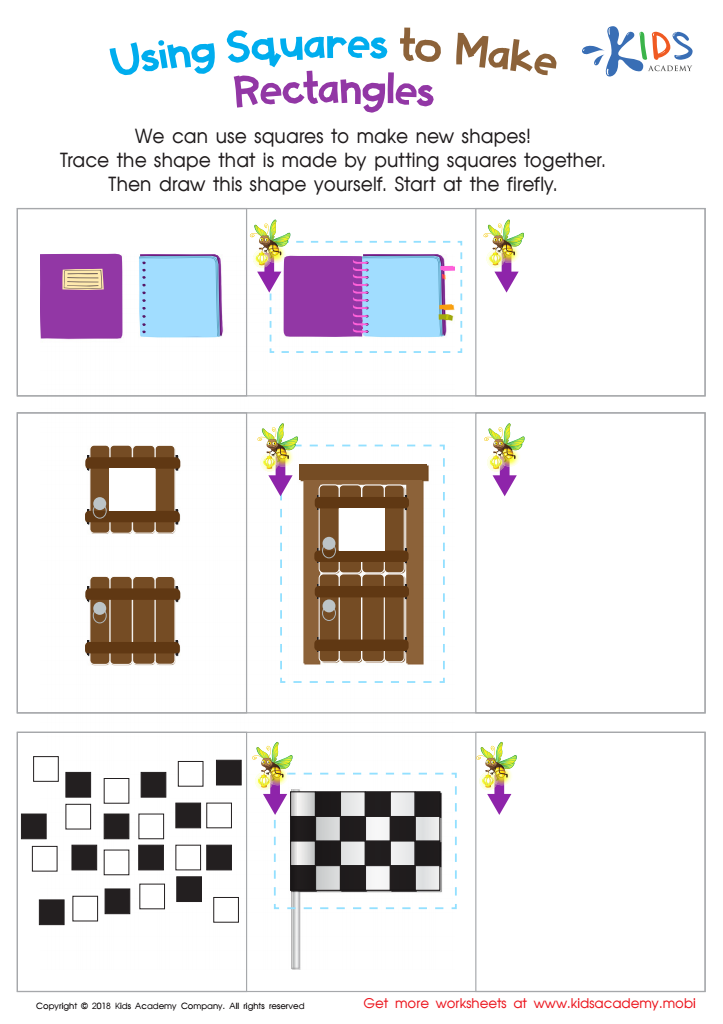
Using Squares to Make Rectangles Worksheet
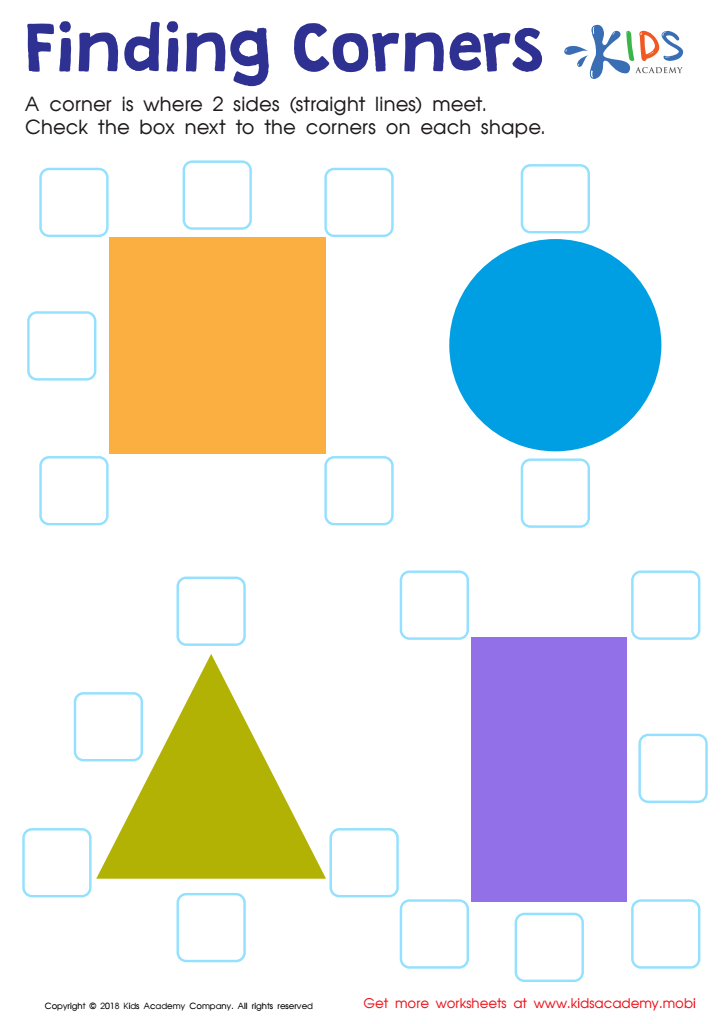
Finding Corners Worksheet
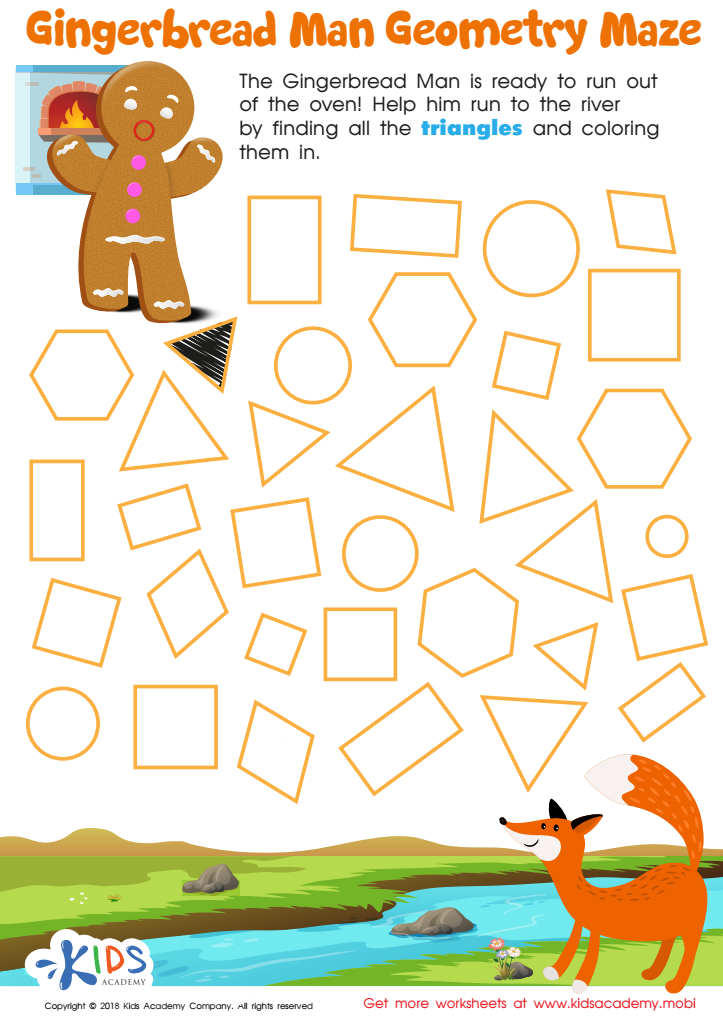
Gingerbread Man Geometry Maze Worksheet








Counting skills and an understanding of basic geometry are foundational components of early childhood education, crucial for 5-year-olds' cognitive development. Developing counting skills fosters numeracy, which is essential for everyday tasks, such as shopping or time management. When children can count confidently, they build a strong mathematical foundation that will benefit them in more complex math concepts later on.
Additionally, learning normal geometry introduces young learners to shapes, sizes, and spatial understanding. This knowledge enhances their visual perception and helps in developing critical thinking and problem-solving skills. Recognizing shapes and understanding how they relate to each other enables children to make connections in various subjects, not just math.
Furthermore, these skills enhance children's creativity. They engage with their environment, exploring shapes and relationships visually and interactively, which encourages play-based learning. Parents and teachers play a pivotal role in nurturing this learning by incorporating counting games, puzzles, and geometric activities into playtime.
Ultimately, instilling strong counting and geometry skills sets the stage for lifelong learning. It cultivates an analytical mindset, helps in social interactions (like sharing and taking turns), and supports emotional intelligence through collaborative play and problem-solving with peers.








