Fine Motor Skills Normal Tracing Shapes Worksheets for 5-Year-Olds
3 filtered results
Difficulty Level
Grade
Age
-
From - To
Subject
Activity
Standards
Enhance your child's fine motor skills with our engaging Normal Tracing Shapes Worksheets for 5-Year-Olds! Designed to support early childhood development, these printable worksheets provide an enjoyable way for children to practice tracing various shapes. As kids follow the lines, they improve hand-eye coordination, strengthen grip control, and build confidence in their writing abilities. Perfect for both home and classroom use, these worksheets are not only educational but also fun! With colorful designs and age-appropriate challenges, your little learners will enjoy hours of creative practice. Start their journey toward essential fine motor skills today!
Favorites
With answer key
Interactive
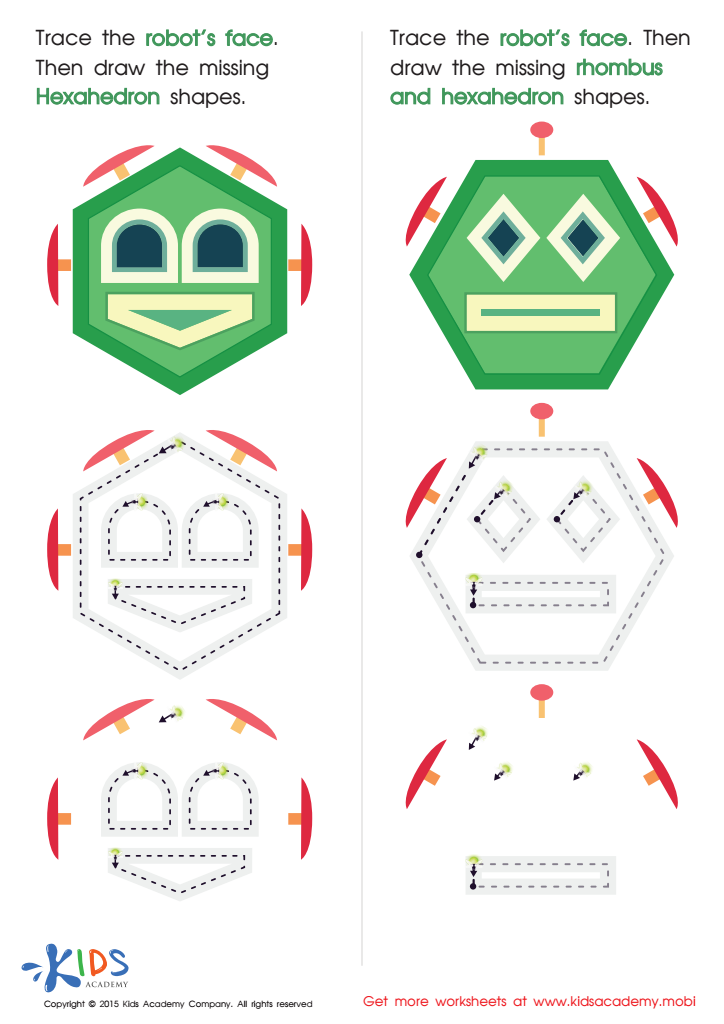
Practice Drawing Hexahedrons And a Rhombus Worksheet
Trace the Robot's face, draw hexahedron and rhombus shapes, then trace again. Our tracing shapes worksheets make it easy for kids to learn geometry. Get more materials from Kids Academy to practice all the shapes.
 Assign to My Students
Practice Drawing Hexahedrons And a Rhombus Worksheet
Worksheet
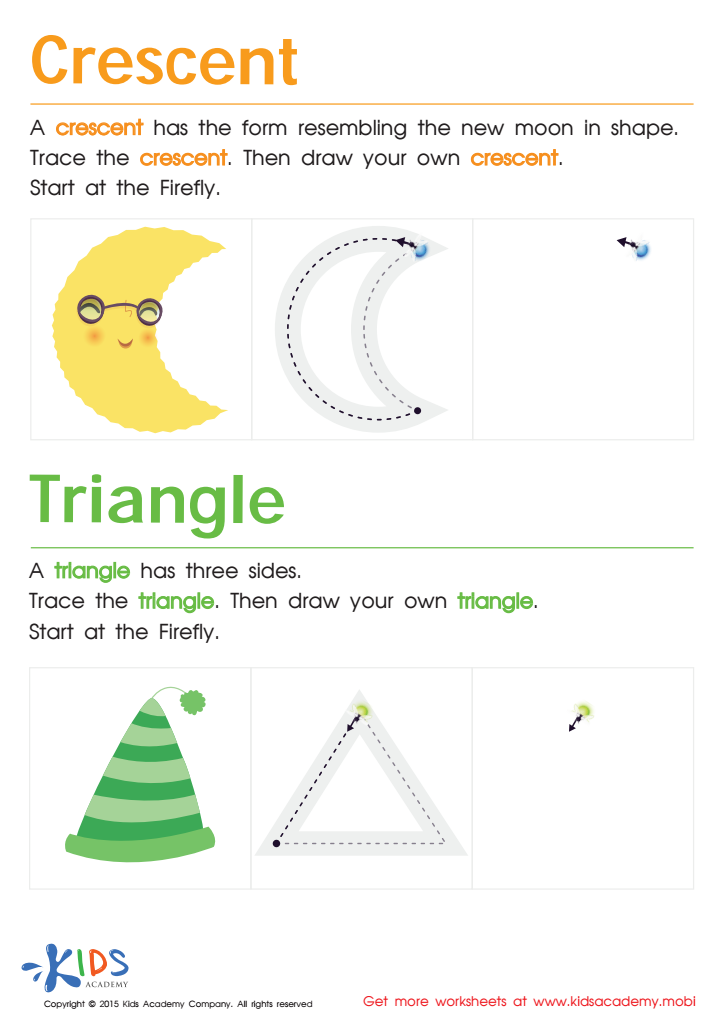
Learning to Draw Crescents And Triangles Worksheet
Help your kids draw a crescent and triangle with this free printable worksheet! Start by tracing a crescent in the form of the new moon, and then teach them that a triangle has three sides and looks like a hat. Find more geometry practice worksheets at Kids Academy!
Learning to Draw Crescents And Triangles Worksheet
Worksheet
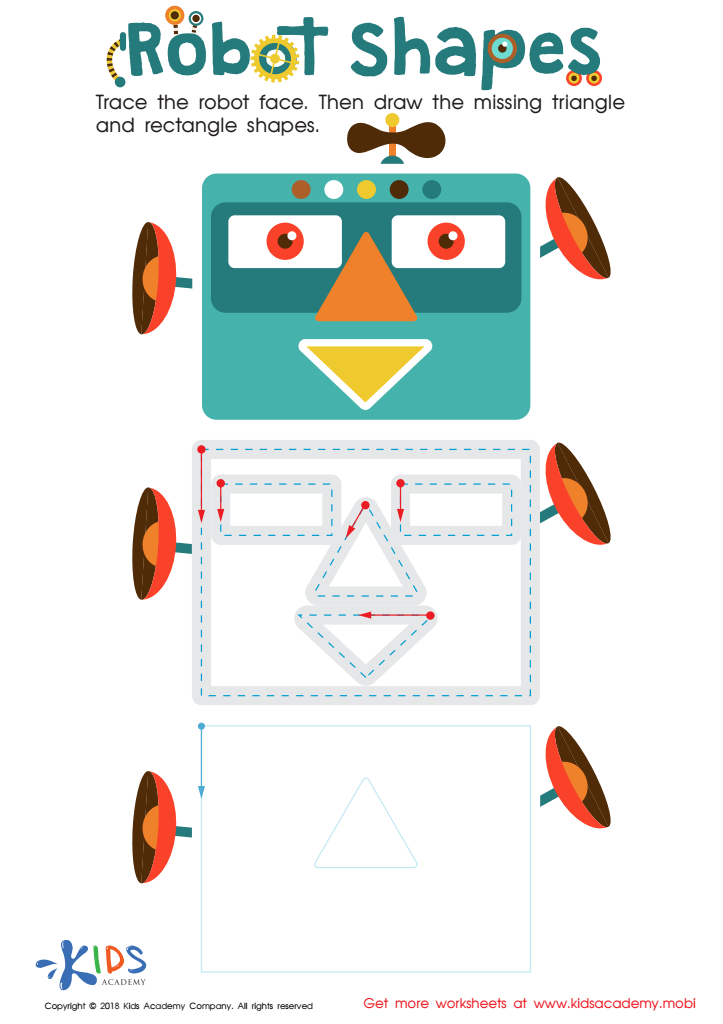
Robot Shapes Worksheet
Help your preschooler get started with math skills while having fun with this shape tracing worksheet featuring a cute robot! Ask them to study the first image, trace the dotted lines to draw the shapes in the second, and color the third. With this activity, they'll learn shapes while enjoying the funny robot pictures!
Robot Shapes Worksheet
Worksheet
Join Kids Academy for Free
Who is primarily going to use this learning content?








Fine motor skills are essential for young children's overall development, particularly at the age of five. Tracing shapes is a foundational activity that helps refine these skills, enabling children to develop coordination, precision, and control over their hand movements. When children engage in tracing shapes, they are not only practicing their fine motor skills but also enhancing their cognitive and spatial awareness.
These skills are crucial for various daily activities, such as writing, buttoning shirts, and using utensils. Additionally, well-developed fine motor skills can boost a child's confidence, making them more capable and independent as they enter school and social settings.
Parents and teachers should care about this developmental milestone because a delay in fine motor skills can hinder a child's ability to learn essential tasks, ultimately affecting their academic success. By encouraging activities like tracing shapes, adults can provide children with opportunities to practice and improve, laying a solid foundation for future skills. Furthermore, tracking progress in this area can inform educators and parents if additional support or intervention might be required, ensuring that children are reaching their developmental milestones effectively. Supporting fine motor skill development in early childhood fosters not only academic readiness but also lifelong learning and adaptability.