Discover our engaging Alphabet Understanding Normal Worksheets designed specifically for children aged 6-7. These interactive resources promote letter recognition, phonemic awareness, and early literacy skills through fun activities tailored to young learners. Each worksheet combines visually appealing graphics with hands-on exercises, making it easy for kids to practice identifying, tracing, and forming letters. Parents and educators will appreciate the structured approach that supports diverse learning styles while fostering confidence in reading and writing. Perfect for home or classroom use, our worksheets invite exploration and reinforce essential alphabet knowledge. Ignite a love for learning with our Alphabet Understanding resource today!

Check out this FREE "Alphabet understanding" Trial Lesson for age 6-7!

Identify Lowercase Letters p-r

Favorites
With answer key
Interactive
  • 6-7
  • Alphabet understanding
  • Normal
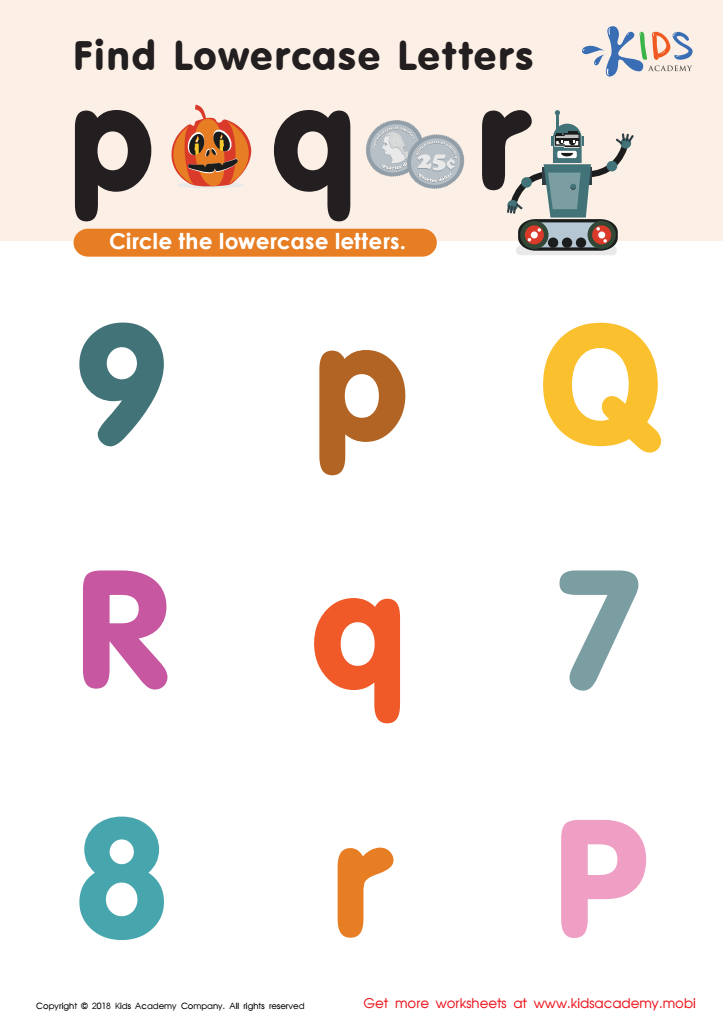
Find lowercase Letters p q r Worksheet

Find lowercase Letters p q r Worksheet

Help your child spot the lowercase letters among the numbers and uppercase letters in this worksheet. It's a great way to teach them to identify and write the lowercase and uppercase letters. Assist them in completing the exercise to give them a better understanding of the alphabets.
Find lowercase Letters p q r Worksheet
Worksheet
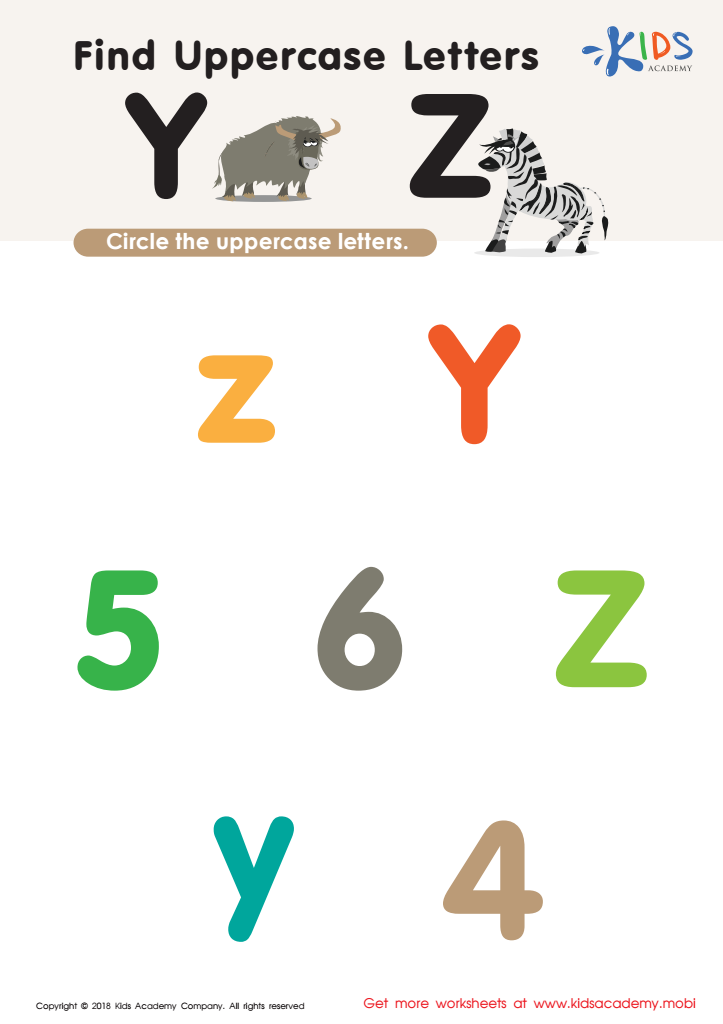
Find Uppercase Letters Y Z Worksheet

Find Uppercase Letters Y Z Worksheet

Download the worksheet! Help your youngster to learn the alphabet and distinguish uppercase from lowercase letters by having them circle the uppercase ones. It's an important first step towards reading and writing success!
Find Uppercase Letters Y Z Worksheet
Worksheet
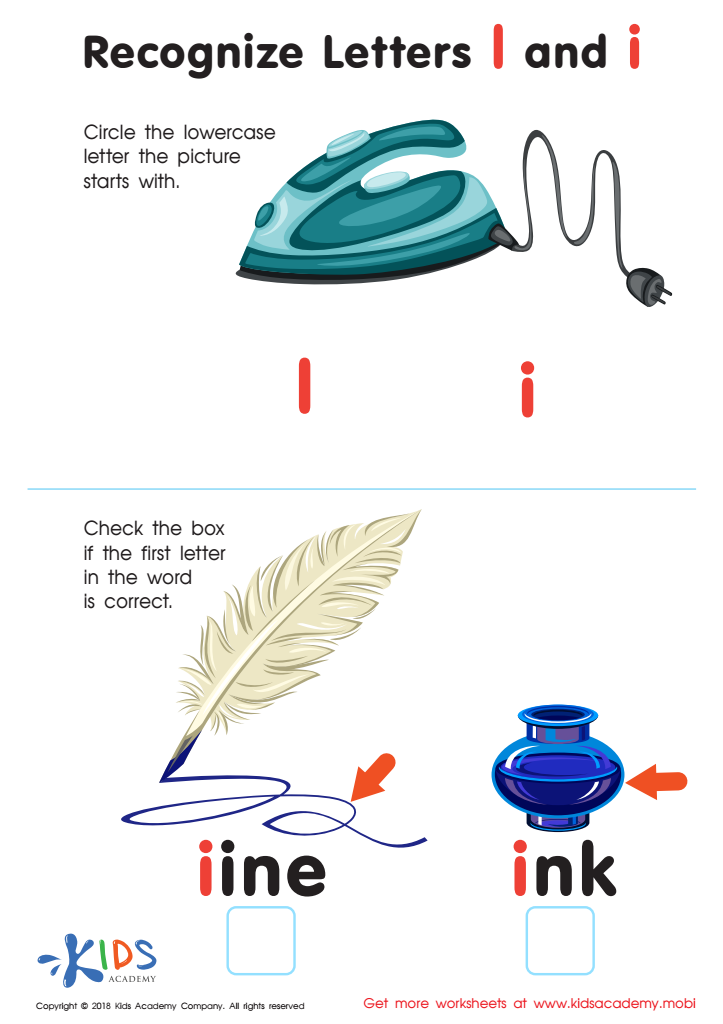
Recognize Letters l and i Worksheet

Recognize Letters l and i Worksheet

Help your child become familiar with uppercase and lowercase letters. Have them look at the pictures in the worksheet and circle the lowercase letter the picture starts with. For example: which one is the lowercase "i", the capital "I" or the small "i"?
Recognize Letters l and i Worksheet
Worksheet
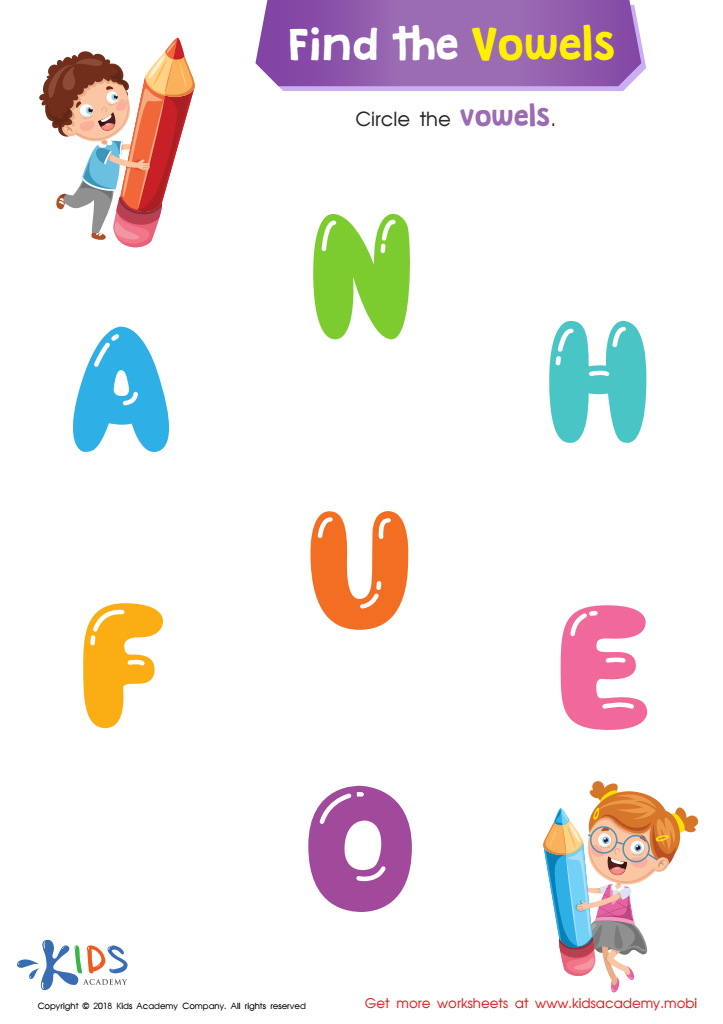
Find the Vowels Reading Worksheet

Find the Vowels Reading Worksheet

This worksheet helps kids identify vowels with bright colors and engaging activities to strengthen their visual discrimination and fine motor skills. Young learners will find it easy to succeed and be excited to keep reading!
Find the Vowels Reading Worksheet
Worksheet
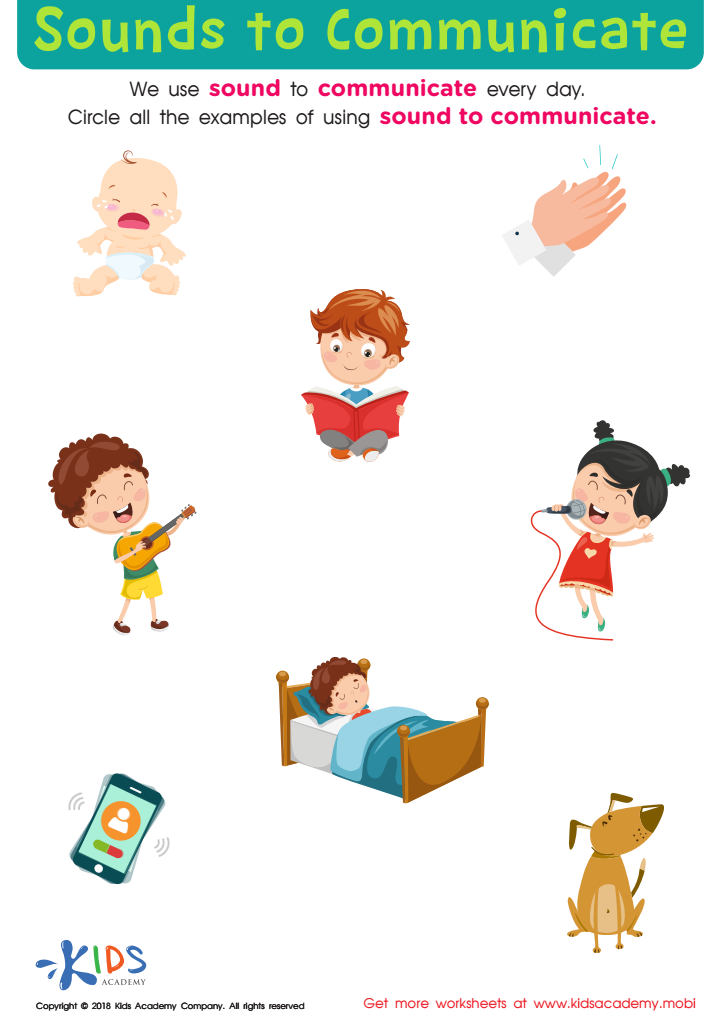
Sounds to Communicate Worksheet

Sounds to Communicate Worksheet

Sounds are important for communication. Ask your students to name sounds people, animals and things make. Then, review this worksheet with them and see if they can identify the activities. Ask them to circle examples of sounds used to communicate.
Sounds to Communicate Worksheet
Worksheet
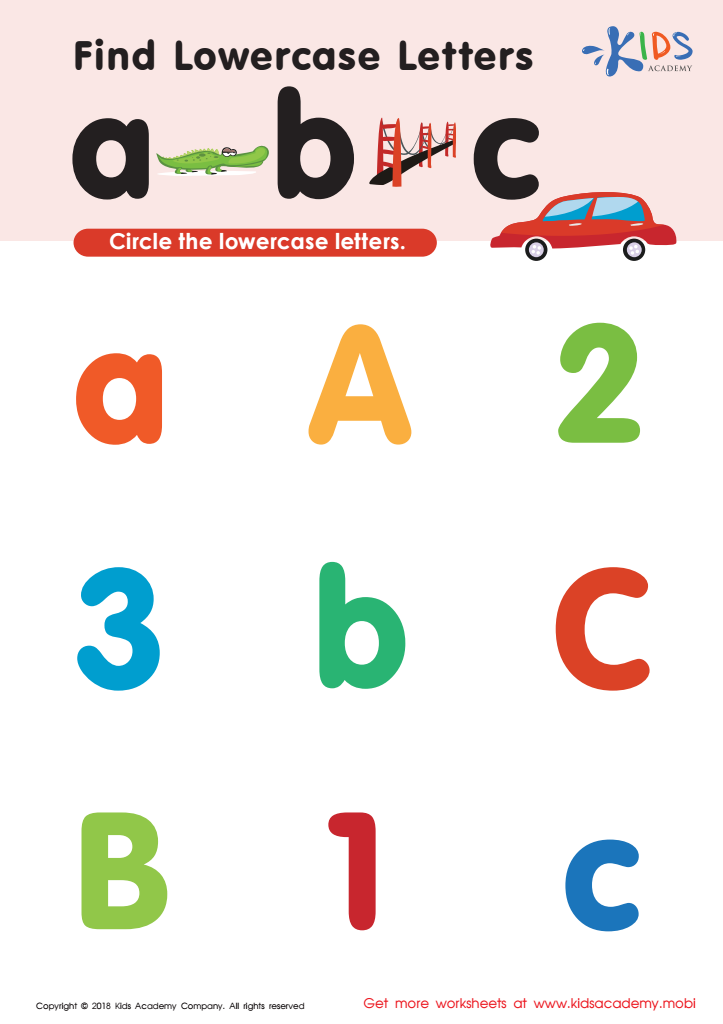
Find lowercase letters a b c Worksheet

Find lowercase letters a b c Worksheet

Help your child identify lowercase letters with this worksheet. Carefully look at each letter and have your child circle the lowercase ones. This exercise is vital in helping them understand the alphabet and the difference between lower and uppercase letters.
Find lowercase letters a b c Worksheet
Worksheet
Letter K worksheets
Letter K worksheets

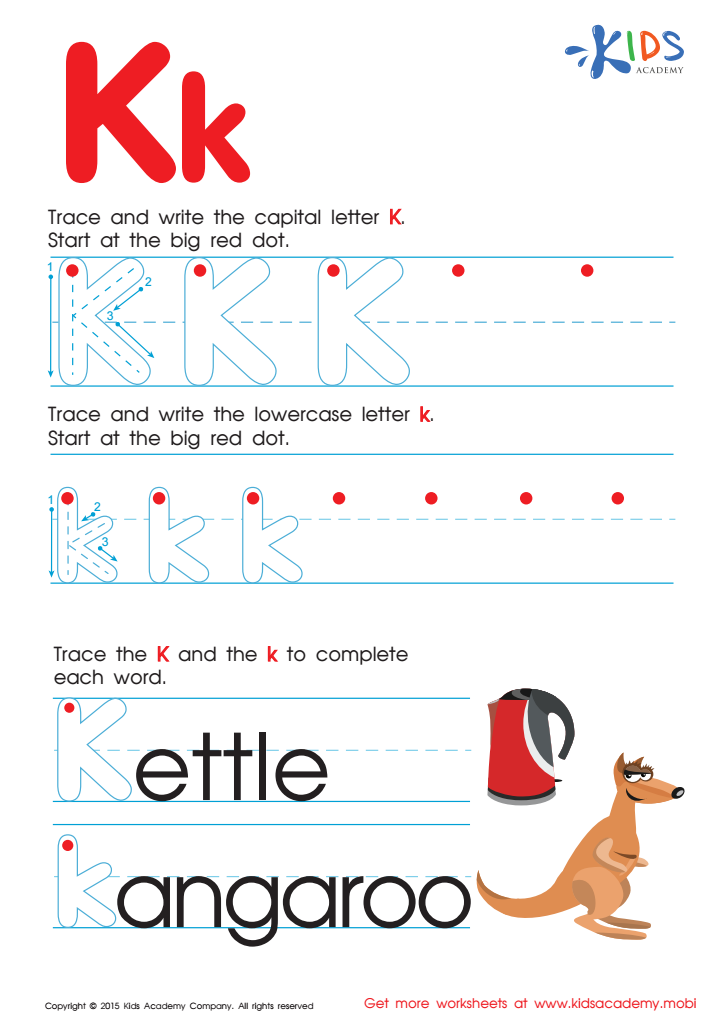
Letter K Tracing Page

Trace and write the letter K; start at the big red dot. Use it to complete words like "Kettle" and "Kangaroo". Visit Kids Academy for more free alphabet worksheets for kindergarten.
Letter K Tracing Page
Worksheet


Understanding the alphabet is a critical foundational skill for children aged 6-7, influencing their overall literacy development and academic success. At this age, children are transitioning from learning individual letter sounds to using these skills for reading and writing. A strong grasp of alphabet recognition aids in their ability to decode words, which in turn fosters independent reading and comprehension skills.

Parents and teachers play a vital role in this developmental stage. By promoting alphabet understanding through engaging activities such as songs, games, and storytelling, they can ignite a child's interest in reading. This not only enhances cognitive skills but also builds self-confidence, as children recognize their progress in learning.

Additionally, literacy is linked to social-emotional development; children who feel proficient in reading are more likely to participate in classroom discussions and share ideas. This confidence can translate into overall improved academic performance, larger vocabulary, and better communication skills.

Moreover, early literacy experiences set the stage for lifelong learning habits. Thus, parents and teachers who prioritize alphabet understanding contribute significantly to a child's educational journey and their love for literacy, preparing them for future challenges in school and beyond.