Identifying patterns Normal Worksheets for Ages 6-7
3 filtered results
-
From - To
Discover our engaging "Identifying Patterns" worksheets designed for children aged 6-7! These fun and educational resources help young learners develop essential pattern recognition skills through various activities that promote logical thinking. Our worksheets include colorful visuals and interactive exercises that captivate kids' attention while enhancing their learning experience. Perfect for home or classroom use, these worksheets encourage creativity and critical thinking as children learn to identify, continue, and create patterns. Foster a love for math and science with our easy-to-use printables that support early academic development. Explore and download these valuable resources to enrich your child's education today!
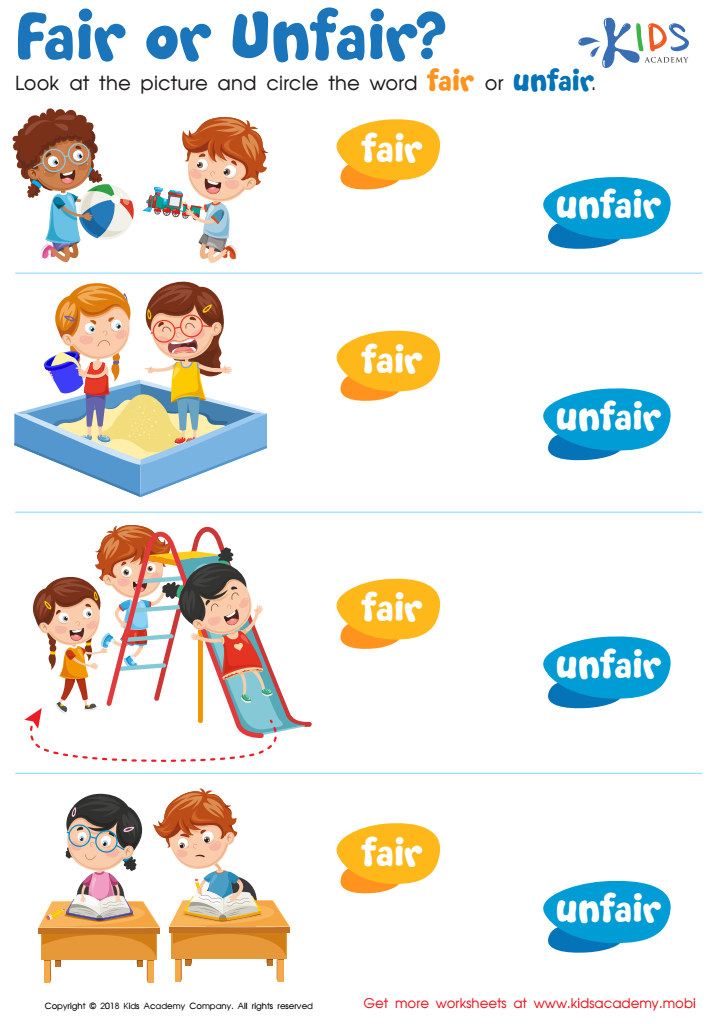
Fair or Unfair Worksheet
 Assign to My Students
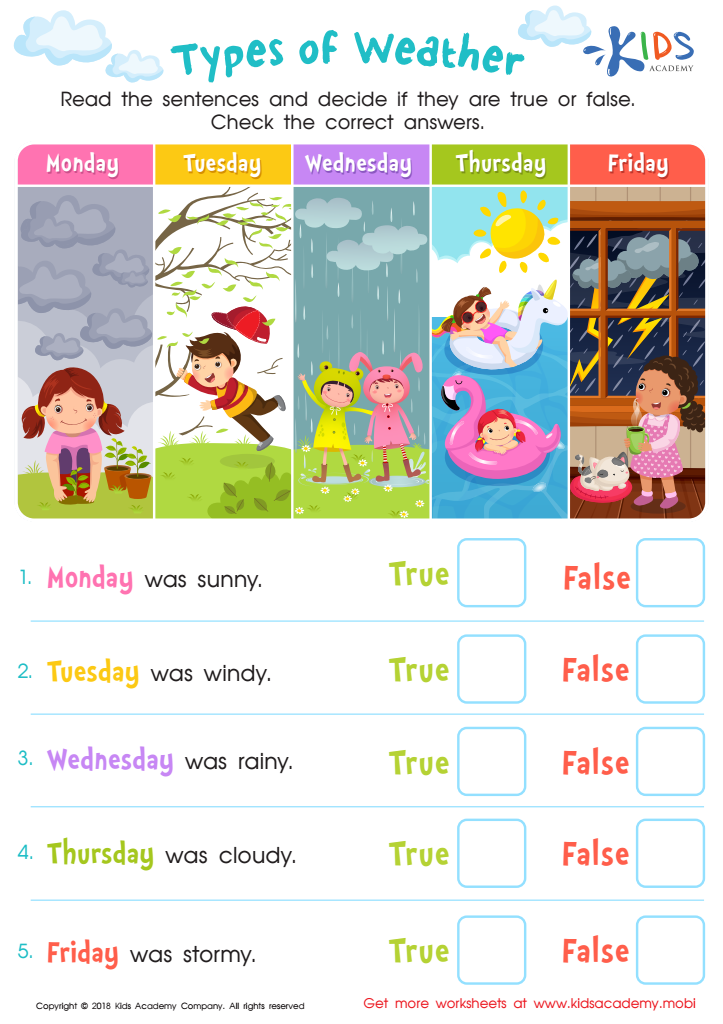
Types of Weather Worksheet
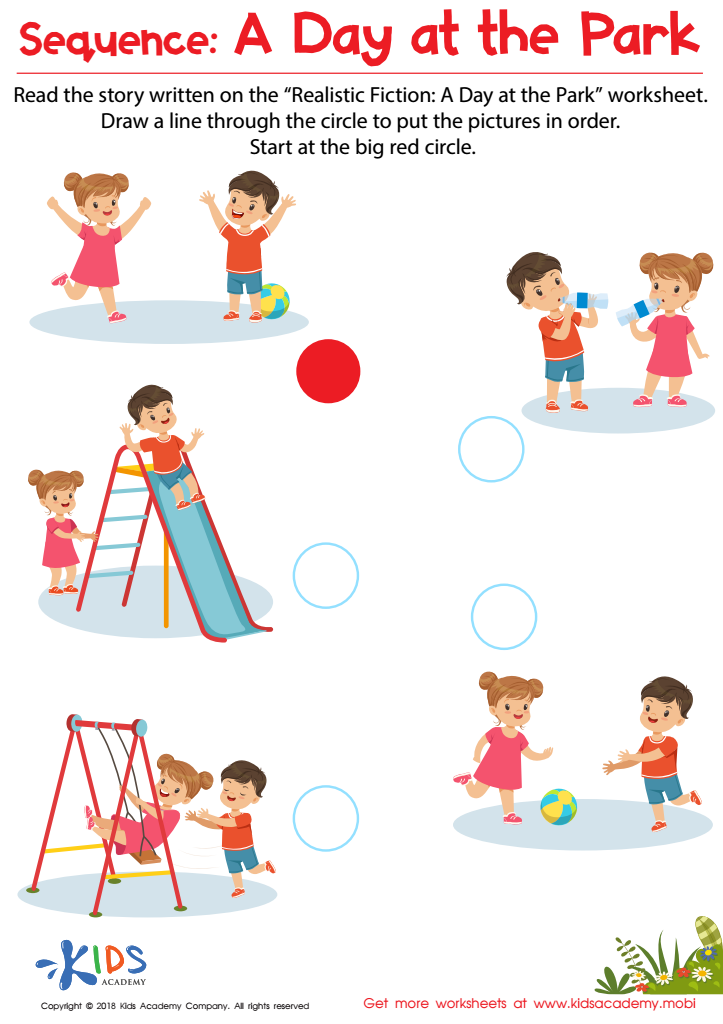
Sequence: A Day at the Park Worksheet








Identifying patterns is an essential skill for children aged 6-7, and both parents and teachers should prioritize its importance in early education. Recognizing patterns fosters critical thinking and problem-solving skills, laying the groundwork for more complex mathematical concepts. When children engage in identifying patterns—be it in numbers, shapes, or everyday situations—they strengthen their ability to organize information logically, which enhances their cognitive development.
Additionally, understanding patterns helps children develop rhythm and predictability, crucial for literacy and language skills. For example, rhymes and syllable patterns in poetry can stimulate phonemic awareness, paving the way for reading fluency. Encouraging pattern recognition also builds confidence; children discover that they can anticipate outcomes based on previous experiences, making learning a more interactive process.
From a social standpoint, identifying patterns cultivates observation skills and nurtures their capacity to draw connections, promoting engagement and participation in group activities. This is crucial for building healthy communication and teamwork skills. Ultimately, early exposure to patterns shapes a child's overall learning trajectory. Thus, parents and teachers should actively incorporate pattern recognition into everyday activities, making it a fundamental part of early childhood education.








