Critical Thinking Normal Addition & Subtraction Worksheets for Ages 6-7
5 filtered results
-
From - To
Unlock your child's potential with our "Critical Thinking Normal Addition & Subtraction Worksheets for Ages 6-7." These expertly designed worksheets not only reinforce essential addition and subtraction skills but also cultivate critical thinking in young learners. Each activity encourages problem-solving, logical reasoning, and analytical skills, making math both fun and educational. Perfect for home or classroom use, these worksheets offer a diverse range of engaging exercises that challenge students to think deeply and understand concepts, rather than just memorize them. Equip your child with the confidence and abilities needed for future academic success. Explore our comprehensive range today!
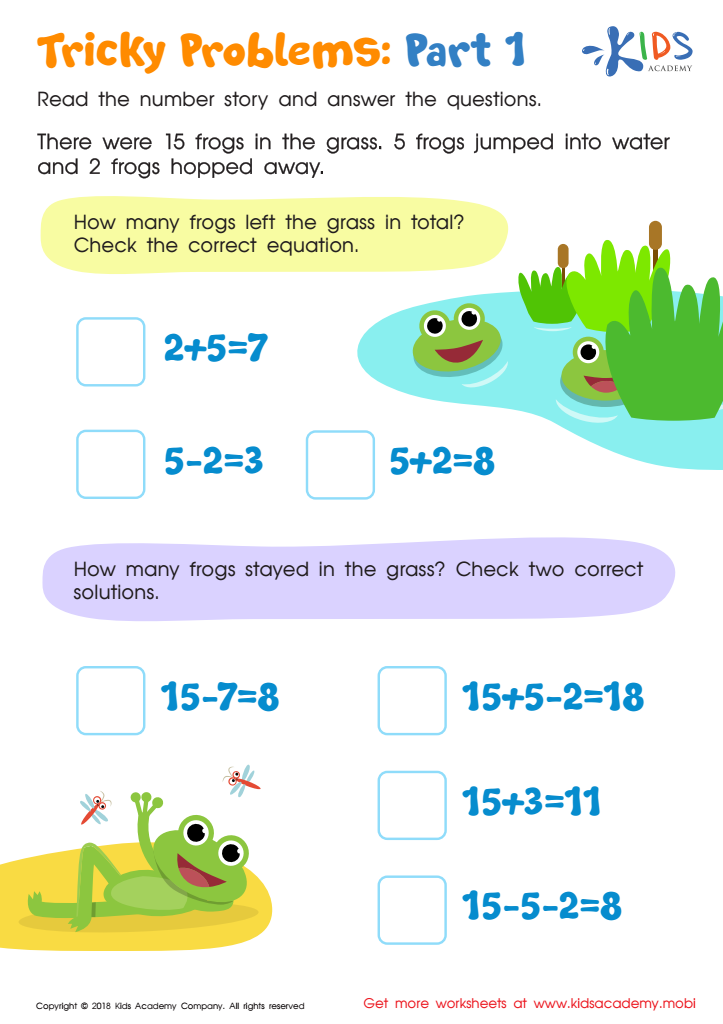
Tricky Problems Worksheet: Part 1
 Assign to My Students
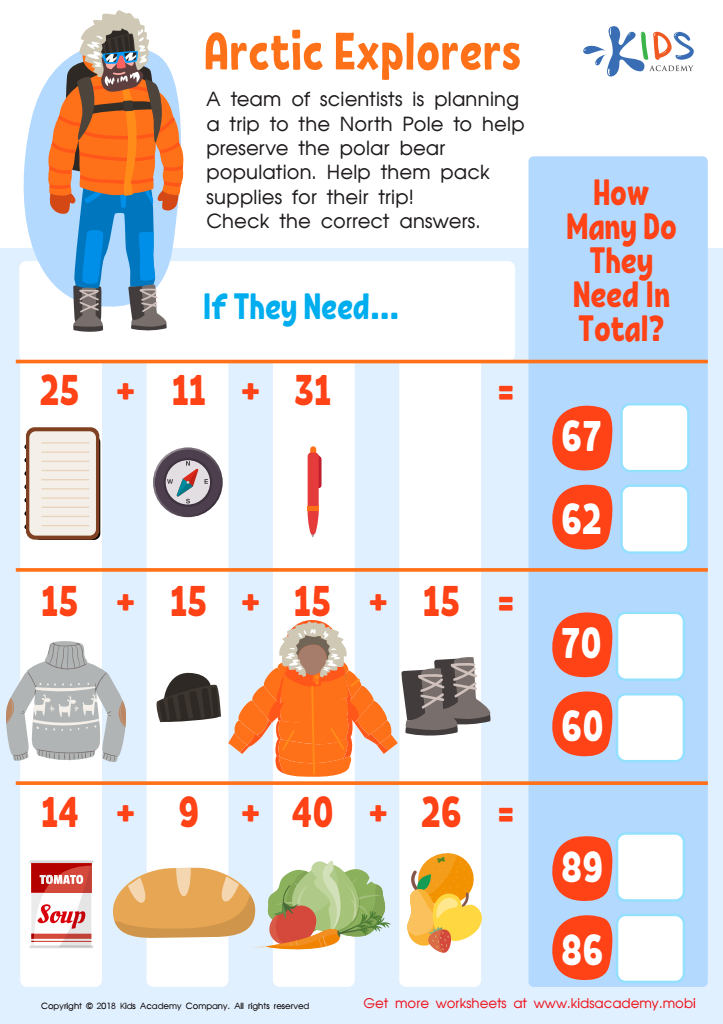
Arctic Explorers Worksheet
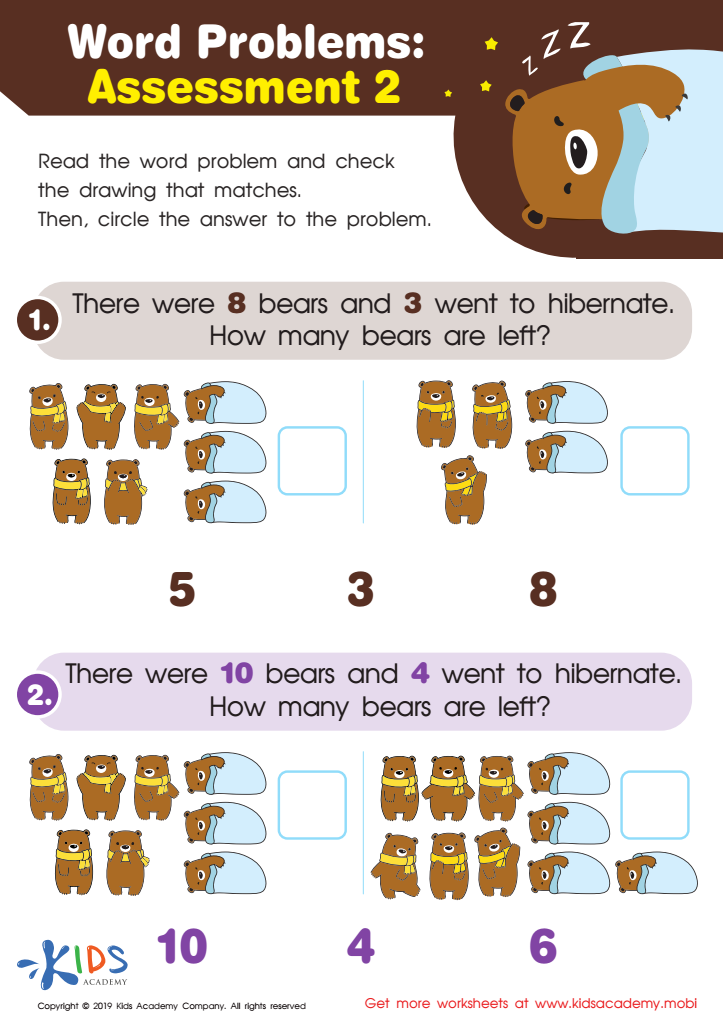
Word Problems: Assessment 2 Worksheet
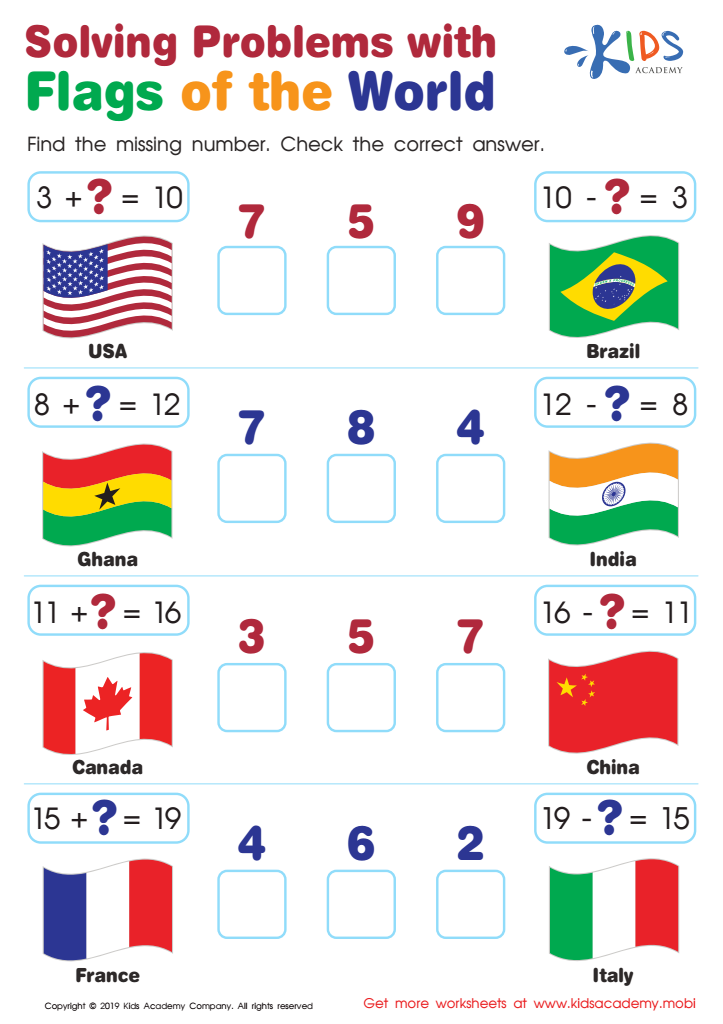
Solving Problems with Flags of the World Worksheet
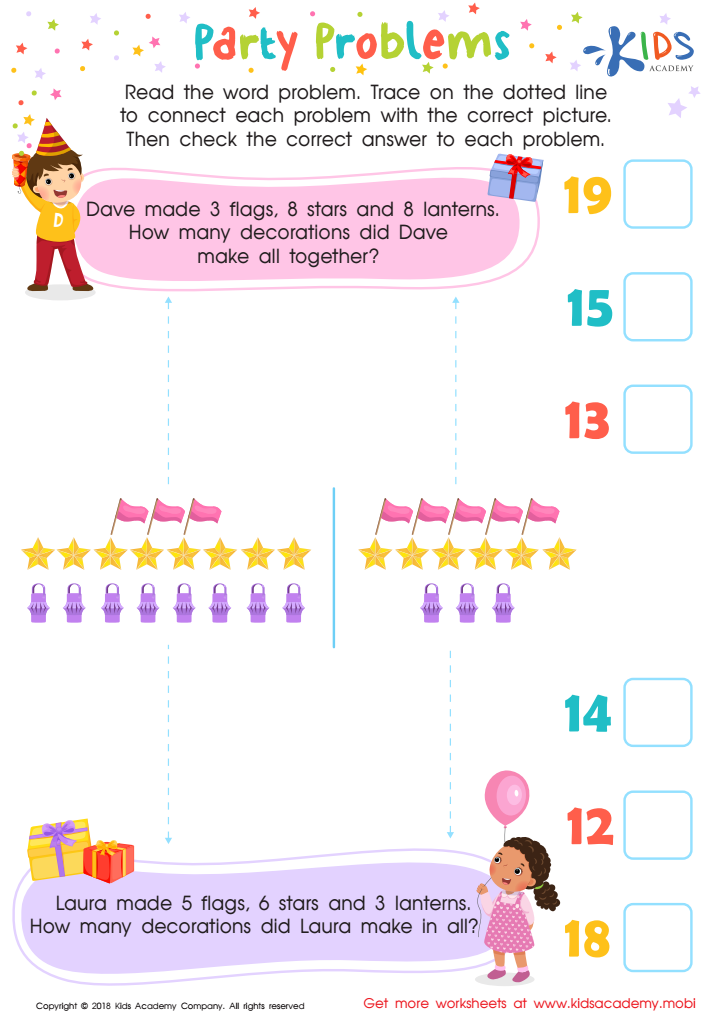
Party Problems Worksheet








Parents and teachers should care about teaching critical thinking in addition and subtraction to children aged 6-7 because these skills form the foundation for more complex mathematical reasoning and problem-solving abilities in later years. These early experiences with arithmetic develop more than just number sense; they also foster logical thinking, pattern recognition, and the ability to make reasoned decisions. When children solve basic arithmetic problems, they begin to understand concepts such as quantity, sequence, and the relationships between numbers, which are essential for future math success.
Moreover, early critical thinking in mathematics encourages a growth mindset. Young learners come to see challenges as opportunities to explore different strategies, fostering perseverance and resilience. For instance, if a child finds more than one way to solve an addition or subtraction problem, they develop confidence and flexibility in thinking, skills which are valuable across all subjects and real-life decisions.
Finally, strengthening these critical thinking skills in mathematics at an early age helps to build a solid educational framework, leading to improved academic performance, better problem-solving skills, and a higher likelihood of success in school and beyond. Parents and teachers play crucial roles in guiding young children through these initial stages, supporting balanced cognitive development and enthusiasm for lifelong learning.








