Counting skills Normal Geometry Worksheets for Ages 6-7
5 filtered results
-
From - To
Enhance your child's counting skills with our engaging Normal Geometry Worksheets designed for ages 6-7. These printable activities from Kids Academy seamlessly integrate counting while reinforcing fundamental geometry concepts, offering a fun and interactive learning experience. Each worksheet helps young learners recognize shapes, improve spatial awareness, and develop precision in counting objects within geometric patterns. Aligned with educational standards, these thoughtfully crafted worksheets turn math practice into an exciting adventure, making it easier for children to grasp essential math skills progressively. Perfect for home or classroom use, these resources are designed to boost confidence and mathematical understanding.
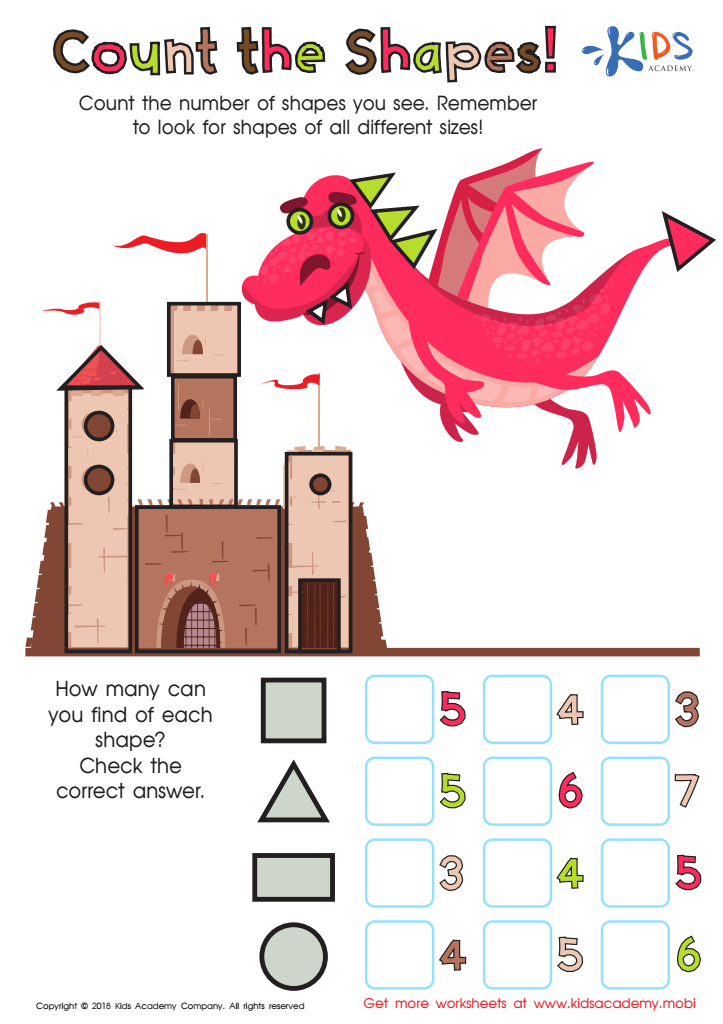
Count the Shapes Worksheet
 Assign to My Students











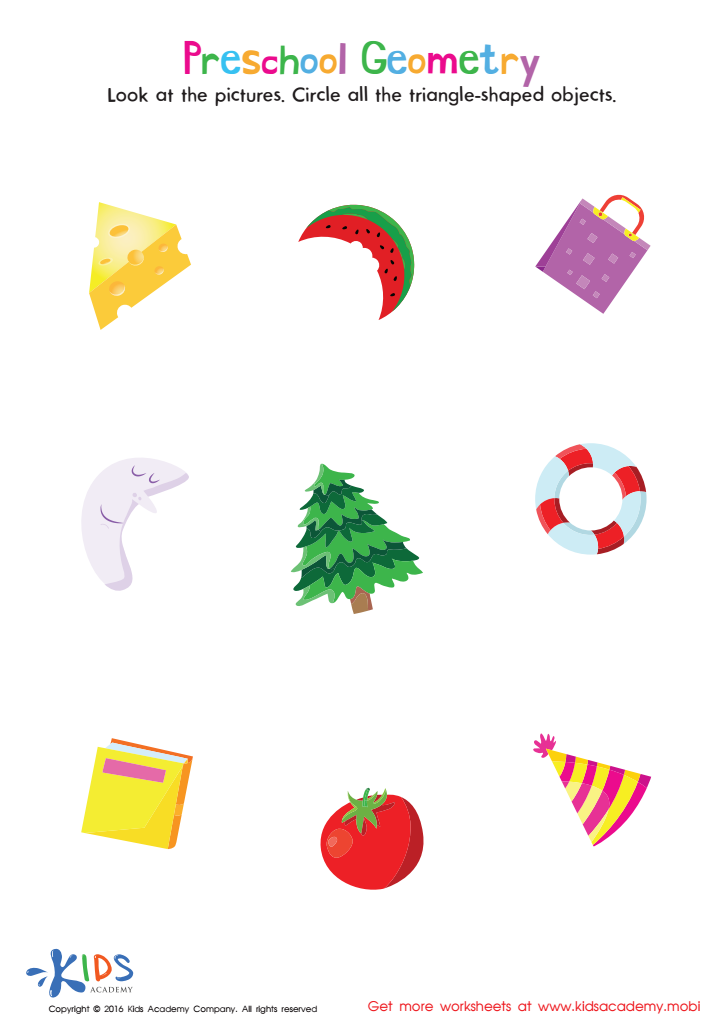
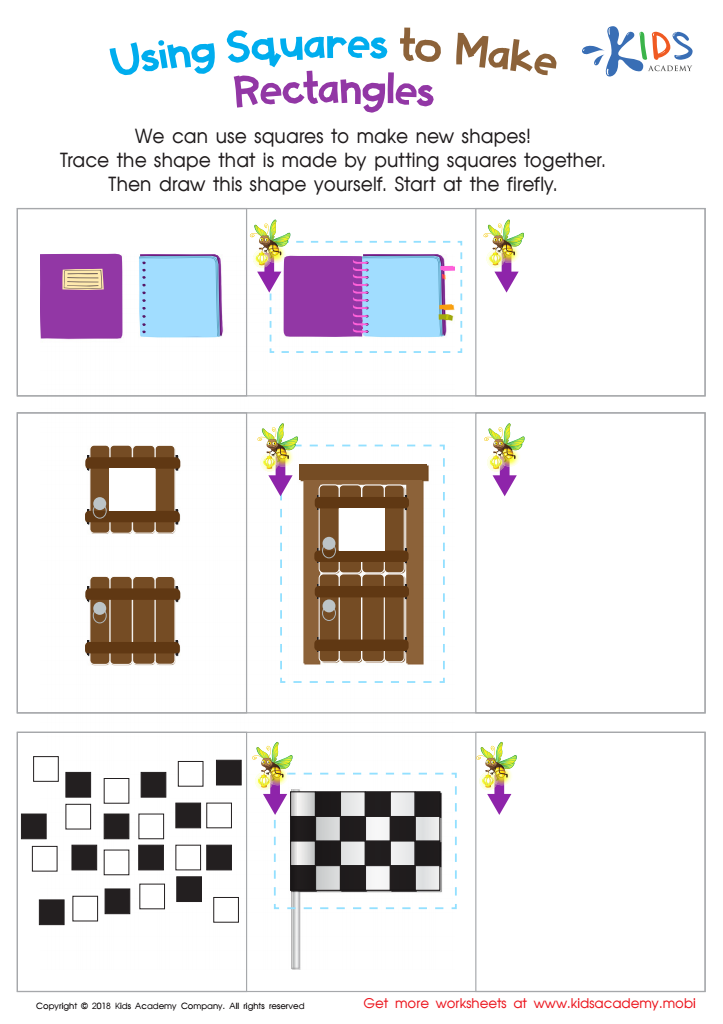
Using Squares to Make Rectangles Worksheet
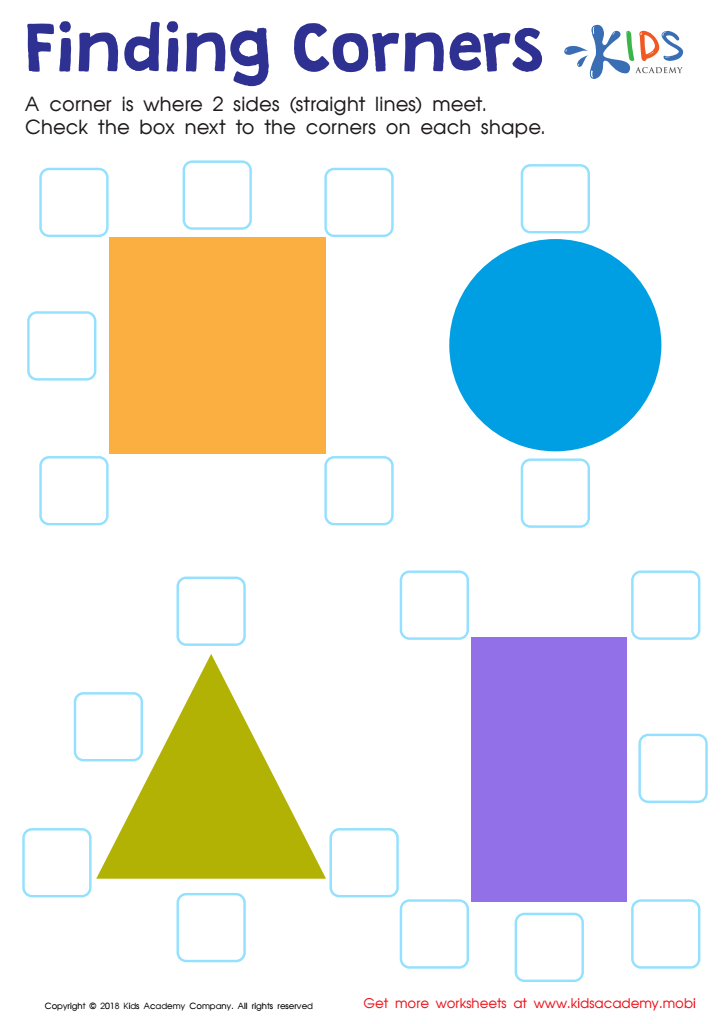
Finding Corners Worksheet
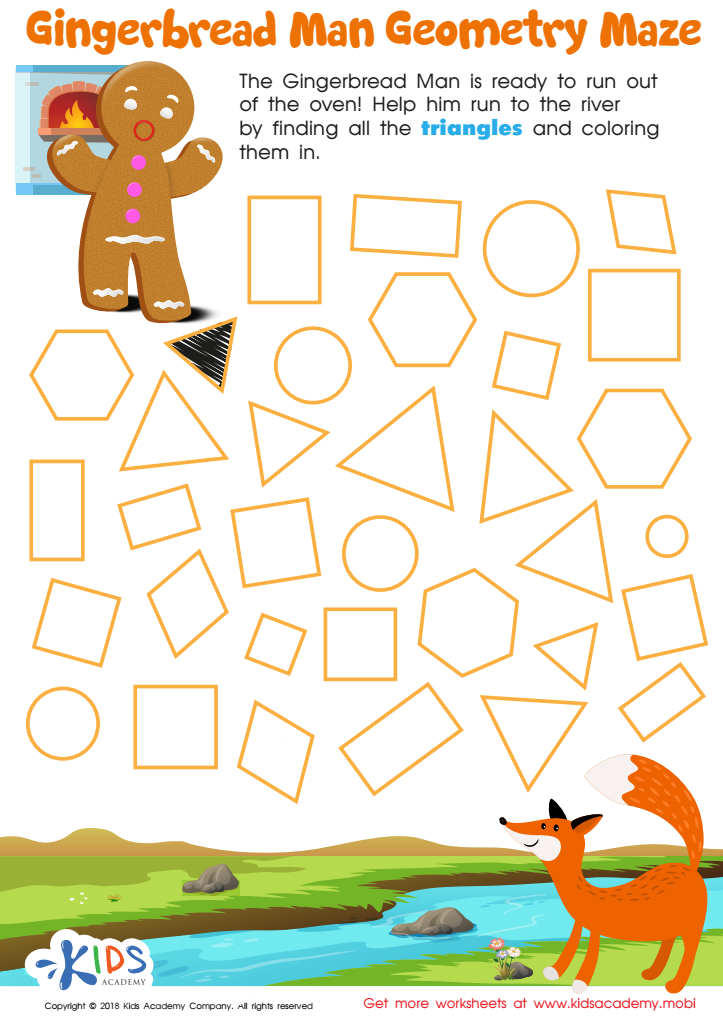
Gingerbread Man Geometry Maze Worksheet








Counting skills and basic geometry are fundamental building blocks in a child's early education, serving as the foundations for more complex mathematical concepts that they will encounter later in life. At ages 6-7, children are at a critical stage of cognitive development where they are able to grasp concrete and abstract ideas more effectively.
Counting skills go beyond simple number recognition; they help children understand number patterns, sequences, and the concept of quantity. Mastering counting paves the way for addition, subtraction, and, eventually, more advanced operations. Moreover, counting aids in developing problem-solving abilities and logical thinking, both crucial skills for academic success and everyday life.
Normal geometry for this age involves understanding basic shapes, dimensions, and spatial relationships. Learning geometry helps children recognize and describe the world around them, fostering spatial awareness and visual learning. Children who grasp geometric concepts early find it easier to navigate subjects like physics, engineering, and architecture later on. Additionally, these skills support abilities in art and creativity, improving their overall cognitive and perceptual skills.
For parents and teachers, nurturing these skills through engaging activities and consistent practice not only builds a solid math foundation but also boosts a child’s confidence and enthusiasm for learning, setting them on a path to academic success and lifelong learning readiness.








