
Basic counting skills Normal Math Worksheets for Ages 6-7
5 filtered results
Difficulty Level
Grade
Age
-
From - To
Subject
Activity
Standards
Discover our engaging "Basic Counting Skills Normal Math Worksheets" designed specifically for children aged 6-7! These worksheets provide a fun and interactive way for young learners to develop essential counting abilities through colorful illustrations and diverse activities. Each worksheet focuses on foundational skills, such as number recognition, one-to-one correspondence, and counting objects. Whether at home or in the classroom, these resources offer countless opportunities for practice and skill reinforcement. Align your child’s learning with educational standards while fostering a love for numbers. Explore our collection today and watch your child's confidence in math flourish! Perfect for early grade educators and parents alike.
Favorites
With answer key
Interactive
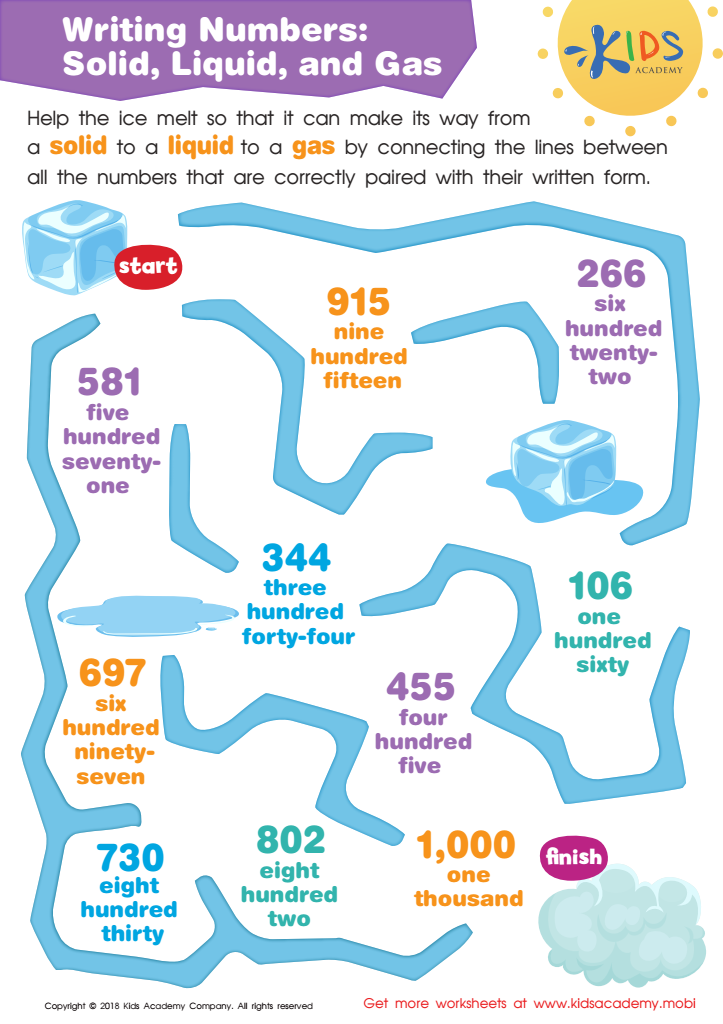
Solid, Liquid, and Gas Writing Numbers Worksheet
Your student can see the math/science connection in this fun maze! Download the PDF and help the ice melt by navigating a maze of number words and numeral representations. To the finish line! Only the paired words and numbers that match get you there.
 Assign to My Students
Solid, Liquid, and Gas Writing Numbers Worksheet
Worksheet
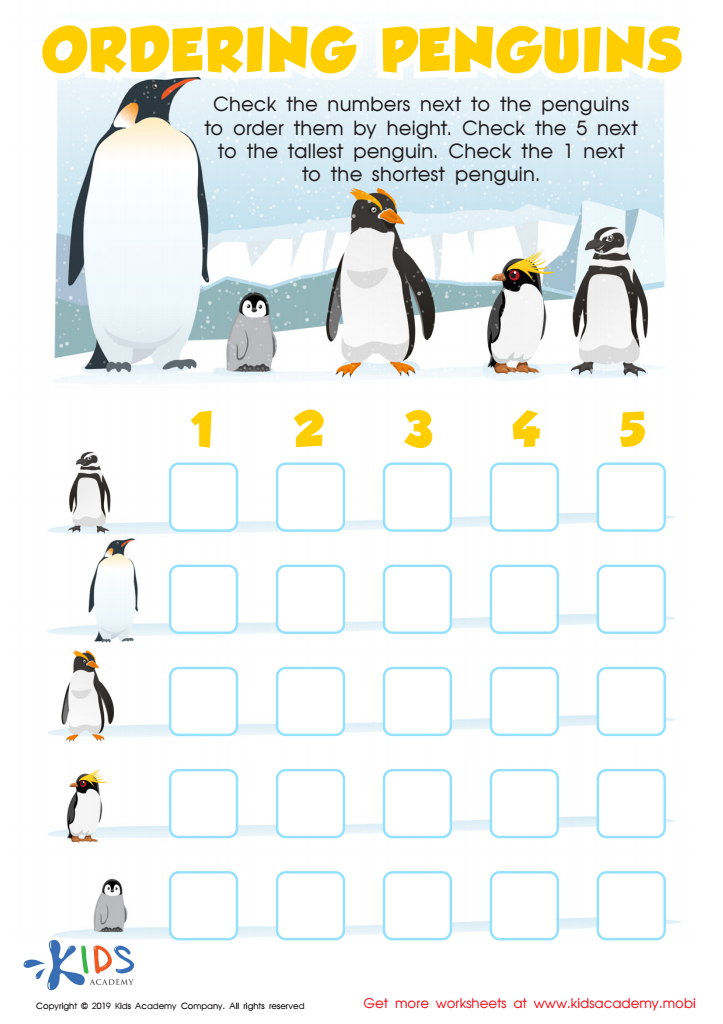
Ordering Penguins Worksheet
Check photos of penguins with your kids, then help them order by height. Tallest gets a 5, shortest gets a 1. Learn cool facts while having fun!
Ordering Penguins Worksheet
Worksheet
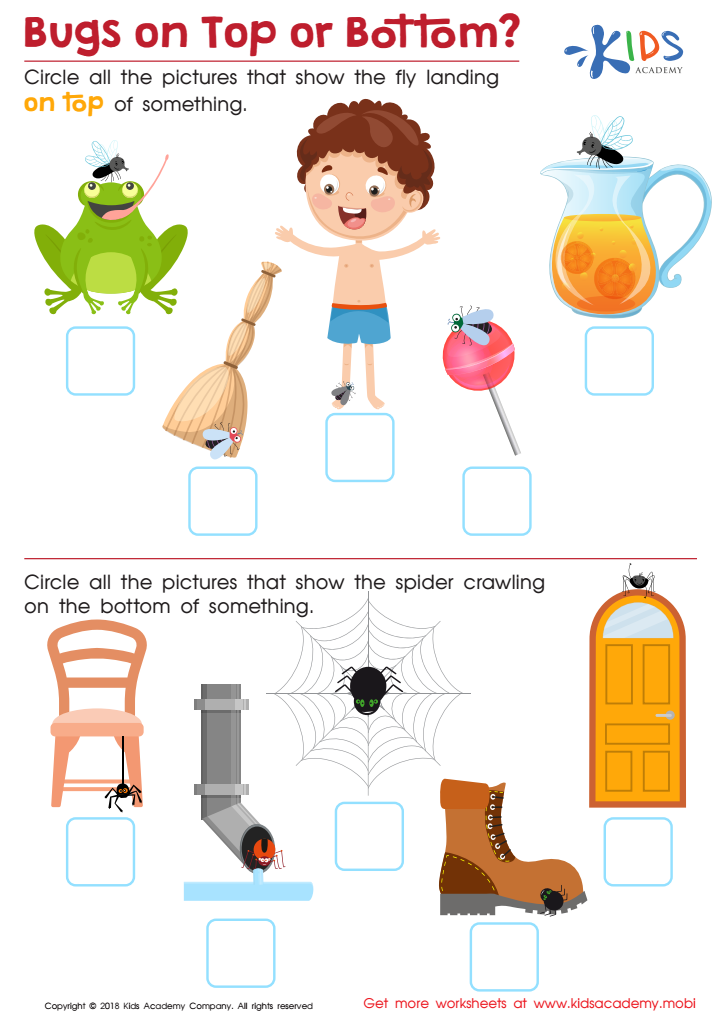
Bugs on Top or Bottom? Worksheet
Preschoolers need to learn directional skills such as top and bottom. This PDF worksheet helps them recognize bugs on the top or bottom using fun visuals. It builds their spatial reasoning while teaching prepositional words in an engaging way.
Bugs on Top or Bottom? Worksheet
Worksheet
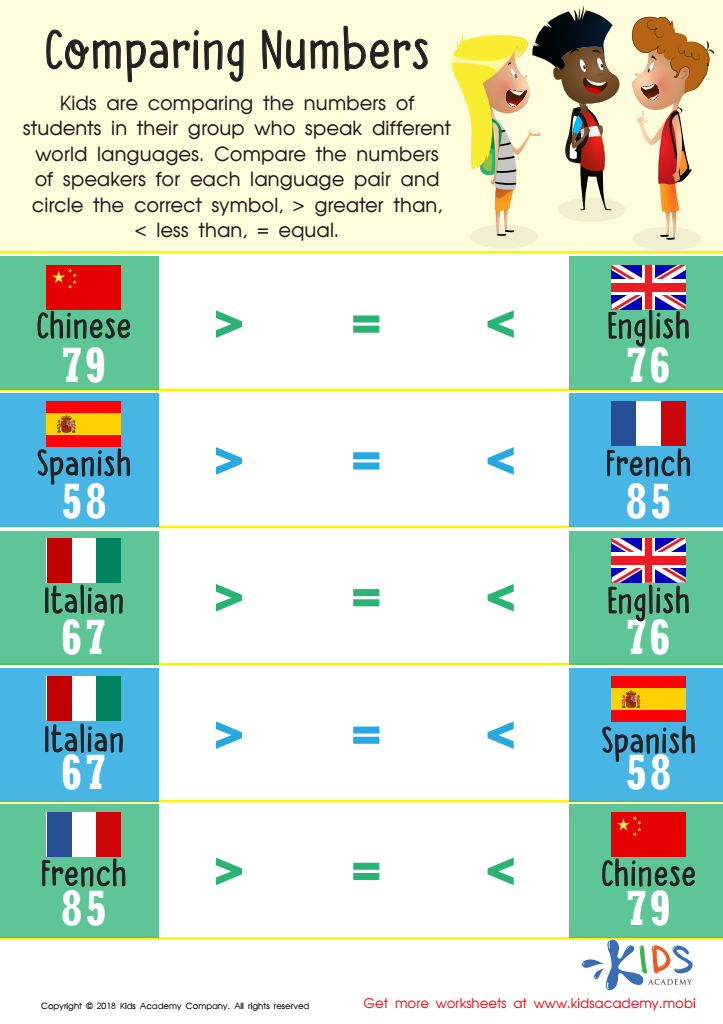
Comparing Numbers Worksheet for 1st Grade
Children can build number sense by exploring the relationship between numbers. This worksheet uses bright international flags to compare numerical groups. Kids will love the cheerful colors and flags from different countries. It encourages them to compare numbers and reinforces their number sense with tens and ones place values.
Comparing Numbers Worksheet for 1st Grade
Worksheet
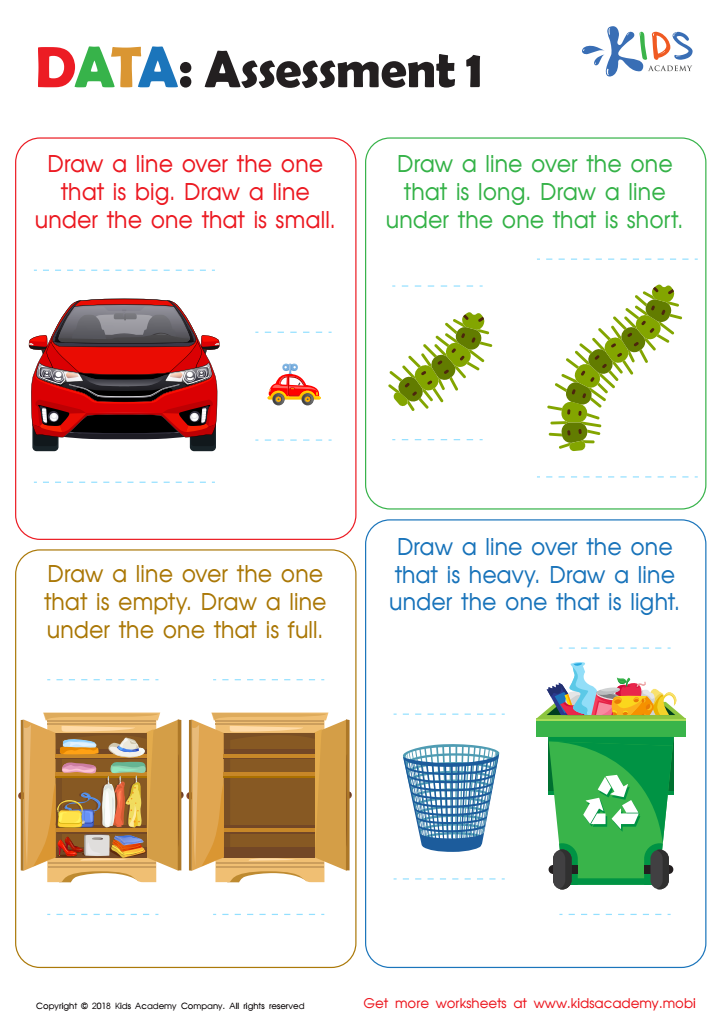
Data: Assessment 1 Worksheet
Assess your students' knowledge of measurement words with this worksheet. Have them compare and describe objects/quantities using words like "big", "small", "long", "short", "empty", "full", "heavy" and "light". Encourage further learning by asking students to provide examples of each word meaning.
Data: Assessment 1 Worksheet
Worksheet
Join Kids Academy for Free
Who is primarily going to use this learning content?








Basic counting skills are foundational for children aged 6-7 as they form the bedrock of all future math learning. At this stage, children begin to explore essential concepts such as addition, subtraction, and number sense, which are vital for their academic success. Mastering counting helps kids understand relationships between numbers and develop mental math skills that are critical in daily life.
Furthermore, parents and teachers play a crucial role in nurturing these skills. Engaging in counting games, using manipulatives, and encouraging real-life counting situations—like counting fruits while grocery shopping—can make learning enjoyable. This age group also exhibits rapid cognitive development, making it an optimal time to instill a positive attitude toward math.
Being proficient in counting boosts students' confidence and promotes a sense of achievement, which can minimize math anxiety later on. Moreover, these skills support other areas of learning—such as problem-solving and logical thinking—equipping children with tools that extend beyond the classroom. Ultimately, by prioritizing basic counting skills, parents and teachers help set a solid foundation that will benefit children throughout their educational journeys and everyday experiences.








