Matching skills Normal Math Worksheets for Ages 6-7
6 filtered results
-
From - To
Discover our engaging "Matching Skills Normal Math Worksheets" designed specifically for children aged 6-7. These worksheets promote early math concepts through enjoyable activities that enhance matching abilities, strengthening critical thinking and number recognition. Packed with colorful illustrations and age-appropriate challenges, they keep young learners motivated and excited about math. Each printable worksheet supports various learning styles and reinforces foundational skills essential for future academic success. Perfect for homeschooling or classroom use, our resources provide an effective avenue for children to practice matching numbers, shapes, and objects, culminating in a fun learning experience. Explore our collection today to ignite a love for math in your child!
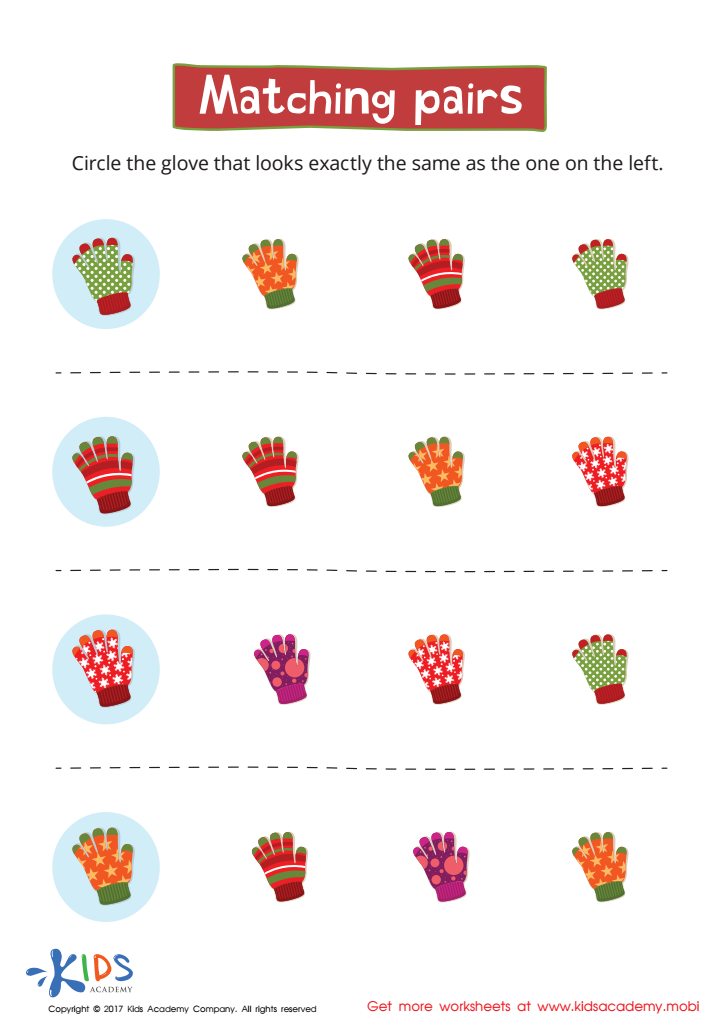
Matching: Matching Pairs Worksheet
 Assign to My Students
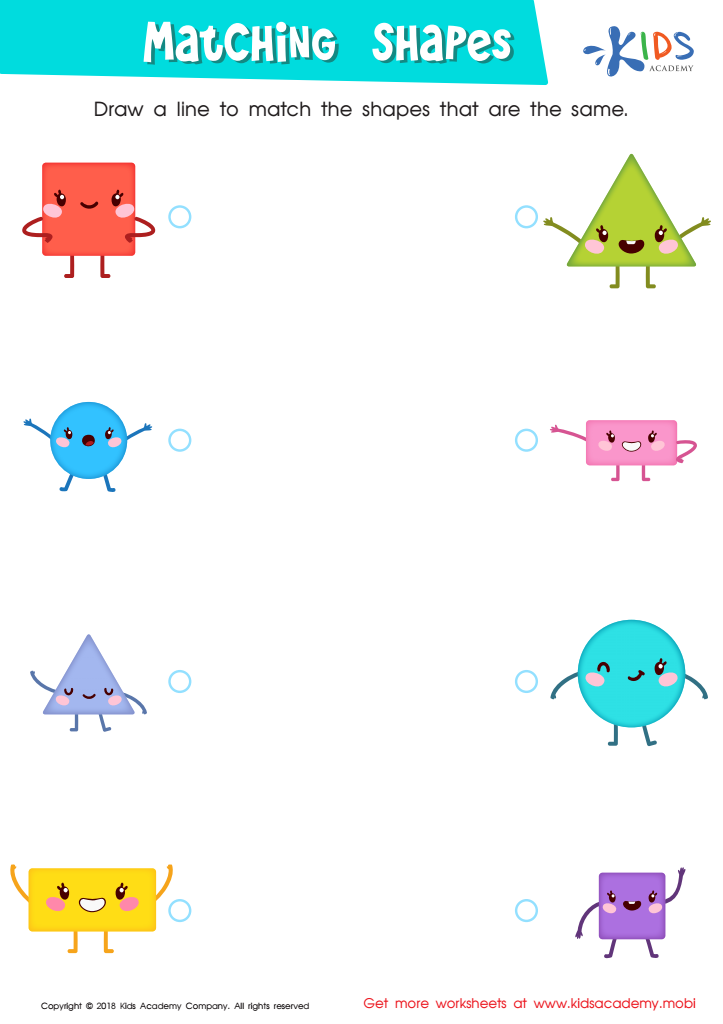
Matching Shapes Worksheet
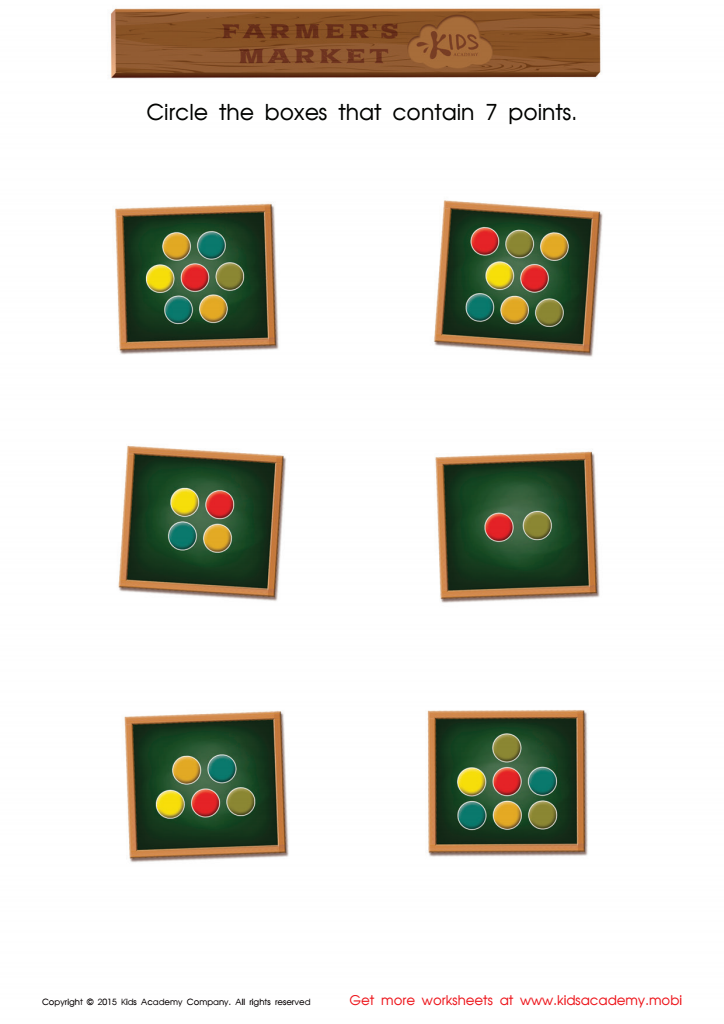
Count and Match Points 7 Math Worksheet
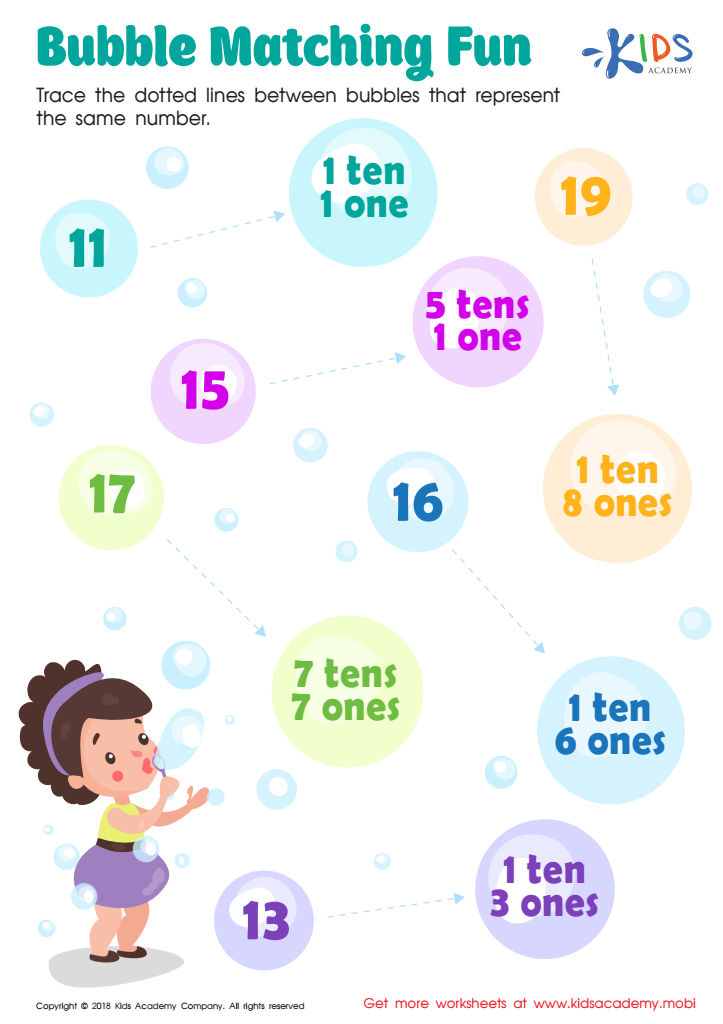
Bubble Matching Fun Worksheet
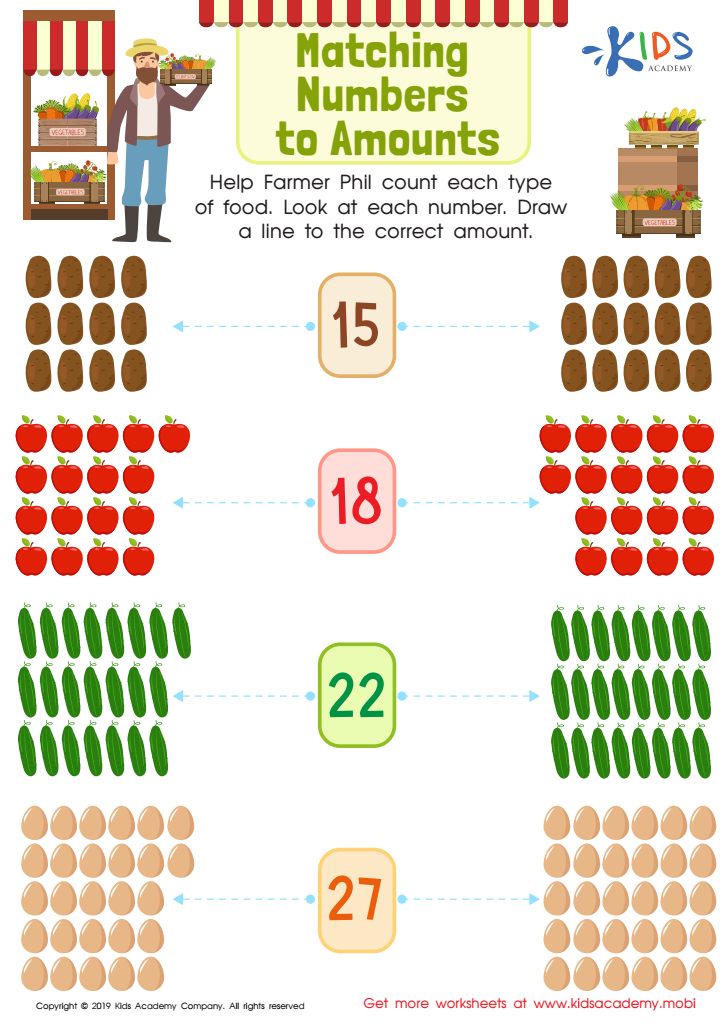
Matching Numbers to Amounts Worksheet








Matching skills in early math education, particularly for children aged 6-7, are essential for developing a strong foundation in mathematical understanding. At this age, children are rapidly acquiring new cognitive skills, and matching activities can enhance their ability to recognize patterns, categorize objects, and establish relationships between numbers and quantities.
Parents and teachers should care about these skills because matching allows young learners to engage with math in a playful and tangible way, making abstract concepts more accessible. For example, matching number cards to corresponding groups of objects helps them understand the idea of quantity in a concrete manner. This foundational understanding fosters confidence and encourages a positive attitude toward math at an early age, reducing math anxiety in the long run.
Additionally, mastering matching skills promotes critical thinking and problem-solving abilities, ultimately leading to more complex math competencies as children progress in their education. Moreover, these skills can be easily integrated into daily activities, making learning fun and relevant. By prioritizing matching skills, adults play a vital role in supporting children’s growth in mathematics, thereby setting the stage for academic success and lifelong learning.








