Addition skills Normal Word Problems Worksheets for Ages 6-7
4 filtered results
-
From - To
Introduce your child to the fun world of math with our "Addition Skills Normal Word Problems Worksheets for Ages 6-7"! These printable worksheets cleverly combine engaging stories and relatable scenarios, making addition easy to grasp for young learners. Designed by educational experts, each worksheet helps kids practice essential addition skills within everyday contexts. Perfect for reinforcing classroom learning or extra practice at home, these problems boost confidence and encourage a love for math. Whether they’re adding up apples or frogs, your child will develop critical thinking and problem-solving skills while having fun! Jumpstart their math journey with our vibrant and interactive worksheets today.
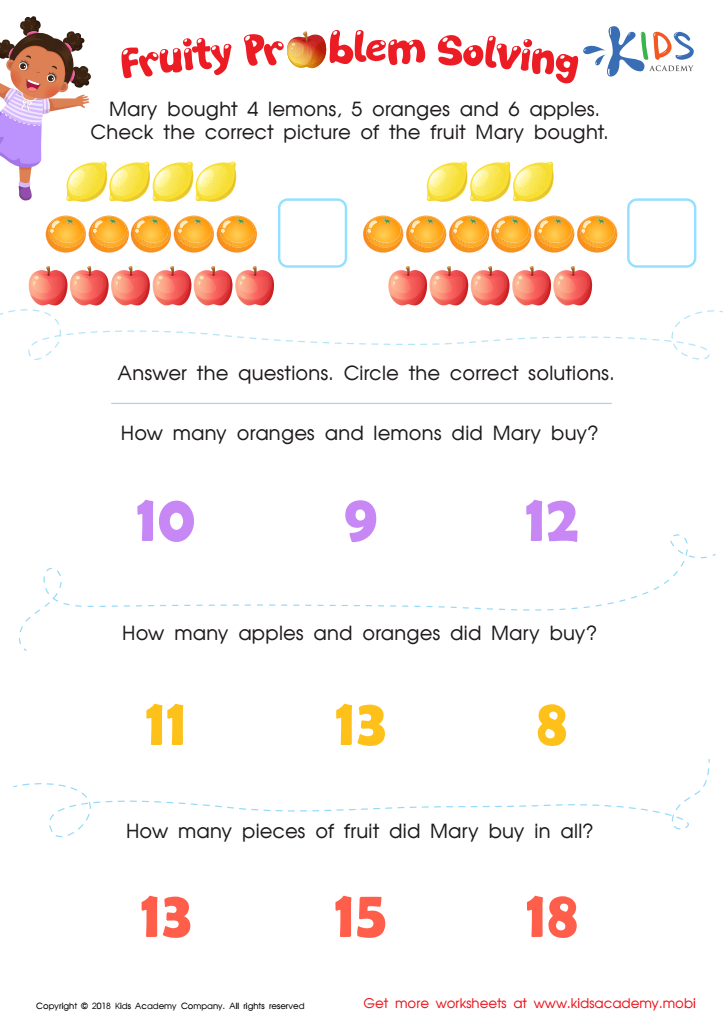
Fruity Problem Solving Worksheet
 Assign to My Students
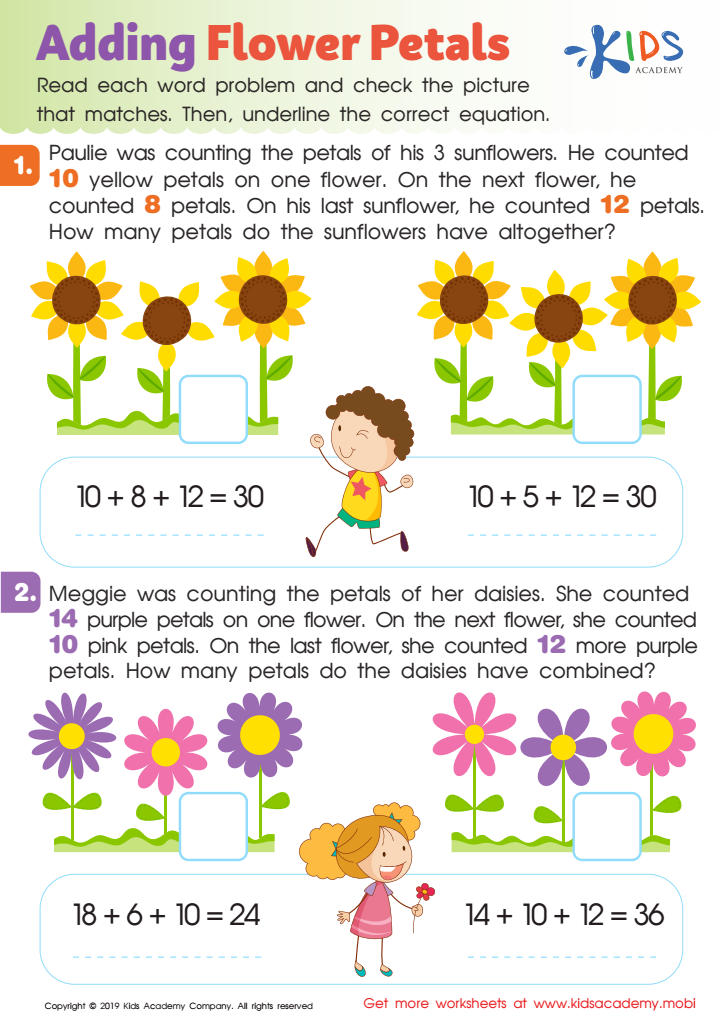
Adding Flower Petals Worksheet
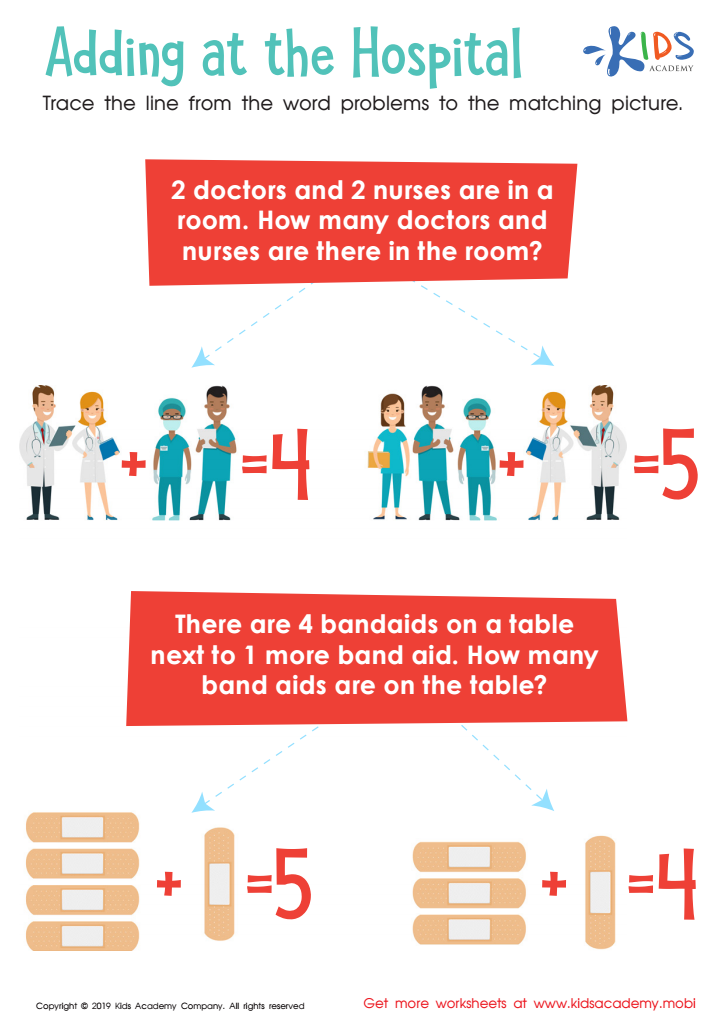
Adding at the Hospital Worksheet
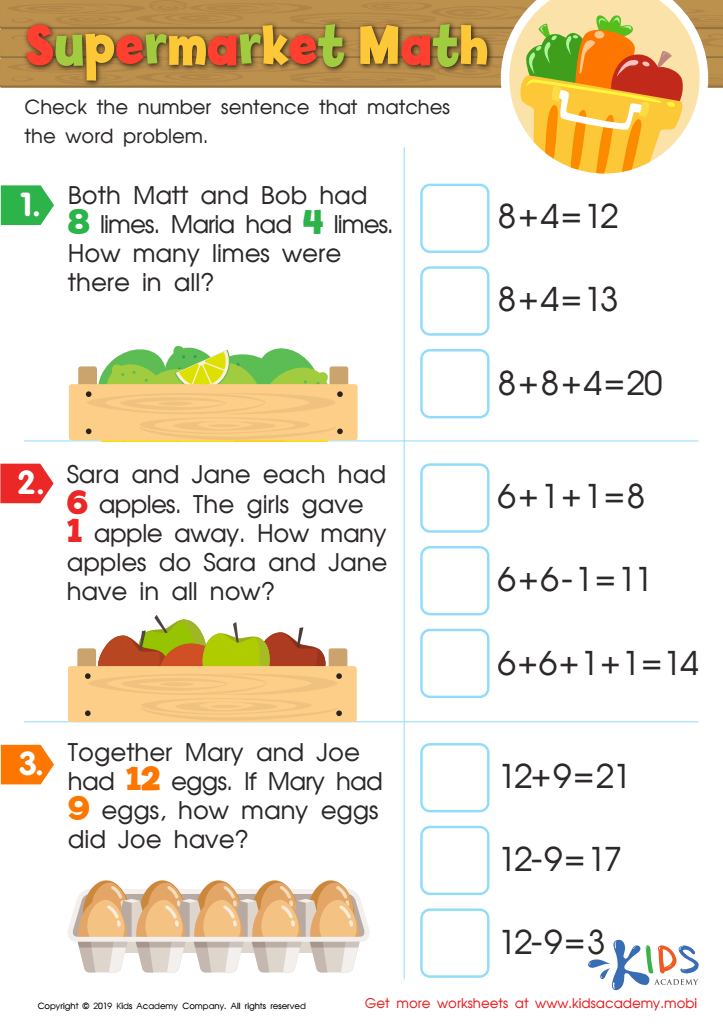
Supermarket Math Worksheet



.jpg)




Parents and teachers should care deeply about addition skills and normal word problems for children aged 6-7 because these foundational math skills lay the groundwork for future academic success. At this age, children's brains are highly receptive to learning, and building a strong base in mathematics promotes critical thinking, problem-solving, and logical reasoning. When children practice addition, they not only enhance their numerical understanding but also improve their ability to perform more complex mathematical operations in the future.
Working through word problems is especially crucial as it teaches kids how to apply mathematical concepts to real-world situations. This skill is indispensable as they grow older, helping them navigate everyday tasks like budgeting, cooking, and even time management. Additionally, excelling in math contributes positively to a child's confidence and academic self-esteem, which can encourage a love for learning across other subjects.
Furthermore, mastering addition and word problems early on helps identify areas where a child might need further assistance, enabling early intervention and support. Hence, dedicating time and resources to develop these skills can significantly influence a child’s cognitive development and equip them with essential tools for lifelong learning. Parents and teachers play a pivotal role in this developmental phase, and their involvement makes a noticeable difference in a child's educational journey.








