Shape Recognition Normal Social Studies Worksheets for Ages 6-7
3 filtered results
-
From - To
Introduce young learners to shape recognition through engaging social studies worksheets designed for ages 6-7. Our carefully crafted activities combine fundamental geometric concepts with real-world applications within a social context. Each worksheet integrates fun exercises that help children identify, compare, and draw various shapes while exploring community-related themes. Enhance your child's learning skills by connecting shapes to everyday objects, historical landmarks, and spatial awareness. Perfect for reinforcing classroom learning or supplementary home practice, these worksheets support cognitive development and practical knowledge, ensuring a well-rounded education in a playful and interactive manner. Start shaping their future knowledge today!
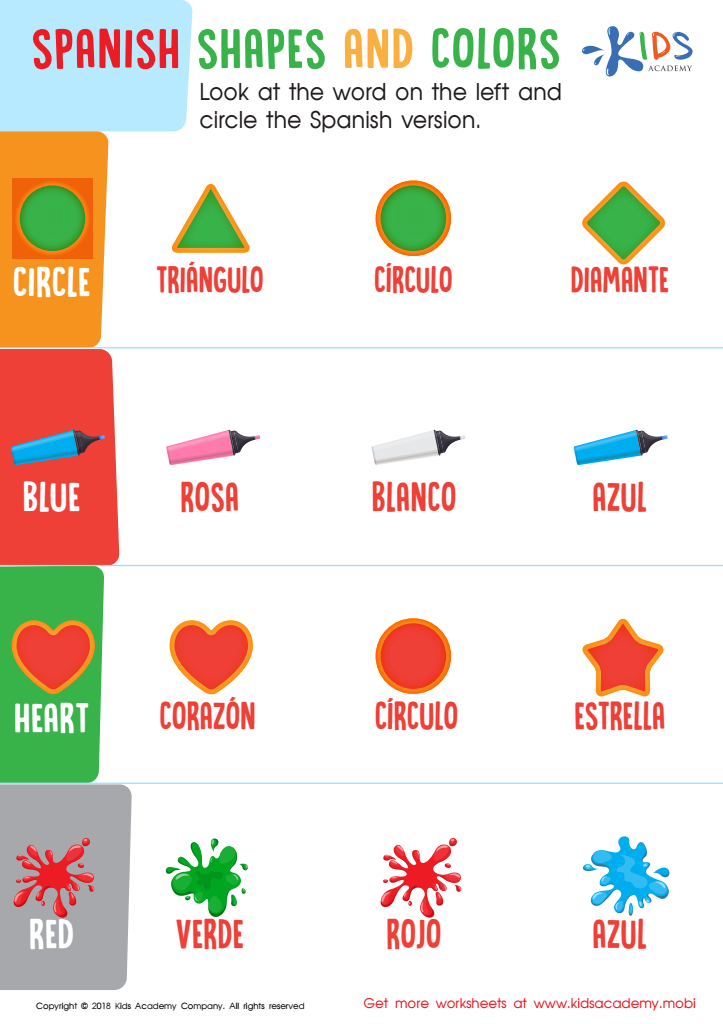
Spanish Shapes and Colors Worksheet
 Assign to My Students

Playground Worksheet
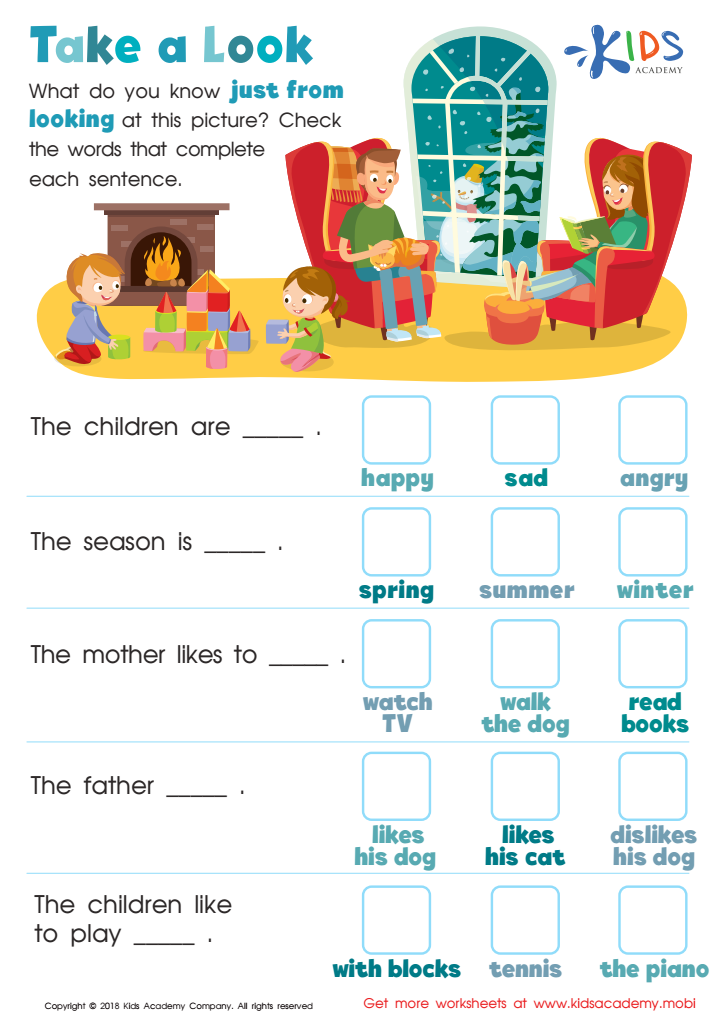
Take a Look - Part 1 Worksheet








Shape recognition is a fundamental skill in early childhood education that serves as a building block for various academic subjects and daily life pragmatics. Parents and teachers should prioritize shape recognition in social studies for children aged 6-7 as it intersects cognitive, spatial, and analytical development. Understanding shapes enhances children's abilities to notice patterns, differentiate objects, and make sense of their environment—skills paramount for grasping more complex mathematical concepts and logical thinking later on.
Social studies, at this stage, often include learning about communities, basic geography, and spatial awareness. Shape recognition helps children properly identify and name basic shapes, understand simple maps, recognize various landmarks, and navigate their surroundings safely. Teachers can introduce these concepts through interactive social studies activities, making learning engaging and contextually meaningful. For instance, recognizing shapes in the local community—like rectangles in buildings, circles in traffic signs—integrates real-world connections into their learning journey.
Moreover, fostering shape recognition in early education boosts fine motor skills through hands-on activities like drawing, building blocks, and navigation exercises. It develops linguistic abilities as children learn shape-related vocabulary, enhancing communication. Ultimately, shaping perception builds a strong foundation enabling better social and academic growth. Therefore, teachers, alongside parents, should champion the importance of these skills within their educational paradigms.








