Problem-Solving Skills Normal Addition & Subtraction Worksheets for Ages 6-8 - Page 2
33 filtered results
-
From - To
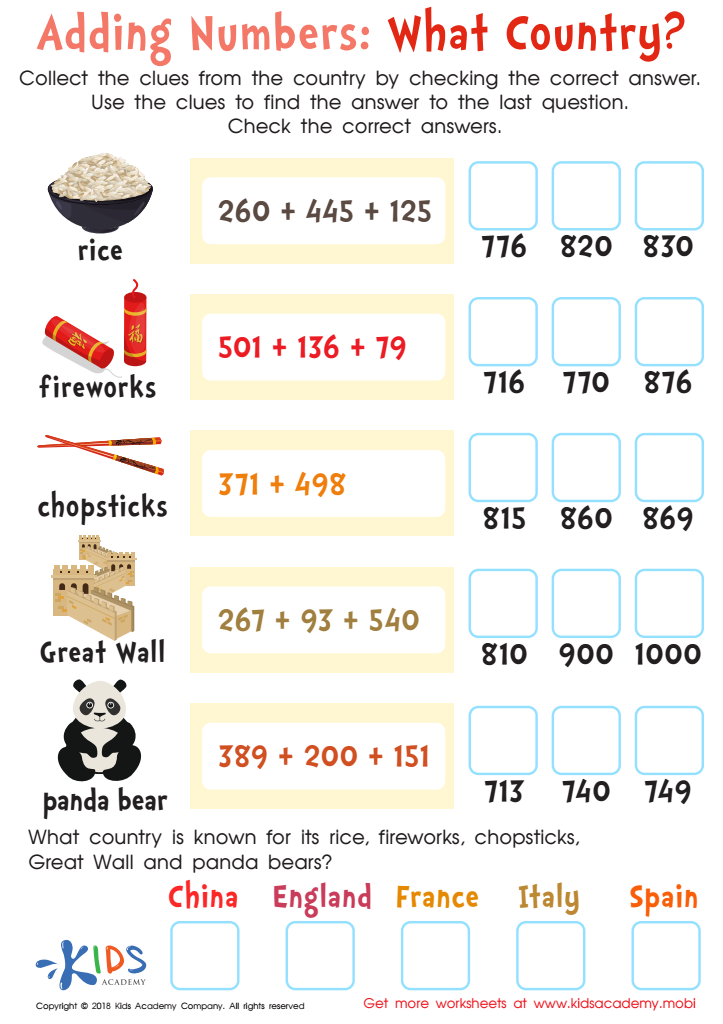
Adding Numbers: What Country Worksheet
 Assign to My Students
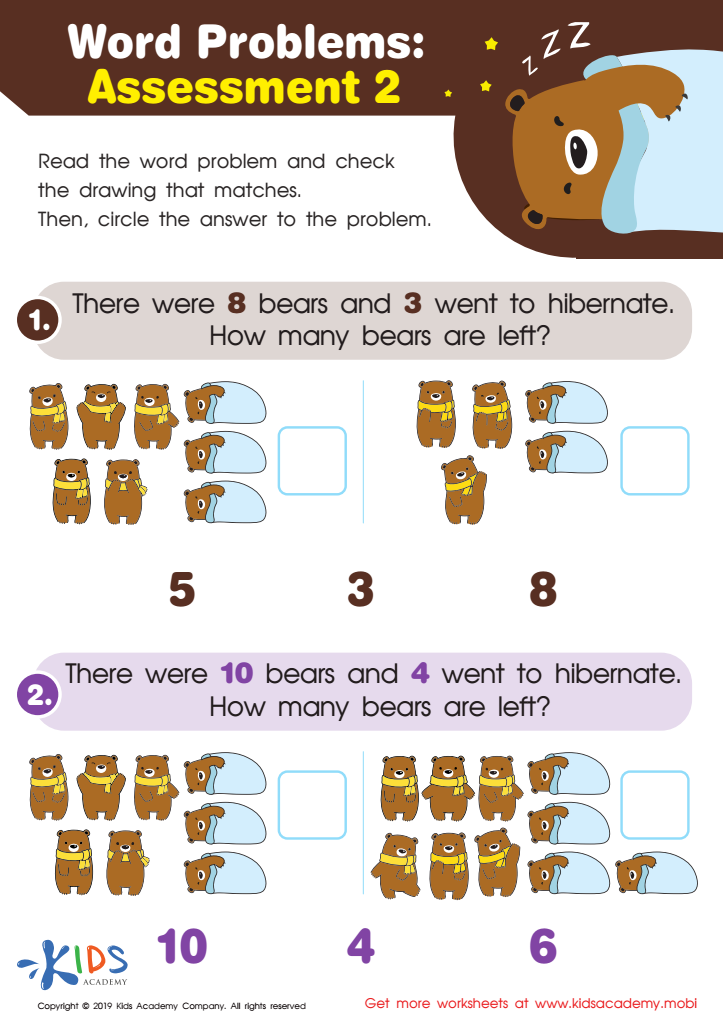
Word Problems: Assessment 2 Worksheet
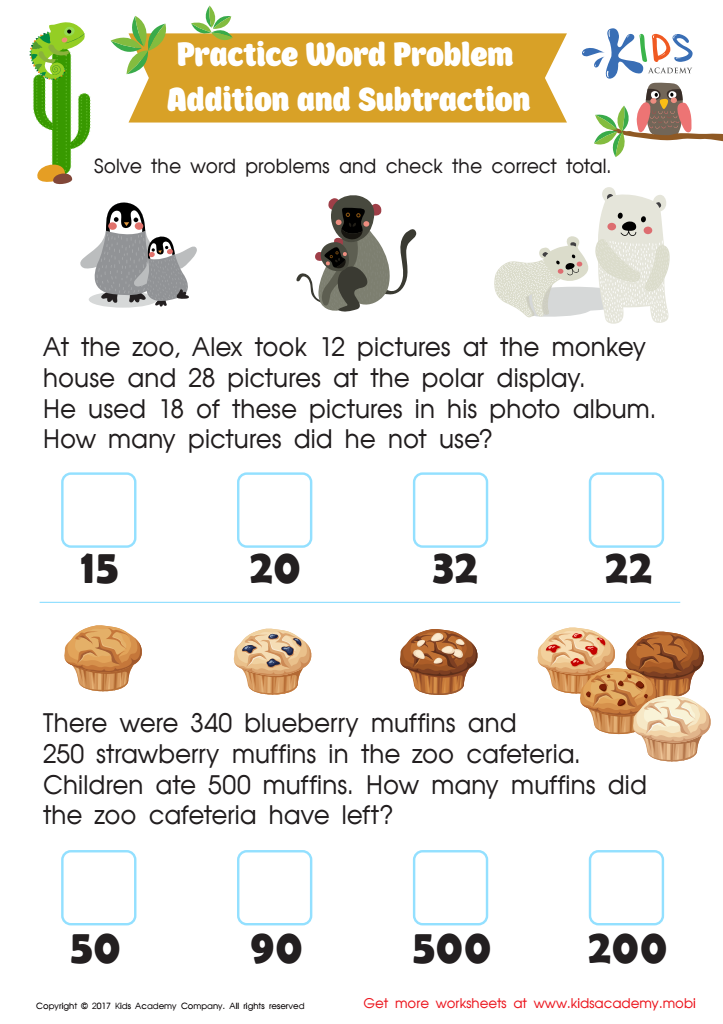
Addition and Subtraction: Word Problems Worksheet
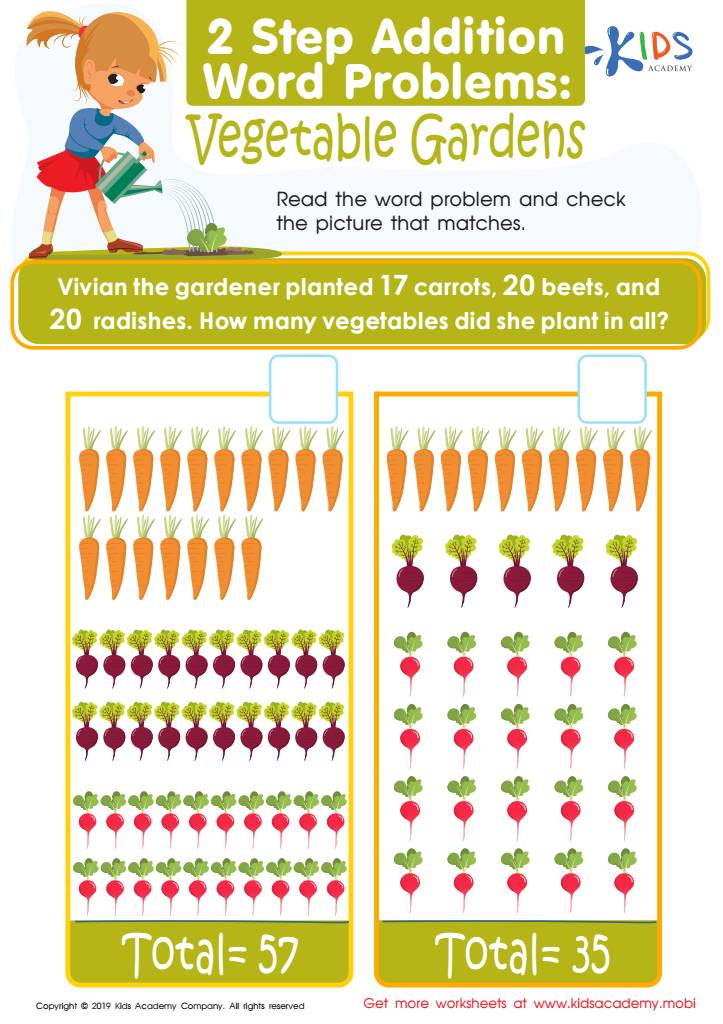
Vegetable Gardens Worksheet
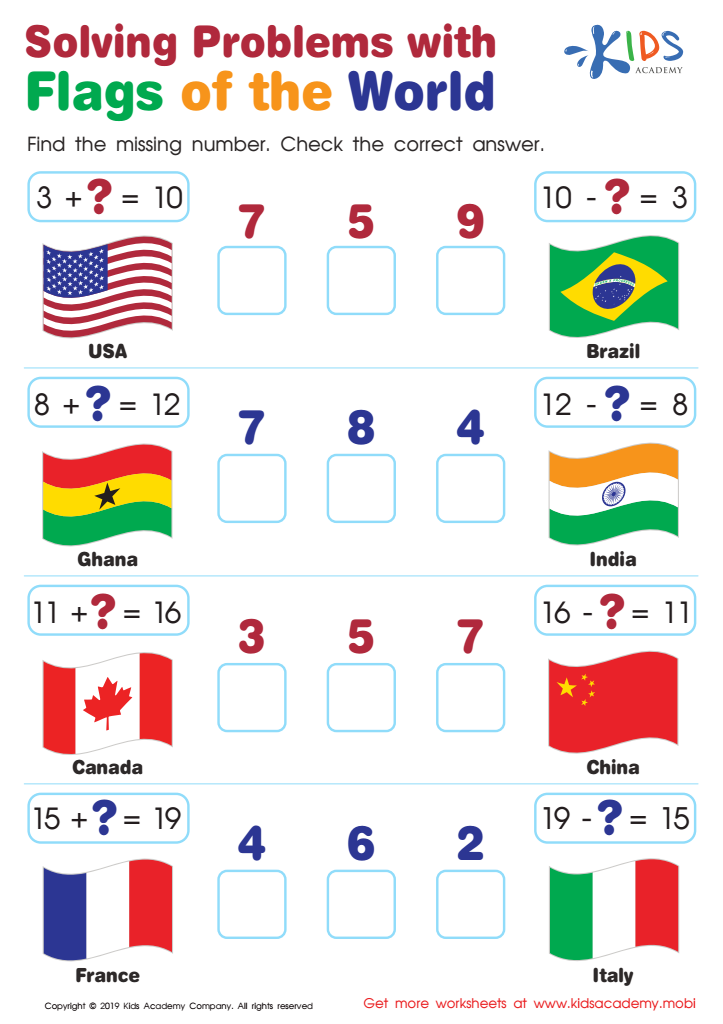
Solving Problems with Flags of the World Worksheet
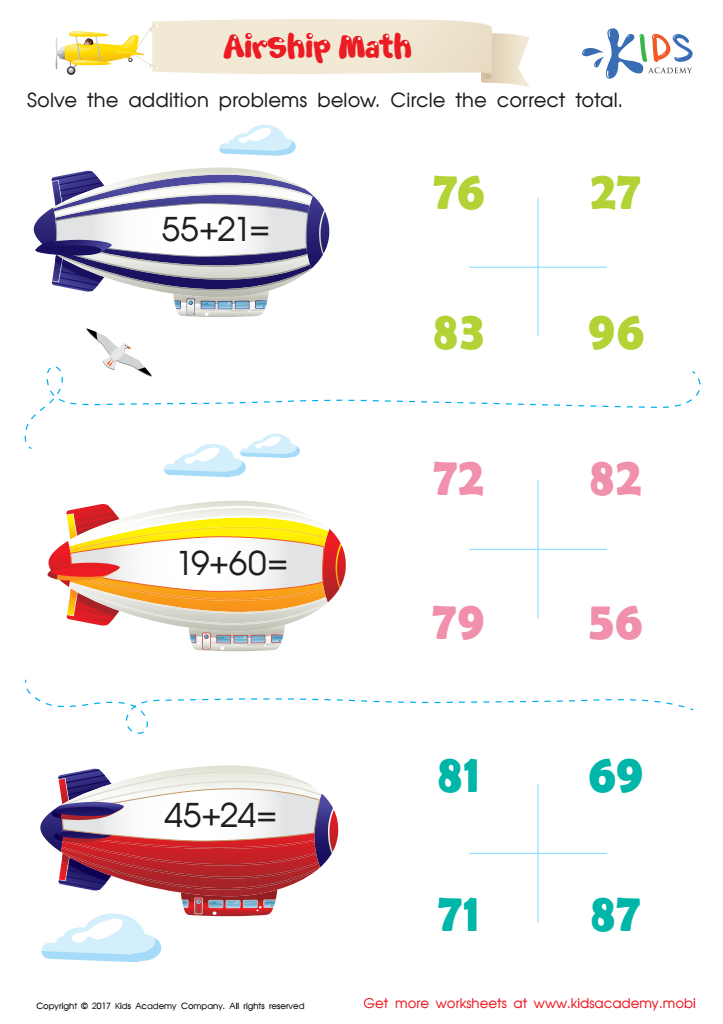
Airship Math Addition Printable
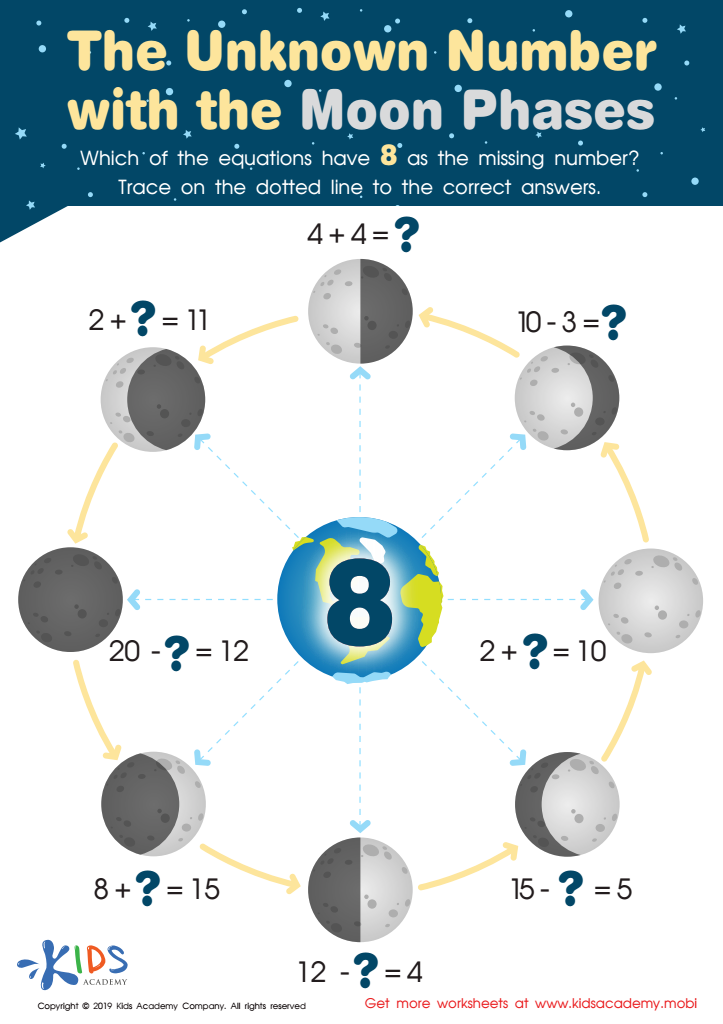
The Unknown Number with the Moon Phases Worksheet
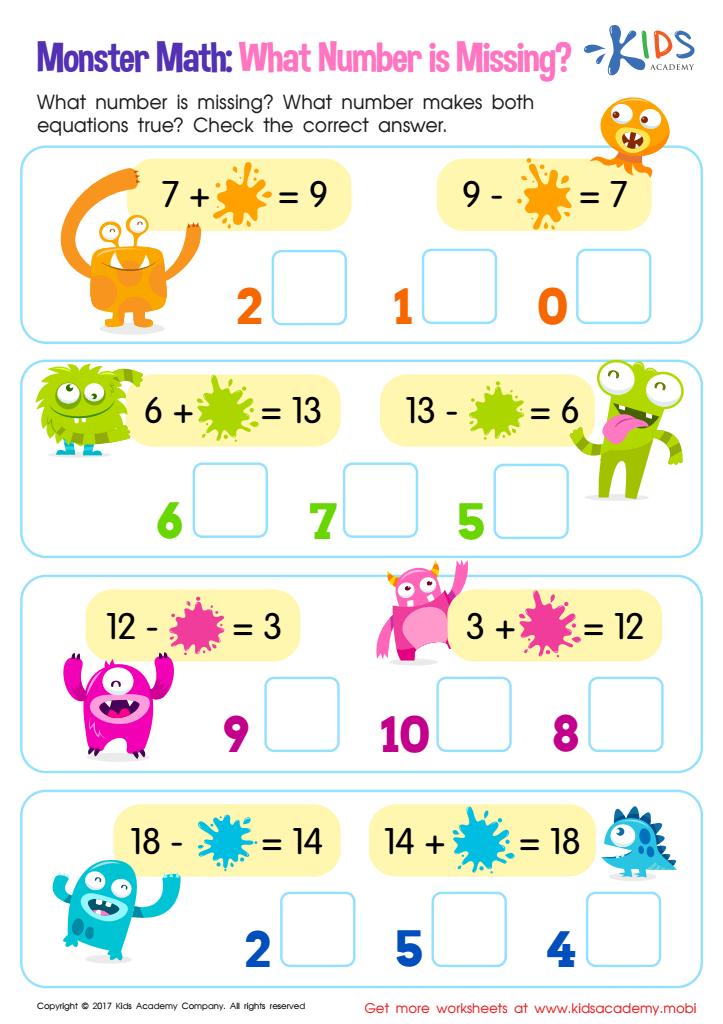
Missing Number: Monster Math Worksheet
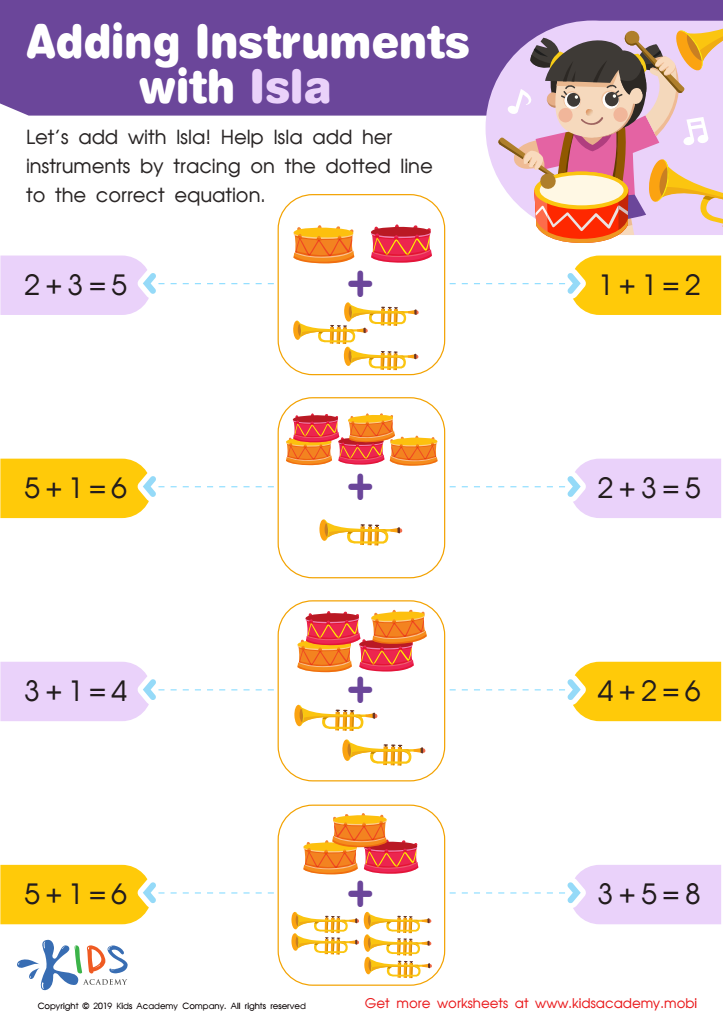
Adding Instruments with Isla Worksheet







Problem-solving skills in addition and subtraction are crucial for children aged 6-8, as they form the foundation for more advanced mathematical concepts in later years. At this stage of development, children begin to understand not just how to perform calculations, but also to grasp the underlying principles of math. This understanding helps them see mathematics not just as isolated facts and figures, but as a tool to solve real-world problems.
Parents and teachers should care about nurturing these skills because they promote critical thinking, creativity, and persistence. When children engage in solving math problems, they learn to approach challenges methodically—breaking them down into manageable parts and testing various strategies for solutions. This approach fosters resilience, as they learn to see mistakes as opportunities for learning rather than failures.
Moreover, problem-solving enhances a child's ability to work collaboratively and communicate their reasoning, both of which are essential skills in today’s world. In an increasingly complex society, these mathematical skills contribute to children's overall cognitive development, promote confidence in their abilities, and lay the groundwork for future academic success in math and science, ultimately preparing them for a wide range of future opportunities.








