Normal Fractions of Shapes Worksheets for Ages 6-8
5 filtered results
-
From - To
Explore our "Normal Fractions of Shapes Worksheets for Ages 6-8" to help young learners master the basics of fractions in a fun and engaging way! Designed for early graders, these worksheets introduce the concept of fractions by dividing shapes like circles, squares, and more. Children will learn to identify and color fractions, recognize equal parts, and understand halves, thirds, and quarters. With vibrant visuals and simple instructions, these printable activities make learning fractions accessible and enjoyable. Perfect for classroom use or at-home practice, our worksheets provide essential math skills foundation, preparing kids for more advanced concepts.
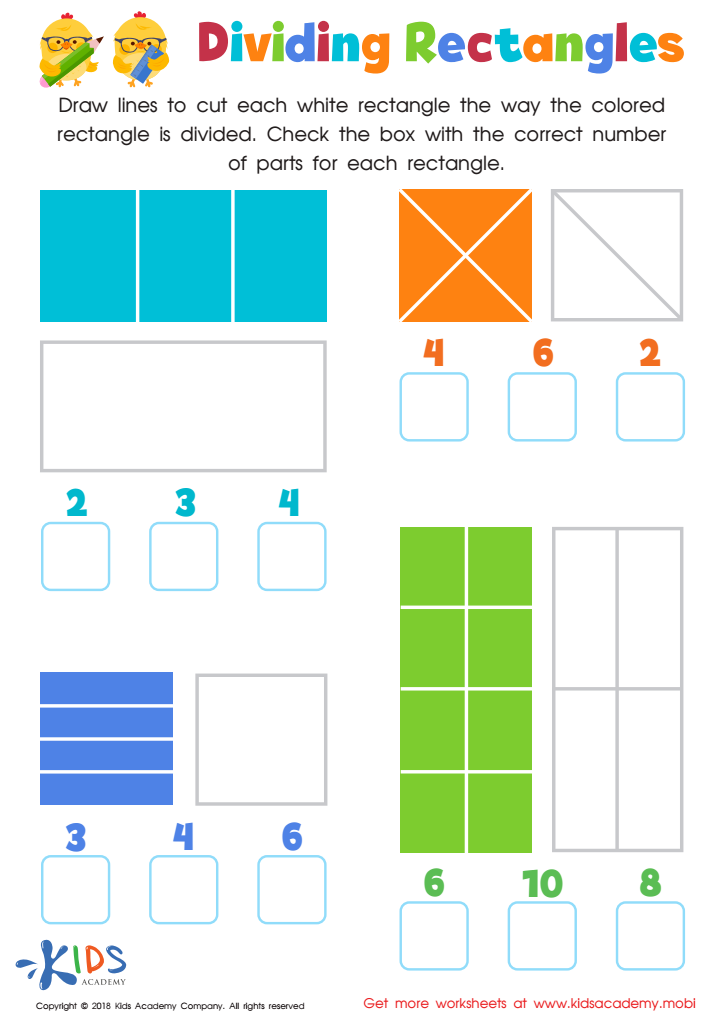
Dividing Rectangles Worksheet
 Assign to My Students
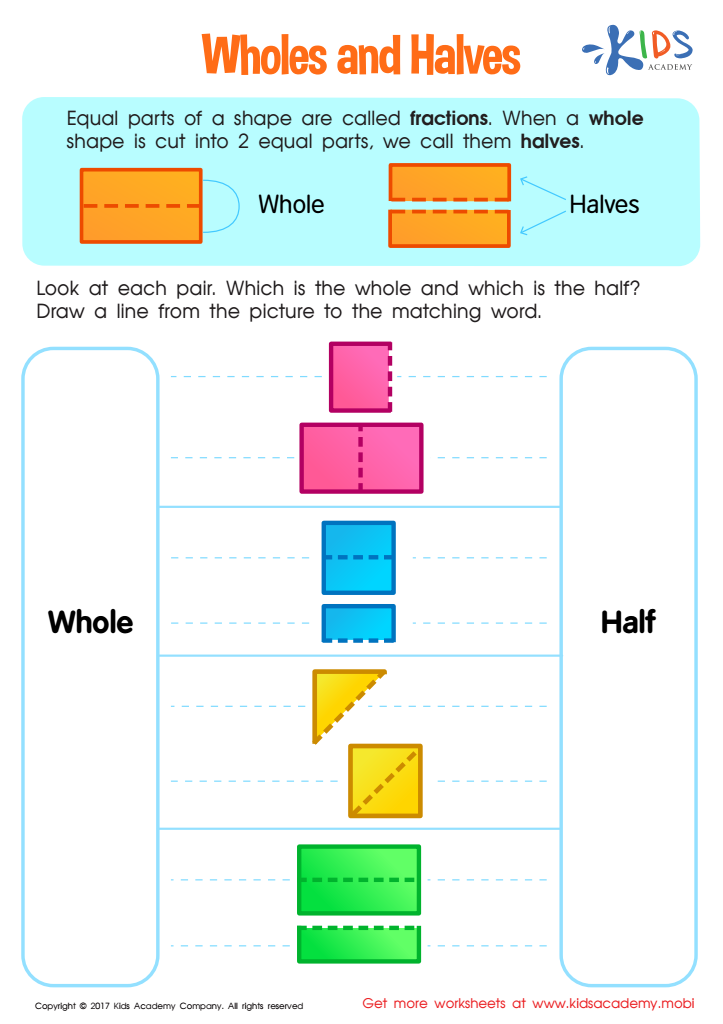
Wholes and Halves Worksheet
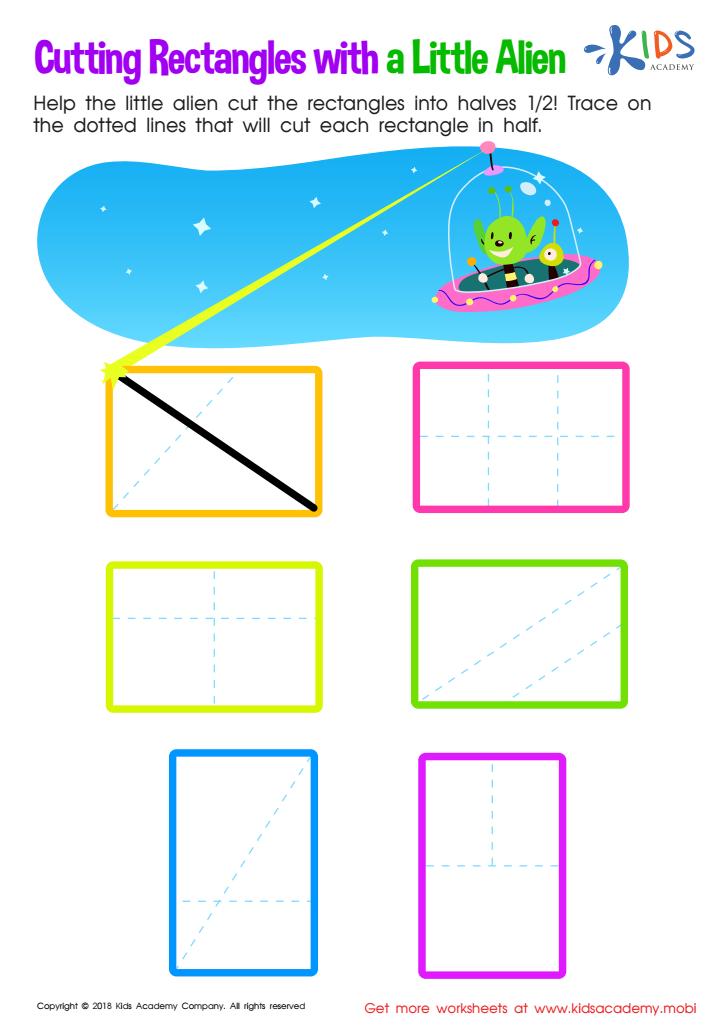
Cutting Rectangles with Alien Worksheet
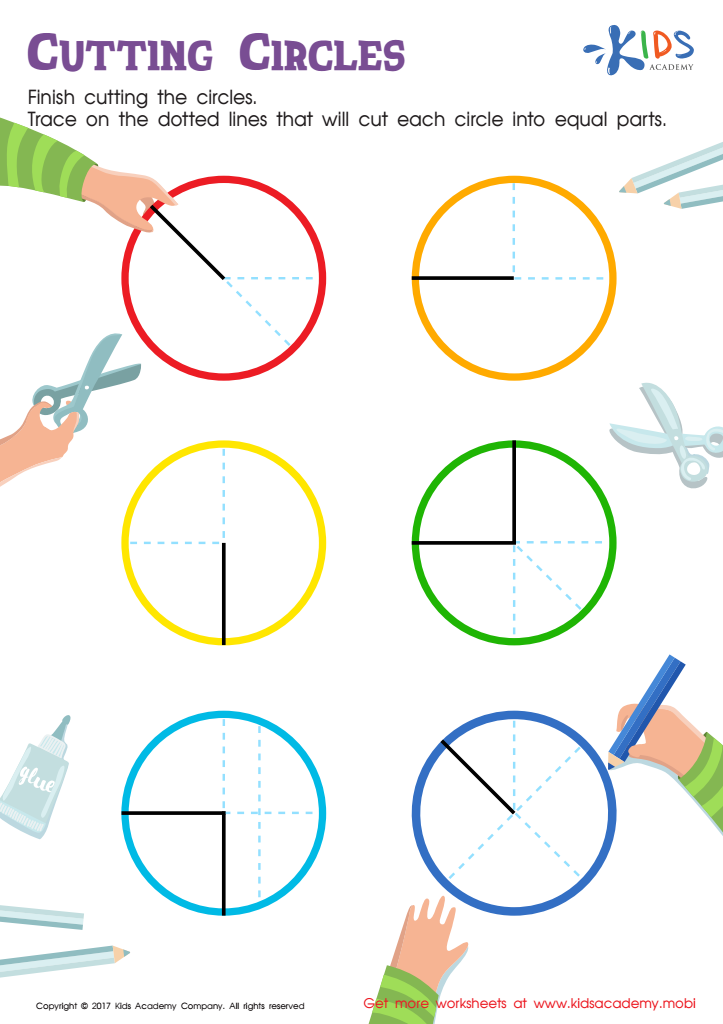
Cutting Circles Worksheet
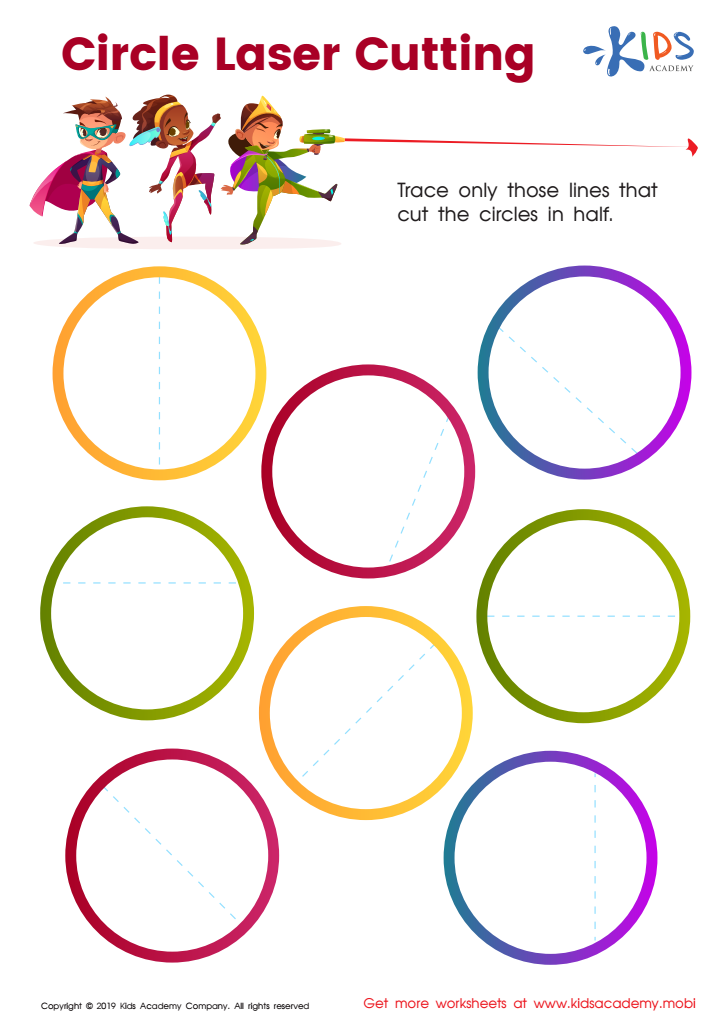
Circle Laser Cutting Worksheet








Parents and teachers should care about teaching normal fractions of shapes for ages 6-8 because this foundational skill is crucial for several reasons. Firstly, fractions help young students grasp the concept of part-whole relationships. By recognizing halves, thirds, quarters, and other fractions within geometric shapes, children develop visual and spatial understanding, setting the stage for more advanced math topics.
Understanding fractions at an early age also enhances problem-solving abilities. As children manipulate and dissect shapes, they engage in hands-on learning that reinforces cognitive development and critical thinking skills. This early exposure to fractions ensures they are not intimidated by more complex mathematical concepts in later schooling.
Fractions also appear prominently in real-life situations. Whether in cooking, dividing items fairly, or understanding measurements, familiarity with fractions will empower children to navigate everyday tasks confidently. Additionally, a strong grasp of fractions integrates well with other subjects like science and art, illustrating the interconnected nature of knowledge.
Finally, early success in understanding fractions breeds confidence and academic motivation. Encouraging young learners in these foundational math skills lays down a positive attitude towards mathematics, nurturing a lifelong willingness to explore, learn, and solve problems. Therefore, parents and teachers play a critical role in shaping these early mathematical experiences.