Cognitive Development Normal Geometry Worksheets for Ages 6-8
6 filtered results
-
From - To
Unlock your child's potential with Cognitive Development Normal Geometry Worksheets tailored for ages 6-8. Our expert-designed worksheets enhance spatial understanding, shape recognition, and problem-solving skills through engaging, fun activities. Foster cognitive growth with diverse exercises that challenge and inspire. Prepare your child for future math success with tools that encourage logical thinking and perseverance. Ideal for home or classroom use, these worksheets provide the perfect blend of education and enjoyment, ensuring a solid foundation in geometry. Make learning a delightful journey with resources that align with your child's developmental needs. Ignite curiosity and inspire excellence today!
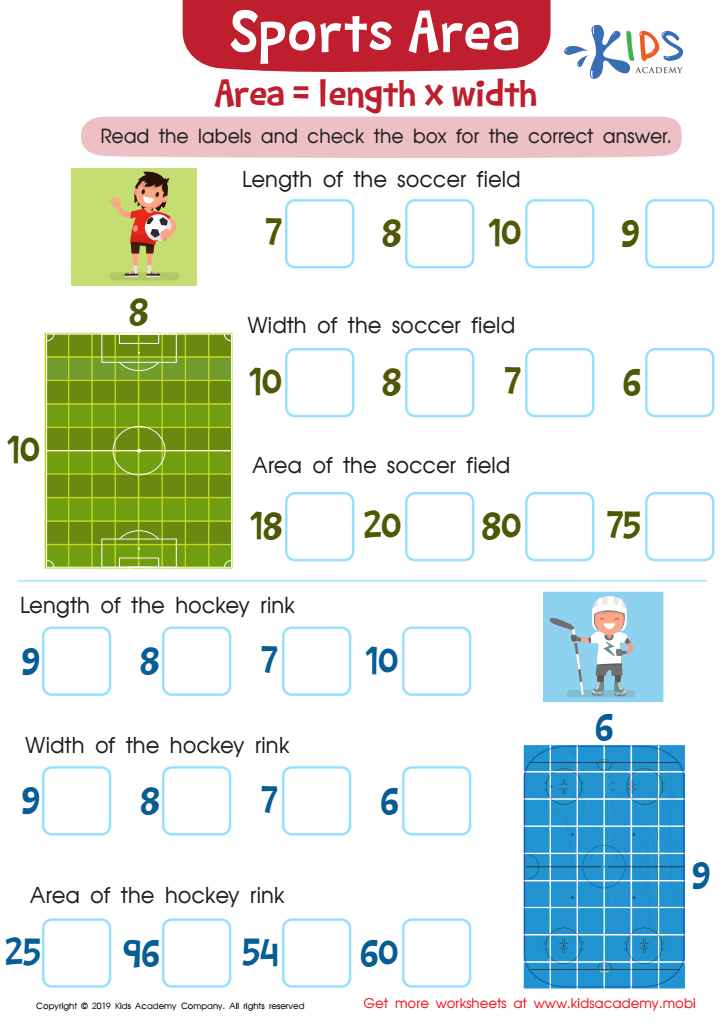
Sports Area Worksheet
 Assign to My Students











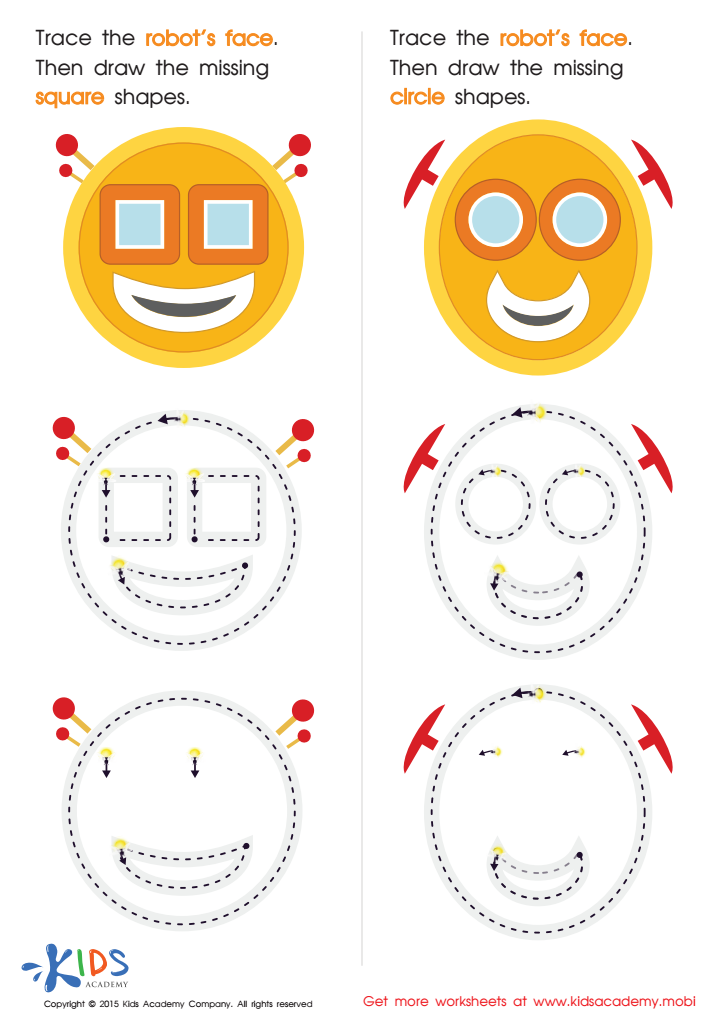
Practicing to Draw Circles And Squares Printable
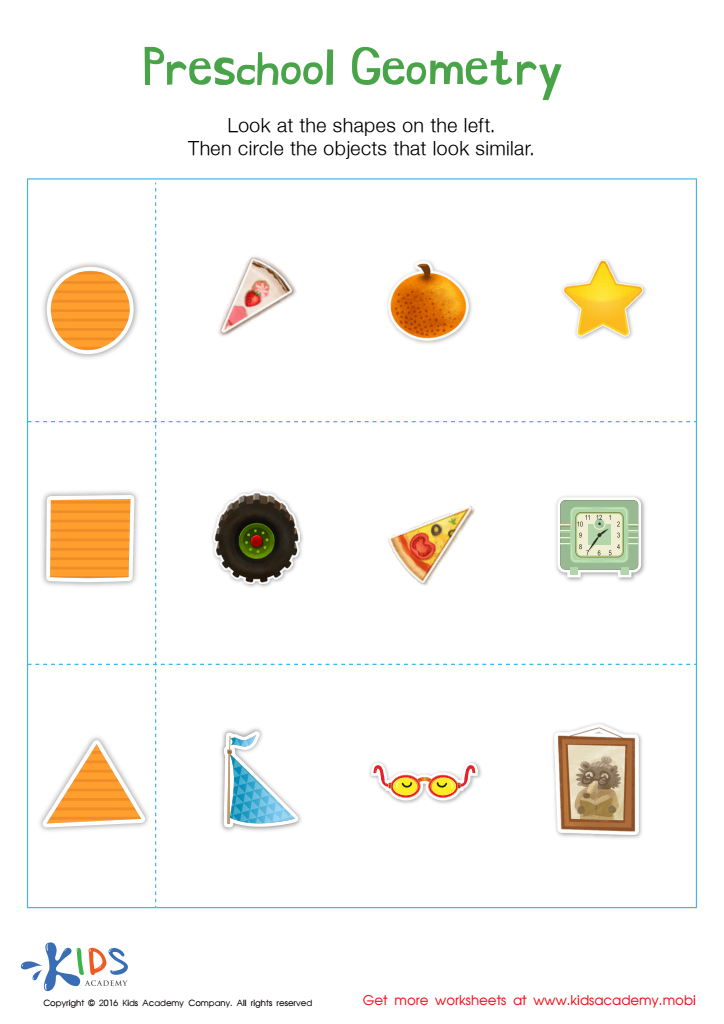
Preschool Geometry Match Up Worksheet
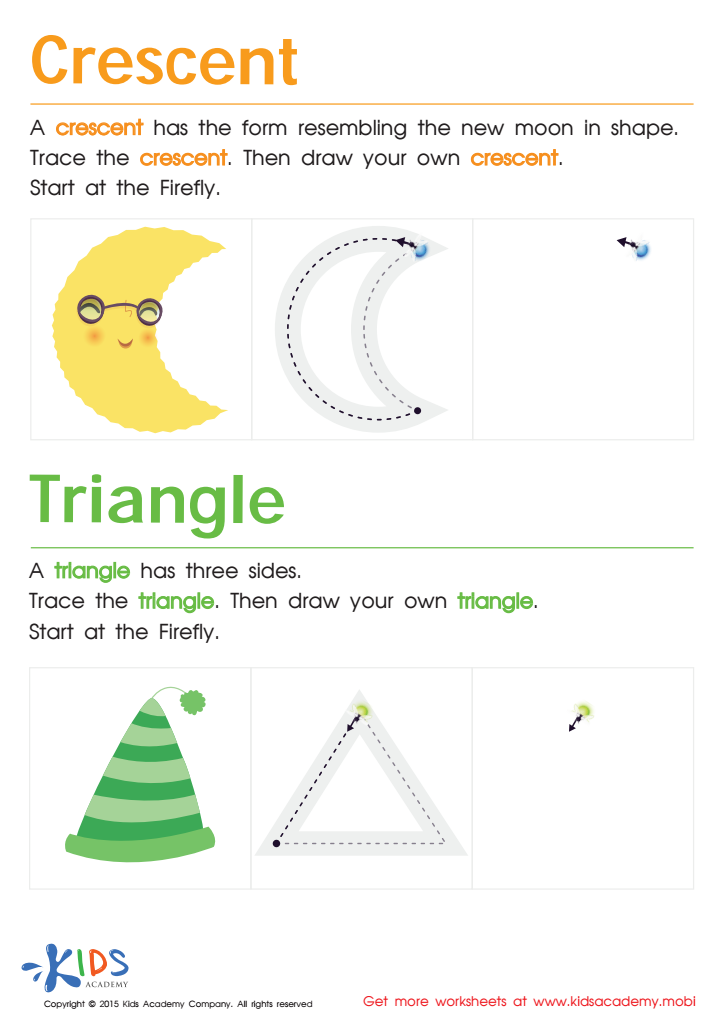
Learning to Draw Crescents And Triangles Worksheet
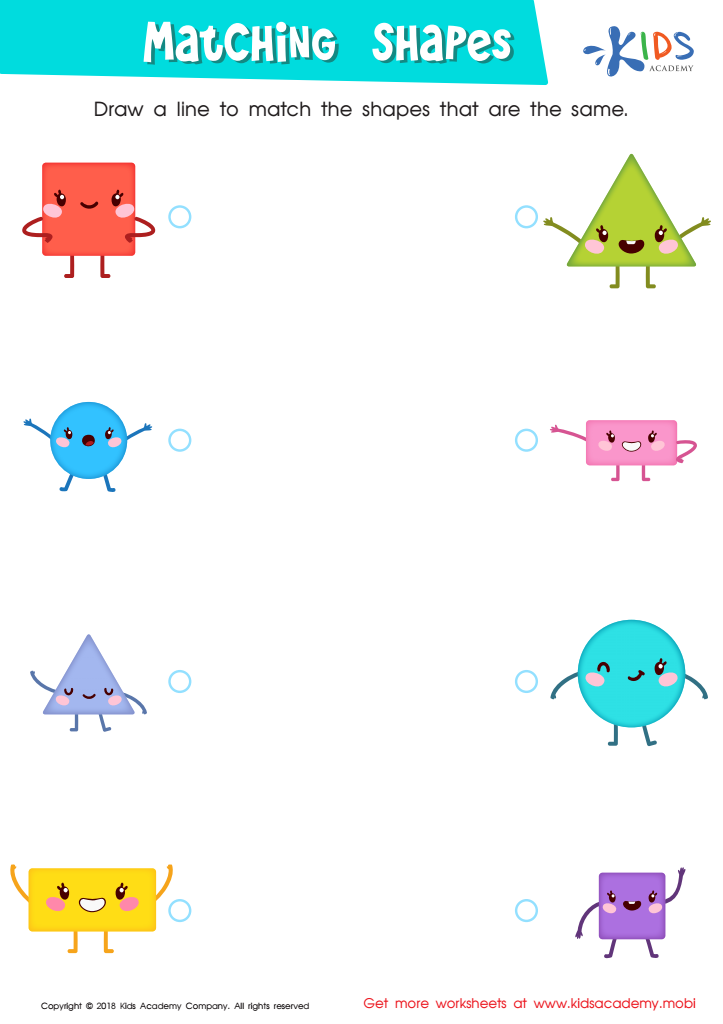
Matching Shapes Worksheet
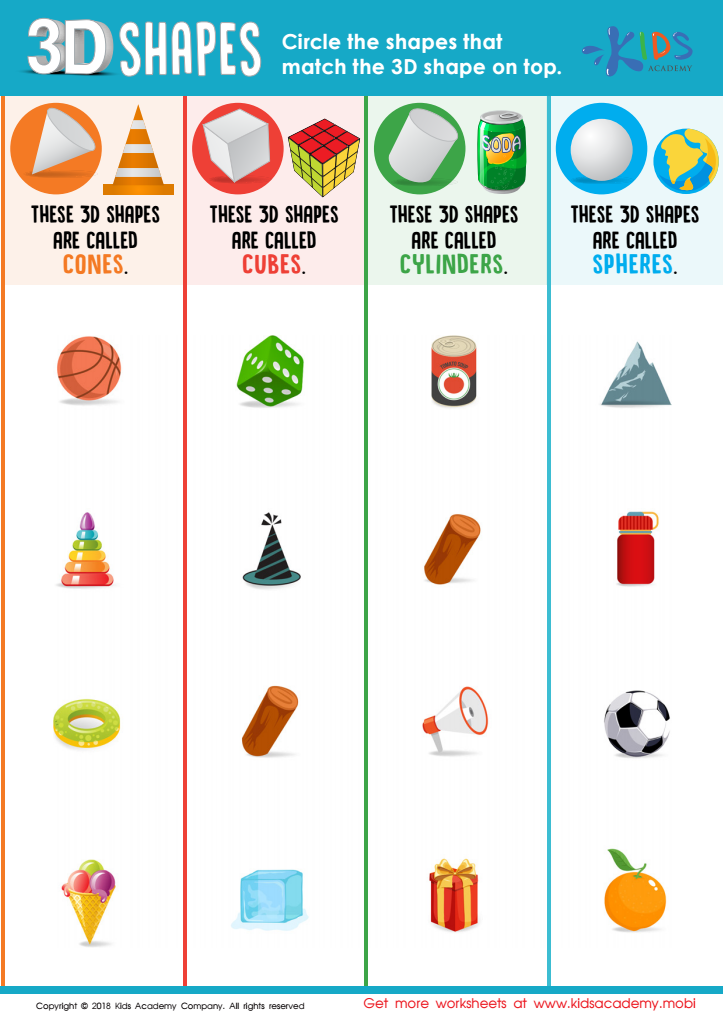
3D Shapes Worksheet








Cognitive development in the context of normal geometry for children aged 6-8 is a cornerstone for building foundational skills that impact a child's overall learning trajectory. At this stage, children’s minds are highly plastic and capable of grasping new concepts more effectively, making early exposure to geometric ideas essential.
First, an understanding of geometry fosters spatial reasoning, which is the ability to visualize and manipulate shapes and objects in one's mind. This skill is not only critical for success in mathematics but also in everyday problem-solving and future scientific or technical pursuits. For instance, tasks like reading maps, organizing spaces, and understanding patterns all benefit from strong spatial reasoning.
Moreover, learning geometry enhances critical thinking and problem-solving skills. Children are encouraged to observe, question, and analyze different shapes and their properties, which translates to improved logical reasoning and analytical skills. These cognitive capabilities are applicable beyond math, promoting academic excellence across various subjects and enhancing a child's intellectual toolkit.
Lastly, early engagement with geometric concepts enriches creativity. When children manipulate shapes and construct new patterns, they exercise their imagination and grow more confident in expressing innovative ideas. This blend of creative and logical skill sets prepares children not just for school success, but for lifelong critical thinking, problem-solving, and adaptability.
Therefore, parents and teachers investing in geometry education are laying down a essential foundation that supports both immediate academic success and lifelong cognitive and creative development.








