Filters

10 filtered results

Clear all filters
Favorites
With answer key
Interactive

10 filtered results

Difficulty Level

Grade


Subject

    Our "Normal Beginning Sounds Worksheets for Ages 6-9" are designed to enhance phonetic skills essential for early readers. Engaging activities help children identify and practice the initial sounds of words, laying a strong foundation for literacy. Each worksheet features a variety of fun exercises, including matching sounds to pictures and coloring activities that spark creativity. These worksheets are perfect for classroom use or at-home practice, catering to different learning styles. With appealing visuals and interactive elements, children will enjoy mastering beginning sounds while building confidence in their reading abilities. Explore our collection today and support your child’s path to literacy success!

    Check out this FREE Trial Lesson on Beginning Sounds for age 6-9!

    Consonant Blends with l

    Favorites
    With answer key
    Interactive
    • 6-9
    • Beginning Sounds
    • Normal
    Consonant Blend Bl Printable Worksheet
    Consonant Blend Bl Printable Worksheet

    Beginning Blends: "Bl" Words Worksheet

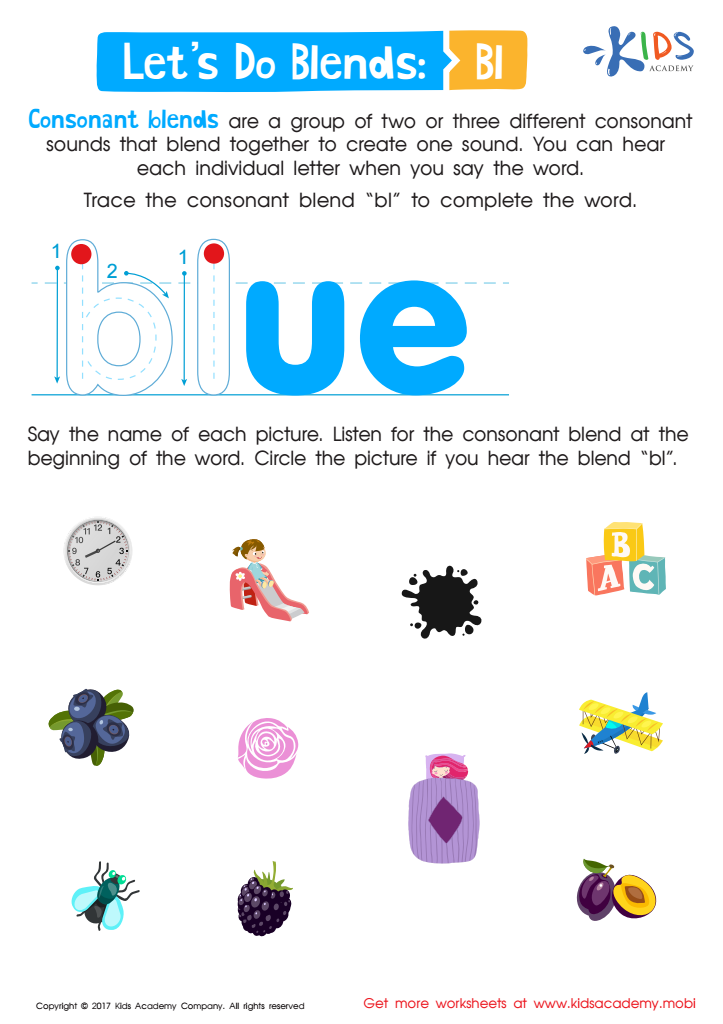
    Help your child master their phonics skills with this fun, focused consonant blend worksheet! They'll practice spelling, reading, and sounding out the words, which will help their speech and other skills. The worksheet focuses on "Bl" but extend your child's learning by finding other blends on the page. After completion, they'll be closer to phonics mastery!
    Beginning Blends: "Bl" Words Worksheet
    Worksheet
    Words with sound h Reading Worksheet
    Words with sound h Reading Worksheet

    Words with sound h Reading Worksheet

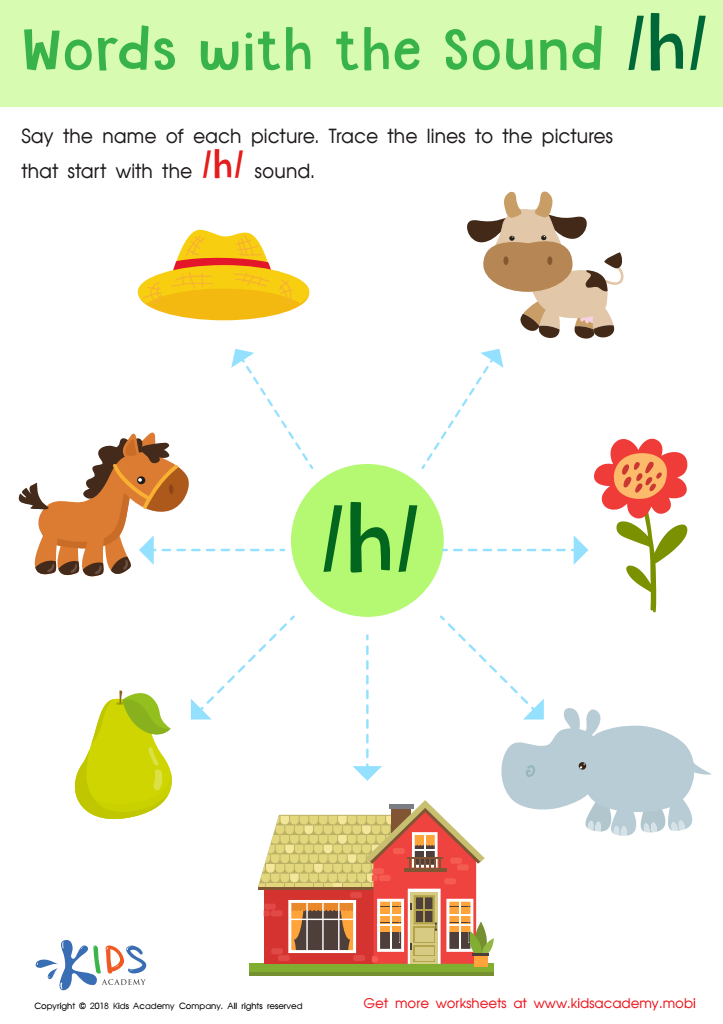
    The letter H can often be heard in words! Check your child's knowledge with an engaging worksheet from Kids Academy. Ask them to go around a circle and name each image aloud. Listen for the starting sound and trace the line from the middle letter to the images with the sound. This is a great way to practice phonics!
    Words with sound h Reading Worksheet
    Worksheet
    Beginning Sound «n» Worksheet
    Beginning Sound «n» Worksheet

    Beginning Sound «n» Worksheet

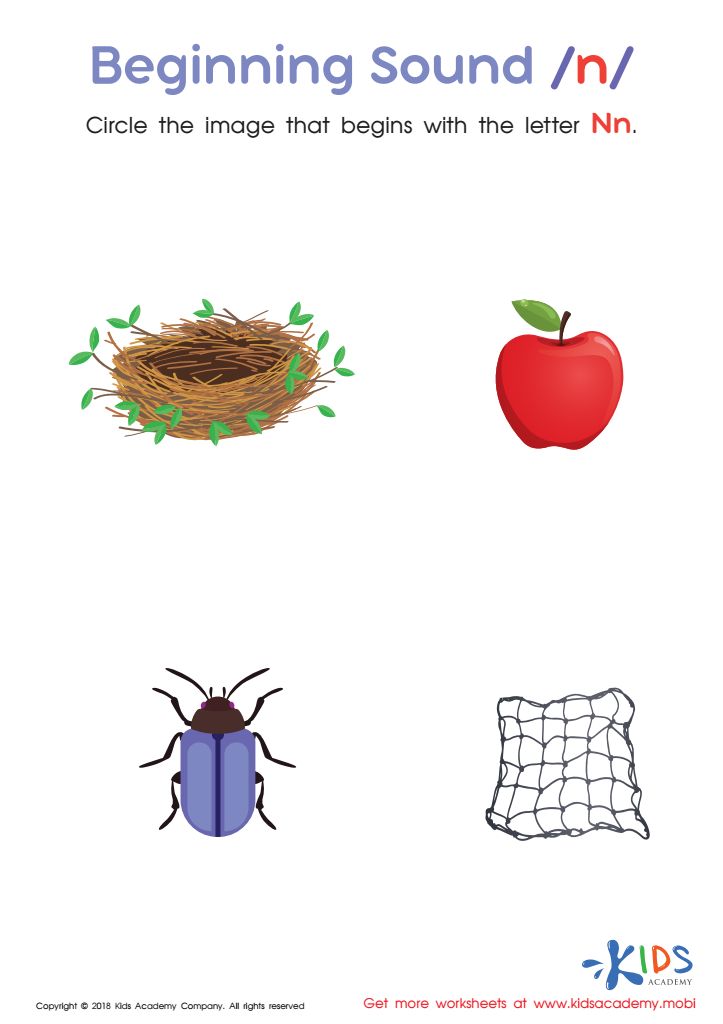
    Help your emerging reader learn the initial «n» sound with this free PDF worksheet! Strengthen fine motor skills by tracing circles around words beginning with «n». Pictures are clear and engaging, giving beginning Phonics learners the right amount of practice and the confidence to succeed.
    Beginning Sound «n» Worksheet
    Worksheet
    Twin Onset Worksheet
    Twin Onset Worksheet

    Twin Onset Worksheet

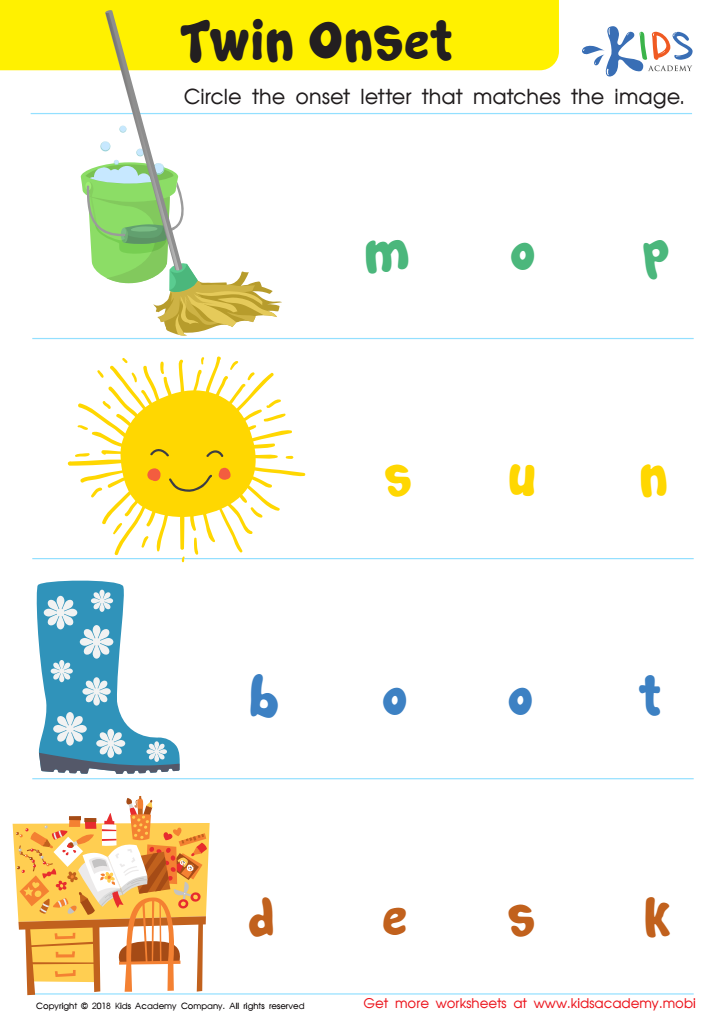
    Children's phonological skills and reading/spelling strategies are strengthened by isolating initial consonants. This fun PDF worksheet encourages kids to trace the correct onset letter and hone fine motor skills. It's a great way to introduce early reading and spelling.
    Twin Onset Worksheet
    Worksheet
    Is it b, p or d? Worksheet
    Is it b, p or d? Worksheet

    Is it b, p or d? Worksheet

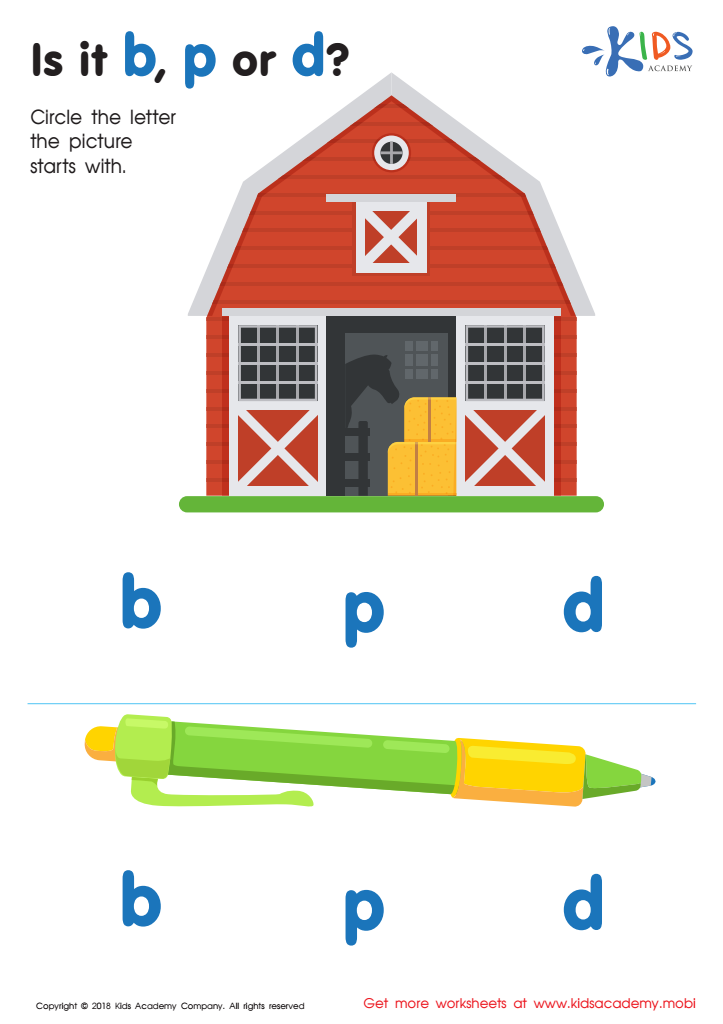
    Test your child's identification skills with this worksheet. They must identify the image and then circle the letter it begins with: 'b', 'p', or 'd' (e.g. an image of the sun would mean they circle 's').
    Is it b, p or d? Worksheet
    Worksheet
    Can you Guess Which Letter? Worksheet
    Can you Guess Which Letter? Worksheet

    Can you Guess Which Letter? Worksheet

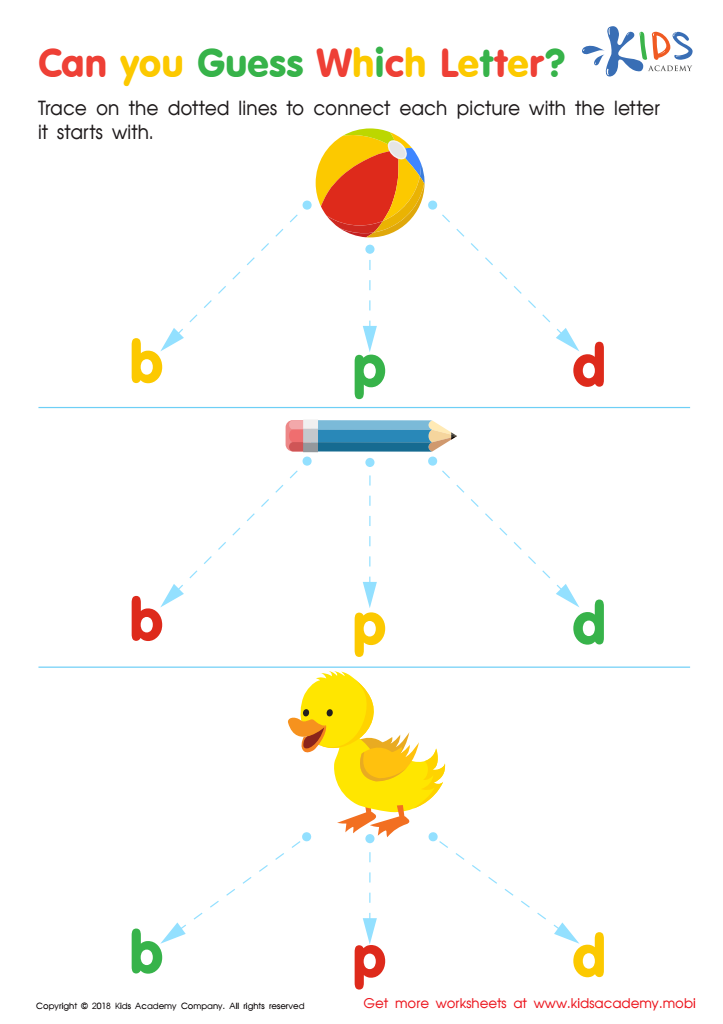
    Connect the pictures with their corresponding letters with this fun worksheet! Ask your child what each picture is, then what letter it begins with. Download the PDF for colorful images and engaging texts to hold their attention, making learning an enjoyable activity.
    Can you Guess Which Letter? Worksheet
    Worksheet
    Words with sound p Reading Worksheet
    Words with sound p Reading Worksheet

    Words with sound p Reading Worksheet

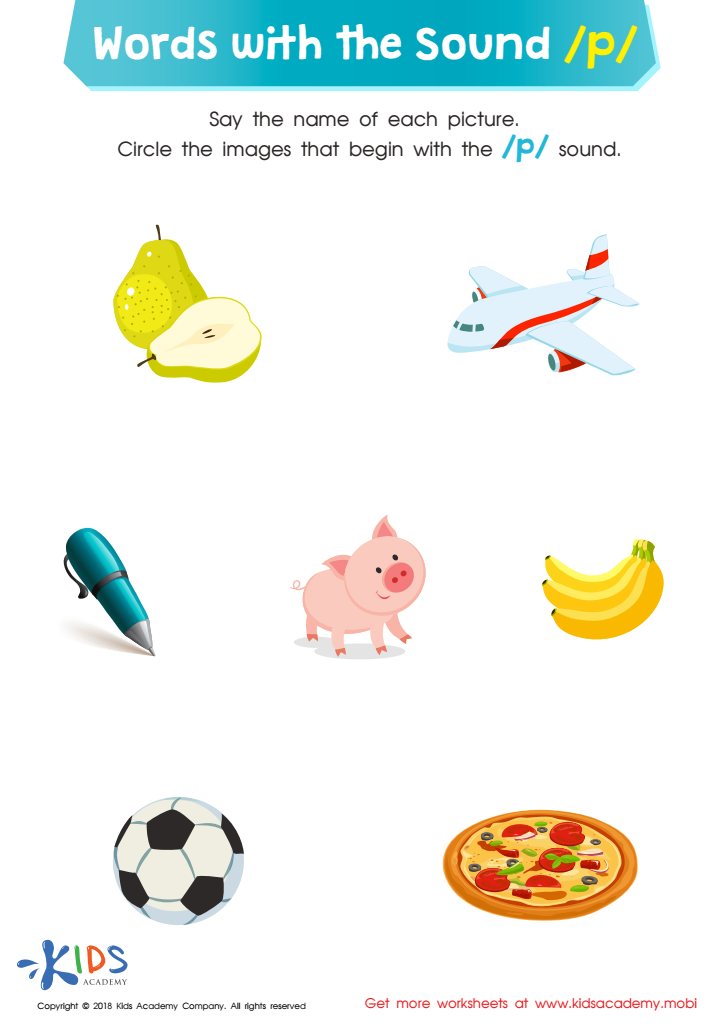
    Working on this fun worksheet? Name each picture aloud and listen carefully before circling those that start with the letter «p»! Pizza, pig, plane, or banana - practice phonics to help your child recognize the letter «p» sound for successful early reading and decoding!
    Words with sound p Reading Worksheet
    Worksheet
    Words with sound f Reading Worksheet
    Words with sound f Reading Worksheet

    Words with sound f Reading Worksheet

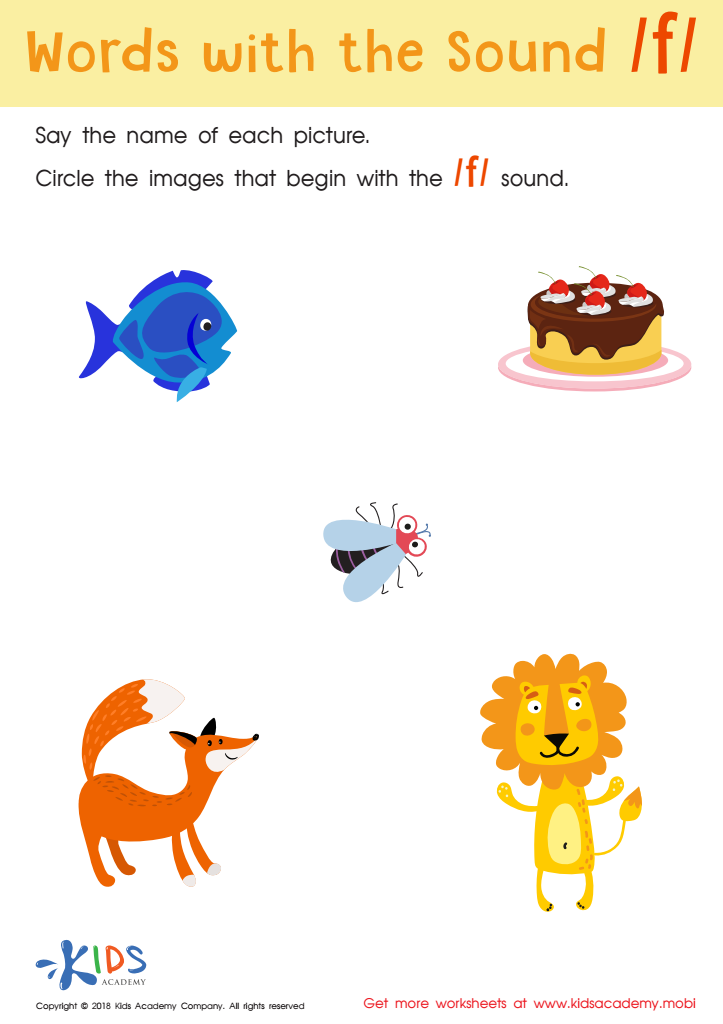
    This illustrated phonics worksheet is ideal for preschool or kindergarten. It helps boost learners' literacy skills with a focus on the letter "f". Ask your child to name all the pictures, listening for that sound. Examples are fish, fox, lion, bug. When they can identify which words start with "f", have them circle the images. Congratulate them on a job well done!
    Words with sound f Reading Worksheet
    Worksheet
    Words with Sound M Reading Worksheet
    Words with Sound M Reading Worksheet

    Words with Sound M Reading Worksheet

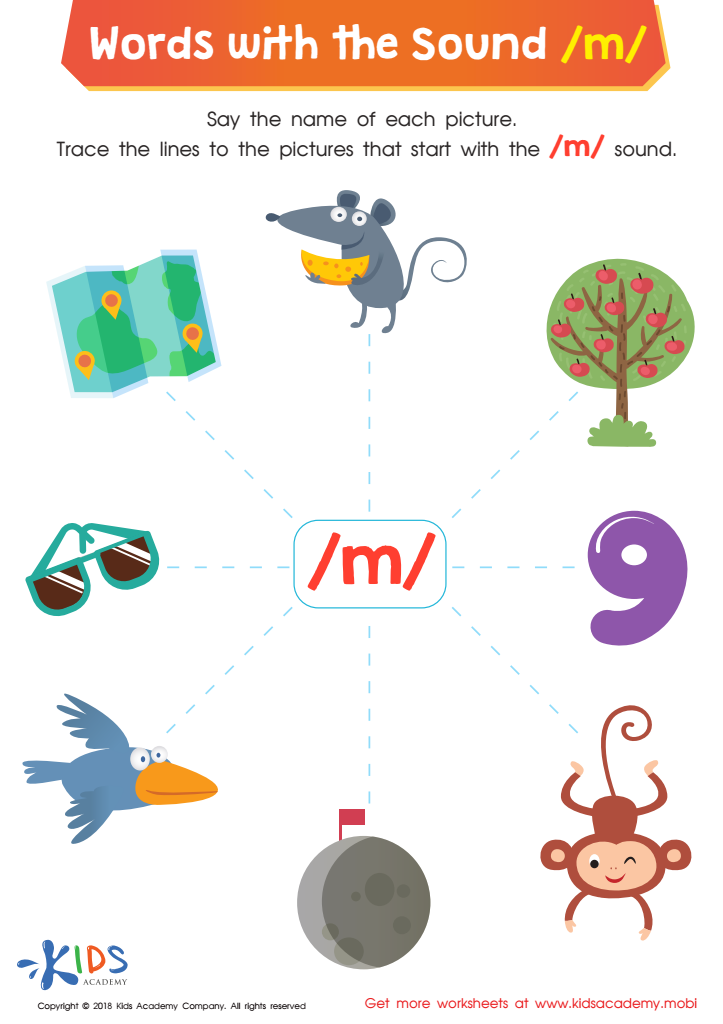
    Emerging readers will use this traceable worksheet to name and trace pictures with the letter sound «m». Bright, engaging pictures make this fun and build confidence while strengthening fine motor skills. They won't even know they're also working on reading skills!
    Words with Sound M Reading Worksheet
    Worksheet
    Words with sound k Reading Worksheet

    Words with sound k Reading Worksheet

    Words with sound k Reading Worksheet

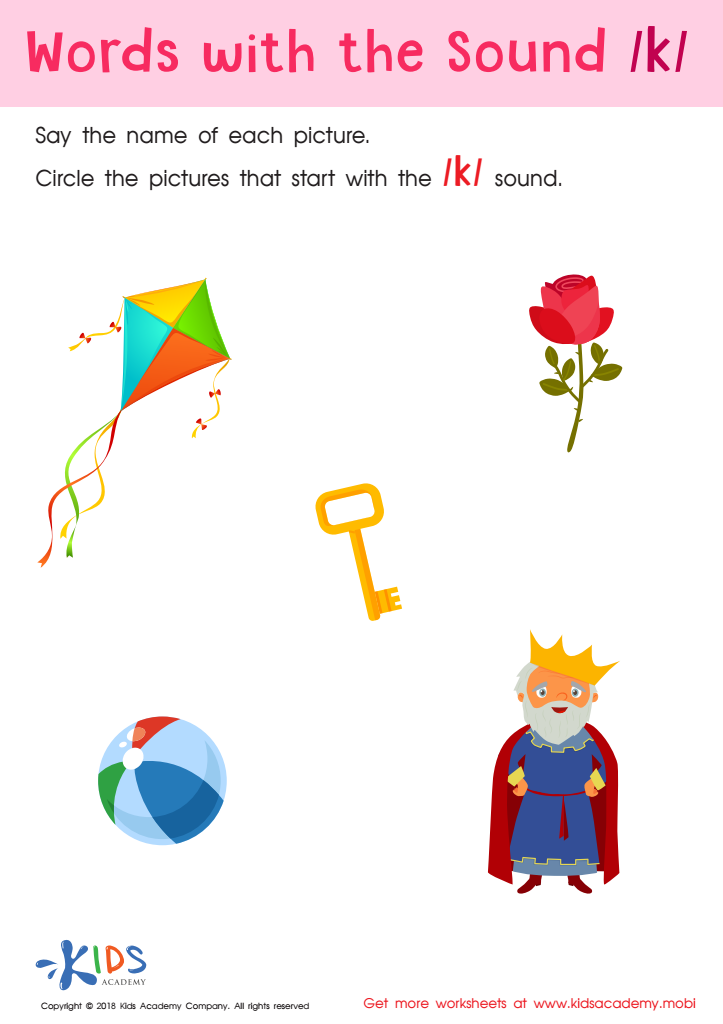
    Help your preschooler master the hard "k" sound with this fun worksheet from Kids Academy! Ask your child to say each picture aloud and circle only the pictures that start with "k". This early reading exercise will boost phonics skills and is sure to be loved by your little learner!
    Words with sound k Reading Worksheet

    Worksheet


    Understanding normal beginning sounds is crucial for children aged 6-9 as it forms the foundation for their reading and writing development. At this stage, students are beginning to make connections between sounds and letters, which is essential for phonemic awareness. Recognizing beginning sounds helps children decode words more easily, enhancing their reading fluency and comprehension skills.

    Parents and teachers should emphasize this area because it aids in literacy development, ensuring that children can sound out and blend words effectively. Mastering beginning sounds also boosts a child’s confidence in communication and self-expression, as they become more comfortable with stringing letters together to form words and sentences.

    Moreover, teaching normal beginning sounds encourages interactive and engaging learning experiences, fostering a love for reading and writing. It offers opportunities for fun activities that can enhance critical thinking and problem-solving skills as students learn to analyze sounds in different contexts.

    Ultimately, a shared focus on beginning sounds allows parents and teachers to work collaboratively in supporting children’s learning. This cooperative environment underscores the importance of early education in literacy, preparing students not only for advanced reading and writing but also for lifelong learning opportunities.