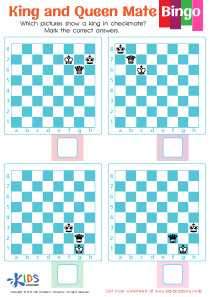
Problem-Solving Skills Normal Chess Worksheets for Ages 6-9
6 filtered results
-
From - To
Discover engaging Problem-Solving Skills Normal Chess Worksheets designed specifically for children ages 6-9! These interactive worksheets help young learners enhance their critical thinking and strategic planning abilities while having fun with chess. By tackling various puzzles and challenges, kids will develop essential problem-solving skills that are crucial for their educational journey and future success. Each worksheet is tailored to encourage creativity and perseverance, making it a perfect learning tool for both home and classroom settings. Explore our collection and watch your child build confidence and improve their cognitive abilities as they enjoy the timeless game of chess!
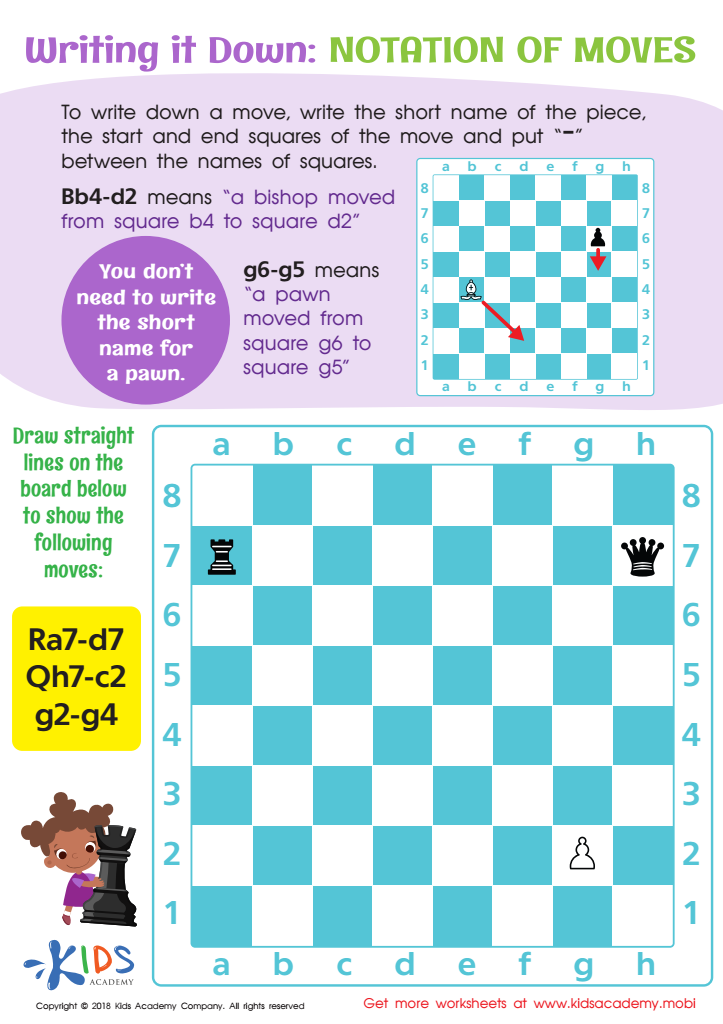
Notation of Moves Writing it Down Worksheet
 Assign to My Students
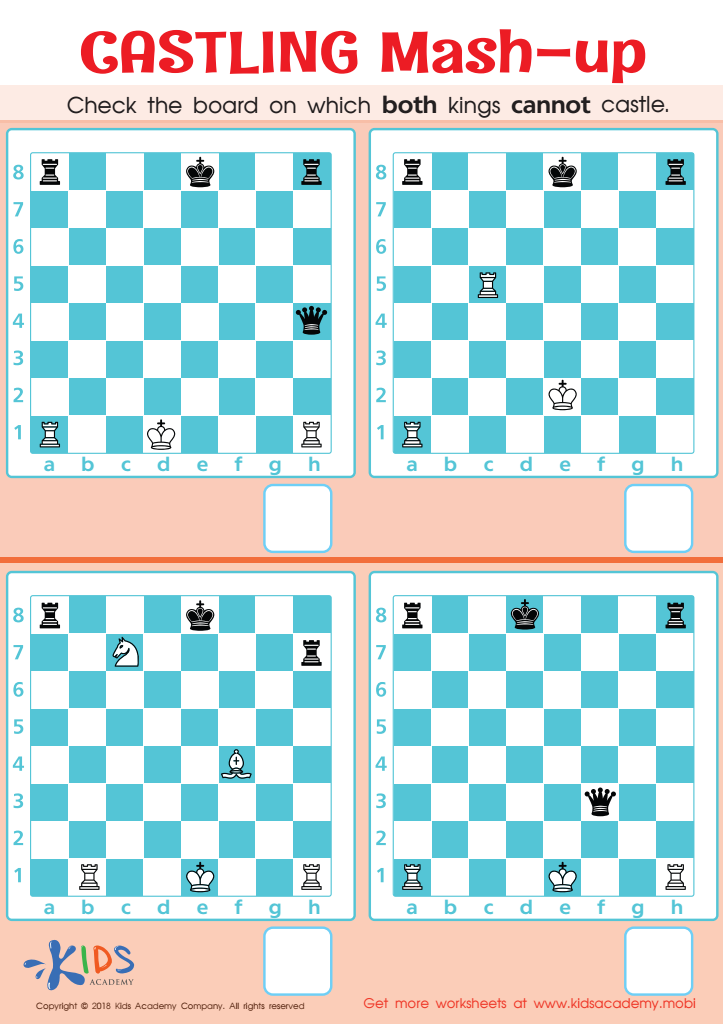
Castling Mash–up Worksheet
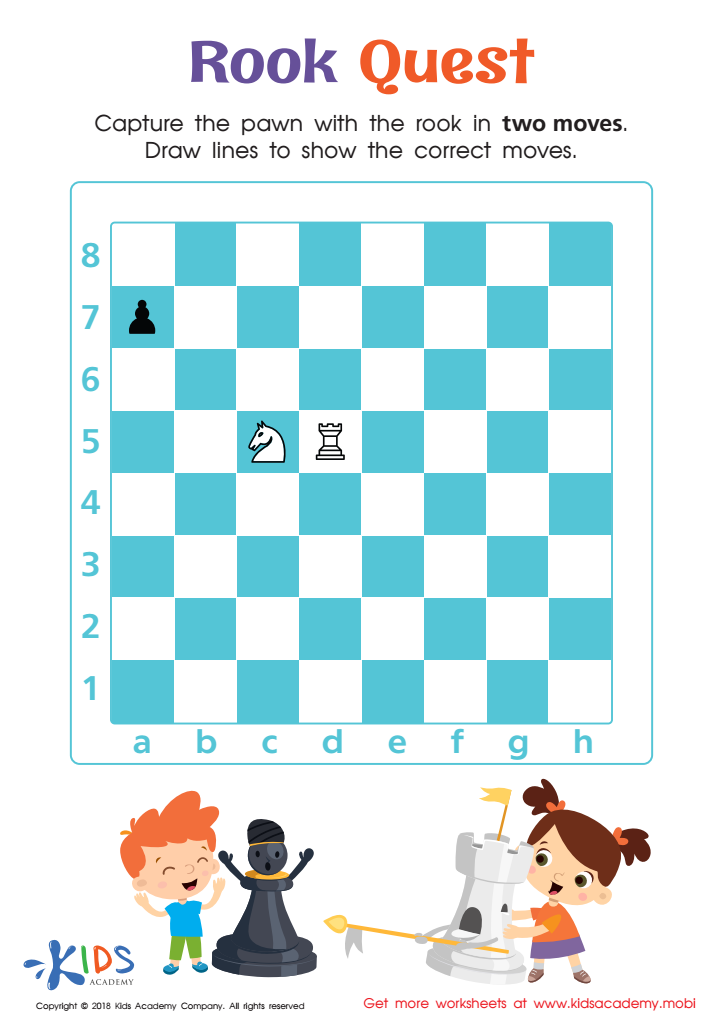
Rook Quest Worksheet
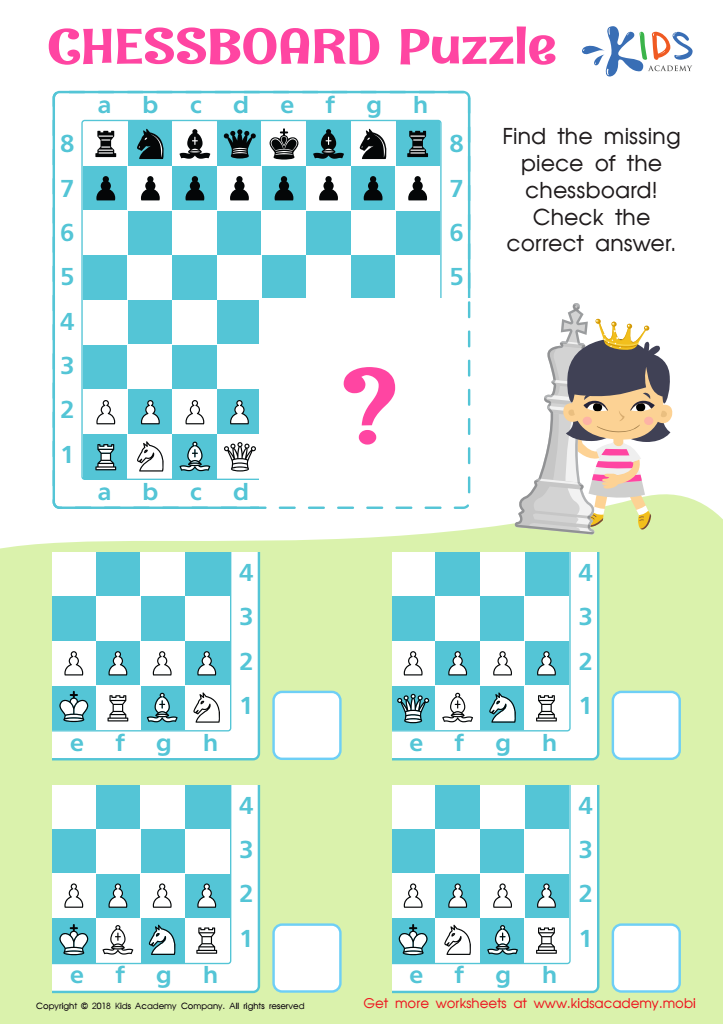
Chessboard Puzzle Worksheet
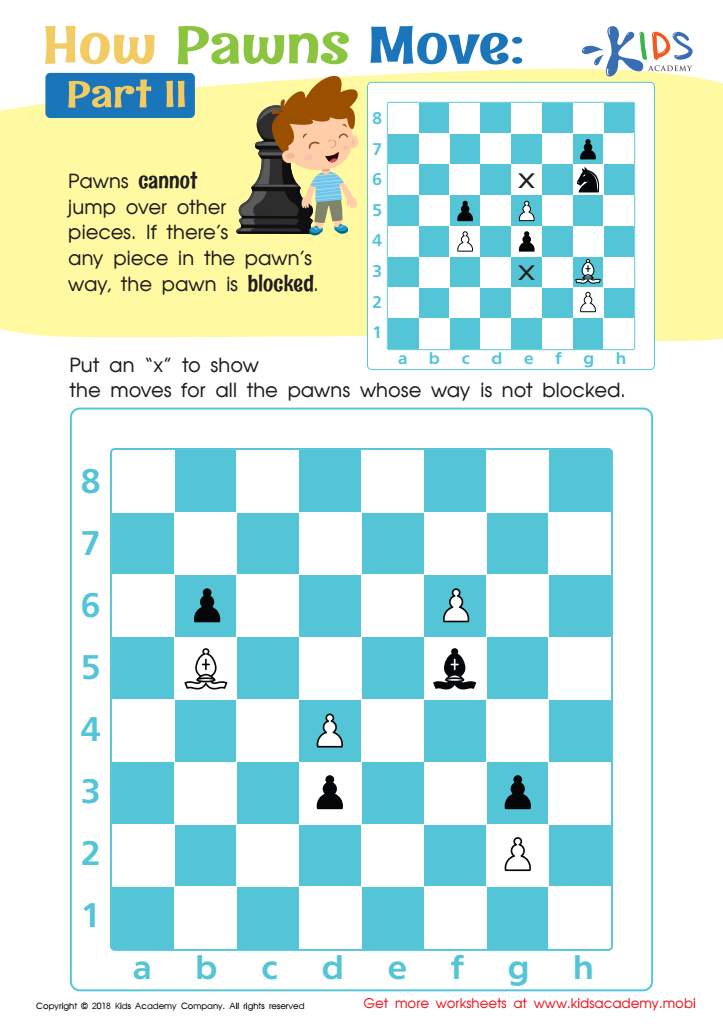
How Pawns Move: Part II Worksheet
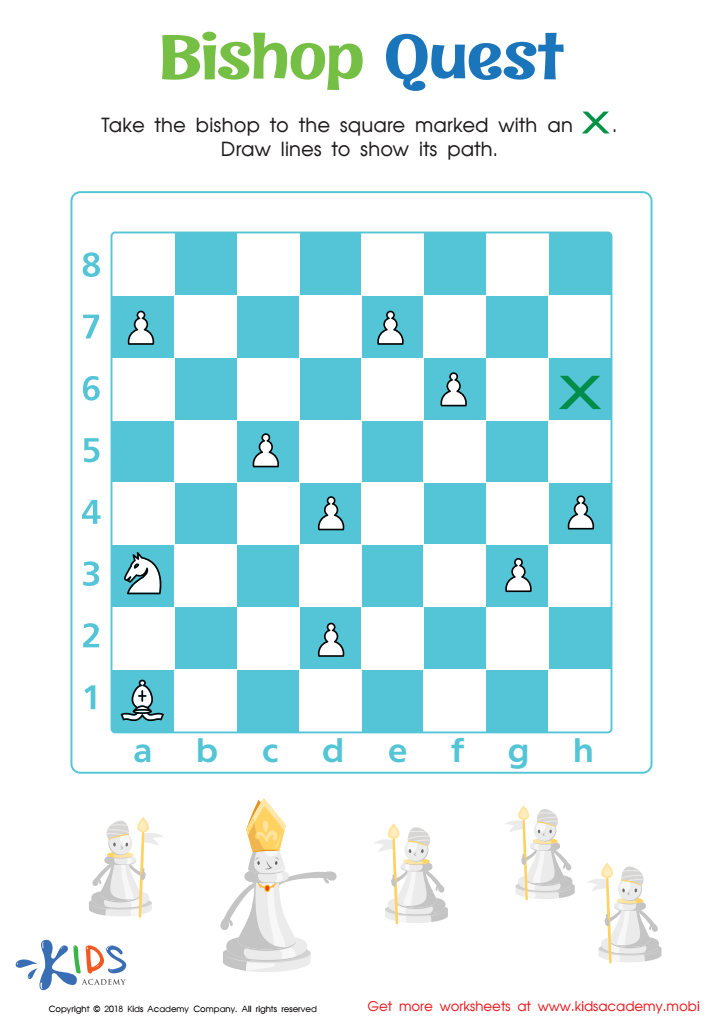
Bishop Quest Worksheet







Problem-solving skills are crucial for children, especially ages 6-9, as they lay the foundation for future learning and social interactions. Introducing chess to this age group can significantly enhance these skills in fun and engaging ways. Chess teaches important cognitive abilities like critical thinking, planning, and the evaluation of consequences. As children make decisions on the board, they learn to analyze situations, anticipate outcomes, and develop strategies, a process that encourages logical thinking and creativity.
For parents and teachers, promoting activities like chess in early education can cultivate resilience and patience. Children learn that mistakes are part of the learning process, allowing them to build perseverance and adapt strategies—life skills vital beyond the chessboard. Also, chess helps improve concentration and focus, which are beneficial in both academic and day-to-day scenarios.
Ultimately, by fostering problem-solving through chess, educators and parents equip children with essential tools for navigating challenges. This early focus not only advances their cognitive development but also boosts their confidence in confronting obstacles, shaping well-rounded individuals who can thrive in various situations. Investing in these skills now sets a strong educational groundwork for the future, ensuring students are better prepared for complex problem-solving in academics and real life.